In the winter of 1921, a respected lawyer’s wife was laid to rest in a small churchyard in Herefordshire, her death certified as natural. Ten months later, her grave was torn open, and the poison found in her body would shock even Scotland Yard’s most seasoned analysts. This is the story of Katharine Armstrong—a tale of arsenic, betrayal, and a quiet death that was anything but natural.
The village of Cusop, nestled on the English-Welsh border, seemed an unlikely setting for murder. Here, among the black mountains and winding lanes, the Armstrongs lived a life of quiet respectability. Herbert Rowse Armstrong, a solicitor known as Major Armstrong, and his wife Katharine were pillars of the community. But beneath the surface, a storm was brewing.
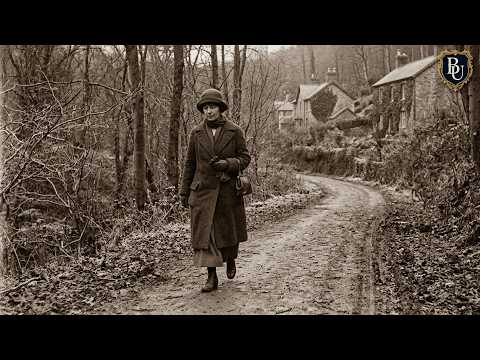
Katharine was a woman of intelligence and piety, a skilled pianist who managed her household with strict discipline. Yet by August 1920, her health had deteriorated alarmingly. Diagnosed with “madness,” she was committed to a private asylum in Gloucester. Under the care of Dr. Arthur Townsend, she improved significantly, and by early 1921, she was deemed well enough to return home. But her husband had other plans.
On January 11, 1921, Herbert Armstrong purchased a quarter-pound of arsenic. He claimed it was for killing weeds in his garden. Just eleven days later, against Dr. Townsend’s advice, he brought Katharine back to Mayfield. Within weeks, she was dead. Dr. Hincks, the family physician, certified the cause as gastritis with heart and kidney disease—natural causes. No suspicions were raised. Katharine was buried, and the matter seemed closed.
But fate had other ideas. Herbert Armstrong was not the only solicitor in Hay. A younger man, Oswald Norman Martin, shared the same small professional circle. Their relationship was strained by a land deal gone sour—a property called Villender, where a deposit of £500 had been paid but the transaction stalled. Martin, representing the buyers, pressured Armstrong to either complete the sale or return the money. The dispute festered through the autumn of 1921.
Then, on October 26, 1921, Oswald Martin accepted an invitation to tea at Mayfield. Armstrong handed him a buttered scone with his own hand, uttering words Martin would later swear to in court: “Excuse my fingers.” That evening, Martin fell violently ill. A sample taken from him was found to contain arsenic. Weeks earlier, an anonymous box of chocolates had arrived at Martin’s home, also laced with the poison. The link was undeniable: Martin’s father-in-law, chemist John Davies, had sold the arsenic to Armstrong.
Dr. Hincks, who had treated Martin, relayed his concerns to the Home Office. The case was now in the hands of Scotland Yard. What began as a petty dispute between rural lawyers had escalated into a case of attempted poisoning. On December 31, 1921, Herbert Armstrong was arrested at his office. In his pocket, officers found a small packet of arsenic. His explanation—that he had prepared twenty such packets, one for each dandelion plant in his garden—would later become a damning detail in court.
The arrest triggered a re-examination of Katharine’s death. On January 2, 1922, her body was exhumed from Cusop churchyard. Home Office pathologist Dr. Bernard Spilsbury and analyst John Webster conducted the examination. The findings were staggering: the largest quantity of arsenic ever recovered from a human body—more than three grains. Spilsbury concluded that a massive dose had been administered about twenty-four hours before death. The natural death certificate was a lie.
Herbert Armstrong was charged with murder. He pleaded not guilty. The trial opened in April 1922 at the Shire Hall in Hereford, presided over by Mr. Justice Darling—his last murder trial. The prosecution, led by the Attorney General Sir Ernest Pollock, built its case on the arsenic in the exhumed body, the purchase of the poison, the packet in Armstrong’s pocket, and the July 1920 will that made him the sole beneficiary of his wife’s estate. They also presented the evidence of Oswald Martin’s illness and the anonymous chocolates as proof of a pattern.
The defense, led by Sir Henry Curtis Bennett, did not deny that Katharine died of arsenic poisoning. Instead, they argued that she had taken it herself. She had been certified insane, depressed, and delusional—perhaps, they suggested, she had swallowed the poison by her own hand. But the prosecution’s case was circumstantial yet compelling: opportunity, means, motive, and the later approach to Martin. The judge himself questioned Armstrong about the twenty packets of arsenic. “Why did you prepare twenty small packets,” Justice Darling asked, “each a fatal dose for a human being, and carry one in your pocket?” The answers did not satisfy the court.
On April 13, 1922, the jury returned a verdict of guilty. Herbert Rowse Armstrong was sentenced to death. His appeal was dismissed on May 16, and on May 31, 1922, he was hanged at Gloucester Prison. He made no confession, maintaining his innocence to the end. He remains the only English solicitor ever to be hanged for murder.
The case of Katharine Armstrong did not end with the gallows. Questions lingered for decades. In 1997, a later Hay solicitor, Martin Beales, argued in a book that Armstrong might have been innocent. A 2019 television program re-examined the case, but no pardon or acquittal was ever granted. The conviction stands. The story of the quiet death in Cusop—and the arsenic in the grave—remains one of the most haunting episodes in English criminal history.
Yet the Armstrong case, for all its notoriety, was only the first of three poisonings that would grip England between the wars. Each one turned on a single, unassailable piece of forensic evidence—a grave, a torn page, a pair of lungs that should have been black with soot but were not. And each one, in its own way, revealed how fragile the line was between respectability and murder.
The second case began not in a quiet churchyard but in the brash, bustling port of Southampton in the autumn of 1928. The city was a place of transit—of great steamers bound for America, of docks and warehouses, of commission agents and oil companies feeding the growing appetite for motor cars. It was a city of lodging houses and small ventures, where a man could rent a lock-up garage in a back street and leave it sealed for weeks without anyone taking notice.
Vivian Messiter was a man who had come home from abroad. He belonged to an old Somerset family, had spent years in America and Mexico, and had served as an officer in the Great War, returning with a permanent limp from a wound. Divorced and living alone, he was a solitary man in his fifties. In September 1928, he became an agent for the Wolfe’s Head Oil Company in Southampton, responsible for stock, the company car, and the hiring of commission men beneath him.
He took lodgings in Carlton Road and a lock-up garage at 42 Grove Street. To find salesmen, he placed an advertisement in the Southern Daily Echo. A man answered to the name of William F. Thomas, and Messiter hired him in late October.
On the morning of October 30, 1928, Messiter left his lodgings early to keep a ten o’clock appointment at the Grove Street garage. He was never seen alive again. A note in his own hand was later found in the garage, fixing the hour of that meeting. He had been killed with a hammer.
That same evening, the man who had answered the advertisement drove the company car to Downton in Wiltshire, where a builder had offered him work. Behind the oil drums in the locked garage, the body of Vivian Messiter was left, and there it remained. A constable was sent to the garage early in the investigation, found it padlocked from the outside, and—with no way in and no reason to force entry—moved on. For ten weeks the garage stayed sealed, the stock and the car gone, the body waiting behind the drums.
On January 10, 1929, the company’s new agent came to the garage, broke the lock, and went inside. Behind the oil drums, he found the body of Vivian Messiter. The long interval between the man’s last sighting and the discovery now stood between the crime and its solution, and the state of the remains reflected the ten weeks they had lain there.
Scotland Yard was called in. Chief Inspector John Prothero and Detective Sergeant Hugh Young were sent to Southampton. Sir Bernard Spilsbury, now knighted, examined the body and the garage. A hammer was found, and Spilsbury determined it was the murder weapon. The cause of death was a head injury. Time of death could not be fixed from the body alone after so long, so it was inferred from the last sighting—the morning of October 30.
The investigation turned to Messiter’s business and the man he had hired. The agency’s invoice book was examined. Its carbon papers preserved copies of entries written on the pages above. Among the customers listed were firms that could not be found and did not exist. Sales recorded against them were fictitious. The man calling himself Thomas had fled from Downton, taking money belonging to the builder who had employed him. A document found in his lodgings pointed to Manchester, where he was identified as William Henry Podmore, a motor engineer wanted there for car theft. He was arrested and imprisoned for the Manchester theft.
The inquest into Messiter’s death returned an open verdict—the jury was satisfied a death had occurred but could not name the killer. The case against Podmore for murder was not yet complete. It rested on the fact that he had answered the advertisement, worked briefly for the dead man, driven the company car away on the evening of October 30, and fled his next job with money that was not his. Suspicious, yes—but not proof of murder.
The evidence that bridged the gap was found by Chief Inspector Prothero in the dead man’s ledgers. Among Messiter’s papers was an exercise book. Held to the light, the surface of a blank page bore faint impressions of writing from a page above it—a page since torn out. The pen that wrote the missing page had pressed onto the sheet beneath. The torn page had carried a receipt for two shillings and sixpence, a commission on oil sold to a firm called Cromer and Bartlett, bearing the initials W.F.T. Cromer and Bartlett did not exist. The initials were those of William F. Thomas.
Photographed under oblique light—a light thrown across the page at a low angle so that the impressions cast tiny shadows and became legible—the page revealed the man taking a commission on sales he had invented. The killer had torn from the dead man’s books every page that mentioned his name. The pen had pressed through to the pages beneath. The prosecution now had a motive: the man had invented customers and collected commissions on oil never sold, and he killed Messiter when the fraud was about to be exposed.
Added to this was the testimony of men who had been imprisoned with Podmore, who said he had spoken to them of the murder. On December 17, 1929, Podmore was arrested at the gate of Wandsworth Prison, where he was being held on other matters, and charged with the murder of Vivian Messiter.
The trial opened at the Grand Hall of Winchester Castle in March 1930, presided over by the Lord Chief Justice, Lord Hewart. The prosecution, led by Herbert du Parcq KC, laid out the hammer, the fictitious customers, and the incriminating impressions revealed by oblique light. “Cromer and Bartlett did not exist,” the prosecution declared, and the torn page became the silent witness against Podmore.
The defense attacked the circumstantial nature of the case, but the jury was convinced. On March 8, 1930, William Henry Podmore was found guilty. His appeal was dismissed on April 7, and despite a public petition, he was hanged at Winchester Prison on April 22, 1930, still protesting his innocence.
The third and final case unfolded in the seaside town of Margate in October 1929. Rosaline Fox, a frail 63-year-old widow, and her son Sidney moved from hotel to hotel, living on credit. Sidney insured his mother’s life for £3,000 against accidents, the policies due to expire at midnight on October 23. That night, a fire broke out in Room 66 of the Metropole Hotel. Rosaline was found dead, and Sidney claimed she had perished in the blaze.
But Home Office pathologist Sir Bernard Spilsbury found no soot in her airways and no carbon monoxide in her blood. She had been strangled before the fire was set to cover the crime. Sidney Fox was convicted and hanged at Maidstone Prison on April 8, 1930.
Three cases, three graves, and three killers brought to justice by the quiet, relentless work of forensic science. The Armstrong, Messiter, and Fox cases became landmarks in criminal history, each a testament to the power of evidence over deception.
But were these verdicts truly just, or did the hangman’s rope silence doubts that still linger today? Share your thoughts in the comments below.
Report this article
Select a reason for reporting:






