Harry Morant was a charmer, a poet, and a liar. He was also, by his own admission, a murderer. But was he a war criminal, or a scapegoat for a British Empire desperate to save face? The 1980 film Breaker Morant turned him into a legend, but the truth is far more complex—and far more disturbing.
Born in England in 1864, Edwin Henry Morant reinvented himself in Australia as Harry Harbord Morant, the illegitimate son of an admiral. He was a drover, a horse breaker, a womanizer, and a bush poet—a man who left a trail of broken hearts and unpaid debts across the Outback. When the Boer War broke out in 1899, he saw his chance for adventure and escape. He enlisted, and by 1901, he was a lieutenant in the Bushveldt Carbineers, an irregular unit fighting a dirty guerrilla war in the Transvaal.
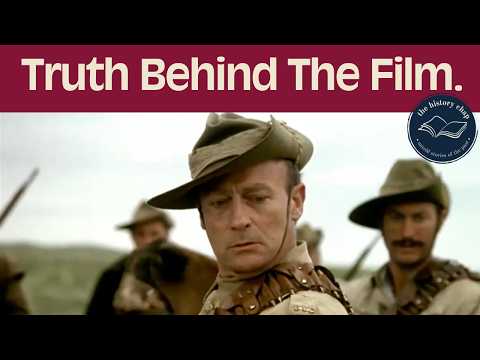
It was there, in the remote Soutpansberg mountains, that the line between soldier and killer blurred beyond recognition. After his close friend Captain Percy Hunt was killed—and allegedly mutilated—Morant ordered the execution of Boer prisoners. One of them, a man named Visser, was wearing Hunt’s uniform. Morant had him shot on the spot. “I have taken my revenge,” he later wrote. “I have avenged my friend.” But it didn’t stop there. On August 23, 1901, eight more Boers were lined up and executed on Morant’s orders. A Lutheran missionary, Reverend Daniel Heese, witnessed the slaughter and confronted Morant. “You have committed murder,” Heese told him. “I will report you.” That afternoon, Heese and his driver were found shot dead.
The killings didn’t stay secret for long. Within weeks, fifteen of Morant’s own men signed a letter exposing the executions. The British Army, embarrassed and under pressure, ordered a court-martial. In January 1902, Morant, along with Lieutenants Peter Handcock and George Witton, stood trial for murder. The proceedings were rushed, held in secret, and the defendants were denied proper access to their lawyer until the night before. Morant’s defense was simple: he was following orders—verbal orders from Captain Hunt, who claimed to have received them from higher up. But no written evidence existed, and the court wasn’t interested in hearsay.
Morant and Handcock were found guilty of murdering twelve unarmed Boer prisoners. They were sentenced to death. Witton got life. The night before the execution, Morant reportedly told a guard, “I’m not sorry for what I did. I’m only sorry I didn’t do more.” At dawn on February 27, 1902, they were led to a firing squad. Morant’s last words, according to legend, were “Shoot straight, you bastards! Don’t make a mess of it!”
But here’s where the story takes a sharp turn. If Morant was a cold-blooded killer, why did the man who started the killing—Captain Alfred Taylor—walk free? Taylor, an intelligence officer with a reputation for sadism, had ordered the execution of six Boers before Morant even arrived. He was tried, but acquitted. The difference? Taylor had connections. He was Kitchener’s man. And Kitchener, the commander-in-chief, had no intention of letting the scandal reach his door.
So was Morant a scapegoat? Perhaps. But he was also a murderer. The truth, as always, lies somewhere in between—and the debate is far from over.
The court-martial of Alfred Taylor was a study in contrasts. While Morant and Handcock were convicted on flimsy evidence and hearsay, Taylor was acquitted despite clear testimony from Captain Robertson that he had ordered the Valdesia massacre. The court deemed Robertson unreliable—he had been removed from command under a cloud of sexual assault allegations—and Taylor walked free. Robertson’s testimony was the only direct evidence linking Taylor to the killings, and the court chose to discredit him. Taylor returned to Rhodesia, where he lived peacefully until 1941.
The disparity did not go unnoticed. In Australia, the executions sparked outrage, but it was muted at first. The war was still ongoing, and the public’s attention was fixed on the concentration camps and the suffering of Boer civilians. Only later, with the publication of Witton’s account and the film, did Morant become a symbol of colonial injustice.
But the question remains: were Morant and Handcock following orders? The film suggests they were pawns in a political game, sacrificed to appease the Germans over the murder of Reverend Heese and to show the Boers that Britain was serious about peace. Yet the British acquitted Morant and Handcock of Heese’s murder, despite having a witness—a black African whose testimony was dismissed. If the Germans were the primary concern, why not convict them on that charge?
The answer may lie in the nature of the trials themselves. The court-martial was held in secret, contrary to regulations, and the defendants were denied proper access to their lawyer. The transcripts were never produced, and key witnesses like Colonel Hall were unavailable. Kitchener himself never testified, and there is no record of a request for his appearance. It is possible that the trials were designed to deliver a swift verdict, to send a message that atrocities would not be tolerated—but only for those without powerful friends.
Morant’s own words at his trial did him no favors. He admitted ordering the executions, claiming he was following verbal orders from Hunt. But without written evidence, his defense crumbled. The court was not interested in hearsay, especially when it implicated higher command.
Yet the question of scapegoating persists. Why was Taylor, who had ordered the first killings, acquitted? Why was Robertson, who had passed on the order, discredited? And why were Morant and Handcock, who had acted on the same verbal orders, executed? The answer may be simple: they were expendable. Taylor had Kitchener’s ear; Morant had only his charm and his poetry.
In the end, the debate over Breaker Morant is a debate over memory. The film turned him into a tragic hero, a man who followed orders and was betrayed by the Empire he served. But the truth is messier. Morant was a murderer, but he was also a soldier in a dirty war, where the rules were unclear and the lines blurred. He was not innocent, but he was not alone.
As the firing squad took aim that February morning, Morant’s last words—if they were his—were a defiant cry. “Shoot straight, you bastards!” It was a line worthy of a bush poet, a final performance from a man who had spent his life telling stories. And perhaps that is how he should be remembered: not as a hero or a villain, but as a storyteller who spun one last tale, even as the bullets flew.
But the story does not end with the bullets. In the years that followed, the official record of the court-martial vanished. The transcripts, which would have revealed exactly what was said in that secret courtroom in Pietersburg, were never produced. Historians have spent decades searching for them. They have never been found.
This absence is itself a kind of evidence. Armies do not lose paperwork by accident, especially paperwork that could implicate a commander-in-chief. The missing transcripts have fueled every conspiracy theory about the case, from the plausible to the absurd. Some say Kitchener personally ordered their destruction. Others insist they were simply victims of the chaos of war, filed away in a warehouse in Cape Town and forgotten.
What we do know is that George Witton, the youngest of the condemned men, did not stay silent. After his release in 1904, he returned to Australia a broken man. He had served two years of his life sentence before a petition of 80,000 signatures forced King Edward VII to intervene. Witton then wrote Scapegoats of the Empire, a furious account of the trial that painted Morant and Handcock as martyrs.
The book sold poorly. It was largely forgotten. Witton died in 1942, a footnote in a story that the world had moved on from.
Then, in 1973, the Australian journalist Kit Denton published The Breaker, a novel based on Morant’s life. Denton had grown up hearing stories about the executed lieutenant—his father had served in the Boer War and remembered the outrage. The book struck a chord. Australians were beginning to question their national myths, and Morant fit perfectly: a larrikin, a poet, a rebel hanged by the British for doing what soldiers do in war.
Seven years later, Bruce Beresford’s film cemented the legend. Breaker Morant was nominated for an Academy Award for Best Adapted Screenplay. It won ten Australian Film Institute Awards. It turned Edward Woodward’s Morant into an icon of colonial defiance. And it presented a version of history that was compelling, emotionally satisfying—and not entirely true.
The film’s most famous invention is the line “Shoot straight, you bastards!” No contemporary source records Morant saying it. The earliest reference appears decades later, in a memoir by a man who wasn’t there. But it was too good a line to leave out. As Morant himself might have said, why ruin a good story?
Yet the film’s central argument—that Morant and Handcock were scapegoats for Kitchener—has never been proven. The evidence is circumstantial. Kitchener did issue orders that Boers wearing British uniforms could be executed as spies. Morant’s friend Hunt may have passed on a verbal order to shoot prisoners. But no document survives to confirm it.
What survives is the testimony of the men who were there. And their testimony is damning. Morant admitted ordering the executions. He admitted shooting Visser in revenge for Hunt’s death. He admitted the eight Boers at Eland Hospital were killed on his command. His only defense was that he believed he was acting under orders.
Was that enough? The court said no. And in the cold light of history, it is hard to disagree. A soldier who shoots unarmed prisoners without written orders is not a scapegoat. He is a man who crossed a line.
But then there is Alfred Taylor. The man they called Bulala—the one who kills. The man who ordered the Valdesia massacre weeks before Morant arrived. The man who was acquitted and lived to seventy-nine, dying peacefully in his bed in Rhodesia.
Why? Because the court decided his accuser was unreliable. Because Robertson had his own skeletons. Because Taylor had friends in high places and Morant did not.
The contrast is impossible to ignore. One man ordered the killing and walked free. Another ordered the killing and was shot. The difference was not guilt. It was power.
And so the debate continues. Every few years, a new book or documentary reopens the case. Historians argue over the missing transcripts, the verbal orders, the political machinations of Kitchener. Australians argue over whether Morant was a hero or a murderer. The Boers—those who remember—argue over whether justice was done.
There is no final answer. There never will be. The men who could have told us are dead. The documents that could have proved it are gone. What remains is a story—a story told by a liar, a poet, and a killer, who charmed his way into legend and died with a defiant shout.
Perhaps that is the real truth of Breaker Morant. Not that he was innocent, but that he was human. Capable of courage and cruelty, loyalty and murder. A man who followed orders when it suited him and invented them when it didn’t. A man who loved his friend and avenged him with blood.
As the centenary of his execution approached in 2002, a group of Australians petitioned the British government for a posthumous pardon. The request was denied. The Ministry of Defence replied that there were no grounds to overturn the court-martial’s verdict. Morant and Handcock, the letter said, had been convicted of murder after a fair trial.
Fair. It is a word that hangs over this story like a shadow. The trial was held in secret. The defendants were denied counsel until the night before. The transcripts disappeared. And the man who started it all walked free.
That word—fair—is the crux of it. Fairness, after all, is not a matter of verdicts but of process. And the process that sent Morant and Handcock to their graves was anything but fair.
Yet fairness cuts both ways. The Boer prisoners at Eland Hospital were given no trial at all. They were lined up and shot on a verbal command, their bodies left for the vultures. Whatever Morant’s grievances, whatever orders he believed he had, those men had surrendered. They were unarmed. They were killed in cold blood.
So we are left with two truths that sit uneasily together. Morant was denied a fair trial. And Morant was guilty of murder. Both can be true. Both are true.
Perhaps that is why the story refuses to die. We want our heroes clean and our villains simple. Morant gives us neither. He was a charmer who killed, a poet who lied, a man who loved his friend enough to avenge him and enough to die for it.
The firing squad did its work. The Empire moved on. But the question remains, as it always will: when a soldier follows an order he knows is wrong, where does the guilt truly lie—with the man who pulls the trigger, or the men who gave the command and then looked away?
Report this article
Select a reason for reporting:






