He was born to rule a nation that worshipped his bloodline as gods. But before he could inherit the throne, a single night of gunfire inside the royal palace turned his family into targets—and him into a fugitive from his own legacy. This is the story of Paras Shah, the last crown prince of Nepal, whose life spiraled from divine right to public disgrace, leaving behind a question that still haunts a nation: what happens when a god falls?
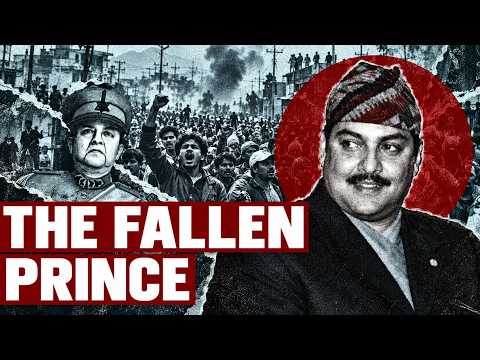
Paras grew up in the Narayanhiti Royal Palace, a self-contained universe where his every whim was indulged. As the son of Prince Gyanendra and grandson of King Mahendra, he was third in line to a 240-year-old dynasty that had unified Nepal and ruled it with absolute authority. But privilege bred recklessness. Known as a wild child, Paras racked up a reputation for late-night partying, reckless driving, and a belief that the law simply didn’t apply to him. Then, in August 2000, a speeding blue Mitsubishi Pajero struck and killed popular singer Praveen Gurung near the palace gates. Witnesses identified Paras behind the wheel, and when he arrived at the police station, he allegedly pulled a gun on the duty officer and threatened him to stay silent. An army officer eventually took the blame, and the case was closed without charges. But the public wasn’t fooled. Over 600,000 people flooded the streets in protest—one of the largest demonstrations Nepal had ever seen—planting a seed of resentment that would grow into a movement to destroy the monarchy itself.
Just ten months later, that resentment exploded into unimaginable horror. On the evening of June 1, 2001, the royal family gathered for their regular Friday night dinner at Tribhuvan Sadan. King Birendra, Queen Aishwarya, and several other royals were present. Crown Prince Dipendra, the heir apparent, arrived drunk and unruly, reportedly high on hashish. After being told to leave, he was escorted to his room by his brother Nirajan and his cousin—Paras. Minutes later, Dipendra returned dressed in army fatigues and armed with an assault rifle, a submachine gun, and a shotgun. He opened fire, killing his father, mother, brother, sister, and several aunts and uncles. Nine members of the royal family were dead or fatally wounded in a matter of minutes. Then Dipendra turned a weapon on himself.
Paras was in that room. As the bullets flew, he grabbed a sofa and pulled it over at least three family members, including two children, shielding them from the gunfire. He took injuries himself but survived. For three surreal days, Nepal had a comatose king—Dipendra, the murderer—lying in a hospital bed with a bullet in his brain, technically wearing the crown. When Dipendra died without regaining consciousness, the throne passed to Paras’s father, Gyanendra, the man who had been conveniently absent from the palace that night. And just like that, Paras—the playboy prince with a scandal-plagued past—became the crown prince of Nepal.
The public reaction was not grief-stricken unity. It was fury and suspicion. Conspiracy theories spread like wildfire: how could Dipendra, beloved by the people, have acted alone? Why were Gyanendra and his immediate family the only survivors? The official investigation named Dipendra as the sole perpetrator, but the damage to the monarchy’s legitimacy was catastrophic and permanent. Gyanendra took the throne under a cloud of suspicion that never lifted. He was seen as aloof, authoritarian, and contemptuous of democracy—a chain-smoking royal with expensive tastes and a belief that parliament was an obstacle. Meanwhile, the Maoist insurgency, which had been raging since 1996, was spreading across the countryside, drawing support from the rural poor and oppressed communities. By the time Gyanendra took power, the insurgency had claimed thousands of lives, and successive elected governments had failed to contain it.
Then, on February 1, 2005, Gyanendra made the decision that would destroy the monarchy. He dismissed the elected government, suspended the constitution, and assumed direct control of the state. He declared a state of emergency, arrested journalists and political leaders, and shut down telecommunications. He claimed it was a temporary measure to crush the Maoists, but it looked like a power grab—an attempt to restore absolute monarchy. The gamble backfired spectacularly. Instead of weakening the Maoists, it united them with the mainstream political parties against a common enemy: the king himself. In November 2005, the Maoists and seven major parties signed a 12-point agreement to jointly oppose royal rule. Then came the Jana Andolan II—the second people’s movement—in April 2006. For 19 straight days, millions of Nepalis defied curfews and police crackdowns, marching in Kathmandu and across the country, demanding democracy and the end of monarchical rule. Faced with overwhelming public anger, Gyanendra capitulated. He reinstated parliament, gave up his emergency powers, and parliament immediately stripped him of virtually all remaining authority—control over the army, veto power, tax exemptions. He was reduced to a ceremonial figurehead overnight. But the parties and Maoists weren’t finished. In December 2007, parliament voted 270 to 3 to abolish the monarchy. And on May 28, 2008, the newly elected constituent assembly formally declared Nepal a federal democratic republic. The 240-year reign of the Shah dynasty was over.
For the royal family, the transition was swift and unceremonious. The Narayanhiti Palace was converted into a museum. They were stripped of all titles, privileges, and legal immunities. They became ordinary citizens in the eyes of the law. And it is here that Paras’s story takes its most dramatic and troubling turn. While his father, the deposed king, retreated from public life with quiet dignity, Paras seemed to spiral. Within weeks of the monarchy’s abolition, he left Nepal for Singapore—the first time he had been allowed to travel freely in over two years. His wife Himani and their three children joined him shortly afterward. For a time, they lived in the island city-state, far from the political turmoil. It was during this period that Paras gave one of his only public interviews, speaking to a Singaporean newspaper about the royal massacre. He described a web of rivalries and palace intrigues that he said had driven Dipendra to the breaking point. According to Paras, the trigger wasn’t just Dipendra’s thwarted love affair with Devyani Rana, but also a failed multi-million-dollar arms deal—50,000 rifles that would have netted Dipendra $15 million, an escape plan in case palace politics turned against him. Whether true or not, it painted a picture of a royal family far more fractured and dysfunctional than the public ever knew.
The family eventually moved to the United States, but trouble followed Paras wherever he went. In December 2010, he was back in Nepal and arrested after an incident at a forest resort in Chitwan. He had been drinking heavily and got into an altercation with members of a prominent politician’s family. During the confrontation, he allegedly fired a pistol into the air. He was arrested three days later and faced trial. In his defense, he claimed he had been provoked—that the individuals had insulted him, his family, and his country. He was eventually acquitted, but the court ordered him to give a written commitment to correct his public behavior. It was a humiliating moment for a man who had once been crown prince of an entire nation. Then came the drug arrests in Thailand. In 2012, he was arrested on the resort island of Phuket after the management of his condominium complained about his unruly behavior. Police found roughly three grams of marijuana in his possession. He was granted bail and denied the charges. Then, in July 2014, he was arrested again on drug charges in Thailand—this time with the possibility of facing up to five years in prison. Reports indicated police found drug paraphernalia in a BMW he had been riding in. The image of a former crown prince being arrested for drug possession in a foreign country was a far cry from the days when the Shah family had been worshipped as incarnations of Vishnu.
And throughout all of this, Paras was battling a health crisis that would have been alarming for anyone, let alone a man living a lifestyle of excess. Heart problems—what some doctors described as a hereditary issue in the Nepali royal family—hit him with brutal regularity. In September 2007, while still technically crown prince, he suffered his first heart attack at just 35. He was rushed to the military hospital and then transferred to Norvic International Hospital in Kathmandu, where doctors performed a balloon angioplasty to clear a blocked artery. In February 2013, while living in Bangkok, he suffered a massive cardiac arrest and was admitted to Samitivej Hospital. He was unconscious for more than two weeks before regaining consciousness on March 2. In 2015, doctors implanted a cardioverter defibrillator in his chest—a battery-powered device to monitor and correct dangerous heart rhythms. He was 43. In January 2019, he suffered a third heart attack and was admitted to Norvic Hospital again. In September 2023, a fourth heart attack landed him in Hams Hospital in Kathmandu. And then, in March 2025, he suffered yet another heart attack and underwent another angioplasty at Norvic Hospital. Five heart attacks by the age of 53. His doctors noted that heart disease appeared to run in the royal family—an inherited vulnerability compounded by a lifestyle that, by most accounts, had not been kind to his body.
But even amidst the scandals and health scares, there were occasional flickers of the old royal entitlement. In July 2021, he made headlines again after mistreating a traffic police officer in Kathmandu. He had been stopped at Narayan Gopal Chowk in Maharajgunj for not wearing a helmet and for being intoxicated. Police said he was drunk and belligerent. He later apologized, but the incident reinforced the public perception of a man who had never truly accepted that his royal status was gone. There were also reports of him showing up at establishments connected to his family and issuing orders as though he still carried the authority of the crown—demanding that fired workers be reinstated and threatening consequences if his instructions were ignored. And then there was the matter of the National Trust for Nature Conservation, a charitable organization that Paras had run during his time as crown prince, with King Gyanendra as its patron. After the monarchy was abolished and the Maoists took control of the organization, a report was published alleging that the royal family had misused the trust’s funds for years—spending its money on personal expenses, including foreign trips, lavish parties, and health checkups abroad for Queen Komal. One trip specifically cited was Paras’s visit to Austria to donate a pair of Indian rhinoceroses—an endangered species in Nepal—to a zoo. The objectivity of the findings was questioned given the Maoist control of the organization at the time, but the allegations added another layer of tarnish to an already deeply damaged reputation.
So where does Paras Shah stand today? The answer, like so much about this man’s life, is complicated. He lives in Nepal, moving between Kathmandu and other parts of the country. He is no longer the headline-grabbing figure he once was. The drug arrests, the shootings, the drunken confrontations—they have largely faded from the news cycle, replaced by occasional reports about his recurring heart problems. His father, the former King Gyanendra, now in his late 70s, has maintained a more dignified public presence, occasionally appearing at religious ceremonies and cultural events. There are even small but vocal groups in Nepal who advocate for the restoration of a constitutional monarchy, though these movements have never gained enough traction to seriously threaten the republic. His son, Prince Hridayendra, who was once proposed as a potential child king to save the monarchy, has grown up far from the palace. He left Nepal as a boy and spent years abroad, including time in Singapore and the United States. The young prince who was supposed to be the dynasty’s last hope has grown into a man in a world where his title means nothing legally, even if it still carries a certain romantic weight among monarchists. And Paras’s wife, Himani, has perhaps fared better in the public eye than her husband. She has been described as a stabilizing presence in the family, someone who tried to manage the chaos of Paras’s public behavior while raising their children in an environment of extraordinary upheaval.
But the broader story here is not really about one man’s personal failures. It is about what happens when an institution that has existed for two and a half centuries is swept away in the space of a few years. The Shah dynasty did not fall because of Paras’s scandals, though they certainly did not help. The monarchy fell because of a perfect storm: the royal massacre that shattered public faith in the institution, the Maoist insurgency that exposed the depth of inequality in Nepali society, and the catastrophic miscalculation of King Gyanendra in seizing absolute power and uniting the entire political spectrum against him. Paras was in many ways a symptom rather than a cause. He was a product of a system that told him from birth that he was special, that normal rules did not apply to him, that his family’s right to rule was divinely ordained. When that system collapsed, he had no framework for navigating the real world—no skills for dealing with a life where his actions had actual consequences. He was born into a golden cage and never learned to function outside of it.
There is also something deeply tragic about the trajectory of this family. Think about what they lost. Not just power and wealth and palaces, though they lost all of those things. They lost people. The massacre of 2001 killed nine members of the royal family in a single night. Paras watched members of his extended family die in front of him. Whatever you think of his character, whatever legitimate criticisms can be leveled at his behavior, that kind of trauma leaves scars that no title or privilege can heal. And for Nepal itself, the abolition of the monarchy has brought its own complications. The country has struggled with political instability since 2008. There have been frequent changes of government, often driven by coalition politics and internal party disputes. The constitution finally adopted in 2015 was the product of years of difficult negotiation and was immediately controversial, particularly among communities in the Tarai region who felt underrepresented. The promise of the republic—that democracy would bring stability and prosperity—has been only partially fulfilled. Which brings us to the question that always lingers in the background when you look at fallen monarchies: was it worth it? Was Nepal better off for having abolished the monarchy? The answer depends on who you ask. Ask the Maoists and the democratic activists who risked their lives in the people’s movement, and they will tell you that no nation should be ruled by a family that claims divine authority while its people starve. Ask the monarchists, and they will tell you that the country has been adrift since the king was dethroned—that Nepal needs a unifying symbol above the dirty scramble of party politics. Ask ordinary Nepalis, and the answers are as varied as the country itself.
What is not in doubt is that the Shah dynasty left an enormous mark on Nepal, for better and for worse. Prithvi Narayan Shah created the nation. His descendants ruled it for nearly two and a half centuries. And Paras Shah, the last man to hold the title of crown prince, stands as the final troubled chapter of that story—a man who was supposed to carry a dynasty into the future, but instead became a cautionary tale about what happens when privilege meets reality.
He still lives in Nepal, moving quietly between Kathmandu and the old family estates. The headlines have softened, replaced by murmurs of failing health and a legacy he cannot outrun.
“The kingdom is gone. The palace is a museum. And the throne exists only in memory.”
The crown, once said to be blessed by the gods themselves, sits behind glass now—a relic of an age that ended not with a grand farewell, but with a vote in a constituent assembly and the quiet turning of a page.
Was Nepal better off without its divine kings—or did it trade one cage for another?
Report this article
Select a reason for reporting:






