The autumn light filtered through the dusty windows of the old Victorian house in Philadelphia, casting long shadows across the wooden floor. Dr. Sarah Mitchell carefully lifted another box from the pile, her hands protected by white cotton gloves. As a historian specializing in 19th-century American women’s lives, she had spent countless hours in attics like this one, searching for fragments of the past. But something about this box felt different.
She had been called to the old Whitaker estate after the last descendant passed away, leaving behind a house crammed with a century’s worth of memories. Most of it was ordinary—letters, ledgers, faded photographs. But as Sarah peeled back the brittle newspaper wrapping, her breath caught in her throat.
It was a portrait of two women, their expressions serene, their hands folded in their laps. At first glance, it seemed like a typical Victorian keepsake. But something in the woman’s hand on the left—a small, dark object—made Sarah’s skin prickle.
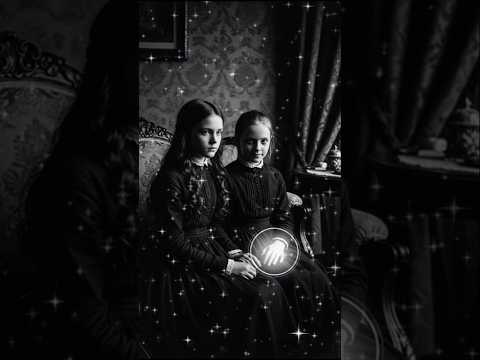
She brought the photograph closer to the lamp, her heart hammering. The object was a ring, but not just any ring—it was a signet ring, the kind worn by members of a secret society. Sarah had seen one before, in a museum exhibit about the underground networks of the 1800s. But what was it doing in a family portrait?
She turned the photo over. On the back, in elegant cursive, were the words: “To our sisters, bound in silence.” No names, no date. Just that cryptic message.
Sarah’s mind raced. The Whitaker family was prominent, respected. Could they have been involved in something hidden? She thought of the stories she’d read about secret societies operating in Philadelphia during the Gilded Age—groups that wielded power from the shadows.
She carefully placed the photograph on the table and reached for the next item in the box—a small leather journal, its pages yellowed with age. As she opened it, a folded piece of paper slipped out and fluttered to the floor.
Sarah picked it up and unfolded it. Her eyes widened. It was a map, hand-drawn, with a series of symbols marking locations across the city. At the bottom, a note: “The truth lies beneath the stone.”
She looked back at the portrait. The woman’s hand, the ring, the message—it all pointed to something far more sinister than a family keepsake. What had she stumbled upon?
Outside, the wind howled, rattling the windowpanes. Sarah felt a chill run down her spine. She had come here looking for stories of ordinary women. Instead, she had found a secret that someone had gone to great lengths to hide.
And she was determined to uncover it.
She opened the journal with trembling fingers. The first pages were filled with neat, looping script—recipes, household accounts, the mundane details of daily life. But as she turned deeper, the entries changed. Names appeared, dates, and cryptic references to meetings held after dark. Sarah recognized some of the surnames—old Philadelphia families, the kind whose portraits hung in the city’s finest museums.
One entry stopped her cold. It described a gathering at a house on Chestnut Street, where a group of women had sworn an oath. “We pledged ourselves to the cause, to one another, and to the silence that binds us.” The date was October 1873.
Sarah scribbled notes in her own notebook, cross-referencing the names with what she knew. One of them, Margaret Whitaker, was the matriarch of the family that had owned this house. She was also, according to the journal, the woman on the left in the portrait.
The map, meanwhile, was too cryptic to decipher at a glance. The symbols were unfamiliar—circles within circles, a triangle bisected by a line, a small cross with a hook. Sarah photographed it with her phone, planning to consult her colleague, Dr. Ellis, who specialized in esoteric iconography.
She turned back to the journal. Near the end, the handwriting grew shakier, as if written in haste. “They are watching. I fear the stone will not stay buried much longer.” The next page was torn out entirely.
Sarah’s pulse quickened. She checked the box again, digging through the remaining papers. At the bottom, wrapped in velvet, was something small and hard. She unwrapped it carefully.
It was the signet ring from the portrait. Up close, the design was unmistakable—a serpent coiled around a key. The same symbol appeared on the map, marking a location near the old cemetery on Arch Street.
She slipped the ring into an evidence bag and gathered her things. The sun had dipped below the horizon, and the old house creaked and groaned in the rising wind. Sarah didn’t believe in ghosts, but she couldn’t shake the feeling that she was no longer alone in the attic.
As she descended the narrow staircase, her phone buzzed. A text from Ellis: “That symbol you sent—where did you find it? We need to talk. Now.”
Sarah paused on the landing, the ring heavy in her pocket. Outside, the streetlamp flickered, casting a pale glow across the overgrown garden. Somewhere in the city, a stone was waiting to be lifted.
She called Ellis from the car, heater blasting against the evening chill. He picked up on the second ring, his voice unusually tight. “Sarah, listen carefully. That serpent-and-key isn’t decorative. It belonged to a group called the Order of the Silver Key.” A pause. “They were real. And they didn’t like being found.”
Sarah gripped the wheel. She had read footnotes about the Order—whispered references in abolitionist diaries, hints that the network had helped women escape bad marriages, hide fortunes, even disappear entirely. But no historian had ever proven they existed.
“How do you know all this?” she asked.
Ellis hesitated. “Because my grandmother left me a box of papers when she died. I always thought they were family nonsense. Until tonight.” He sent her a photo—a page from a ledger, its seal identical to the one on the map. “Same symbol. Same city. Sarah, this goes back further than either of us realized.”
She pulled over beneath a streetlamp and studied the image. The ledger listed payments, properties, and initials—dozens of them, stretching across decades. “This isn’t just a secret society,” she murmured. “It’s an operation. A network with money and reach.”
Back at her apartment, Sarah spread the map across her kitchen table and pinned the portrait beside it. The serpent-and-key marked the Arch Street cemetery, but three other symbols clustered near the river—an old warehouse district, a church that had burned in 1901, and a plot of land now buried under a parking garage.
She opened the journal again, hunting for any mention of those places. On the second-to-last page, she found it: “The sisters keep their promises in stone. What we buried, we buried for them.” Beneath it, a single line of numbers—coordinates, she realized, after a moment’s calculation.
They pointed to the cemetery. Not the main gate, but a corner plot near the western wall.
Her phone rang. Ellis again, his voice barely above a whisper. “Sarah, I did some digging. The Whitaker estate—there’s a probate lawyer asking questions about you. Someone wants to know what you took from that attic.”
She glanced at the evidence bag on the counter, the ring’s serpent eye glinting under the kitchen light. “Then we don’t have much time,” she said. “Meet me at Arch Street. Midnight.”
After she hung up, she noticed something she had missed before—a faint pencil mark in the journal’s margin, nearly rubbed away. She tilted the page toward the lamp and read: “Trust no one who asks about the stone.”
Sarah stared at the words, then at her phone, where Ellis’s messages glowed innocently on the screen. She had known him for six years. But someone had just asked about the stone—and it hadn’t been her.
The cemetery at midnight was a country of shadows. Sarah parked two blocks away and walked the rest, the ring zipped inside her coat pocket like a second heartbeat. The western wall loomed ahead, its stones furred with moss. Ellis was already there, a flashlight in one hand and a trowel in the other.
“You brought a shovel,” she said. “That’s either very reassuring or very alarming.”
He didn’t smile. “The coordinates. This is the spot.” He pointed to a flat marker half-swallowed by ivy. No name, no dates—just the serpent-and-key, worn nearly smooth by a century of rain.
They dug together in silence, the trowels scraping against roots. Twenty minutes in, metal rang against metal. A small iron box, no bigger than a hatbox, sealed with wax gone brittle with age.
Inside were letters—dozens of them—and a ledger bound in green cloth. Sarah lifted the top letter, her flashlight trembling over the handwriting she now knew by heart. It was addressed to Margaret Whitaker, dated 1874. “The child is safe. She has a new name and a new home. She will never know what you risked.”
Sarah read on, her throat tightening. The Order of the Silver Key hadn’t hoarded power. They had smuggled women out of violent marriages, hidden children, moved fortunes to fund safe houses across three states. The ledger listed every rescue, every name changed, every debt paid in silence.
“They weren’t villains,” Ellis whispered. “They were heroes. And someone buried them.”
Sarah thought of the probate lawyer, the missing page, the warning in the margin. “Someone still wants them buried.” She looked at Ellis—really looked at him—and decided, in that breathless moment, to trust him. “We publish everything. All of it.”
He nodded slowly. Above them, the clouds broke, and moonlight spilled across the unnamed stone. For the first time in a hundred and fifty years, the sisters of the Silver Key were about to be seen.
Sarah pocketed the ring, no longer evidence but inheritance. Some secrets, she understood at last, were never meant to stay buried—only waiting for the right hands to lift the stone.
But as they refilled the grave, a car’s headlights swept the cemetery wall—and stopped.
Who do you think was watching them that night—and should Sarah publish the truth, or protect the silence the Order died to keep?
Report this article
Select a reason for reporting:






