On the night of May 18, 1970, the sky over Binh Dai was a black curtain ripped open by tracer fire. A South Vietnamese battalion was being overrun by the Viet Cong, and the evacuation fell to a handful of American Hueys. Several aircraft had already been shot out of the fight. The call went out for a volunteer—someone who had already flown eight hours that day. The man who stepped forward was 21 years old, a second lieutenant from Kettering, Tasmania. His name was Andy Perry. And he was not American. He was an officer of the Royal Australian Navy.
Perry flew nine US Army helicopters into that landing zone, under intense fire, and he was not alone in his strangeness. For eight months, he had been flying for an American assault helicopter company—the 135th—composed of roughly 300 men and 30 Hueys. Embedded within it was a contingent of 46 Royal Australian Navy personnel: eight pilots, four observers, four aircrewmen, 24 technical sailors, and six administrative staff. The senior Australian was second-in-command of the entire company. Australian pilots flew American aircraft with American co-pilots and door gunners. Australian mechanics kept American machines in the air.
This arrangement lasted nearly four years, from October 1967 to June 1971. The US Army took sailors from another country into one of its combat units and handed them its aircraft and crews. The question is why.
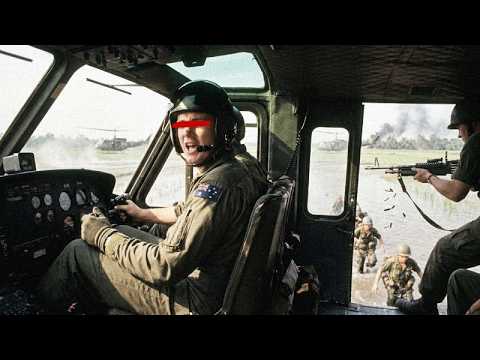
They came from the Fleet Air Arm, the navy’s aviation branch, from 723 Squadron at HMAS Albatross, the naval air station at Nowra on the south coast of New South Wales. Until then, their work had centered on ships and submarines. In eight weeks at Nowra, starting July 1967, anti-submarine training was set aside for a military trade: putting troops into a landing zone under fire, extracting them again, and staying alive on the ground if their aircraft went down.
On October 16, the first contingent arrived in Vietnam at Vung Tau, on the coast southeast of Saigon. With that, two questions would be put on the table. Who asked for these men, and why? And what did the Americans write about them in the records once it was over?
The request came from Washington in December 1966. The US government asked Australia for help amid a shortage of aircrew and men to keep aircraft flying. Australia’s response, as documented by the Department of Veterans’ Affairs, took into account the heavy losses the war was inflicting on American aircrews. On July 14, 1967, Defense Minister Allen Fairhall announced that eight navy helicopter pilots and their support staff would join a US Army helicopter unit. Eight pilots was a small contribution to a war of that size. The arrangement was the unusual part. The sailors would be attached to an American company, flying its aircraft in its formations under its commander.
The Americans had chosen a name before the sailors arrived. The arrangement was officially an experimental military unit. The 135th wanted those letters to spell the name of an Australian bird. All the company had heard about the emu was that it was big, fast, and aggressive. When the Americans discovered it couldn’t fly, they were disappointed. But they kept the name anyway. The company became known as “The Emus,” Americans and Australians alike, under the motto “Get the bloody job done.”
And so, the US Army named a helicopter company after a bird that cannot leave the ground, and sent it to war with partial leadership from sailors trained to hunt submarines.
On April 6, 1966, two American generals—Harold Johnson for the Army and John McConnell for the Air Force—signed an agreement that settled an old dispute between their services over who flew what. The Army handed over its Caribou and Buffalo transport aircraft to the Air Force, with the transfer to be complete by January 1, 1967. The Air Force gave up its claim to most Army helicopters. Until then, the 135th had been a Caribou company flying transport aircraft. According to its history kept by veterans, it was re-formed at Fort Hood, Texas, in February 1967 as a helicopter company. With two platoons of Hueys for troop transport and an armed platoon of gunships.
The aircraft were the easy part. Each Huey needed two pilots, and the Army was short of pilots. The Royal Australian Air Force wanted four helicopters of its own, flown and maintained by Australians to support the Australian task force directly in Phuoc Tuy province. According to Max Speedy, who flew with the RAN in 1968 and later wrote about his service in the Naval Historical Review, the Americans had already refused the same request from the Thais and the Filipinos and found no way to approve it for the Australians. Army and Air Force pilots were committed to other tasks in the war. Instead, the Navy Department offered to cover part of the American shortage, and the Americans agreed.
Dave Farthing, who later commanded the third RAN contingent, wrote that the sailors were initially supposed to join No. 9 Squadron of the RAAF, and that it was the US Army that asked for them to work in one of its companies. Eight RAN pilots did fly with No. 9 Squadron in 1968 and 1969. That is another story. Let us take both sides on the same units: flying hours and pilots.
According to Farthing’s account, every RAN pilot arrived with more than a thousand flying hours, while one US Army flight instructor attached to the 135th had only 125 hours. The larger number belongs to the Army itself. As Speedy explains, the US Army expected to have about 12,800 pilots by mid-1968 against a need for 21,500. That is a gap of roughly 8,500 men qualified to fly a helicopter in a war that depended on helicopters to move the Army’s infantry. Eight navy pilots a year were not going to fill that gap.
Those thousand hours had been spent the navy way—over water and from the decks of ships—and that was the sailors’ own gap. Putting a load of infantry into a hot landing zone was a skill they learned in eight weeks at Nowra. Then the flying hours piled up at a rate none of them had known at home. Within a few months, pilots averaged 120 to 130 hours a month—a full year of flying in Australia compressed into four weeks. At one point, the company had to cap a pilot’s flying at 140 hours a month and cut daily flying from nine hours to six.
Estimates from 1970 laid out the scale of risk clearly. A pilot carrying troops into an operation could expect to be shot at on every second mission. Speedy, writing about the 32 RAN pilots who served with the unit, says almost every one of them had his aircraft hit at least once. Major Paul Wrights, who commanded the company, said in 1969 that his executive officer, operations officer, and one of his platoon leaders were Australians. He said the arrangement worked well and gave his American soldiers an understanding of a different country and a different people.
The Australians filled positions in the company by rank and seniority, just like American officers, and each RAN contingent commander was appointed second-in-command of the whole company. The first was Lieutenant Commander Neil Ralph, who later became an admiral. Ralph spoke of the great respect the American side showed for Australian expertise and for the way the navy men maintained and operated their aircraft. The gunship platoon called itself “Taipan,” after a type of snake. The RAN kept its own chain of command back to the Australian headquarters in Saigon, and Farthing wrote that during 12 months in command he used it once.
The company history says it was initially considered a test unit, and that combat experience soon put an end to that label. It was declared operational on November 3, 1967, flying from Vung Tau. By the end of that month, the company had logged 3,182 flying hours. On November 19, a gunship flown by Lieutenant Tony Casadio became the first Emu aircraft to be shot down. The crew was rescued.
On the last day of the year, the company moved inland to Blackhorse, a base camp in Long Khanh province near Xuan Loc, about 55 km from Vung Tau. The site was more exposed than the coast, more primitive and dustier, making more work for the maintainers. January 6, 1968. Eight company helicopters returned to Blackhorse that day after being hit by ground fire, and all eight had to be ready by dawn. The men who did that work rarely appear in aviation stories. They were technical sailors from the RAN contingent and American crew chiefs and mechanics beside them, working through the night in the open on airframes that had been shot up hours earlier.
In that company, maintenance never stopped—around the clock and in all weather. Many of those sailors themselves climbed into helicopters during the day. There is a photograph from May 1969 of Airman Frank Eke, a mechanic by trade, with an M60 machine gun, taken while the flight was supporting the 7th South Vietnamese Division in the Delta. The unit citation awarded to the flight half a century later records that almost all support personnel regularly volunteered to fly as aircrew, as door gunners and crew chiefs, in addition to their original work.
The workday began at 4:30 a.m., and typically launched a command helicopter, four gunships, and ten transport helicopters for a combat assault, with everyone back before dark. Twelve hours in the air was not unusual. At the end of January, the Tet Offensive erupted across the country. Around Blackhorse, the fighting reached the barbed wire, and the road supplying the camp was mined.
On February 22, Lieutenant Commander Patrick Vickers was leading a troop lift of the 18th South Vietnamese Division near Xuan Loc. As his helicopter descended toward the landing zone, he was hit. His American co-pilot flew him straight to the hospital pad at Blackhorse. Vickers never regained consciousness. He was the first Fleet Air Arm man killed, and the first Australian pilot lost in the Vietnam War. He was mentioned in dispatches posthumously.
Max Speedy recorded the events of his own year. In 1968, he flew 1,250 combat hours, including 85 hours on night attacks. He also carried an 8mm camera, and his silent color films of the company, shot in the air and on the flight line in 1968 and ’69, are now held by the Australian War Memorial.
On August 21, a light fire team of gunships was flying from Blackhorse toward the Australian base at Nui Dat. A rocket hit the lead gunship and it fell into open ground. It was flown by Lieutenant Anthony Casadio, the pilot whose aircraft had been shot down and who was rescued in the company’s first month. Petty Officer O’Brien Phillips was manning the door gun. Two Americans were aboard, Staff Sergeant Herschel Pollock and Specialist William Fennell. All four were killed.
By then, the second RAN contingent was on its way. Squadron Commander Graham Rossheim brought the second contingent in that September and took over from Ralph as the company’s executive officer. In November, the company moved to Bearcat, Martin Cox Camp, in Bien Hoa province northeast of Saigon, a base shared with US aviation units and Royal Thai Army volunteer forces.
On January 3, 1969, the helicopter of Second Lieutenant Anthony Hugh Lean struck power lines in bad weather. With him were three Americans: Staff Sergeant William Childers and Specialists Ernest Dodson and Larry McPherson. None survived. Some pilots attracted fire more than others. Lieutenant Richard Marum’s aircraft was hit 11 times, once by a bullet that pierced the cockpit glass and his flight helmet. The company called him “Magnet.”
Noel Shipp was born in Brisbane on Christmas Eve 1944. He joined the Navy in January 1963, trained as an underwater control officer at HMAS Watson in Sydney, and served at sea in the ships Yarra, Gascoyne, and Anzac. In 1967, he volunteered for aircrew, and with the second contingent went to Vietnam as a door gunner in “Taipan,” the gunship platoon that provided covering fire around landing zones while the transport helicopters landed. In January 1969 at Bearcat, an American officer, Lieutenant Colonel Wallace Baker, presented him with the US Air Medal with “V” device for valor. That medal was the only American award Australian rules allowed navy men to accept.
On May 31, 1969, the Taipans were covering the withdrawal of South Vietnamese forces of the 7th Division from a pickup zone in Dinh Tuong province in the Delta. The gunship made its run toward the enemy position, and he leaned out of the aircraft so he could direct his weapon at the target. He was seen firing at enemy positions throughout the mission and until the moment the helicopter hit the ground. The other three aboard were Americans: Captain Dennis Phillips, Staff Sergeant Stephen Martin, and Specialist Byron Bowden. None of the four returned. Another man from the company, Dave Farmer, was listed for that flight. But a problem with his teeth kept him on the ground.
A year later, in May 1970, US and South Vietnamese forces crossed the border into Cambodia. For the operation that began on May 3, the Delta aviation group launched 60 Hueys and 38 gunships with Chinooks and aerial cranes behind them, and the 135th was part of it. Its Australian members did not take part. A government agreement barred RAN aircrew from participating in that operation. The company history for that month records the event in one sentence. Australian aircrew were unable to participate, and it had a negative effect on the company’s efficiency.
On May 18, two weeks after that operation began, Perry took command at Binh Dai. His Huey was hit on the first landing and was repaired in the landing zone under fire just enough to fly. On a later mission, a bullet pierced the windshield, and he later recalled that blood was covering his face. Fragments from the pedals scattered and lodged in his right foot. The cockpit lights and instruments failed, and he flew the rest of the night without any gauges to read in front of him. The flights kept coming in until the troops were landed. The helicopter he flew that night never flew again.
The Navy commended him in its official reports. South Vietnam awarded him the Cross of Gallantry. The Americans recommended him for the Silver Star. Here is the company record for 1968 beside the record for 1970. In 1968, flying mainly from Blackhorse, the company flew almost 100,000 sorties and about 34,000 flying hours, moved 193,000 people and 1,500 tons of cargo, and had 115 aircraft damaged by enemy fire. In 1970, mostly over the Delta, it flew 83,132 sorties, moved 219,000 troops and 724 tons of supplies, and had 264 aircraft hit. Eight were destroyed. Nine men of the company were killed that year.
In the second half of 1970, the company moved to the Delta itself at Dong Tam in Dinh Tuong province, flying in support of the 7th Division and the 9th and 21st Regiments of the South Vietnamese Army. The fourth and last RAN contingent arrived with Squadron Commander Winston James, who succeeded Farthing as executive officer in September. On November 3, a mortar attack on Dong Tam wounded five men of the company. Two months later, on January 7, 1971, the company commander, Major Fred Danaway, wrote the opening of the company history for that year. He wrote that the 135th was probably the most unusual Army aviation unit in Vietnam and perhaps in the world. And that the Emu units were considered one of the most professional and dedicated helicopter units supporting South Vietnamese forces in the Delta. He signed it as a major of field artillery and commander of the unit.
The company’s last casualties in Vietnam occurred on April 4, 1971, when an American aircraft crashed with all aboard after a rotor mast failure. The RAN flight flew its last mission on June 8, and the last contingent left Vietnam on June 16. Across four contingents, more than 200 navy men served with the company. Five of them did not return home, and 22 were wounded in action, and no naval unit in the war had a higher casualty rate. Their awards included three British Empire Medals, eight Distinguished Service Crosses, five Distinguished Flying Crosses, a Member of the Order of the British Empire, 24 mentions in dispatches, and 34 naval board commendations, alongside Vietnamese and American decorations.
On December 22, 1972, 723 Squadron at Nowra was awarded the Vietnam Battle Honour for 1967 to 1971. Some of these numbers change depending on who is counting. Both the Navy’s Sea Power Centre and the Department of Veterans’ Affairs say more than 200 navy men served with the flight. Another Navy historical page suggests the number is closer to 200. Speedy estimates the company’s losses from 1967 to 1971 at 35 men, while the memorial to them in Alabama carries 37 names. Perry’s night has two versions as well. Australian accounts credit him with three more landings after he was wounded, while the American citation says he returned to the same landing zone twice more. The story of the instructor with 125 hours rests on Farthing’s book alone.
And the question with which this story began needs one correction. Washington asked Canberra for pilots and maintenance workers, not for the Navy. Canberra provided sailors because its army and air force pilots were busy, and the air force’s helicopter plan had been rejected. What the US Army decided was what it would do with them once they arrived.
Australian rules on foreign awards were strict. RAN men on the flight were not allowed to accept American decorations, except the Air Medal, though some received them unofficially and wore them. The Silver Star awarded to Perry ran straight into that rule. According to the account of the Australian Fleet Air Arm Association, a planned presentation ceremony in mid-1970 was cancelled because Australian personnel could not accept foreign awards. In 1985, Defense Minister Kim Beazley denied that the medal had ever been awarded. The same account says it was hung on his chest in April 1995 in Townsville aboard the US flagship Blue Ridge by the commander of the US Seventh Fleet, Vice Admiral Archie Clemins. In March 2006, Perry returned to 723 Squadron at Nowra, the squadron the first contingent came from, and presented them with his photograph to hang there.
Noel Shipp was later recommended for the Victoria Cross posthumously. The tribunal that reviewed the air service record did not approve it, and in September 2012 the Navy named one of its recruit school divisions after him. Recognition for the air flight as a whole came last. In October 2017, the Defence Honours and Awards Appeals Tribunal considered its case. On June 1, 2018, the Governor-General, Sir Peter Cosgrove, approved the award of a Unit Citation for Gallantry to the Royal Australian Navy Helicopter Flight in Vietnam for its service from October 1967 to June 1971. The citation was presented at the Australian War Memorial. It records exceptional courage in combat operations. It records that the flight’s aircrew flew on average 50 percent more operational hours per month than other Australian aircrews in similar roles, and that its men saw the most bitter fighting of any Royal Australian Navy personnel in the war.
Bomaderry sits across the river from Nowra, where the first contingent completed its eight weeks of training. In April 2002, veterans of the flight dedicated a memorial there. Three years later, on May 27, 2005, another memorial was dedicated at the US Army Aviation Museum at Fort Rucker, Alabama, the home of US Army aviation, to the men of the 135th Assault Helicopter Company who did not return between 1967 and 1971. It bears 32 American names. And it bears five Australian names: Vickers, Casadio, Phillips, Lean, and Shipp.
The story of “the night was dark” has another version, an American one. Headquarters, US Military Assistance Command Vietnam, General Orders Number 905. The order records that a second lieutenant of the Royal Australian Navy, flying as a Huey helicopter pilot, volunteered to assist a unit engaged in night combat assaults after several of its aircraft were out of service. He led the flight, carrying Vietnamese troops into a landing zone under intense fire. His aircraft was hit repeatedly. When the second aircraft in the formation was disabled, he continued to lead and returned to the same landing zone twice more. The order is dated February 28, 1973. The last sailors of the RAN flight had returned home 20 months earlier. A month later, on March 29, the command that issued it was closed down.
That is the record: a unit citation approved 47 years late, a Silver Star hung on a chest in Townsville after a minister had denied it existed, and an American general order signed in the final weeks of a command about to be dissolved. The paperwork outlived the war, but it never quite caught up with the men.
Five Australian names sit on a wall in Alabama beside 32 American ones. The Emus flew, fought, and died under a bird that cannot leave the ground—and then flew home to a country that took decades to say so officially.
So here is the question the records leave open: when a nation borrows its neighbors’ sons and returns most of them, who owes the debt—the country that asked, or the one that sent them? What do you think the five names on that wall would say?
Report this article
Select a reason for reporting:






