The moon hung full and unforgiving over the Hindu Kush, casting long shadows that betrayed every move. Four Navy SEALs crouched on a barren ridge, 10,000 feet above sea level, their hearts pounding against the cold, thin air. They had inserted under cover of darkness, but now the landscape offered nowhere to hide. “What I couldn’t see was a place to hide,” Marcus Luttrell would later recall. “It was obviously bad and barren way up there.” They were hunting a man named Ahmad Shah, a Taliban commander whose Mountain Tigers had been wreaking havoc in Kunar Province. But from the moment the MH-47 Chinook thundered away, leaving them alone in the wilderness, Luttrell had a sinking feeling. It would prove devastatingly accurate.
Just hours into the mission, three goat herders stumbled upon their position. The SEALs faced an impossible choice: kill unarmed civilians or let them go, knowing they might alert the enemy. Rules of engagement forbade the former. Lieutenant Michael Murphy tried to radio for guidance but couldn’t get through. With no orders, he made the call: release the herders. It was a decision that would haunt them all. Within an hour, the mountainside erupted in gunfire as dozens of Shah’s fighters swarmed from three sides, armed with heavy machine guns, RPGs, and mortars. The SEALs were outnumbered and outgunned, but they fought with a ferocity that would become legend.
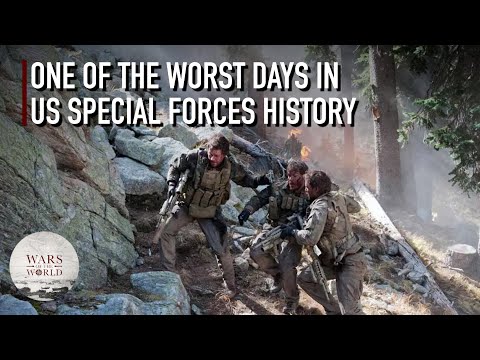
Bullets tore through the air, kicking up dust and rock. Luttrell watched in horror as his comrades fell, one by one. Murphy, knowing their only hope was to call for help, moved into the open—directly into the line of fire. He managed to reach Bagram Air Base, calmly reporting their position before a bullet slammed into his back. He kept talking. Another round hit his torso. Still, he stayed on the line until his message was through. “Roger that, sir. Thank you,” Luttrell heard him say, just before Murphy was hit again. The lieutenant’s sacrifice would later earn him the Medal of Honor, but in that moment, all Luttrell could do was watch his commander die.
The battle raged for over two hours. When it was over, 35 of Shah’s men lay dead, but so did Murphy, Axelson, and Dietz. Luttrell, wounded and thrown by a rocket blast, crawled away into the darkness. He was the only one left.
For hours, he dragged himself through the rugged terrain, his body broken, his throat parched. He sucked on leaves for moisture, his legs shredded by shrapnel. Finally, he found a waterfall—and salvation. A group of Pashtun villagers discovered him, and instead of turning him over to the Taliban, they took him in. For three days, they hid him, fed him, and protected him from the very fighters who were searching for him. It was an act of courage that defied the odds—and it would lead to his eventual rescue.
But the story of Operation Red Wings was far from over. The loss of 19 men—including the 16 aboard the Chinook sent to rescue Luttrell—sent shockwaves through the US military. It was the deadliest day for Navy SEALs since World War II. Yet from the ashes of that tragedy, a legend was born. Marcus Luttrell’s survival, and the heroism of his teammates, would become a symbol of resilience and brotherhood. But the man who ordered the attack, Ahmad Shah, was still out there. And the US was not about to let him get away.
The mountain had fallen silent, but the war was just beginning. Back at Bagram Air Base, the weight of the loss hung heavy in the operations center. Nineteen men were dead—the largest single-day loss for Naval Special Warfare since World War II. Commanders stared at maps and radios, trying to piece together what had gone so wrong. The intelligence had been thin. The terrain had been brutal. And the rules of engagement had tied their hands at the worst possible moment.
Yet even as the grief settled in, there was a flicker of hope. A Pashtun villager had carried a note to a Marine outpost: an American was alive, hidden in the village of Sabray. The message was terse, scrawled in shaky handwriting, but it was enough. Marcus Luttrell was still breathing.
This time, there would be no half-measures. A massive rescue operation was launched, involving combat aircraft, drones, and heavily armed quick reaction forces. Apaches and AC-130 gunships pounded known insurgent positions, keeping Shah’s men pinned down while a rescue team swooped in. On July 2, 2005, Luttrell was finally extracted, bruised and broken but alive. The lone survivor had come home.
For Ahmad Shah, the battle on that ridge had been a triumph—a rare victory against the American infidels. He wasted no time in boasting, broadcasting his success to anyone who would listen. But his celebration was short-lived. The US military was not about to let the man who killed nineteen SEALs slip away. Within weeks, a new operation was hatched: Operation Whalers.
Unlike Red Wings, Whalers was a full-scale offensive. Marines and Afghan forces swept through Kunar Province, dismantling Shah’s network piece by piece. Air strikes and ground raids targeted his safe houses, his weapons caches, and his fighters. The Mountain Tigers were scattered, their supply lines cut, their leaders captured or killed. Shah himself managed to slip across the border into Pakistan, but his organization was in ruins.
For three years, Shah remained a ghost, moving between hideouts in the tribal areas of Pakistan. He was a wanted man, but the trail had gone cold. Then, in April 2008, fate caught up with him. Pakistani police stopped him at a security checkpoint in Khyber Pakhtunkhwa after he had kidnapped a local trader. When officers tried to search his vehicle, Shah opened fire. The shootout was brief and brutal. When it was over, Ahmad Shah lay dead in the dirt—not killed by American bombs or SEAL snipers, but by a routine police stop gone wrong.
The news trickled back to the US. For the families of the fallen, it was a measure of closure, though it could never undo the loss. Lieutenant Michael Murphy was posthumously awarded the Medal of Honor for his selfless act of courage. Petty Officer Matthew Axelson and Gunner’s Mate Second Class Danny Dietz Jr. received the Navy Cross, as did Luttrell himself. Their names were etched into the walls of the Naval Special Warfare Command, and in 2011, the Navy christened a new destroyer—the USS Michael Murphy—in honor of the man who gave his life so his brothers might live.
But the story of Operation Red Wings would not stay buried. In the years that followed, it became the subject of books, documentaries, and a major motion picture. Luttrell wrote a bestselling memoir, Lone Survivor, which brought the harrowing tale to millions. Yet controversy lingered. Some questioned the details of the battle, the number of enemy fighters, and the decisions made on that ridge. But one thing was certain: four men had stood their ground against impossible odds, and one had lived to tell the tale.
The legacy of Red Wings extended beyond the battlefield. It prompted a hard look at the rules of engagement that had forced Murphy’s hand, and it led to changes in how special operations teams were deployed in Afghanistan. The loss of Turbine 33 also underscored the risks of low-altitude rescue missions in hostile territory. Every future operation carried the lessons of that day.
For Luttrell, the wounds never fully healed—neither the physical ones nor the memories of his fallen brothers. He left the Navy in 2007, but he never stopped honoring their sacrifice. He founded the Lone Survivor Foundation, a nonprofit dedicated to helping wounded veterans and their families. In interviews, he spoke of Murphy, Axelson, and Dietz with a reverence that bordered on reverence. They were not just comrades; they were family.
And yet, the mountains of Kunar Province remained a place of shadows. The Taliban and their allies would regroup, and the war in Afghanistan would grind on for another decade. But for the men who fought on that ridge, the battle was personal. It was a story of courage, of impossible choices, and of a brotherhood that transcended death.
The controversy that swirled around Lone Survivor was perhaps inevitable. Luttrell’s account claimed that the SEALs had faced as many as 140 fighters on that ridge, a figure that some military analysts and fellow veterans quietly disputed. Others questioned whether the goat herders had truly been civilians or Taliban scouts sent to test the team’s position. Even the rules of engagement came under scrutiny—why had four men been sent into a known hostile valley without a larger quick reaction force on standby? The answers were never fully satisfying.
What was not disputed was the raw courage on display. Murphy’s decision to expose himself to enemy fire in order to transmit the distress call became a case study at the Naval Academy. His final words—”Roger that, sir. Thank you”—were repeated at memorial services across the country. For the families of the fallen, the debate over numbers and tactics felt like a distraction from the simple truth: their sons and husbands had died trying to save each other.
Luttrell himself grew weary of the second-guessing. In interviews, he was blunt. “Unless you were there, on that mountain, with the bullets flying, you don’t get an opinion,” he said more than once. He reserved his deepest gratitude for the Pashtun villagers of Sabray, particularly a man named Mohammad Gulab, who had sheltered him at enormous personal risk. Gulab’s defiance of the Taliban—hiding an American while armed fighters searched the village—became a symbol of a different kind of courage, one that had nothing to do with medals or citations.
Gulab’s story, however, took a dark turn in the years that followed. He was forced to flee Afghanistan after the Taliban threatened his life, eventually resettling in the United States with Luttrell’s help. But the two men later became estranged, with Gulab claiming that Luttrell had failed to adequately repay the debt owed to him. The falling-out was painful and public, a sad epilogue to a tale of unlikely salvation. Luttrell maintained that he had done everything in his power to help, but the bond forged on that mountainside had frayed under the weight of fame and expectation.
Meanwhile, the tactical lessons of Red Wings rippled through the special operations community. The loss of Turbine 33—sixteen men dead in a single RPG strike—forced a hard review of extraction protocols. Chinooks would no longer approach landing zones without dedicated gunship cover already on station. Communications gear was upgraded so that teams in deep valleys could reach higher headquarters without exposing themselves to fire. And the practice of sending small reconnaissance elements deep into insurgent territory without reliable, real-time intelligence was curtailed, at least for a time.
Yet the war ground on. Kunar Province remained a sanctuary for fighters crossing from Pakistan, and the border itself—a rugged, porous line drawn by colonial mapmakers a century earlier—defied every attempt to seal it. Shah’s death in 2008 had removed one commander, but others rose to take his place. The Mountain Tigers fragmented into smaller cells, some aligning with the Taliban, others with al-Qaeda, and still others simply preying on local villagers. The chaos that Shah had exploited did not disappear with him.
For the men who had served alongside Murphy, Axelson, and Dietz, the passage of time brought a strange mixture of grief and gratitude. Reunions were held on the anniversary of the battle. Toasts were raised with quiet solemnity, and stories were told—not of the firefight itself, but of the men as they had been in life. Murphy’s dry humor. Axelson’s uncanny marksmanship. Dietz’s relentless optimism. These memories, more than any medal or monument, kept their spirits alive.
And on a windswept ridge high in the Hindu Kush, where the rock was still scarred by shrapnel and the ground still littered with spent casings, the wind howled through the passes as it always had. Four men had climbed up there in the dark, and only one had come down. The mountain remembered, even if the world moved on.
Years later, Luttrell returned to Afghanistan—not as a SEAL, but as a civilian. He walked the same streets, met some of the same villagers, and stood once more beneath the unforgiving peaks of the Hindu Kush. “I wanted to see the place where my brothers died,” he said quietly. “And I wanted to say thank you to the people who saved me.” The mountain had not changed. It remained as brutal and beautiful as ever.
He visited Mohammad Gulab’s old house, now empty. The walls still bore the marks of that desperate week. Luttrell stood in silence for a long time, then turned and walked away. Some debts, he knew, could never be fully repaid.
Back home in Texas, he kept a simple wooden box on his mantel. Inside were three items: Murphy’s dog tags, a spent casing from Axelson’s rifle, and a scrap of paper with Dietz’s handwriting. Every morning, he touched the box and whispered their names. It was his private ritual—a promise that they would never be forgotten.
What do you think—was Murphy’s decision to release the goat herders the right call, or should the SEALs have prioritized their own survival? Share your thoughts below.
Report this article
Select a reason for reporting:






