For over sixty years, the world has been fed a lie about the greatest military brotherhood in history. Two legendary special forces—the British SAS and the Australian SASR—fought side by side in the hell of Afghanistan. But what really happened in those blood-soaked mountains sparked a silent, ruthless war. A war of inflated egos, stolen glory, and a devastating betrayal that would leave generals panicked and politicians scrambling to bury the truth.
Why did high-ranking officers in London desperately burn classified files? What dark secret did the British masters try to hide while their Australian students were left to take the ultimate hit? This is not the sanitized history they show you on the evening news. This is the story of a massive government cover-up and the explosive truth about who really did the dirty work in the deadliest valleys of the Afghan War.
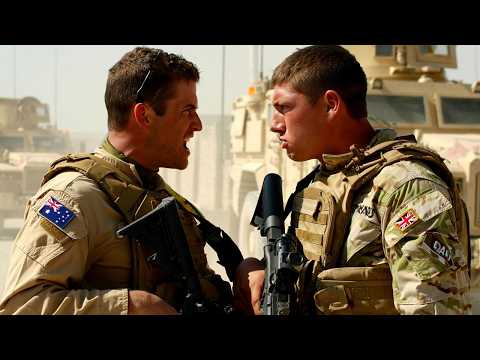
The official reports were destroyed, but the truth always bleeds through. Deep within the suffocating dust and treacherous mountain passes of the Afghan wilderness, a different kind of conflict was boiling beneath the surface of official coalition reports. You have always been told that allied forces stood shoulder to shoulder. But the classified reality paints a disturbing picture of jealousy, arrogance, and institutional betrayal.
We are pulling back the curtain on the most fiercely guarded secret of the Afghan campaign: the silent, bitter rivalry between the legendary British 22nd Special Air Service and the formidable Australian Special Air Service Regiment. The toxic seeds of this scandal were not planted in the unforgiving valleys of Kandahar. They trace their dark roots back to a humiliating ceremony in 1957.
On a sun-baked parade ground in Swanbourne, Western Australia, a condescending British officer stood before a line of hardened Australian soldiers. He presented the newly formed unit with a traditional combat dagger, but his exact words carried a razor-sharp insult. He loudly declared that the British establishment was giving the Australians “our dagger,” denying them any sense of equal partnership and cementing their status as a mere colonial imitation.
That tiny, arrogant word established a toxic hierarchy of teacher and student, donor and recipient, original and copy—a hierarchy the British military elite intended to maintain forever. The Australian SASR was initially designed as an exact clone of the British 22nd Regiment, adopting the same initials, squadron structures, and the famous motto “Who Dares Wins.” Australian commanders were sent to Hereford, the sacred epicenter of British special operations, to absorb the methodology of their supposed superiors.
For decades, veteran British instructors swaggered through Australian training facilities, passing down their doctrines while quietly reinforcing that elusive sense of imperial superiority. The British elite reveled in their prestigious global brand, an untouchable reputation built in the jungles of Malaya and sealed by the televised operations of 1981. They never predicted that the humble Australian copy would one day preserve the sacred original traditions far better than the arrogant British masters could manage themselves.
But this humiliating psychological hierarchy was merely the prelude to a far more shocking confrontation that would unfold in the harsh deserts of the Middle East.
When the tragedies of September 11th, 2001 fractured the geopolitical landscape, the Australian government wasted no time pledging unwavering support to its allies. This was no simple diplomatic gesture. It was a hard commitment that immediately activated the most lethal assets in the Australian military arsenal. By late 2001 and early 2002, both the British and Australian special forces found themselves thrown into the chaotic environment of southern Afghanistan under a unified coalition umbrella known as Task Force K-Bar.
Operating directly under American Rear Admiral Robert Harward, these highly trained units were forced to perform side by side in the most demanding combat theater on the planet. The Australian operators were dispatched into the terrifyingly hostile provinces of Kandahar, Zabul, and Paktia—regions American intelligence had explicitly designated as the most concentrated strongholds of enemy resistance. The operational results delivered by the silent Australians were so overwhelmingly exceptional that veteran American commanders openly expressed profound astonishment.
Rear Admiral Harward himself publicly declared that the Australian forces had demonstrated a level of professionalism that redefined the highest standards of modern coalition warfare. Yet the true shattering of this fragile alliance was only just beginning to unfold in the classified corridors of military power. The British commanders watched the skyrocketing reputation of their former students with thinly veiled frustration, quietly making their own calculated deductions about the future of the Afghan campaign.
The definitive turning point arrived in 2006 when coalition forces finalized the territorial division of Afghanistan, handing each nation a distinct geographical canvas to paint its military legacy. The globally famous British 22nd Regiment was awarded exclusive operational control over Helmand Province, while the Australian Regiment was deliberately assigned to the impossibly remote territory of Uruzgan. On official paper, this division appeared logical and diplomatically neutral. But any seasoned analyst could see that neutrality was nothing more than a carefully manufactured illusion.
Helmand rapidly devolved into the most violently contested and highly publicized battlefield in southern Afghanistan, swiftly earning a terrifying moniker among the hungry British tabloids. The British military public relations machine capitalized on the intense conflict, transforming their deployment into a spectacular media circus flooded with embedded journalists, dramatic primetime documentaries, and best-selling heroic memoirs. The entire narrative was aggressively manufactured to convince the global audience that the courageous British forces were single-handedly fighting the only conflict that actually mattered.
However, while the British establishment soaked up the bright media spotlight, a profoundly different reality was unfolding in the absolute silence of Oruzgan.
The remote province of Oruzgan was a geographical nightmare situated deep in the central highlands of Afghanistan, where the brutal terrain itself participated as a formidable adversary in every single engagement. The jagged mountain peaks soared to dizzying heights of over 3,000 meters above sea level, harboring narrow, easily ambushed valleys and isolated villages completely cut off from the modern world. The complex tribal loyalties in this desolate region shifted constantly like the unpredictable desert sand, entirely dependent on whichever heavily armed patrol had most recently marched through their territory.
The Oruzgan operational zone was fundamentally just as dangerous as the highly publicized battlefields of Helmand, but its unique danger was entirely invisible, utterly treacherous, and ruthlessly methodical in its execution. The most glaring difference between the two operational zones was the absolute media blackout strictly enforced by the intensely private Australian commanders. They explicitly prohibited any ambitious journalists or news crews from entering their classified airspace, ensuring that their daily struggles remained entirely hidden from the demanding public eye. This silent suffering in the shadows was actively preparing the ground for an unprecedented institutional earthquake.
The Australian military leadership had fully embraced a highly controversial operational philosophy that was quietly categorized in classified headquarters documents as “long-range reconnaissance patrols with an absolute minimal environmental footprint.” In the brutal freezing reality of the Afghan mountains, this doctrine meant repeatedly plunging tiny, completely isolated teams of merely four to eight heavily equipped operators into the most hostile mountain ranges imaginable.
These exhausting deployments were not brief tactical missions. These resilient men were expected to survive and operate at peak efficiency for agonizing uninterrupted durations of up to thirty-five consecutive days. These exhausted but mentally unbreakable phantoms operated entirely without the comforting safety net of constant close air support, and they were completely denied the luxury of regular logistical supply convoys.
They maintained an excruciating and absolute regime of strict radio silence, purposely cutting themselves off from the outside world, and only daring to break their transmission protocols in the absolute most catastrophic operational emergencies. Their primary overwhelming objective was the meticulous and unseen gathering of incredibly high-value intelligence, strictly avoiding unnecessary provocations or the flashy headline-grabbing firefights that their British counterparts seemed to continually chase.
Spending thirty-five agonizing days freezing in the harsh Afghan peaks without leaking a single dramatic photograph to the international press was not just a tactical choice. It was a profound institutional philosophy that defined their entire existence. This relentless dedication to unseen intelligence gathering actually mirrored the precise historical methodology that the elite British forces had originally utilized during their highly successful campaigns in the 1950s.
The supreme and bitter irony of this entire historical situation was that the underestimated Australians were flawlessly preserving the sacred principles of long-term presence and minimal visibility. They maintained this extraordinary operational discipline precisely at the exact historical moment when the arrogant British establishment was completely abandoning its own rich heritage in desperate pursuit of quick, highly publicized tactical victories. The brilliant students had silently and meticulously surpassed their legendary teachers, operating effectively in the shadows of the Hindu Kush while the originators of the doctrine lost themselves in the blinding flash of the media cameras.
This breathtaking philosophy of complete and absolute invisibility did not just magically appear out of thin air in the dusty chaotic command tents of the Middle East. It was deeply rooted in the exact same legendary tactical doctrines that the arrogant British establishment had originally forged during the brutal suffocating Malayan campaign of the 1950s. The legendary Sir John Slim had formulated a brilliant operational concept in those sweltering hostile jungles demanding long-term presence, absolutely minimal environmental footprint, and maximum intelligence extraction.
These were the highly sacred foundational principles of stealth that the mighty British instructors had pompously handed down to the eager Australian recruits back in the late 1950s. It was a methodology built on extreme patience and flawless discipline, designed to turn ordinary soldiers into terrifying unseen phantoms of the battlefield.
But in a twist of absolutely staggering historical irony, the famous British 22nd Regiment systematically abandoned every single one of these legendary principles for the sake of cheap explosive theatrics. By the time the calendar hit the critical years between 2006 and 2008, the London High Command had radically and inexplicably evolved its entire military doctrine. They completely surrendered their unique intellectual heritage to blindly chase the loud, highly destructive American model of high-tempo joint special operations.
They willingly traded the noble intellectual art of silent reconnaissance for the blinding flash of explosive night raids and the endless exhausting pursuit of high-value targets. But this shocking betrayal of their own sacred traditions was merely the first devastating blow in a catastrophic institutional downfall that would humiliate the British elite forever.
The British operators in Afghanistan rapidly transformed into adrenaline-fueled tactical machines conducting incredibly intense operations solely focused on the immediate neutralization or capture of local insurgents. Their nightly operational tempo became absolutely frantic, sometimes executing multiple aggressive raids in a single chaotic night while frantically chasing targets continuously updated by remote intelligence analysts. It was a dizzying cinematic spectacle of roaring helicopters, blinding speed, overwhelming firepower, and maximum visible effect designed specifically for the glowing screens of coalition command centers.
The legendary masters of stealth had willingly mutated into a blunt, noisy instrument of destruction, completely losing their elusive historical identity in a massive cloud of desert dust. The incredible speed of these aggressive night missions looked absolutely fantastic in polished governmental reports, but they completely lacked the deep strategic value that truly wins modern conflicts. While the British command was busy treating the complex Afghan conflict like a spectacular Hollywood action movie, the Australians were watching this chaotic circus with absolute icy disbelief.
The underestimated Australian operators had just spent an agonizing thirty-five days completely submerged in the freezing, unforgiving mountains without firing a single weapon or making a single unnecessary sound. They operated as terrifying, invisible phantoms in the harshest terrain on the planet, enduring unbelievable physical and mental exhaustion just to bring back the most precious intelligence packages the coalition had ever seen. Their silent, methodical, and incredibly dangerous dedication allowed the bewildered American commanders to completely redraw the entire strategic map of the treacherous Uruzgan province.
Yet the true, terrifying scale of this massive professional embarrassment was still slowly creeping up on the unsuspecting generals sitting in their comfortable, air-conditioned London offices.
The highest-ranking American generals, who typically reserved their praise for their own elite troops, were absolutely floored by the flawless perfection of the Australian intelligence networks. They quickly realized these quiet operators were executing the pure essence of special operations far better than any other allied nation. In the ego-driven environment of the coalition, this undeniable Australian supremacy was a humiliating slap in the face to the proud British commanders.
By 2014, the cold statistics leaked from classified archives and screamed a truth no politician could spin. The tiny Australian contingent had executed over 3,000 complex combat sorties, placing them second only to the colossal American military machine. Great Britain, with its massive budgets and centuries of imperial dominance, was left completely overshadowed by the very unit they had once treated with condescending amusement.
But behind those celebrated numbers hid a far darker reality. The 2020 Brereton Report exposed 25 horrifying incidents, leading to the disbanding of decorated squadrons and an unprecedented public apology. Australia chose the agonizing path of accountability. Britain, meanwhile, quietly burned its files and buried the ashes.
The students had proven infinitely more honorable than their hypocritical masters. The dagger gifted in 1957 finally rested in the hands of far better men.
So tell us—when the cameras fade and the truth bleeds through, who truly deserves to carry the legacy of the elite? Let us know in the comments below.
Report this article
Select a reason for reporting:






