In the shadowed alleys of Zarqa, Jordan, a young man named Ahmed Fadil Nazal al-Khalayleh—later known to the world as Abu Musab al-Zarqawi—was forging a path that would ignite a firestorm of terror across the Middle East. Born into poverty in 1966, his early years were marked by gang fights, heavy drinking, and petty crime, but beneath the surface lurked a simmering extremism that would soon consume him.
Zarqawi’s transformation began in the crucible of Jordanian prisons, where instead of repenting, he manipulated the Quran to recruit fellow inmates for his twisted vision of jihad. “He was a dictator with a plan,” recalled Lt. Gen. Mike Flynn. “His plan was to kill as many people that did not see life the way he saw it.” Released in 1999, Zarqawi wasted no time—he fled to Afghanistan, where a fateful meeting with Osama bin Laden ended in mutual disdain, setting the stage for a rivalry that would reshape global terrorism.
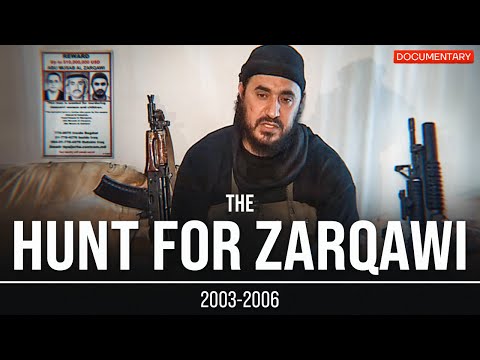
While bin Laden focused on the West, Zarqawi’s obsession was closer to home: a sectarian war between Sunni and Shia Muslims. “What he was trying to do was create a civil war,” noted Gen. Stanley McChrystal. Zarqawi’s group, Jama’at al-Tawhid wal-Jihad, unleashed a wave of suicide bombings and beheadings, culminating in the horrific 2004 murder of American contractor Nicholas Berg—a video that shocked the world and cemented Zarqawi’s reputation as the “Sheikh of the Slaughterers.”
But Zarqawi’s brutality was not mindless; it was strategic. By targeting Shia civilians, he sought to provoke retaliation and ignite a sectarian conflict that would destabilize Iraq and pave the way for an Islamic state. His tactics caught the attention of bin Laden, and in 2004, Zarqawi pledged allegiance to al-Qaeda, rebranding his group as al-Qaeda in Iraq. “He created a movement,” McChrystal admitted. “Something bigger than a small terrorist organization.”
The US-led coalition, already bogged down in Iraq, quickly recognized Zarqawi as a growing threat. Yet early attempts to capture or kill him were plagued by incompetence—his laptop mysteriously vanished, and he was reportedly captured and released by US troops who failed to recognize him. All the while, Zarqawi’s influence spread, his propaganda videos recruiting disillusioned youth and his network expanding across Iraq’s lawless regions.
By 2006, Zarqawi had become the most wanted man in Iraq, but his luck was running out. A series of raids, including Operation Larchwood 4, yielded a treasure trove of intelligence, and Task Force 145 closed in. On June 7, 2006, an F-16 strike obliterated a safe house near Baquba, killing Zarqawi and five associates. “Al-Zarqawi’s death is a significant blow to al-Qaeda,” declared Gen. George Casey. But even in death, Zarqawi’s legacy would endure—his brutal tactics and sectarian vision would later be adopted by ISIS, ensuring that the fire he ignited would continue to burn.
Yet the story of Zarqawi does not end with his death—it merely entered a new, more dangerous chapter. In the vacuum left by his elimination, his followers and former lieutenants would carry forward his darkest ambitions, refining them into an ideology that would soon eclipse even al-Qaeda’s notoriety. The group he founded, al-Qaeda in Iraq, would morph and mutate, eventually giving rise to the Islamic State—a name that would come to define a new era of global terror.
Within months of Zarqawi’s death, his successor, Abu Hamza al-Muhajir, vowed to continue the fight. “The blood of our Sheikh will not be spilled in vain,” he declared in an audio message, promising a wave of attacks that would dwarf those carried out under Zarqawi’s leadership. True to his word, the group escalated its campaign, targeting not only Shia civilians but also Sunni tribes that dared to oppose them, and even foreign embassies and aid workers.
The sectarian violence that Zarqawi had so carefully stoked exploded into a full-blown civil war by 2006-2007, with tens of thousands of Iraqis killed in the crossfire. “He was the spark that lit the fuse,” observed a former CIA analyst. “Without Zarqawi, there would have been no ISIS.” The US troop surge of 2007, combined with the Sunni Awakening movement, temporarily quelled the insurgency, but the underlying tensions remained—and Zarqawi’s ideology had taken root.
By 2011, as American forces withdrew from Iraq, the group—now rebranded as the Islamic State of Iraq—saw an opportunity to rise again. Exploiting the chaos of the Syrian civil war, its fighters crossed the border and established a stronghold in Raqqa, from which they would launch a blitzkrieg across the region. In 2014, the world watched in horror as ISIS swept through northern Iraq, capturing Mosul and declaring a caliphate. “The Islamic State is the child of Zarqawi,” declared Abu Bakr al-Baghdadi, the group’s new leader, in a rare public appearance. “We are following his path.”
The beheadings that Zarqawi had pioneered became a grim staple of ISIS propaganda, with victims ranging from Western journalists to aid workers to captured soldiers. Jihadi John, the masked executioner with a British accent, became the face of this new wave of terror, his knife flashing on screens worldwide. But unlike Zarqawi, ISIS had mastered social media, using platforms like Twitter and Telegram to recruit thousands of foreign fighters from Europe, North America, and beyond.
Yet even as ISIS grew, Zarqawi’s legacy remained contested. Some within the jihadist movement criticized his extreme sectarianism, arguing that it alienated potential allies. Others, however, saw him as a visionary who understood that only through bloodshed could the ummah be united. “Zarqawi was a strategic genius,” insisted one ISIS ideologue in an online tract. “He knew that the Shia were the internal enemy, and that the West would only be defeated after the apostates were crushed.”
As the caliphate crumbled under a relentless international bombing campaign, Zarqawi’s ghost seemed to fade once more. But his ideas proved resilient—sleeper cells and lone wolves, inspired by his example, continued to strike from Manchester to Manila. The fight against extremism, it seemed, would not be won by killing one man or even destroying one organization; it required addressing the grievances and ideologies that gave them life.
The question of how to counter Zarqawi’s ideological heirs became a battleground in itself. Military officials and intelligence analysts who had studied his methods argued that the coalition had made a critical error by treating him as a conventional enemy rather than a viral idea. “You can bomb a safe house, but you can’t bomb a narrative,” one senior counterterrorism official warned in a classified briefing later leaked to the press. “Zarqawi understood that better than we did.”
Indeed, his propaganda machine had been remarkably sophisticated for its time. Videos were edited with cinematic flair, distributed through encrypted channels, and designed to provoke outrage, recruitment, and fear in equal measure. His successors at ISIS would perfect this dark art, but the blueprint was unmistakably Zarqawi’s. Analysts would later describe his media strategy as a form of psychological warfare that weaponized the very freedoms of the open internet.
Beyond the battlefield, Zarqawi’s personal life remained a tangle of contradictions. His first wife, Om Muhammad, had pleaded with him to abandon his militant path, but he refused. His second wife, Isra, was barely a teenager when she bore his child, and both perished alongside him in the Baquba strike. “He loved his family, but he loved the cause more,” a former associate later recalled in an interview from a Jordanian prison. “In his mind, there was no separation between the two.”
The Jordanian government, which had long viewed Zarqawi as a national embarrassment, quietly celebrated his death while publicly maintaining a measured tone. King Abdullah II, whose country had been targeted by the 2005 Amman hotel bombings, had personally authorized intelligence cooperation with the Americans in the hunt for Zarqawi. The operation that finally killed him was, in many ways, a joint Jordanian-American success—a fact that was largely downplayed in official statements to avoid inflaming local sentiment.
Yet the Amman bombings remained a deep wound. On November 9, 2005, three hotels—the Grand Hyatt, the Radisson SAS, and the Days Inn—were struck by suicide bombers, killing sixty people and injuring over a hundred more. The attack was widely seen as Zarqawi’s attempt to export his sectarian war beyond Iraq’s borders and to punish Jordan for its perceived alliance with the West. “He wanted to show that no one was safe,” a Jordanian intelligence officer later explained. “Not even his own people.”
The aftermath of the bombings revealed another facet of Zarqawi’s strategy: the deliberate targeting of Muslim civilians, including women and children, in order to sow chaos and undermine the legitimacy of local governments. His ideology demanded the destruction of any authority that did not conform to his extreme interpretation of Islam—a stance that even al-Qaeda’s leadership found troubling.
As the years passed, the ideological descendants of Zarqawi continued to evolve, adapting to new circumstances and technologies. The rise of encrypted messaging apps and cryptocurrencies presented fresh challenges for intelligence agencies, who found themselves outmatched by the speed and anonymity of digital recruitment. “Zarqawi was a man of his time,” noted one academic who studies extremist movements. “But his ideas have proven timeless in the worst possible way.”
In the dusty towns of Anbar province and the crowded suburbs of European cities, his name was still invoked with reverence by those who sought to emulate his brutality. The fight against such an ideology, officials conceded, would not be measured in months or years, but in generations. And the man who had once been dismissed as a petty criminal from Zarqa had, in death, become an enduring symbol of the very terror he had sought to unleash.
The hunt for Zarqawi’s successors never truly ended. In the years that followed, coalition forces and intelligence agencies would repeatedly find themselves chasing shadows—men who had studied Zarqawi’s playbook and learned to move faster, hide deeper, and strike without warning. “He wrote the manual on modern insurgency,” one retired Delta Force commander admitted. “We’re still fighting the war he started.”
Perhaps the most chilling testament to his influence came not from his allies but from his enemies. Iraqi civilians who had once celebrated his death found themselves mourning the relative stability they had lost. “Zarqawi was evil, but at least we knew who our enemy was,” an elderly resident of Fallujah told a journalist years later. “Now the evil has no face.”
His family, too, bore the weight of his legacy. The children he left behind grew up under assumed names, their identities erased by governments fearful of reprisal or recruitment. His first wife, Om Muhammad, reportedly remarried and refused to speak of him, while his surviving relatives in Zarqa lived in quiet shame, shunned by neighbors who remembered the bombs that bore his name.
In the end, Abu Musab al-Zarqawi was neither a master strategist nor a holy warrior—he was a man consumed by hatred, whose greatest achievement was teaching others to hate as fiercely as he did. The bombs he planted, the throats he slit, the videos he broadcast—all of it was designed to create a world where only his vision could survive. And for a time, in the chaos of Iraq and Syria, it nearly did.
Today, the safe house near Baquba is a pile of rubble, overgrown with weeds and forgotten by most. But somewhere, in the dark corners of the internet and the minds of the disillusioned, his message still echoes. The fight against extremism is not a war that can be won with bombs and bullets alone—it is a battle for ideas, for hope, and for the souls of those who might otherwise be lost.
What do you think—can the ideology Zarqawi unleashed ever truly be defeated, or will his ghost haunt us for generations to come? Share your thoughts in the comments below.
Report this article
Select a reason for reporting:






