The moonless night was a cloak of darkness, but for the pilots of the Westland Lysander, it was a canvas for danger. They flew alone, deep into occupied Europe, with nothing but a flashlight beam from the resistance to guide them down. This was no ordinary aircraft—it was a taxi for spies, a silent witness to the most clandestine operations of World War II.
The Lysander, affectionately known as the ‘Lizzie,’ was the SOE’s weapon of choice for inserting and extracting agents behind enemy lines. Its ability to land on tiny, unlit fields made it a ghost in the night, a lifeline for those who lived in the shadows.
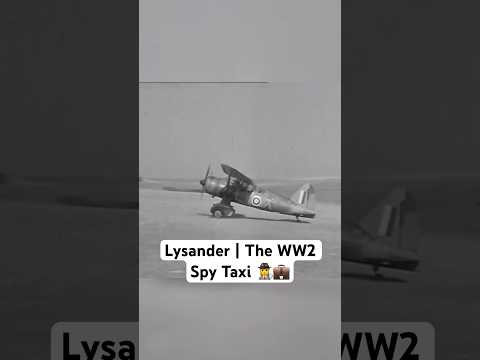
Every mission was a gamble. Pilots relied on split-second timing and the courage of resistance fighters flashing torches into the void. One wrong move, and the plane would be swallowed by the darkness—or worse, by the enemy. Yet, these brave airmen flew over 500 agents and personnel in and out of occupied Europe, each flight a thread in the tapestry of secret warfare.
Among them was a young pilot named James, who had volunteered for the most dangerous job of all. His first mission was to extract a British spy carrying vital intelligence about a new German weapon. The rendezvous point was a pasture near a small French village, surrounded by patrols.
As James approached, his heart pounded against his ribs. The flashlight signal blinked twice—the all-clear. He descended, the wheels touching down with a soft thud. The spy, a woman with steely eyes, sprinted from the treeline and climbed aboard. But before they could take off, the roar of engines shattered the silence. A German patrol had spotted them.
James slammed the throttle forward, the Lysander lurching into the air as bullets whizzed past. He banked hard, skimming the treetops, and vanished into the night. The spy was safe, but the war was far from over. This was just one of many missions that would test the limits of courage and luck.
As the Lysander disappeared into the darkness, another agent waited in the shadows, ready for the next flight. The taxi for spies was always on call, its pilots bound by a code of silence and duty.
James flew three more missions that month, each one a blur of adrenaline and fear. The second was a drop-off—two agents and a crate of radio equipment—into a field so small the locals called it ‘the pocket.’ He cleared the hedge by inches, and the return trip was white-knuckle all the way home.
But it was the fourth mission that changed everything. The briefing officer slid a photograph across the table: a man named Laurent, a resistance leader who had been captured and was now being held in a château turned command post. The SOE wanted him out—alive—before he could be interrogated.
James studied the aerial reconnaissance photos until his eyes ached. The château sat on a hill, its grounds patrolled by dogs and searchlights. There was no pasture, no treeline, no convenient flashlight signal. This time, the landing would have to happen on the château’s own gravel drive.
The night of the operation arrived with a cold drizzle that turned the windshield into a sheet of silver. James took off from a secret airfield in England, the Lysander heavy with fuel and a single passenger: a French-speaking commando named Émile, who would go in first to cut the power.
They crossed the coast at low altitude, the sea a black mirror beneath them. James kept the plane so low that the prop wash churned the waves. Radar was a blind man in the dark, and James intended to stay that way.
Twenty minutes from the target, Émile tapped his shoulder and pointed ahead. The château’s searchlights swept the sky like slow, lazy sabers. James circled wide, waiting for the signal—a single lamp switched on and off three times in an upstairs window.
It came. Then the lights died. The whole château went dark, and the searchlights froze mid-sweep before shutting off entirely. Émile had done his job.
James dove toward the gravel drive, the wheels touching down with a crunch that seemed to echo for miles. He killed the engine and listened. Dogs barked somewhere near the kennels, but no shots, no shouts. Not yet.
Then a side door burst open, and Laurent came running—ragged, bleeding from a cut above his eye, but alive. Behind him, two guards stumbled in the dark, blinded by the sudden blackout. Émile emerged from the shadows and dropped them both with two quick shots.
Laurent threw himself into the fuselage, gasping in French, ‘They know you’re here—the garrison is five minutes away!’
James didn’t need to be told twice. He cranked the engine, and the Lysander rolled forward, gathering speed on the gravel. The first headlights appeared at the gate, then the first tracer rounds streaked past the wing.
He pulled back on the stick, and the plane leapt into the air, clearing the château wall by what felt like a hand’s width. Below them, the garrison’s trucks skidded to a halt, too late.
As they climbed into the clouds, Laurent leaned forward and gripped James’s shoulder. ‘You are crazy, Englishman,’ he shouted over the engine. ‘But thank you.’
James just smiled and set his course for home. The taxi for spies had made another pickup, and somewhere in the darkness below, another agent was already waiting for the next call.
The flight back was quiet, save for the drone of the engine and Laurent’s ragged breathing. James kept the Lysander low over the Channel, the black water invisible beneath them. Only when the English coast appeared as a grey smudge on the horizon did he allow himself to exhale.
But the debriefing room was not the end of it. The intelligence Laurent carried—names, dates, a map of a munitions factory hidden in a forest—was too valuable to sit on. Within forty-eight hours, James was summoned again.
This time the briefing officer was a woman, her voice clipped and cold. ‘Laurent is going back in. And you’re flying him.’ James stared at her. The man had barely healed. The château was surely crawling with reinforcements by now.
‘He volunteered,’ she said, reading his face. ‘The factory must be destroyed before the new weapon ships out. He knows the terrain better than anyone.’
They flew on a night with no moon at all, the kind of darkness that swallowed the plane whole. Laurent sat behind James, silent, checking his pistol every few minutes. The drop point was a clearing in the forest, barely long enough for the Lysander’s wheels.
James circled twice, searching for the signal. Nothing. The resistance was supposed to mark the field with three lanterns in a row. He saw only trees, black against blacker sky.
Then a single match flared below—once, twice, three times—and went out. It was not the agreed signal. It was a warning.
‘Ambush,’ Laurent breathed. ‘They are waiting for us.’
James’s hand tightened on the stick. Every instinct screamed at him to pull up, to climb and run for home. But Laurent was already reaching for the hatch. ‘Take me lower,’ the Frenchman said. ‘I will jump.’
‘You’ll break your legs in those trees—’
‘Then I will crawl.’ Laurent’s eyes burned in the cockpit gloom. ‘That factory cannot be allowed to run.’
James cursed under his breath and nosed the Lysander down, skimming the treetops until the clearing opened beneath them. Laurent dropped through the hatch and vanished into the darkness, rolling once and coming up running.
James hauled the plane back into the sky, the engine screaming. Below, muzzle flashes sparked among the trees—then stopped. He could not tell whether Laurent had escaped or been cut down. He flew home with a hollow ache in his chest, the kind that no amount of tea or debriefing could fill.
Three weeks passed. No word. James flew other missions, other agents, but Laurent’s face haunted every landing. Then, one grey morning, a coded message arrived at the airfield: the factory was ash. A single line at the end, unsigned—‘The taxi service is still the best in France.’
James read it twice, then folded it carefully into his flight log. The war went on, and the Lysander waited on the tarmac, its engine cold but ready. Somewhere across the water, another lantern would soon blink in the dark.
The months that followed blurred into a rhythm James came to know by heart: the hush of the briefing room, the cold bite of the cockpit, the endless black water beneath his wings. He stopped counting the agents he carried and started counting the lantern signals he never saw again. Some nights the fields were empty. Some nights the flashlights blinked twice and then nothing.
By the spring of 1944, the Lysanders were flying almost nightly, feeding the resistance the weapons and radio sets they would need for the invasion everyone knew was coming. James had grown lean and quiet, his boyish grin traded for a pilot’s flat, patient stare.
Then came the call he had half-expected, half-dreaded. Laurent was coming home—this time for good. The rendezvous was the same pasture near the village where James had first learned to land in the dark.
The night was warm, the first real breath of summer. James set the Lizzie down on the familiar grass and killed the engine. The flashlight blinked twice. But it was not Laurent who came running from the treeline—it was a boy, no older than sixteen, carrying a lantern in one hand and a folded map in the other.
‘Laurent is dead,’ the boy said, his English careful and rehearsed. ‘He was caught last week. He told us to give you this.’ He pressed the map into James’s hand. ‘And to tell you the taxi must keep running.’
James looked down at the map—a new target, a German fuel depot, marked in Laurent’s own hand. Then he looked at the boy, standing there in the dark with a lantern, waiting to be flown out. Another agent, another shadow, another thread in the tapestry.
‘Get in,’ James said quietly. ‘The meter’s running.’
They climbed into the night, and behind them the flashlight blinked twice, then went dark. The taxi for spies flew on, its pilots bound by silence and duty, its passengers bound for the dangerous world of secret warfare. Over 500 agents would ride the Lizzie before the war was done—and every one of them owed their life to a flashlight in a field.
James never learned what became of the boy with the lantern. But he liked to think that somewhere, in a quiet village in France, there was a man who still remembered the night the taxi came for him.
What would you have done, standing in that dark field with nothing but a flashlight and a prayer? Tell us in the comments below.
Report this article
Select a reason for reporting:






