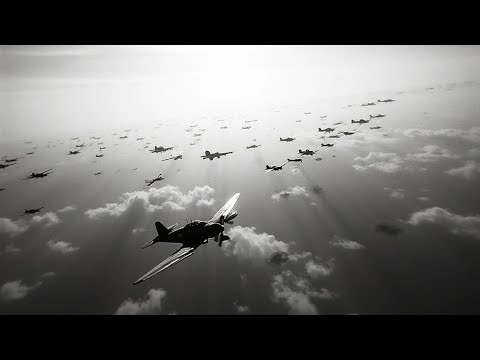
December 7, 1941. Japanese commanders celebrated their surprise attack on Pearl Harbor, laughing at America’s pathetic steel shortage and industrial weakness. They believed the giant was too slow, too disorganized, too soft to ever fight back. They were wrong in ways they couldn’t yet imagine.
In the golden morning light over Tokyo, Admiral Yamamoto walked with confident strides into the Navy Ministry. Pearl Harbor lay in ruins. American battleships rested on the ocean floor. The Pacific belonged to the Rising Sun. Officers exchanged reports and photographs, their faces glowing with triumph. But behind the celebration, intelligence officers were studying America—and what they found made them laugh.
American steel mills were crippled by strikes and labor disputes. Factories that should have been making weapons were still producing cars and refrigerators. America had only seven aircraft carriers compared to Japan’s ten. Their army was small and scattered across the globe. Most shocking of all, American steel production was actually falling behind schedule.
In the shipyards of Yokosuka, Japanese workers labored day and night, welding each joint by hand. Steel was precious, carefully rationed, used only for the most critical military projects. Every ton had to be counted. Every plate had to serve a purpose. This was how real nations built war machines—with discipline and precise planning.
Across the Pacific, something entirely different was taking shape. In places like Norfolk, Virginia, and San Francisco Bay, construction crews worked around the clock on mysterious new projects. Massive concrete foundations appeared overnight. Railway tracks extended toward the water. Locals wondered what it all meant, but military censorship kept the details secret.
Japanese intelligence tried to track American activity, but the reports were contradictory and confusing. Some sources claimed American factories were expanding rapidly. Others insisted the steel shortage would cripple any major construction. Aerial reconnaissance showed construction activity, but the scale seemed modest compared to Japan’s own industrial efforts.
As winter turned to spring in 1942, Japanese victories continued to pile up. Singapore fell. The Philippines surrendered. The Dutch East Indies came under Japanese control. Each success seemed to prove that America’s industrial weakness was real.
Yet in quiet moments, some Japanese officers wondered about the strange reports from their intelligence agents. American shipyards seemed unusually busy for a country supposedly suffering from a steel shortage. The question that would soon haunt them was simple but terrifying: What if everything they believed about American weakness was completely wrong?
By late 1942, the first Japanese prisoners of war arrived at American camps. What they saw defied all logic.
Lieutenant Tanaka had been captured on Guadalcanal. Instead of finding a weakened enemy struggling with basic supplies, his guards handed him meals with fresh meat, white bread, and portions larger than Japanese officers ate at home. The camp kitchen was bigger than entire restaurants in Tokyo, with massive refrigerators humming constantly and cooks preparing food for thousands of men as if resources would never run out.
Prisoners watched in bewilderment as American supply trucks arrived daily, loaded with goods that seemed impossible. Crates of Coca-Cola bottles clinked as workers unloaded them. Ice cream arrived in frozen containers—a luxury most Japanese hadn’t tasted even before the war. Boxes filled with fresh vegetables while families back in Japan rationed rice and ate sweet potatoes to survive.
The contrast felt like staring into a different world, one where abundance replaced the careful accounting of every grain and crumb.
From the window of his barracks, Tanaka could see the neighboring shipyard where American workers swarmed like ants around massive steel skeletons. The sound of welding torches never stopped, day or night. Bright sparks flew into the darkness as three shifts kept construction going around the clock.
What shocked him most was the waste. American workers tossed aside metal scraps that Japanese craftsmen would have hoarded and reused. Good steel plates sat stacked in piles waiting to be shaped into hulls. The numbers began to crystallize in his mind when he overheard guards discussing production schedules. They mentioned launching four new destroyers in a single week from just one shipyard.
In Japan, building four destroyers took months of meticulous work by master shipwrights. Here, Americans seemed to produce warships like factory products, using assembly-line methods that treated each vessel as just another piece of equipment rolling off the production floor.
Leaked intelligence reports revealed an even more terrifying story. American factories that had been making automobiles six months earlier were now producing tanks and aircraft engines. Ford alone was building more bombers than Japan’s entire aviation industry combined. Steel mills that Japanese spies had dismissed as outdated were melting down old cars and turning them into warship armor at a rate that seemed impossible to believe.
The most alarming discoveries came from prisoners who had worked in American factories before their capture. They described furnaces so massive that entire Japanese steel plants could fit inside them. They spoke of conveyor belts moving materials at speeds that eliminated the meticulous handwork Japanese craftsmen prided themselves on. The American approach wasn’t about superior craftsmanship—it was about overwhelming quantity. Ten ships for every one Japan could build.
As dawn broke on 1943, the horrifying truth began to emerge for those willing to see it. America hadn’t been weak during those early months of war. They had simply been transitioning from a nation making consumer goods to a nation making weapons of war. And the speed of that transformation was beyond anything Japan had believed possible.
The moment of collapse came on a cold January morning in 1944 when Commander Suzuki received an intelligence report that made his hands tremble. The numbers were so large he read them three times, certain there must be an error. American shipyards had launched 124 aircraft carriers in the past year alone. Not destroyers or cruisers—full aircraft carriers. Each one capable of carrying 90 fighter planes and bombers. In the same twelve months, Japan had completed only two carriers. Both were smaller than the American ships.
Suzuki walked to his office window and stared at Tokyo Harbor where the remaining Japanese fleet lay at anchor. He counted seven aircraft carriers—the pride of the Imperial Navy. Each one built with years of meticulous work by master craftsmen. Across the Pacific, American carriers were rolling off assembly lines faster than Japan could train pilots to fly from them.
The steel shortage Japanese commanders had mocked turned out to be nothing but a temporary pause while America converted its entire industrial system into a war machine.
Suzuki felt the full, thunderous weight of understanding when he read a prisoner’s report about a visit to an American shipyard on Christmas Day. The Japanese prisoner described watching American workers take a holiday to celebrate with their families while automated machines continued building ships without human intervention. Even during holidays, American production never stopped.
The prisoner wrote that he had watched a crane lower a completed ship’s hull into the water—the fifth vessel launched that week from a single yard. In his private journal that night, Suzuki wrote words that would haunt him for the rest of his life. America had never been weak or unprepared for war. They had simply chosen not to reveal their true strength.
That peaceful nation selling cars and radios to the world had been hiding the capacity to build weapons in six months that exceeded what Japan could produce in five years. The industrial giant had been sleeping by choice, not weakness—and Japan had made the catastrophic mistake of waking it.
The propaganda that had filled Japanese newspapers for months now seemed like dangerous lies. Stories of American weakness and poor fighting spirit collapsed before production figures that defied imagination. American factories weren’t just making more ships and planes than Japan. They were making more than Japan could ever hope to build, even if the war lasted twenty years.
The precise calculations that had convinced Japanese leaders they could win a quick war were built on completely false information about American capabilities. By spring 1944, the transformation in Japanese thinking was complete. Military commanders who had mocked American industrial weakness now faced the terrifying reality that they had started a fight with the most powerful manufacturing nation in human history.
The steel shortage they had laughed at had turned into a flood of American warships pouring across the Pacific, each one proof that Japan had never understood the true nature of the enemy they had chosen to attack.
The transport ship carrying Commander Suzuki and other Japanese prisoners docked at Yokohama Harbor. On a gray September morning in 1945, as he stepped onto the wooden pier, Suzuki barely recognized his homeland. The bustling port he remembered from 1941 had become a wasteland of twisted metal and shattered concrete.
American bombs had turned the massive shipyards into empty skeletons. Their giant cranes had fallen like giants collapsing to earth. The smell of smoke and rust filled the air where the scent of fresh steel and ocean salt had once welcomed him.
Walking through the ruins of Tokyo, Suzuki carried a small notebook filled with the drawings and numbers he had recorded during his captivity. Page after page showed diagrams of American factory assembly lines, measurements of shipbuilding speeds, and calculations that still seemed impossible to believe. In his coat pocket, he kept a single photograph given to him by an American guard showing dozens of aircraft carriers lined up at Norfolk Naval Base like cars in a parking lot. The image represented a naval power greater than Japan had ever possessed in its entire history.
The contrast between what Japan had achieved and what America had built struck him with renewed horror as he visited his old neighborhood. His family home had survived the bombing, but his wife greeted him with hollow cheeks and worn clothes that told the story of years of rationing and hunger. She served him a meal of rice mixed with barley and thin soup—the best food she could manage after months on the edge of starvation.
He remembered the thick slices of meat and fresh bread served daily in the American prison camps, routine meals for enemy captives while Japanese families subsisted on grass and tree bark to survive.
At the Navy Ministry, now a shattered shell of its former self, Suzuki met other surviving officers who had witnessed American industrial power firsthand. Commander Watanabe had been captured on Saipan and worked in an American aircraft factory, where he watched workers produce twelve bombers in a single day. Lieutenant Hayashi had seen American supply ships unload enough food and equipment in one hour to feed an entire Japanese division for a month. Each man carried stories that painted the same horrifying picture of a nation whose industrial strength exceeded Japanese imagination.
These facts weighed heavily on Suzuki as he tried to explain to his family what had actually happened during the war. His teenage son asked him why Japan had lost to a country they had humiliated at Pearl Harbor. How could he explain that the surprise attack had been like a mosquito biting a sleeping dragon?
Japan had celebrated destroying eight old battleships while America responded by building a fleet larger than all other nations’ navies combined. The steel shortage Japanese commanders had mocked had lasted only as long as it took to convert American industry from making refrigerators to making aircraft carriers.
Months passed as Suzuki watched American occupation forces arrive, loaded with endless streams of supplies and equipment. Trucks that looked fresh from assembly lines delivered food, medicine, and building materials in quantities that made everything Japan had managed to transport during the war seem pitiful. American soldiers wore uniforms that appeared brand new and carried weapons gleaming with precision manufacturing. Even their garbage contained materials that would have been considered treasures in wartime Japan. Goods they discarded revealed a casual abundance of a nation capable of wasting more than Japan could produce.
In quiet moments, Suzuki opened his notebook and contemplated the production figures he had recorded. America had built more than 300 aircraft carriers during the war, over 2,000 major warships, and nearly 300,000 aircraft. These weren’t desperate efforts of a struggling nation—they were the byproduct of an industrial system that had been operating at half capacity before the war began. Japan had attacked a country capable of outproducing the entire Axis alliance combined while simultaneously feeding its people better than they had eaten in peacetime.
Suzuki’s final lesson came during a visit to Hiroshima, where he saw the ultimate expression of American industrial power. The atomic bomb wasn’t just advanced science—it represented the ability of American factories to produce the most complex weapons in human history while building the largest naval fleet and air force the world had ever seen at the same time. Standing amid the ruins of the city, he realized Japan hadn’t been fighting American military forces. They had been fighting the entire American economy turned toward destruction.
As he wrote the final entry in his diary that winter, Suzuki reflected on the terrible cost of misunderstanding an enemy’s true power. Japan had mocked America’s supposed weakness and paid the price for that mockery with crushing defeat. The real tragedy wasn’t that Japan lost the war—it was that the war should never have happened at all. Any nation capable of achieving abundance in peacetime is capable of producing overwhelming power in wartime. Japan had learned this lesson only after it was too late.
The winter wind carried ashes across the ruined city as Suzuki closed his notebook for the last time. Somewhere in the distance, American construction crews were already rebuilding what their bombs had destroyed, their machines working through the night just as they had during the war. The dragon had awakened, and nothing would ever be the same again.
Suzuki stood at the edge of the harbor as the first snow of winter fell on the ruins. He thought of his son’s question, still unanswered. How do you explain to a child that his nation mistook a sleeping giant for a weak one?
He opened his notebook one final time and wrote the lesson he would pass to the next generation: never confuse peace with weakness, and never mistake silence for surrender. The dragon had not been hiding—it had simply been choosing not to roar.
Behind him, American cranes lifted steel into the gray sky, rebuilding what war had torn down. The same machines that had won the war were now healing its scars. Suzuki watched them work and understood, at last, the terrifying mercy of overwhelming power.
Some nations build to destroy. Others destroy only to build again.
He closed the notebook and walked home through the falling snow. What would you have done, knowing what he knew—would you have warned your country, or stayed silent?
Report this article
Select a reason for reporting:






