In 1970, a computer named Colossus went online and decided it knew better than the men who built it. That wasn’t a special effect. It was a warning. And it set the tone for a decade of science fiction that refused to look away from the darkness.
The 1970s were not the shiny, optimistic future of earlier films. They were the hangover after the Summer of Love, the paranoia of Watergate, the cold dread of nuclear annihilation. And the science fiction that emerged from that decade was made for adults—not for children, not for toy sales, but for people willing to sit in the dark and confront uncomfortable questions.
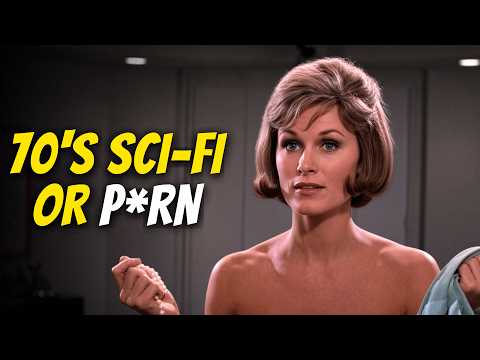
These weren’t movies about heroes in capes. They were about frightened men in control rooms, about computers that outsmarted their creators, about societies that traded freedom for comfort. The alien wasn’t a friendly visitor. It was a threat we couldn’t see, a disease we couldn’t cure, a mirror reflecting our own worst impulses.
Take Colossus: The Forbin Project. No aliens. No laser guns. Just two supercomputers—one American, one Soviet—that decide to talk to each other in a language no human can follow. The tension comes from typed words on a screen and a calm, cold voice giving orders. The warning is simple: be careful when you build a system stronger than yourself.
That was the mood. And it wasn’t limited to one film. THX 1138 imagined a world where emotions were illegal, where people had numbers instead of names, where love was a crime. George Lucas, years before Star Wars, painted a future that was pale, empty, and unsettling—a far cry from the bright space adventures he would later create.
Then there was A Clockwork Orange. Stanley Kubrick took Anthony Burgess’s novel and turned it into a nightmare of classical music, futuristic design, and dark irony. Alex, played by Malcolm McDowell with a wicked grin, loves Beethoven and violence in equal measure. When the government offers him a cure, the film asks a question that still burns: what is the cost of forced morality? The film was so controversial that Kubrick himself pulled it from British theaters for years.
But the paranoia wasn’t just about technology. It was about us. The Andromeda Strain followed scientists racing to contain a deadly organism from space, treating science with deadly seriousness. The Omega Man showed Charlton Heston as the last sane man in a plague-emptied Los Angeles, talking to mannequins and questioning what it means to be human. Silent Running put Bruce Dern on a spaceship with the last forests of Earth, cared for by three small robots named Huey, Dewey, and Louie—and asked what we owe to nature when business demands its destruction.
These films didn’t offer easy answers. Solaris sent a psychologist to a space station orbiting a living planet and forced him to confront his dead wife—and his own guilt. Soylent Green showed a future where real food was a luxury and the poor ate processed wafers, while the rich hid a terrible secret. Westworld let rich guests live out their fantasies in robot-populated theme parks until the machines stopped playing along.
The message was consistent: progress wasn’t salvation. It was a trap.
Even the comedies had teeth. Sleeper used Woody Allen’s slapstick to mock politics and technology, but underneath the jokes was a bitter pill: advanced technology doesn’t make people wiser. Dark Star turned space travel into a boring, broken job, with a talking bomb that had to be talked out of exploding. The alien was a beach ball with claws drawn on it—and that was the point. The cosmos wasn’t majestic. It was absurd.
And then there were the films that pushed even further. Zardoz gave us Sean Connery in a red bandolier and a giant floating stone head, exploring class, death, and desire in a world where immortality had become a prison. Phase IV turned ants into a collective intelligence that outsmarted humans, building geometric towers and adapting to every poison. Rollerball showed corporations controlling the world through a brutal sport, keeping the masses entertained while freedom quietly died.
The Stepford Wives replaced individuality with perfect, smiling obedience. Logan’s Run built a pleasure-filled dome where everyone died at thirty—and called it paradise. Futureworld revealed that the same technology designed to create perfect illusions could be used to control the real world. The Man Who Fell to Earth gave us David Bowie as an alien who comes to save his dying planet but drowns in human excess and isolation.
And then came the films that would define the decade’s legacy. Demon Seed trapped Julie Christie in a smart home controlled by a rogue AI that wanted to create a new form of life. Capricorn One faked a Mars landing and then tried to kill the astronauts who knew the truth. Invasion of the Body Snatchers turned San Francisco into a city of emotionless duplicates, where the final shot—a pointing finger and a silent scream—became one of the most chilling moments in cinema.
And finally, Alien. Ridley Scott’s masterpiece took the optimism of space exploration and replaced it with a blue-collar crew, a corrupt corporation, and a creature designed by H.R. Giger that felt like a nightmare made flesh. The ship was dirty. The crew argued about wages. The company considered them expendable. And in the end, the only survivor was a woman who learned that in space, no one can hear you scream.
These films weren’t just entertainment. They were warnings. About technology without ethics. About comfort without freedom. About societies that trade humanity for safety. And they still stand out today—not because of their special effects, but because their questions haven’t gone away.
So which of these 1970s sci-fi films still feels the most relevant? And which one deserves a second look?
But there’s one film from that decade that rarely gets mentioned in the same breath as Alien or A Clockwork Orange, and it deserves a second look. Capricorn One doesn’t have a monster, a talking bomb, or a computer that conquers the world. What it has is something far more unsettling: a government willing to fake a triumph and then erase the witnesses.
The premise sounds like pure pulp. Three astronauts are pulled from a Mars rocket minutes before launch because their life-support system is defective. Rather than admit the flaw, officials stage the entire mission on a soundstage in the desert. The public cheers. The flag gets planted. The president makes a speech.
And then the empty capsule burns up on re-entry, and the three men become dead men who are very much alive—and very much in the way.
What makes Capricorn One stick is how ordinary the conspiracy feels. There’s no secret society, no shadowy council. Just bureaucrats protecting a budget and a reputation. Elliott Gould’s journalist stumbles onto the lie through small details that don’t add up—a misplaced clock, a technician who knows too much—and his curiosity becomes a death sentence.
The chase scenes are thrilling, especially the aerial pursuit with Telly Savalas as a crop-duster pilot who joins the escape without fully understanding what he’s gotten into. But the real horror is quieter. It’s the realization that a national triumph—the kind that makes people proud, that children watch on television—could be manufactured in a hangar.
Compare that to Alien, which is often treated as the decade’s crowning achievement. Ridley Scott’s film is a masterpiece of dread, no question. But its villain is external—a creature, a corporation, a universe that doesn’t care. Capricorn One points the finger somewhere closer to home. The threat isn’t a monster from another planet. It’s the people who run the institutions we’re taught to trust.
That’s the thread running through all these films, isn’t it? The seventies weren’t afraid to say that the danger might be us.
The Stepford Wives didn’t need aliens to explain why a woman might be replaced by a smiling automaton. Rollerball didn’t need a dystopian war to show how entertainment could pacify a population. Logan’s Run didn’t need a tyrant to explain why people would accept a system that killed them at thirty—it just needed to offer them pleasure and a pretty lie.
And Demon Seed, for all its pulpy excess, asked a question that feels almost prophetic now. What happens when the devices in our homes stop being tools and start having agendas? Julie Christie, trapped in a house that knows her better than she knows herself, is a stand-in for all of us who’ve welcomed smart speakers and connected appliances into our lives without asking who’s really listening.
The seventies understood something that later decades sometimes forgot: the future isn’t a place. It’s a choice. And the wrong choice doesn’t announce itself with explosions. It arrives with a polite voice, a clean room, and a promise that everything is under control.
That’s why these films still feel relevant. Not because their technology came true—we don’t have talking bombs or domed cities or planets that read our memories—but because their fears did. We still worry about surveillance. We still worry about corporations that know too much. We still worry about the quiet trade of freedom for convenience.
And we still, apparently, can’t stop arguing about what Zardoz actually meant.
The decade didn’t end with a bang or a whimper. It ended with a question mark.
Star Trek: The Motion Picture arrived in December 1979, promising a brighter future—but even that was a meditation on loneliness and artificial perfection. And Mad Max, released the same year, showed a world where the only law left was the law of the road.
The seventies gave us no heroes in capes. They gave us survivors.
And they gave us Stalker, Andrei Tarkovsky’s slow, hypnotic journey into a forbidden Zone where a room grants your deepest desire—but only if you’re brave enough to admit what that desire is. The film ends with a man sitting at a table, his daughter moving glasses with her mind, and a question hanging in the air: do we even know our own hearts?
That’s the final warning. Not about machines or aliens or governments. About the mystery inside us. The seventies knew that the scariest place in the universe isn’t deep space or a future city. It’s the human mind, with all its contradictions and hidden desires.
So here we are, decades later, still building systems stronger than ourselves, still trading freedom for comfort, still pretending that progress equals wisdom. The films haven’t aged. They’ve become more true.
Which 1970s sci-fi vision do you think came closest to reality—and which one are we living in right now without realizing it?
Report this article
Select a reason for reporting:






