What happens when cinema throws away the rulebook and dives into chaos? The ’70s were a decade of rebellion where filmmakers broke every convention and unleashed pure anarchy on screen. These were movies too raw, too wild, and too fearless for the mainstream. Some shocked audiences, some got banned, all of them rewrote the rules of storytelling. Let’s descend into the shadowy world of ’70s exploitation cinema.
But first, imagine a time when the movies that terrified censors and thrilled audiences were the ones that dared to speak the unspeakable. From Pam Grier’s fierce avengers to Romero’s prophetic nightmares, from desert races to chainsaw massacres, these films didn’t just entertain—they challenged, provoked, and sometimes scarred. They were dismissed as trash, banned as dangerous, and yet they endure as landmarks of fearless filmmaking.
Number 15: Coffy (1973) exploded onto screens like a jolt of electricity. Starring Pam Grier in her breakout role, the film followed a woman on a brutal mission of revenge through a city eaten alive by corruption. She was not a damsel waiting for rescue. She was justice with a shotgun.
The premise was simple, but the message was thunderous: Coffy was about taking back power in a world that refused to give it. Director Jack Hill framed the chaos with raw realism and unapologetic energy. The film blended blaxploitation attitude with political rage, tackling police hypocrisy, addiction, and systemic rot.
Controversy came quickly. Moral watchdogs claimed it glorified violence. Censors accused it of pushing too far. Some theaters refused to screen it. Pam Grier’s portrayal of a strong black avenger shattered the fragile comfort of Hollywood’s status quo. Behind the scenes, Grier endured harsh scrutiny from the press, who labeled her too bold, too fierce, too real. Yet Coffy endured, becoming a midnight movie sensation and inspiring an entire wave of fearless female leads.
Number 14: The Crazies (1973) – When George A. Romero released The Crazies, audiences expected zombies. What they got instead was something far scarier. A small Pennsylvania town descends into madness after a military experiment leaks into the water supply. Neighbors turn on neighbors, soldiers open fire on civilians, and sanity collapses in broad daylight.
The Crazies was Romero’s unflinching portrait of a country at war with itself. Made during the Vietnam era, it mirrored the chaos of televised conflict and government mistrust. The real monsters were not the infected, but the people in charge. The controversy was instant. The military condemned it. Distributors panicked, calling it too subversive, too political. Some theaters pulled it after violent audience reactions. The censorship board hacked away scenes of government brutality, fearing it would ignite unrest.
Behind the camera, Romero battled constant setbacks. Funding collapsed mid-production, forcing the crew to film in freezing weather. Local volunteers acted as extras, earning only lunch as payment. The exhaustion shows in every frame. The paranoia feels authentic because it was. Though ignored at release, The Crazies grew into a cult legend. Its vision of weaponized disease and state control feels prophetic today.
Number 13: Vanishing Point (1971) – Few films capture the loneliness of rebellion like Vanishing Point. Released in an era of fuel-soaked freedom, it follows a man named Kowalski racing across the American desert pursued by police helicopters and existential despair. To some, it was just a car chase movie. To others, it was the ultimate statement of defiance.
The story unfolds like a fever dream. Kowalski, a former cop turned delivery driver, accepts a dare to drive from Denver to San Francisco in 15 hours. As he tears through endless highways chased by flashing lights, a blind DJ narrates his journey like a prophet calling him the last American hero. Critics did not know what to make of it. Some called it meaningless speed. Others saw it as a hymn to counterculture freedom and fatalism.
Its anti-establishment tone drew heat from censors who saw the police violence as unpatriotic. Several European countries briefly banned it, labeling it nihilistic propaganda. Behind the scenes, the production was as wild as the story. The stunt drivers pushed real Dodge Challengers to their limits. Crashes were filmed in single takes under blistering sun. Star Barry Newman insisted on performing much of his own driving, creating a sense of reckless authenticity.
Vanishing Point bombed in America, but Europe embraced it. Years later, filmmakers like Steven Spielberg and Quentin Tarantino cited it as sacred inspiration. Its imagery of dust, sunlight, and rebellion still fuels music videos and car ads. In the end, Kowalski’s fate is sealed by fire and silence. But the message endures: Freedom is not found on the road. It is found in the refusal to stop driving.
Number 12: Switchblade Sisters (1975) – Few films scream rebellion louder than Switchblade Sisters. When it premiered, critics dismissed it as juvenile chaos. What they missed was a fierce portrait of power in the hands of women society refused to understand. Directed by Jack Hill, the same visionary behind Coffy, this film turned high school warfare into a full-blown revolution.
The story centers on a girl gang known as the Dagger Debs. They run the hallways like generals, commanding respect through violence and loyalty. When internal rivalries erupt and betrayal splinters the group, their leader, Lace, must decide between vengeance and survival. It is gritty, raw, and unapologetic. Beneath the wild fight scenes lies a portrait of female rage simmering under male control.
Censors and conservative groups condemned it. They called it corrupting filth that glorified gang violence. Several states tried to restrict its screenings. During test showings, some theaters pulled it mid-run after police received complaints about copycat behavior. Even feminists were divided. Some saw empowerment, others saw exploitation. Behind the camera, the tension was real. Low pay, long hours, and endless stunts pushed the cast to exhaustion. Yet that exhaustion bled into the performances. Every scream, every punch, every glare felt genuine.
For decades, the film vanished, buried under bad reviews and moral panic. Then, in the ’90s, it was rediscovered by a new generation of cult fans. Quentin Tarantino personally re-released it through his Rolling Thunder Pictures label, calling it one of the most honest portraits of rebellion ever filmed. Today, Switchblade Sisters stands as proof that sometimes the loudest truths come dressed as anarchy.
Number 11: Foxy Brown (1974) – When Pam Grier returned for Foxy Brown, she was no longer just an actress. She was an icon of vengeance. The film’s tagline promised that Foxy was back, and she was taking no prisoners. What audiences got was a blistering attack on corruption, racial injustice, and moral decay disguised as pulp action.
Foxy infiltrates a drug ring after her undercover boyfriend is murdered. What follows is a storm of revenge, deception, and revolution. She turns the underworld’s weapons against itself, exposing hypocrisy in both the criminal world and law enforcement. Censors hated it. Critics were divided. Some called it too violent. Others accused it of promoting chaos. But Foxy Brown was doing something unprecedented. It was taking the power fantasy Hollywood reserved for men and giving it to a woman who had nothing left to lose.
Behind the scenes, Grier faced constant pushback. Studio executives feared her dominance would alienate audiences. She proved them wrong. The movie exploded across drive-ins and grindhouse circuits, making her one of the decade’s most bankable stars. In later years, Foxy Brown was studied in universities as a symbol of resistance and identity. It became an anthem for those tired of being invisible. Its influence stretched far beyond exploitation. Every modern action heroine owes something to Foxy’s fire. In the end, her legacy is not revenge. It is resilience. A reminder that sometimes the revolution wears high heels and carries a sawed-off shotgun.
Number 10: Rolling Thunder (1977) – Rolling Thunder began as a quiet story about a soldier returning home from Vietnam. By the time it hit theaters, it had become one of the most controversial revenge films of the decade. Critics called it too violent, too grim, too real. And they were right.
Major Charles Rane comes back from war a broken man. His small Texas town greets him with empty patriotism and hidden resentment. When criminals murder his family and steal his money, something inside him snaps. What follows is a descent into vengeance so methodical, it feels like ritual. The controversy was immediate. Censors demanded cuts. Some theaters refused to screen it. One British board called it psychological terrorism.
Even screenwriter Paul Schrader distanced himself, saying the studio softened his vision. But the violence remained raw. Every act felt earned, and every silence carried unbearable weight. Behind the scenes, the set was tense. William Devane stayed in character for weeks, barely speaking between takes. Tommy Lee Jones delivered one of his earliest haunting performances. The ending, drenched in blood and retribution, left audiences shaken silent.
For years, Rolling Thunder was suppressed, mis-marketed, and buried. But whispers spread, bootlegs circulated, and filmmakers like Quentin Tarantino and Robert Rodriguez hailed it as the blueprint for the modern revenge thriller. Today, it stands as a chilling mirror of post-war trauma and rage—not a celebration of violence, but a confession of how deeply it scars the soul.
Number 9: Thriller: A Cruel Picture (1973) – When Swedish filmmaker Bo Arne Vibenius unleashed Thriller: A Cruel Picture, it felt like a scream breaking through censorship. Audiences had never seen anything so cold, so methodical, and so silent. The film followed a woman who, after being brutalized and left voiceless, becomes a one-woman army trained in martial arts, marksmanship, and revenge.
Critics called it disturbing. Censors called it obscene. In Sweden, entire reels were cut out. In America, it was banned outright. But underground audiences whispered that the full version still existed—in shadowy reels traded among collectors like contraband. It became the film that could not be legally seen, but could never be forgotten.
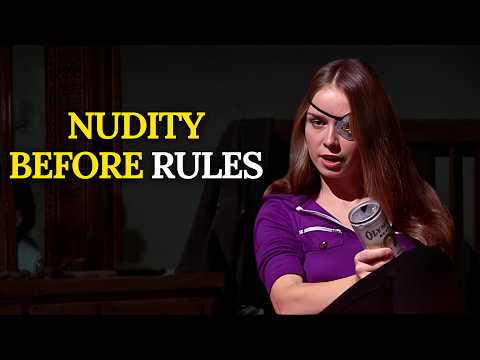
Behind the scenes, the production was a rebellion against the sanitized state of cinema. Vibenius shot in rural isolation using guerrilla methods. The lead actress, Christina Lindberg, performed almost entirely through her eyes—her silence more powerful than dialogue. Her transformation from victim to avenger was captured with documentary precision, turning vengeance into ritual and grief into art.
The violence caused outrage, but also fascination. Film historians later recognized it as one of the first movies to blend art house minimalism with exploitation extremity. Lindberg’s eye patch and cold poise became icons, copied decades later in Kill Bill and countless revenge films. Thriller was not just shocking—it was prophetic. It stripped revenge of glamour and exposed the trauma beneath.
Number 8: Ilsa: She Wolf of the SS (1975) – When Ilsa: She Wolf of the SS appeared, it detonated like a cinematic grenade. Audiences did not know whether to faint or cheer. Critics dismissed it as pure exploitation, yet beneath the chaos lay a chilling reflection of power, cruelty, and submission under fascism.
Set in a Nazi medical camp, the film follows Ilsa, a commandant conducting horrific experiments. What made it infamous was its blunt confrontation of authority and obedience. Director Don Edmonds turned historical horror into an allegory for control gone mad. Governments across Europe banned it instantly. Germany outlawed it permanently. Even the United States saw protests demanding its removal from theaters. Yet every attempt to bury it only made it grow stronger. The forbidden label turned it into legend.
Behind the scenes, the budget was minuscule. Sets were borrowed from a television western. Actors worked through night shoots with minimal pay. Star Diane Thorne approached her role with eerie discipline, portraying evil not as madness, but as bureaucratic routine. That made it unbearable—and unforgettable.
Critics eventually reevaluated it, not as history, but as nightmare. The film’s transgressive energy influenced later horror and art cinema, from Salo to The Night Porter. Its sequels continued the madness, but the first film remains unmatched for its audacity. Ilsa: She Wolf of the SS proved that exploitation could become mirror and monster at once. It confronted evil not with distance, but with proximity—forcing audiences to stare at what polite society preferred to forget.
Number 7: The Last House on the Left (1972) – Few movies in the ’70s rattled audiences like The Last House on the Left. Wes Craven’s debut was sold as simple shock, but it was really a cry of cultural collapse. Inspired by Bergman’s The Virgin Spring, it reimagined morality through the lens of ’70s America, where violence had moved from the jungle of Vietnam to the living room screen.
The story follows two teenage girls who fall victim to a gang of criminals, only for the violence to rebound in the most shocking way possible when the parents discover the truth. It is a descent into revenge and corruption, where innocence and evil merge into one. When it premiered, audiences screamed. Censors demanded entire sequences be cut. Critics walked out of screenings. But others saw something deeper. They saw a filmmaker confronting the nation’s desensitization to violence. Craven himself said he wanted viewers to feel complicit—to look away, and realize what that meant.
Behind the scenes, the cast worked under grueling conditions. The film was shot with minimal crew in freezing weather. Actors performed with raw fear and exhaustion, turning every frame into reality. The result felt more like a found confession than a scripted film. It was banned in several countries. Bootlegs spread. Years later, the film was restored and reappraised as one of the most important horror experiments ever made. The Last House on the Left shattered the boundary between exploitation and art. It reminded audiences that the scariest monsters are not on screen. They are inside us.
Number 6: The Texas Chainsaw Massacre (1974) – When it hit theaters, audiences staggered out in silence. Some fainted, others demanded refunds, but everyone remembered it. Tobe Hooper’s shoestring masterpiece turned regional horror into a cultural earthquake.
Almost none of it showed explicit violence. The horror came from suggestion, from sound, from atmosphere. Censors banned or mutilated it worldwide. Britain kept it off screens for nearly two decades. Yet it spread like wildfire through drive-ins and bootleg tapes.
Gunnar Hansen wore the same costume for weeks without washing. The dinner scene, filmed under scorching lights, became a real ordeal where exhaustion turned to madness. Hooper’s raw documentary tone predicted modern horror’s realism, and its legacy echoes in every slasher and found-footage film since.
From Coffy’s shotgun justice to Leatherface’s roaring chainsaw, these fifteen films proved that cinema’s darkest corners often hold its truest truths. They were banned, buried, and dismissed—yet they refused to die.
So which of these fearless outlaws of ’70s cinema do you think broke the most rules—and which one would you dare to watch tonight?
Report this article
Select a reason for reporting:






