July 31, 1944. Balabac Strait. Commander Lawson Ramage is 300 feet underwater, and the math says he’s already dead. Four Japanese destroyers are dropping depth charges in a grid pattern. His submarine, USS Parche, is being crushed at 130 pounds per square inch. Batteries at 18%. Oxygen for minutes. Above him, sonar counts 17 enemy ships—tankers, freighters, and those four destroyers actively trying to murder him.
Ramage does something no submarine commander has ever done. He surfaces in daylight, in the middle of the enemy convoy, and orders full speed ahead. The survival rate for submarines caught on the surface by destroyers is 4%. Ramage has six torpedoes left. The nearest American vessel is 200 miles away. His submarine can dive in 60 seconds, but it takes 45 seconds to line up a torpedo shot. The margin for error is 15 seconds. 15 seconds between each decision to live or die.
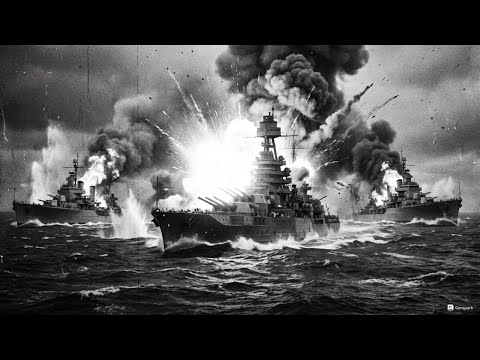
But Ramage is about to sink more tonnage in a single patrol than most submarine crews sink in an entire war. He’s going to engage enemy destroyers at point-blank range. Close enough to see the faces of Japanese sailors. And he’s going to do it because 3 days ago he made a promise to his crew that’s about to become the most expensive decision the Japanese Navy experiences this month.
His advantage: he’s already decided he’s not leaving until every torpedo tube is empty.
Lawson Patterson Ramage, born January 19, 1909, in Monroe Bridge, Massachusetts. Son of a Spanish-American War veteran. At age seven, he built a raft from stolen lumber and navigated it 3 miles downstream before anyone noticed he was missing. When his father asked why, Ramage said, “I wanted to see what was around the bend.” That answer never changed.
But to understand how a man surfaces into a firing squad and wins, you need to know what made him different.
June 1927, Annapolis, Maryland. Ramage is 18 years old, 5’9″, 160 pounds, and consistently overlooked. The Naval Academy doesn’t produce submarine commanders from people who look like high school chemistry teachers. But during a summer cruise aboard USS Arkansas, something happens. A fire breaks out in the engine room. Smoke pours through ventilation shafts. The midshipmen are ordered to evacuate. Ramage walks toward the smoke instead.
He finds two sailors passed out from fumes, drags them both to the deck, then goes back down to help close the bulkhead doors. The XO asks him why he didn’t follow orders. Ramage says, “I thought the order was incomplete, sir.” He graduates 99th out of 441. Not impressive. But his fitness report includes one line: “Does not panic. Does not follow.”
May 1935, Pearl Harbor. Lieutenant Ramage is assigned to USS Pruitt, a destroyer. Standard patrol duty. Nothing happens for 8 months. Then, during a night exercise, another destroyer loses power and starts drifting toward a reef in high winds. The captain orders all ships to maintain position. Too dangerous to approach in darkness. Ramage is officer of the deck. He orders the helmsman to close within 50 yards of the drifting destroyer. Launches a towline using a rifle-fired grappling hook he designed himself 3 weeks earlier for exactly this scenario. Tows the destroyer clear. Prevents a $15 million loss.
Gets formally reprimanded for disobeying orders and informally recommended for submarine duty. The recommendation note says, “Ramage treats orders as suggestions and physics as negotiable.”
January 1942, New London, Connecticut. Ramage finishes submarine school ranked second in his class. He’s assigned to USS Grenadier as executive officer. First war patrol, nothing. Second patrol, they sink one freighter. Third patrol, April 1943, South China Sea. They’re tracking a Japanese troop transport. The captain orders a cautious approach. Attack at 3,000 yards. Ramage calculates the transport’s zigzag pattern, walks to the captain, and says quietly, “Sir, if we close to 800 yards, we guarantee the hit. Their destroyer screen can’t depress guns that close.”
The captain stares at him. “You want to drive a submarine into spitting distance of a destroyer?”
“Yes, sir.”
They close to 750 yards, fire four torpedoes, three hit. The transport sinks in 6 minutes. They dive and the destroyer passes directly overhead so close the crew hears Japanese propellers like a lawnmower through the hull. They escape. The patrol report: “XO Ramage possesses aggressive instinct balanced by mathematical precision. Recommend immediate command.”
July 1943, Mare Island, California. Ramage takes command of USS Trout. His first speech to the crew lasts 11 seconds. “We’re going to get close. We’re going to stay late. Questions?” First patrol under Ramage, Trout sinks four ships in 14 days. Second patrol, six ships. But the Navy pulls him for a special assignment. They’re giving him a brand new submarine fresh from the shipyard, USS Parche. A Gato-class boat with experimental radar and the most aggressive crew the Navy can assemble.
The briefing officer tells him, “Your job is to make the Japanese scared of their own shipping lanes.” Ramage says, “What’s the tonnage quota?” “There isn’t one. Sink everything.”
By July 1944, Ramage has a reputation. Other submarine commanders avoid convoys with more than two destroyer escorts. Ramage hunts them specifically. The Navy’s official patrol doctrine says, “Maintain distance of 2,500 plus yards. Maximize survival over tonnage.” Ramage’s personal doctrine, written on a note card in his cabin, says, “Close until you can see their faces. Leave when the torpedoes are gone.”
On July 30th, 1944, intelligence reports a major convoy forming near Borneo. Estimated 17 ships including four destroyers and multiple tankers carrying aviation fuel to support Japanese airbases in the Philippines. High value, heavy protection. Every submarine in the area is ordered to intercept. Ramage gets there first.
This is how he did it.
July 30th, 1944. 2:47 p.m. Parche is running on the surface 60 miles west of Balabac Strait. The radar operator calls out contact. Multiple ships bearing 270 degrees, range 22,000 yards. Ramage climbs to the bridge with binoculars. 17 ships, four destroyers running picket patterns, 13 merchants and tankers in three columns. They’re heading northwest at 12 knots.
Ramage does the math. If he attacks submerged from standard range, he’ll get maybe two shots before the destroyers force him deep. Two shots against 17 ships. Unacceptable return. His executive officer, Lieutenant Commander Ed Moko, says, “We could shadow them. Wait for night. They’ll be in friendly waters by midnight. Air cover at dawn.”
“So, what do we do?” Ramage looks at the convoy for 30 seconds. “We’re going to surface in the middle of them and shoot until we’re out of torpedoes.”
He calls the crew to battle stations and explains the plan. A torpedo man named Jimmy Reno raises his hand. “Commander, what happens when they start shooting at us?”
“We dive, reload, and surface somewhere else.”
“How many times?”
“Until we’re out of torpedoes or they’re out of ships.”
He makes them vote. The vote is unanimous.
At 4:15 p.m., Parche submerges and begins the approach. At 5:03 p.m., they’re directly beneath the convoy’s center column. Ramage orders the boat to periscope depth. He takes one look. Tanker dead ahead, 1,800 yards. Freighter to port, 2,200 yards. Destroyer to starboard, 4,500 yards and closing. He lowers the periscope. Surface the boat. All ahead full.
5:04 p.m. Parche breaks the surface 1,600 yards from a 10,000-ton tanker. Ramage is on the bridge. He can see the tanker’s crew pointing at them, confused. Submarines don’t surface this close in daylight in the middle of convoys. Bearing 015, range 1,600, fire one, fire two. Two torpedoes away. He’s already swinging to port. Target freighter, bearing 340, range 2,600, fire three, fire four.
The first torpedoes hit the tanker. Twin explosions. Aviation fuel ignites in orange fireballs that climb 200 feet into the air. The tanker’s bow lifts out of the water. The freighter explodes 6 seconds later. It’s carrying ammunition. The blast blows out windows on the ship next to it.
Now the Japanese react. The nearest destroyer turns hard toward Parche, smoke pouring from its stacks. Range 3,800 yards and closing at 35 knots. Ramage calculates 2 minutes until gun range. Target destroyer, bearing 095, range 3,600, fire five, fire six.
Both torpedoes miss. The destroyer is maneuvering too aggressively. It’s now 2,400 yards away. Ramage can see its deck guns training toward Parche. Dive, take her down fast.
Parche slides under in 58 seconds. The Japanese destroyer arrives and starts dropping charges. 18 explosions in 6 minutes. The closest is 400 feet away. Close enough that the boat shudders and cork insulation rains from the ceiling. Ramage sits calmly at the plotting table. The convoy is scattering, but he’s tracking the ships’ courses on paper. He identifies a pattern. Two tankers broke southeast trying to hide in coastal shallows. Reload all tubes. Course 135. We’re going after the tankers.
The crew reloads in 11 minutes. At 5:47 p.m. Ramage brings Parche back to periscope depth. The two tankers are running parallel. 1,500 yards apart, 6,000 yards away. One destroyer is between them and Parche. Moko says, “We can’t get to the tankers without going through the destroyer.”
“Correct. So we’re going through the destroyer.”
5:52 p.m. Parche surfaces again. The destroyer spots them immediately. It’s only 2,800 yards away. Ramage doesn’t target the destroyer. He targets the tanker beyond it. Bearing 175, range 5,200, fire one, fire two, fire three.
Three torpedoes race toward the tanker. The destroyer is now between Parche and the torpedoes’ path. The Japanese captain has a choice. Evade the submarine or evade the torpedoes coming from behind. He chooses to evade the submarine. The torpedoes pass under the destroyer and slam into the tanker beyond. Two hits. The tanker explodes even bigger than the first.
The destroyer opens fire on Parche. 5-inch shells. The first salvo misses by 300 yards. Ramage waits 3 seconds, long enough to line up the second tanker. Bearing 182, range 4,800, fire four. Dive, take her to 250 feet.
They’re under before the shell impacts. The torpedo hits the second tanker 16 seconds later. More depth charges, 23 this time. But Parche is deeper than the charges are set for and Ramage is moving slowly, barely two knots. After 30 minutes, the destroyer gives up.
Ramage surfaces at 6:41 p.m. The sky is orange with burning fuel. Three ships are sinking. Two are already gone. The convoy has split into three groups. Ramage picks the northwest group. Four freighters and one destroyer. Reload all tubes. We’re going again.
The temperature inside the submarine is 102 degrees. One man is vomiting from stress. Ramage orders the cook to distribute cold water and benzedrine tablets.
7:18 p.m. Twilight. Parche surfaces 8,000 yards from the northwest group. Ramage runs on the surface at full speed, 18 knots, chasing them. At 7:34 p.m. range is 3,200 yards. Fire one. Fire two. Fire three. Fire four. Four torpedoes toward four different freighters.
The first hits. The second misses. The third hits. The fourth hits. Three freighters start sinking. The destroyer turns to engage, 6,000 yards away. Ramage stays on the surface. Reload forward tubes. I want that destroyer.
Moko stares at him. “Sir, we should dive.”
“The destroyer is keeping the convoy scattered. If we kill it, we can hunt the rest.”
7:51 p.m. The destroyer is charging straight at them, 4,200 yards and closing. It’s firing as it comes, shells landing closer with each salvo. Ramage is on the bridge with binoculars. Bearing 312, range 3,800, fire one, fire two.
Two torpedoes. The destroyer sees them and turns hard to port. One misses. The other hits amidships. The destroyer breaks in half. Ramage watches it sink. Dive. We need to reload.
9:14 p.m. Full darkness. Parche is running on the surface hunting by radar. The radar operator identifies five contacts 14,000 yards east. Ramage closes to 8,000 yards. Four freighters and one destroyer bunched tightly together. The destroyer is in the center. The freighters surround it like a shield.
Ramage orders the boat positioned at a 45-degree angle. From this angle, a spread of six torpedoes will pass through the formation hitting ships in sequence. At 9:47 p.m. range is 2,400 yards. Parche is fully surfaced, silhouetted against the night. Fire one. 3-second pause. Fire two. 3 seconds. Fire three, four, five, six.
Six torpedoes in the water. Ramage counts 43 seconds to impact. At 38 seconds, the destroyer’s searchlight snaps on. Blindingly bright. It catches Parche perfectly. The destroyer’s guns traverse toward them. At 41 seconds, Ramage says, “Dive.” At 43 seconds, the first torpedo hits the lead freighter.
They’re underwater when the rest hit. Four hits out of six. Depth charges start falling. 73 explosions over 90 minutes. One charge cracks a ballast tank. The crew is drinking hot water in 110-degree heat.
At 11:52 p.m. the depth charging stops. Ramage waits 30 minutes, then surfaces. Four freighters are gone. The destroyer is still there, circling slowly, 9,000 yards away. Ramage has six torpedoes left. Reload all tubes. We’re finishing this.
At 1:34 a.m. August 1st, Parche closes to 3,600 yards. The destroyer still hasn’t seen them. Ramage lines up a perfect shot. Fire one. Fire two. Fire three. All three hit. The destroyer detonates in one massive explosion that lights up the ocean for miles.
Ramage stands on the bridge watching it burn. Secure from battle stations. Set course for Pearl Harbor. They’d been in combat for 8 hours and 30 minutes. 24 torpedoes fired. 17 ships sunk. 78,000 tons.
When the report reached command, the reply came back: “Confirm 17 ships seems unlikely. Do you mean seven?” Ramage wrote back: “Confirm 17. Recommend you review Japanese radio traffic.”
So here’s the question that outlived the man himself: when the math says you’re already dead, do you calculate your survival—or your tonnage?
Report this article
Select a reason for reporting:






