In the annals of Australian aviation, few aircraft have stirred as much passion and controversy as the Dassault Mirage III. It was the first supersonic fighter to wear the RAAF roundel, a delta-winged marvel that promised to catapult Australia into the jet age—but at a cost. As the 1950s drew to a close, the Royal Australian Air Force faced a pressing question: what would replace the locally-built CAC Sabre? The answer would come from halfway across the world, and it would ignite a debate that still echoes in hangars today.
The selection process was anything but straightforward. In 1960, a joint evaluation team traversed Europe and North America, weighing the merits of the American Lockheed F-104 Starfighter against the French Dassault Mirage III. After intense lobbying by the French, the Mirage was chosen in March 1961—a decision that would shape the RAAF’s fighter fleet for decades. The initial order for 30 aircraft soon ballooned to 100 Mirage IIIO fighters and 16 two-seat IIID trainers. But the choice of engine would prove to be a critical fork in the road.
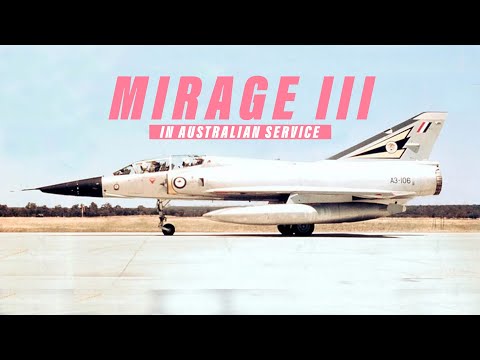
Australia had the option of the French SNECMA Atar 9C or the Rolls-Royce Avon, the latter already powering the Sabre and Canberra in RAAF service. Rolls-Royce teamed up with Dassault to offer an Avon-powered Mirage, and the fourth Mirage IIIC was fitted with an Avon G7 afterburning turbojet. This variant, known as the Mirage 30, first flew on 13 February 1961. Despite its superior performance, the Avon-powered Mirage was prohibitively expensive, and Dassault reverted to the Atar 9C for the Australian order. The first French-built aircraft flew in Bordeaux on 14 March 1963, and deliveries to the RAAF began shortly after.
But the story of the Mirage in Australia was just beginning. As production shifted to local assembly by the Government Aircraft Factories (GAF) and Commonwealth Aircraft Corporation (CAC), the aircraft became a symbol of national pride. The first operational unit, No. 75 Squadron, was equipped in 1965, followed by No. 76 in 1966. The Mirage quickly became the backbone of Australia’s air defense, its delta wing a familiar sight in the skies over Williamtown and Butterworth.
For the pilots who flew it, the Mirage was a demanding mistress. “As a young pilot, it was a bit intimidating,” recalls Mike Tarant, a former Mirage pilot. “We were lucky to have two-seat trainers, unlike the Sabre where you strapped it on and went.” The Mirage’s cockpit was a relic of an earlier era, with ergonomics that bordered on hostile. “It was a nightmare in terms of human factors,” Tarant admits. “The lighting was very poor—World War II-era ultraviolet and infrared. And it had a very high approach speed: 190 knots on final, reducing to 175 knots over the threshold.” Visibility was another challenge, especially in the rain, where the delta wing and high nose angle made it nearly impossible to see forward.
Yet, for all its quirks, the Mirage had a peculiar charm. “It didn’t stall in the conventional sense,” Tarant explains. “It would just mush. In a normal aircraft, the lift and drag coefficient changes suddenly—like this. In the Mirage, it changes like this. So instead of stalling and dropping, you find yourself behind the drag curve, and the more power you add, the less effect it has until you reach a deep stall from which you can’t recover even at full power.” It was a trait that demanded respect—and sometimes fear.
Night flying was particularly harrowing. “We used to do night flying every second Thursday after payday,” Tarant recalls with a chuckle. “There would be one or two or maybe three aircraft left after the day’s flying, so three of the unlucky ones would have to strap into this thing and go off into the darkness. By the time they finished their first sortie, there were no aircraft left for the second wave. So everyone would retire to the bar to hear their horror stories. No one liked flying this thing at night.”
The Mirage’s service life was marked by continuous evolution. As the fleet aged, wing cracks emerged, prompting the Aeronautical Research Laboratories to design boron fiber repair patches. Some Australian Mirages flew more than 4,000 hours, far beyond their nominal 3,000-hour lifespan. Upgrades to avionics, ejection seats, and air-to-air missiles kept the fleet relevant into the 1980s.
But the end was inevitable. No. 77 Squadron was the first to relinquish its Mirages, transitioning to Hornets in November 1987. No. 79 Squadron followed in April 1988, and No. 75 Squadron flew a farewell formation over the eastern state capitals in September 1988 before ceasing operations on the 30th. In 1990, Pakistan purchased 50 Australian Mirages, 45 of which entered operational service and were upgraded under the ROSE I program.
The Mirage III served the RAAF longer than any fighter before the Hornet. Despite the loss of more than 40 aircraft in accidents, it remains a beloved chapter in Australian aviation history—a testament to the daring of those who flew it and the engineers who kept it airborne.
For Ron Haak, another former Mirage pilot, the aircraft’s delta wing defined its character—and its dangers. “Of course, this is a delta-wing aircraft. It had super sensitivity in roll stability, if you want to call it that,” he says. “It would roll so fast and had no real capability to return to level flight. So that was one of the challenges when operating at night in bad weather. You could find yourself inverted without realizing you’d gone upside down.” The Mirage could roll at 320 to 360 degrees per second—a dizzying rate that made spatial disorientation a constant threat.
Compared to the F/A-18, which rolled at a more sedate 180 degrees per second, the Mirage demanded constant vigilance. “The Hornet had good roll stability, so it kept the wings level without you having to think about it,” Haak notes. But the differences didn’t end there. The F-111, with its sophisticated systems, generous fuel, and twin engines, was a far more comfortable machine. “The F-111 had a navigation system. You knew where you were, how much fuel you had, and how much was left for the mission,” Haak explains. “The Mirage didn’t have a real navigation system. Everything was dead reckoning. So there was a lot of mental gymnastics trying to calculate your distance from the airfield, fuel remaining, and fuel consumption—you were doing these mental calculations all the time.”
With large external tanks, the Mirage could stay airborne for four hours. Without them, a clean aircraft lasted just 25 minutes. “That was a huge difference,” Haak says. “The F/A-18, on internal fuel alone, could last two hours.” But it was the radar that posed some of the greatest challenges. “We were doing low-level missions, looking for low-level targets using the radar. Because it was an old analog radar, ground clutter would obscure your radar picture,” Haak recalls. “So we spent a lot of time fiddling with the radar stick, adjusting the antenna height, trying to detect targets in the side lobes.”
Imagine flying at night at 1,000 feet and 600 knots, trying to operate the radar with your head down in the cockpit, adjusting the height and trying to spot a Canberra, another Mirage, or an F-111 in the side lobes. “A lot of risk and a lot of effort just to stay alive, basically,” Haak says. “It was a challenge, as I said. That was the beauty of that aircraft. Maybe that’s why we all loved it. It was a big challenge, truly.”
The Mirage’s weapons capability was equally impressive for its era. “This tank here, if you rotate the camera, is called the RP-3 tank. It’s a supersonic tank, so it’s good for Mach 1.9,” Haak explains. “But it also carries four 500-pound bombs, and you can see the weapons stations on its side. So that gave the aircraft a good payload, and with two of these tanks and a centerline tank, you could reach a range of about 400 nautical miles, or 800 kilometers. You’re carrying 10 weapons—not a bad payload for an old delta-wing aircraft.”
The Mirage’s air data system was another area where engineering ingenuity met practical challenges. “The way aircraft measure airspeed is through a pitot tube,” Haak explains. “When you fly through the air, air strikes the tube through the opening at the front. What we do in measuring airspeed is measure the actual pressure of the air sensed by the sensor in this tube. The problem is that as altitude increases, the static pressure around us changes. At sea level, pressure is 14 pounds per square inch, or 1,013 millibars. At 40,000 feet, it drops to half. So we also have to measure static pressure.”
Those small openings on the pitot tube are located at stagnation points and measure only static pressure. “So you take the part that measures dynamic pressure plus static pressure, then measure the static pressure and subtract it, leaving you with dynamic pressure—which is your airspeed,” Haak says. It was a simple principle, but one that demanded precision at supersonic speeds.
The Mirage’s air intake was a marvel of aerodynamic engineering. “When you exceed Mach 1.2, this small cone moves forward,” Haak explains. “The idea is that it creates a shock wave at the tip, and as your speed increases, the wave becomes more oblique, and you want to keep the shock wave outside the intake. From simple aerodynamic knowledge, all air behind the shock wave is subsonic. These early engines couldn’t handle supersonic air. So we had to keep the air flowing through the intake below the speed of sound. That’s what this part does.”
But that wasn’t all. “Look at how it increases in size—it also closes the intake, reducing the amount of air flowing through the engine. It reduces drag, and therefore speed increases. That’s all it is. It has nothing to do with engine thrust. It’s simply intake design. The same is true on the Concorde and the F-111.”
As the Mirage fleet aged, the RAAF faced a reckoning. The nominal airframe life of 3,000 flying hours had been exceeded by intensive operations, and boron fiber repair patches became a stopgap solution. “The Aeronautical Research Laboratories designed boron fiber repair patches to prevent wing cracks from spreading,” Haak notes. “They extended the wing life by re-skinning or replacing them during the late 1970s.” It was a period that also saw the fleet upgraded with improved avionics, ejection seats, and air-to-air missile systems.
Some Australian Mirages flew more than 4,000 hours—a testament to the skill of the engineers and the durability of the design. But the end was inevitable. No. 77 Squadron was the first to relinquish its Mirages, transitioning to Hornets in November 1987. No. 79 Squadron followed in April 1988, and No. 75 Squadron flew a farewell formation over the eastern state capitals in September 1988 before ceasing operations on the 30th. In 1990, Pakistan purchased 50 Australian Mirages, 45 of which entered operational service and were upgraded under the ROSE I program.
The Mirage III served the RAAF longer than any fighter before the Hornet. Despite the loss of more than 40 aircraft in accidents, it remains a beloved chapter in Australian aviation history—a testament to the daring of those who flew it and the engineers who kept it airborne. “Those were the glory days of the Mirage,” Tarant reflects. “We were bitterly disappointed when 76 Squadron was disbanded. It had a cumulative effect—a squadron commander, three flight commanders, a combat camera instructor. So many positions disappeared from promotion opportunities. It would affect those of us who remained.”
Yet, for all the challenges, the Mirage left an indelible mark on those who flew it. “It was a demanding aircraft, but it was also a joy,” Haak says. “Maybe that’s why we all loved it. It was a big challenge, truly.” And as the last Australian Mirages departed for Pakistan, they carried with them the legacy of a generation of pilots who had tamed the delta-winged marvel—and in doing so, had written one of the most compelling chapters in the history of the Royal Australian Air Force.
Yet the Mirage’s final chapter was not written in Australia, but in the skies over Pakistan. Under the ROSE I program, nearly two-thirds of the ex-RAAF Mirages were upgraded, their analog cockpits and aging radars replaced with modern avionics. They flew on for another decade, a testament to the robustness of the original design.
For the pilots who had flown them in Australia, there was a bittersweet pride in knowing the aircraft still served. “It was a demanding aircraft, but it was also a joy,” Haak had said. And perhaps that was the Mirage’s true legacy—not just a machine, but a challenge that forged a generation of aviators.
Today, a handful survive in museums and private collections, their delta wings still evoking the roar of the Avon and the smell of jet fuel. They stand as silent witnesses to an era when Australia dared to reach supersonic speeds—and paid the price in sweat, skill, and sometimes tragedy.
So what do you think? Was the Mirage III a worthy successor to the Sabre, or a beautiful but flawed mistress? Share your thoughts in the comments below.
Report this article
Select a reason for reporting:






