High in the Austrian Alps, where the air is thin and the snow bites like steel, a film crew teetered on the edge of disaster. They weren’t soldiers, but they might as well have been. Where Eagles Dare wasn’t just a movie; it was a mission. And like any mission worth its salt, it was built on deception, danger, and sheer cinematic nerve.
Behind the camera, the stakes were just as high. Stuntmen dangled from cable cars hundreds of feet above jagged rocks. Actors performed their own death-defying feats. And a director obsessed with realism pushed everyone to the brink. This is the story of how a Cold War classic became a miracle of madness and precision.
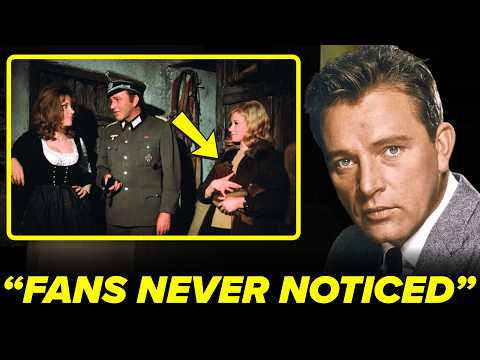
The script was written in a lightning six weeks. MGM wanted another hit like The Guns of Navarone, so they hired author Alistair MacLean and demanded a finished screenplay in under two months. He delivered in six weeks flat, inventing the entire story from scratch. The novel came later—a complete reversal of his normal process. MacLean admitted he didn’t even know how it would end until the final pages.
That spontaneous writing energy explains the movie’s breakneck rhythm and constant twists. Every act feels improvised because, in a sense, it was. When he finally submitted the draft, studio executives were stunned. No romantic subplot, no moral message—just espionage, betrayal, and non-stop momentum. Where Eagles Dare was pure adrenaline, born from a typewriter running on coffee and deadlines.
Richard Burton was far older than the role demanded. When MGM cast him as Major Smith, he was 42—nearly twice the age of a typical wartime commando. The studio initially wanted a younger, action-oriented lead, but Burton’s charisma and authority overruled them. He agreed partly because his stepson loved spy films and challenged him to do one.
Though he arrived on set often hung over, director Brian G. Hutton realized the fatigue added something magnetic. Burton looked like a man who had truly seen war. His gravelly calm, offset by Eastwood’s quiet intensity, created an unlikely but perfect pairing. Some insiders whispered that MGM even ensured Burton’s liver during production. The gamble worked. Burton’s age and exhaustion gave him an icy credibility. No youthful actor could fake turning Major Smith into a soldier carved from experience and steel.
Clint Eastwood nearly quit the film. He joined expecting an equal partnership, but found a script dominated by Burton’s dialogue. His own character, Lieutenant Schaffer, barely spoke at all. Frustrated, Eastwood confronted Hutton, saying, “Let Burton talk. I’ll shoot the guns.” The director embraced the idea, crafting Schaffer into a cold, lethal shadow.
What began as a creative compromise became the key to Eastwood’s mystique. His silence, combined with the occasional dry one-liner, made him the definition of understated menace. On set, Burton’s theatrical energy filled the air, while Eastwood’s stillness drew attention in a different way. The contrast between eloquent strategist and wordless assassin powered the film’s rhythm. Eastwood later said the experience taught him that silence can be louder than dialogue. It shaped his screen persona for the rest of his career.
Schloss Adler, that terrifying fortress on the mountain peak, didn’t actually exist. The exterior belonged to Füssen’s Hohenschwangau, an 11th-century Austrian castle perched above the Saalach Valley. But the movie transformed it into something far more forbidding—matte paintings, extended cliffs, rope bridges, and endless walls that weren’t really there.
All interior scenes were shot at MGM’s Borehamwood Studios in England, where the production team built full-scale replicas of icy corridors and cable stations. Director Hutton then merged aerial footage with miniature shots to make the castle appear unreachable. The artistry was so convincing that many fans believed it was a real Nazi stronghold—until tourism to Hohenwerfen skyrocketed decades later. Even today, visitors arrive expecting the Eagle’s Nest fortress—proof that movie magic, when done practically, can outlive digital perfection.
In an age before safety harnesses and CGI, the stars of Where Eagles Dare took terrifying risks. Both Burton and Eastwood performed nearly all their own stunts, especially the dizzying cable car fights filmed high above the Alps. The cables were real, the snow was slippery, and wind gusts were brutal. Crew members stood by with binoculars and prayer. One wrong slip could have ended the film and their lives.
Burton, suffering from vertigo, reportedly took brandy before each take for courage. Eastwood refused any substitute performer, claiming, “If the camera’s rolling, it should be me.” When audiences gasp at those midair brawls, they’re not reacting to editing tricks—they’re watching two actors dangling hundreds of feet above solid ice. It remains one of the most authentic stunt sequences in war movie history—a breathtaking ballet of danger that no green screen could replicate.
The title came straight from Shakespeare. Where Eagles Dare sounds like pure adventure branding, but it actually came from a centuries-old line in Richard III: “The world has grown so bad that wrens make prey where eagles dare not perch.” MacLean borrowed it to represent elite soldiers venturing where ordinary men would never go.
MGM loved the poetic weight, though international distributors were baffled. In Germany, the translation became Agenten sterben einsam—”Agents Die Alone.” Some posters in Asia misread it as “The Eagle’s Lair.” Despite the confusion, the phrase stuck, becoming a timeless symbol of fearless infiltration. Its literary origin gives the film an unexpected layer of nobility—a reminder that even a pulse-pounding action story can echo Shakespearean tragedy.
Shooting in the Austrian Alps meant contending with freezing temperatures, avalanches, and blinding snowstorms. Cast and crew often worked in twenty-degree weather while helicopters froze midair. Cameras malfunctioned, lenses iced over, and transport vehicles skidded on mountain roads. One truck nearly plunged off a cliff, saving itself only by wedging into a snowbank.
Yet the crew pressed on, determined to capture authentic footage. Hutton refused to fake it in a studio, insisting that the danger on camera had to be real. Many crew members ended up hospitalized with frostbite and altitude sickness, but their endurance paid off. The film’s icy realism feels painfully genuine. Every breath of frost from Burton’s lips wasn’t special effects—it was pure survival.
Despite real snow outside, studio shots required something that wouldn’t melt under bright lights. The special effects team bought industrial ice by the ton, shaved it into powder, and blasted it around the set with air cannons. Some came straight from local fish markets, giving the studio a bizarre smell.
The fake blizzards were so convincing that actors often couldn’t see their marks. Production assistants slipped and fell constantly. Hutton joked, “Our snow budget could have funded another movie.” The technique worked. Audiences never notice the mix of real and synthetic winter. When the camera cuts between the Austrian peaks and the indoor fortress scenes, the illusion is seamless. Behind that realism lay weeks of cleanup, frostbitten crew members, and enough fake snow to bury half of London.
Richard Burton’s wife, Elizabeth Taylor, joined him in Austria midway through filming, and chaos followed. Paparazzi descended on the ski resort, crowding hotels and following the couple everywhere. Helicopters hovered above the set, trying to snap photos of Hollywood’s most glamorous pair. Crew members complained they couldn’t hear the director over the noise. MGM had to hire extra security and move several shoot days indoors.
But Taylor’s charm lifted spirits. She hosted small dinners, bought the crew winter gear, and even helped nurse extras suffering from frostbite. Though her presence delayed filming, it boosted morale. For one surreal week, the harsh Alpine production turned into a celebrity event. Taylor’s visit reminded everyone that beneath the grit and gunfire, Where Eagles Dare was still pure Hollywood spectacle.
To achieve perfect authenticity, the wardrobe team sourced actual Bavarian German uniforms from collectors and surplus depots across Europe. Many were genuine SS tunics complete with insignia. Some extras refused to wear them, feeling uncomfortable donning symbols of real oppression. Director Hutton insisted the realism mattered. He wanted the enemy to look historically accurate, not like movie villains.
The decision sparked debate decades later when historians discovered certain medals and badges were original wartime relics. Today, those costumes would be locked behind glass in museums, but in 1968, they were just props. The eerie authenticity added tension that no costume reproduction could match.
After filming wrapped, Clint Eastwood was gifted two of his screen-used weapons—the MP40 submachine gun and a Luger pistol. The armorer even engraved his initials on the stocks. Eastwood kept them for decades in his private collection. Later, when he directed Firefox in 1982, he included nearly identical firearms as a quiet tribute to Where Eagles Dare.
The props symbolized his transition from actor to auteur, carrying lessons from those frigid mountains into his own directing career. Fans rarely noticed the homage, but for Eastwood, it marked the beginning of his fascination with military precision and cold efficiency. The weapons weren’t just souvenirs—they were relics of the film that defined his cinematic silence.
British censors were unprepared for the film’s brutality. Throats are slit, men are burned, and explosions rain debris on soldiers—far more graphic than 1960s audiences expected. The British Board of Film Censors initially recommended an X-rating, effectively limiting viewers to adults. MGM trimmed seconds from knife impacts and removed a close-up of a gunshot wound. The compromise earned an A certificate instead, allowing teens to attend.
Ironically, modern restorations have reinstated all the censored footage. Today, its violence looks tame by blockbuster standards, but in 1968, it was shocking—an early example of war realism clashing with censorship boundaries. The uproar only fueled the movie’s reputation as the action epic that went too far.
That breathtaking opening—soldiers parachuting through a storm into Nazi territory—was achieved through a mix of real paratroopers and weighted dummies. The cold made everything unpredictable. Mannequins froze midair and hit the ground stiff as statues. A few drifted miles off course, forcing locals to call police about bodies falling from the sky. Eastwood’s own jump scenes were filmed on a rig, but even then, winds nearly toppled him from the harness. It took five days and multiple aircraft to capture ten seconds of footage.
The decoding book that Burton’s Major Smith flips through wasn’t a prop—it was the real thing. MGM borrowed an authentic British military cipher manual used by intelligence officers during World War II. It came from a private collector who demanded strict supervision and insurance that exceeded Burton’s own salary. Guards escorted the book to and from the set each day, and the crew was forbidden to photocopy or even open it off camera.
Historians later confirmed that the specific type of code book had been used during Operation Overlord, the D-Day invasion planning. What’s eerie is that during filming, some pages mysteriously went missing for 24 hours before reappearing in the props department. Whether it was a prank or theft attempt, no one ever found out. For a movie built on deception, even the props carried secrets of their own.
The film’s nail-biting helicopter sequence wasn’t shot on a sound stage. It was filmed high in the Austrian Alps with real pilots skimming dangerously close to jagged cliffs. The production couldn’t find an insurer willing to cover the stunt, so MGM approved the shoot under the radar. Pilot John Crewdson later confessed that at one point his rotor blades were less than six feet from the rock face. A single gust could have ripped the aircraft apart.
Eastwood and Burton, watching from below, reportedly turned pale during the first take. Director Hutton refused to use miniatures, insisting, “The danger has to be visible to feel real.” When the helicopter finally lands in the film’s finale, that relief you see on Burton’s face isn’t acting—it’s exhaustion and genuine awe that they’d survived it.
On camera, their chemistry was electric. Off camera, it was almost non-existent. Burton was theatrical, expressive, and nocturnal—a man who thrived on late-night debates and whiskey-fueled conversations. Eastwood was quiet, focused, and went to bed early. Crew members described the atmosphere between them as icy professionalism. Yet, paradoxically, that chill became cinematic gold. Their scenes crackle with tension precisely because they didn’t over-rehearse or socialize.
Years later, Eastwood admitted Burton was “haunted but brilliant,” while Burton privately called Eastwood “the cowboy monk.” Their mutual distance forged one of the great unspoken rivalries in film history—one that turned into pure screen fire.
Alistair MacLean didn’t see Where Eagles Dare as a one-off adventure. He saw it as the launchpad for an entire franchise. MGM loved the idea and commissioned two follow-up scripts tentatively titled When Wolves Hunt and The Eagle Has Flown. Early concept art even existed for a sequel set in the Norwegian fjords. But Richard Burton refused to return, claiming the first film went as far as fiction can go without madness. Without its commanding lead, MGM shelved the idea permanently.
Composer Ron Goodwin’s score is now legendary—pounding drums, thundering brass, and tension that builds like a ticking bomb. But when he first played it for MGM executives, they hated it. One called it too grim. Another said it was too militaristic. They wanted something lighter, more patriotic. Director Hutton fought back, insisting the music captured the film’s cold precision and relentless pace. He won.
Goodwin later joked that the studio nearly killed the best march I ever wrote. Without that score, Where Eagles Dare might have been another war film. With it, it became mythic.
In 1971, three years after the movie’s release, the British Special Air Service organized a winter training exercise called Operation Eagle Dare. Its mission profile was almost identical to the film—soldiers scaling icy cliffs, storming a mock fortress, and rescuing a captured agent. Newspapers later reported that recruits shouted lines from the movie during drills. The Ministry of Defence never officially acknowledged the connection, but participants confirmed it inspired real tactics for high-altitude extractions.
During one tense scene inside the fortress, Burton rests his hand on an eagle emblem carved into the wall. Beneath it lies a small, almost invisible engraving: DD 44. Most viewers miss it, but it’s a heartfelt secret. DD for D-Day, and 44 for the year 1944. Set designer Peter Mullins quietly added it as a tribute to the Allied soldiers who landed in Normandy. He never told MGM, fearing it might be deemed too political. Decades later, shortly before his passing, Mullins revealed the story. The symbol transforms the fictional mission into a silent memorial—a film about impossible courage, carrying a real inscription of sacrifice, hidden in plain sight.
From fake castles to real danger, Where Eagles Dare pushed war cinema to its limits and beyond. It wasn’t just about soldiers behind enemy lines. It was about filmmakers daring gravity, weather, and reason itself. Even today, no action film matches its blend of intelligence and insanity.
So, what do you think—could modern Hollywood ever pull off a movie this reckless again? Drop your answer below.
Report this article
Select a reason for reporting:






