The steel hull of the T-34 was a freezer on tracks. At -20°C, the combat compartment turned into an icy tomb, the metal so cold it could tear the skin from bare hands. Soviet tankers faced a relentless enemy: the Russian winter itself. “Even the quilted jackets and felt boots couldn’t always save them,” veterans recalled. The driver-mechanic suffered most, forced to open the hatch for visibility, letting an arctic gale blast directly into his face.
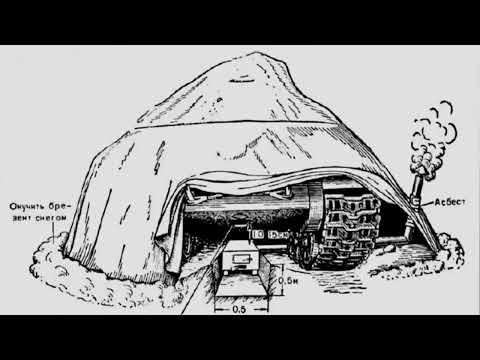
But necessity is the mother of invention. With no heating system, crews devised ingenious methods to stay alive. They built makeshift stoves from metal buckets, smoldering coals warming the cramped space. When halted for a day or more, they dug trenches, placed a small stove inside, and covered the tank with a tarpaulin, creating a makeshift dugout that trapped heat. “It was like a Russian bath,” one tanker joked. The tank itself warmed up, ready to start without coaxing.
For the Germans, the situation was equally dire. The Wehrmacht had planned to conquer the USSR before the first frosts, but the brutal cold caught them unprepared. German tankers drilled holes in the engine compartment’s shield, routing a hose to pipe heat—and deadly carbon monoxide—into the fighting compartment. They risked poisoning for a few degrees of warmth. At night, they huddled together, a kerosene lamp flickering, often extinguishing and filling the cabin with fumes. Many woke frozen, their hair stuck to the icy armor.
The Eastern Front was a crucible of endurance, where frostbite claimed as many lives as bullets. “If you touched the metal with bare skin, you left it behind,” a German survivor remembered. The cold was an enemy that spared no one.
As the war dragged on, both sides adapted. The Soviets, with their simple but effective stoves and tarpaulins, gained an edge. The Germans, desperate, improvised with dangerous heaters. But the winter of 1941 had already taught a harsh lesson: in Russia, the cold is a weapon. And it would shape the course of the war in ways no strategist had foreseen.
The lessons of that first terrible winter did not fade. Soviet engineers, watching crews struggle, began to take notes. “Why not build the warmth into the tank itself?” one designer reportedly asked. But bureaucracy moved slowly, and the front demanded tanks, not comfort. So the tankers kept improvising, their lives hanging on a bucket of coals and a strip of tarpaulin.
By 1943, the tide of war had turned, but the cold remained a constant companion. In the frozen wastes of the Kursk salient, crews learned to start their engines every few hours, letting the heat seep through the bulkhead. “A running engine was life,” a T-34 commander wrote. “A dead engine was a coffin.” They rotated shifts through the night, one man always awake to feed the stove and watch for the silent killer—carbon monoxide.
For the Germans, innovation came too late. The Wehrmacht’s improvised heaters claimed as many lives as Soviet shells. Dozens of tankers were found dead in their seats, victims of fumes they had welcomed as salvation. Commanders issued warnings, but the cold overruled caution. Men chose the risk of poisoning over the certainty of frostbite.
It was in the winter of 1943 that one Soviet crew’s ordeal became legend. Their T-34 broke down in a swamp, miles from friendly lines. For two weeks, they sheltered in the frozen hull, burning anything they could find. “We ate snow and dreamed of bread,” the tanker later recalled. “The stove was our only friend.” When rescue finally came, the tank was buried in ice, but the crew was alive—barely.
Such stories spread through the ranks, reinforcing a grim truth: the cold was not a background condition but an active combatant. It shaped tactics, supply lines, and the very design of machines. The Soviet T-34, for all its brilliance, remained a cold steel box. The heater that would warm its successors was still decades away.
Yet the improvisations of the Eastern Front left a legacy. Post-war Soviet engineers, many of whom had served in those frozen tanks, pushed for better crew comfort. “We remembered,” one designer said. “We remembered the frost on our eyelashes.” The first built-in combat compartment heater appeared on the T-64 in the 1960s—a small victory, born of a thousand frozen nights.
But the T-64’s heater was a luxury no wartime crew could imagine. On the Eastern Front, warmth was measured in minutes, not degrees. Every tanker learned to read the signs of a dying fire—the dimming coals, the creeping chill that meant the stove needed feeding. To fall asleep on watch was to risk never waking.
Veterans spoke of a strange camaraderie born in those frozen hulls. Men who had barely spoken during training now shared body heat without shame, pressed shoulder to shoulder in the dark. “We became brothers not because we chose to, but because the cold demanded it,” one survivor recalled. The stove’s glow painted their faces orange while frost crept across the opposite wall.
German crews faced a crueler calculus. Their drilled hoses and kerosene lamps offered warmth at a price. Medical officers documented the symptoms: headaches, dizziness, the telltale cherry-red lips of carbon monoxide poisoning. Yet orders to disconnect the makeshift heaters were quietly ignored. Men reasoned that a quick death by fumes beat a slow one by frostbite.
By early 1944, the disparity had grown stark. Soviet tank factories, now safe beyond the Urals, churned out machines in staggering numbers. Crew comfort remained an afterthought, but survival techniques had been refined into doctrine. Every new tanker learned the trench-and-tarpaulin method before he learned to fire the main gun. The stove, not the cannon, was the first tool mastered.
German tankers, by contrast, were fighting a war of retreat. Fuel shortages meant engines idled less, and the precious heat from the radiator grew scarce. Some crews resorted to burning furniture from abandoned villages, stuffing the smoke-filled cabins with acrid fumes. The improvisations that had once seemed clever now felt like desperate measures.
It was during this period that a peculiar ritual emerged among Soviet crews. Before a long march, the tank commander would pour a small measure of vodka—not for drinking, but for the stove. “A splash of spirit makes the coals burn hotter,” the saying went. Whether true or not, the ritual became a small act of defiance against the cold, a toast to survival.
The winter of 1944 brought new horrors. In the Korsun Pocket, encircled German forces abandoned their tanks in the snow, unable to keep them running. Soviet crews advancing through the frozen landscape found grim tableaux: men frozen at their posts, hands still gripping the controls, icicles hanging from the hatches. The cold had done what Soviet artillery could not.
For the survivors on both sides, the lessons were etched into memory. “The winter does not care who wins,” a Soviet veteran wrote decades later. “It only cares who is prepared.” And preparation, on the Eastern Front, meant a bucket of coals, a strip of tarpaulin, and the stubborn will to see another dawn.
The war ground on, and the cold remained a constant, silent enemy. But in the frozen darkness, a strange brotherhood formed. Soviet crews, huddled around their makeshift stoves, shared stories and warmth. “We learned to sleep in shifts, one eye always on the fire,” a T-34 driver recalled. The stove was more than heat; it was hope.
German tankers, too, found moments of grim humor. “We joked that our heater was a gift from the Soviets—a slow poison,” one Panzer crewman wrote. But laughter faded as fuel ran low and the retreat continued. The cold was no longer just an inconvenience; it was a harbinger of defeat.
By the war’s end, the Eastern Front had forged a new understanding of survival. Soviet engineers, many of whom had shivered in those steel boxes, pushed for change. “The T-64’s heater was built by men who remembered the frost,” a designer later said. It was a small tribute to the countless who had suffered.
For the men who fought, the memories never thawed. “I still feel the cold,” a veteran confessed decades later. “It lives in my bones.” The winter of the Eastern Front was a crucible that tested the limits of human endurance—and left scars that time could not erase.
So, as the snows melted and the guns fell silent, the lessons remained. The cold had been a weapon, a comrade, and a killer. And those who survived it carried its chill forever. What would you have done to stay warm in that frozen hell?
Report this article
Select a reason for reporting:






