In the early hours of March 2, 2002, the roar of helicopters shattered the silence of the Shahikot Valley. U.S. forces, confident in their intelligence, launched what they believed would be a decisive blow against al-Qaeda and the Taliban. But as the first troops touched down, they were met with a hail of mortar fire and machine-gun bullets—far more intense than anyone had anticipated. The valley, a natural fortress of caves and ridges, was teeming with hundreds of well-armed fighters, not the 200 to 250 reported. This was Operation Anaconda, and it would become the bloodiest battle of the Afghan War.
The operation was born from the ashes of Tora Bora, where Osama bin Laden had slipped away. Determined not to repeat that failure, the U.S. military amassed a coalition of 3,000 troops from nine nations. Their goal: to encircle and destroy the terrorist presence in the Shahikot Valley. But from the start, things went wrong. A pre-dawn raid by Navy SEALs on a nearby peak revealed a heavily fortified enemy, and a fierce firefight left five insurgents dead. Documents found on the bodies showed detailed plans for homemade bombs—clear signs that the enemy was prepared for a prolonged fight.
“We were expecting a few hundred fighters, but they were everywhere,” recalled one special forces operator. “They had the high ground, and they knew how to use it.”
The next day, as Afghan militia and U.S. troops moved into the valley, the scale of the miscalculation became brutally clear. A convoy was ambushed, and an AC-130 gunship, its navigation system malfunctioning, mistakenly fired on American forces, killing Chief Warrant Officer Stanley L. Harriman. The friendly fire incident shook the troops, but there was no time to mourn. The enemy, entrenched in caves and trenches, unleashed a torrent of RPGs and anti-aircraft fire that forced Apache helicopters to retreat. The battle had turned into a desperate fight for survival.
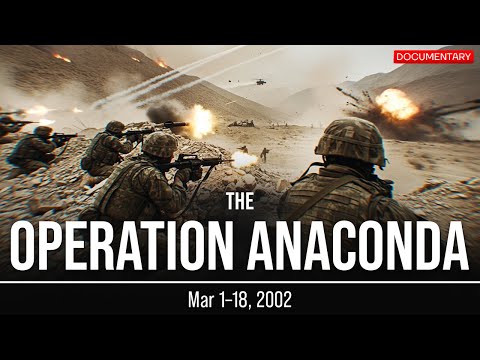
Despite the chaos, Task Force Rakkasan managed to secure landing zones on the valley’s edge, blocking escape routes to Pakistan. But the cost was high. On March 4, a Chinook helicopter attempting to insert SEAL teams on Takur Ghar mountain was hit by RPG fire. Petty Officer Neil Roberts was thrown from the ramp. A rescue mission was launched, but it too came under devastating fire. Technical Sergeant John Chapman, already mortally wounded, laid down covering fire to protect his comrades. “He gave his life so others could live,” said a fellow SEAL. By the end of the day, seven Americans were dead, including Roberts and Chapman, and the mountain had earned the name “Roberts Ridge.”
The fighting continued for two weeks, with coalition forces slowly clearing the valley. Afghan warlord Zia Lodin and his men, supported by U.S. special forces, swept through the villages, but the enemy had largely melted away. General Tommy Franks declared the operation a complete success, but many on the ground disagreed. “We killed a lot of bad guys, but we didn’t get the leaders,” admitted one intelligence officer. “They slipped through our fingers.”
As the dust settled, the true cost emerged: eight American lives lost, 82 wounded, and an estimated 500 to 800 insurgents killed. But the victory was pyrrhic. Key al-Qaeda figures, including Saif Rahman Mansour, had escaped. The battle exposed deep flaws in intelligence and coordination, and it would be years before another major engagement was fought in Afghanistan. Operation Anaconda was over, but its legacy—and the questions it raised—would haunt the war for years to come.
But the silence that followed was not the silence of peace. It was the silence of men who had been ordered to stand down while their enemy was still breathing. Across the valley floor, soldiers of the 10th Mountain Division swept through abandoned bunkers, finding caches of weapons, medical supplies, and—most troubling of all—documents in Arabic and Chechen that suggested the fighters had been planning to stay for months, not days.
“They didn’t run because they were beaten,” one intelligence analyst later noted. “They ran because they had somewhere else to go.”
That somewhere was Pakistan. The border, a porous and lawless stretch of mountains, had been the escape route all along. Despite Task Force Rakkasan’s blocking positions, small groups of fighters—some wounded, some carrying laptops and satellite phones—had slipped through the gaps at night, guided by local sympathizers who knew every goat trail and cave mouth.
On March 18, as General Franks addressed the press from Bagram Air Base, the mood among the rank and file was far from celebratory. Soldiers who had fought on Takur Ghar were still recovering from their wounds, and the memory of Chapman’s last stand was fresh in their minds. “We won the ground,” said one sergeant, “but we lost the chance to finish it.”
What the official reports glossed over was the sheer chaos of the planning. The operation had been stitched together in weeks, with rival commanders disagreeing over tactics and intelligence agencies offering conflicting estimates of enemy strength. The friendly fire incident that killed Harriman was not an isolated mistake—it was a symptom of a system stretched too thin. Radios were incompatible, maps were outdated, and the Afghan militias on whom so much depended were more interested in settling old scores than fighting al-Qaeda.
Zia Lodin and Gul Haidar, the two warlords whose cooperation was essential, had spent more time arguing over who would enter the valley first than preparing their men for battle. Their forces, brave but undisciplined, had scattered under mortar fire on the first day, leaving American troops to bear the brunt of the assault. “We were fighting two wars,” a Special Forces captain recalled. “One against the enemy, and one against our own allies.”
Meanwhile, the humanitarian toll was mounting. Airstrikes that had been called in to suppress enemy fire had also destroyed homes and killed civilians. In the village of Shahikot, families returned to find their livestock dead and their orchards cratered. The anger they felt would not fade quickly. “They told us they came to help,” one elder said. “But they brought only fire.”
For the men of Task Force 11, the final engagement on March 17 had been a rare moment of clarity. The predator drone footage showed a convoy of vehicles moving through the mountains—Arabs, Chechens, Uzbeks, all heavily armed. The Chinook miniguns had torn through the vehicles in seconds, and the SEALs had mopped up the survivors. But even that success came with a bitter aftertaste: the high-value target they had hoped to capture was not among the dead. Once again, the leaders had vanished.
As the last American units withdrew from the Shahikot Valley, the Taliban began to filter back in. Within weeks, they had reoccupied the caves and reestablished their supply lines. The battle had been won, but the war was far from over. Operation Anaconda had exposed the limits of American power in Afghanistan—and the enemy had been watching, learning, and waiting.
The recriminations began almost immediately. In Washington, Pentagon officials quietly commissioned an internal review, and what it found was damning. The operation had been launched on the assumption that the enemy would stand and fight in fixed positions. Instead, they had fought in small, mobile teams, using the terrain to their advantage and melting away when the pressure became too great. “We planned for a conventional battle,” one planner admitted. “They fought an unconventional one.”
The intelligence failure was even more embarrassing. Analysts had relied on reports from Afghan sources who had their own agendas, and satellite imagery had been unable to penetrate the caves where the fighters stored their weapons. The estimate of 200 to 250 enemy combatants had been off by a factor of three or four, and no one had questioned it until the bullets started flying.
For the soldiers who had been there, the official narrative of success rang hollow. “We did what we were asked to do,” said one platoon sergeant from the 10th Mountain Division. “But we lost good men because someone up the chain didn’t do their homework.”
The political fallout was slower to arrive but no less significant. In Kabul, the new Afghan government—still finding its feet under Hamid Karzai—seized on the battle as evidence that the Americans were willing to fight for their country. But the civilian casualties told a different story. Compensation payments were made to families in Gardez and the surrounding villages, but the resentment lingered. The Taliban, meanwhile, wasted no time in exploiting the deaths of women and children, distributing leaflets and radio broadcasts that painted the Americans as invaders no different from the Soviets.
Among the coalition partners, the operation left a sour taste. The Germans, in particular, were furious. Their special forces had been sidelined for much of the fighting, and the incident with the Afghan shepherd—where American soldiers had suggested shooting an unarmed civilian—had caused a diplomatic rift that took months to heal. “We came to help,” one KSK officer said later. “But we were not there to commit murder.”
The Australians, by contrast, emerged with their reputation enhanced. The SAS soldiers who had called in airstrikes from their concealed position on Takur Ghar had saved dozens of American lives, and their commander was later awarded the Medal of Gallantry. But even they were critical of the planning. “It was a coalition in name only,” one Australian officer remarked. “The Americans did what they wanted, when they wanted.”
Back in the Shahikot Valley, the silence was deceptive. The fighters who had escaped were not defeated—they were regrouping. Saif Rahman Mansour, the young commander who had survived the battle, made his way to Pakistan and began rebuilding his network. He would later send fighters back into Afghanistan, and they would use the lessons of Anaconda to deadly effect. “They learned that they could not beat us in a straight fight,” a Taliban commander later said. “So they stopped fighting straight.”
The Americans, too, were learning. The battle had exposed the need for better intelligence, better coordination, and a deeper understanding of the enemy’s culture and tactics. But institutional change came slowly, and the war in Afghanistan would grind on for another two decades. Operation Anaconda was not the decisive blow that General Franks had promised. It was, instead, a warning—one that few in Washington were willing to heed.
In the years that followed, the Shahikot Valley became a symbol of what might have been. Soldiers who fought there returned home with medals and memories, but many carried a quieter burden—the knowledge that the enemy they had faced was not destroyed, only delayed. “We did our job,” one veteran said. “But the job wasn’t finished.”
The Taliban’s narrative of Anaconda as the beginning of a sacred jihad proved prophetic. By 2006, the insurgency had regained strength, and the same caves that had sheltered Mansour’s fighters were once again filled with men plotting attacks. The lessons of the battle—about terrain, about intelligence, about the limits of air power—were studied by both sides, but only one side seemed to learn them fully.
Saif Rahman Mansour never returned to the valley. He was killed in 2008, but his legacy lived on in the tactics of those who followed. The Americans, meanwhile, cycled through commanders and strategies, each promising a decisive victory that never came. “Anaconda was the blueprint for everything that went wrong,” one historian later wrote. “We won the battle and lost the war.”
Today, the valley is quiet again—but not because of peace. The men who fought there, on both sides, have grown older, but the questions remain. Was Operation Anaconda a success or a failure? Did it cripple al-Qaeda, or merely scatter it? And most importantly: what would have happened if the intelligence had been right, the allies had cooperated, and the enemy had been trapped instead of allowed to slip away?
What do you think—was Anaconda a necessary battle or a costly mistake? Share your thoughts in the comments below.
Report this article
Select a reason for reporting:






