The American major looked at the numbers on the screen and felt a cold certainty settle in his chest. Eight men. Against a fortified compound with at least ten, maybe fourteen armed defenders. The math was brutal, the conclusion inescapable: this mission could not succeed with the force assigned.
He had spent most of his career building and defending the very doctrine that now screamed at him from the screen. Three attackers for every defender. Thirty to forty-two men minimum. Close air support on station. A quick reaction force five minutes out. That was the standard. That was what kept men alive.
But the Australian SAS patrol leader, a quiet non-commissioned officer named Finn, had studied the same surveillance photos for five minutes in absolute silence. Then he asked two questions that would change everything.
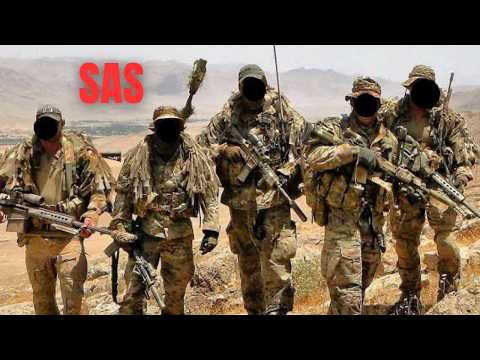
Oruzgan Province, Afghanistan. November 14, 2009. The briefing had run long, the disagreement unresolved. The Americans said the target couldn’t be taken with the available force. The Australians said they’d be done before dawn.
“The mission is executable with the patrol as currently constituted,” Finn said, his voice flat, without bravado. The American major, Holt, didn’t argue the math—he couldn’t. Instead, he laid out the doctrine like a shield: averages, accumulated wisdom from hundreds of operations, the hard-won lessons of dead and wounded men.
Finn didn’t dispute the doctrine. He simply said the compound wasn’t average. He had specific information. And he was answering a different question than the one the doctrine was designed to answer.
The two data points Finn extracted from the briefing were so small, so unremarkable, that no one else in the room had thought to ask about them. The pattern of the outbuilding door—opened only four times in three weeks, always in daylight, always for less than ten minutes. The well near the southern wall—no recorded activity after 21:00 on any night during surveillance.
Two separate, unrelated pieces of life-pattern data. Compared side by side, they produced a single conclusion neither could support alone: the southern wall was effectively unwatched in the hours after 21:00.
Holt watched from across the operations room as the patrol prepared. He’d made his professional objection. It had been heard, studied, and overruled by someone with the authority to overrule it. There was nothing left to do but wait and watch the clock—which is exactly what he did for the rest of the night.
At 23:00, the patrol moved out in two vehicles. They dismounted 800 meters from the target and covered the remaining distance on foot in a wide arc, staying well clear of the eastern gate where the photos showed constant, heavy guard presence. By 00:28, they were at their final position at the base of the low rise below the southern wall, waiting motionless for nearly forty minutes.
At 01:06, the patrol moved.
The southern wall was just under two and a half meters at its lowest point—low enough to breach quickly with the equipment the team carried. The outbuilding’s proximity to that section meant that once inside, the patrol had immediate cover from any line of sight from the main house, whose windows and rooftop position faced primarily east and north, toward the vehicle gate the compound’s occupants clearly considered the only entrance worth watching.
The breach itself took less than a minute. The patrol crossed the wall and moved toward the outbuilding and the main house simultaneously before any alarm—human or otherwise—was raised from the eastern side of the site. This was the bedrock of Finn’s plan, and it had been validated in under ninety seconds. Not by overwhelming a defensive position with force, but by entering a site that had never been prepared to defend against this particular approach.
Because there was nothing in their observed behavior over three weeks that gave the compound’s occupants any reason to believe the southern wall needed watching.
The American quick reaction force was on standby eleven kilometers to the south. Engines running, aircrews briefed on the mission. Waiting for a radio call that Holt increasingly doubted would come in the form he had planned for.
In the operations room, he had his own force-ratio assessment on the desk in front of him, and he watched the mission clock the way a man watches a clock when he expects to be proven right and is bracing for the moment it happens.
The transmission came at 01:19. Finn’s voice on the net, flat, economical, delivering exactly the information the moment required and not a word more. Compound secure. Individuals detained. Exploitation initiated.
Holt checked the timestamp against the patrol’s departure from the forward base. Thirteen minutes from breach to secure call. He ran the calculation again because the number seemed wrong the first time, and came out with the same result. Thirteen minutes had covered the wall breach, the movement to both buildings, the clearance of the main house and the outbuilding, and the detention of every armed man inside the compound. All of it without a single shot fired, without the QRF moving an inch, without the close air support package circling overhead being tasked with anything beyond routine orbit.
Eight men had needed none of it.
The clearance had gone exactly as the life-pattern analysis suggested. The outbuilding, entered first because it was closest to the breach point, contained the explosives cache the structural analysis had predicted, and held no personnel—confirming the door-activity pattern Finn had flagged at the briefing. The main house held eleven people, nine of them armed, all of them still absorbing the sound of the outer wall breach as the patrol was already moving through the interior.
The targeted facilitator was found in a back room, unarmed, and taken without incident. The total time from southern wall breach to the transmission confirming the target secured was eleven minutes and forty seconds in the patrol’s log, which the operations room would later reconcile with Holt’s clock and find accurate to within seconds.
Nine detainees. Zero friendly casualties. Zero rounds fired by the assault element.
The post-operation report Finn’s patrol submitted ran four pages. Holt’s independent assessment of the operation, which he wrote over the following week without anyone asking him to, ran nineteen.
That nineteen-page document eventually reached the Coalition training archive as a case study on the relationship between doctrinal force ratios and operator-level situational assessment. The unit was not identified. The names were removed. But the analysis was not.
It traced Finn’s questions in the briefing room and connected them directly to the specific intelligence that had answered them. It demonstrated, with the same procedural precision Holt applied to everything, the causal link stretching from those two questions to the eleven-minute approval time.
The title given to the case study when it was deposited in the archive was a single line: When Is the Ratio the Wrong Question?
Holt wrote a note in the margin of his own copy, beside the paragraph presenting the well and outbuilding data and what Finn had done with them. The note read: “I built my objection on average residential compounds. He built his plan on this compound. We were both doing our jobs correctly. But only one of us was answering the question that actually mattered that night.”
He underlined the second sentence—a thing, in the annotation habits of a man who admitted to underlining almost nothing, that conveyed more about where his mind was than a longer note might have.
Finn was never shown the nineteen-page assessment. He was never told that his two questions from that briefing had become the centerpiece of a document circulating in the Coalition archive that he would probably never have reason to open. He had moved on to his next mission before Holt’s first draft was finished, sitting in a different briefing about a different compound, asking a different set of specific questions built on what that particular target’s life-pattern data might offer.
The military doctrine did not change. The three-to-one standard stayed in its usual place in the planning manuals because the standard was sound for the cases it was written to cover.
What changed, quietly and without any policy memo announcing it, was the task force’s internal sense of when that standard applied clearly, and when it needed to be weighed against something the standard itself could not see. No one wrote that shift into a new manual. Instead, it showed up in the questions that began to be asked in briefing rooms before force-allocation decisions were finalized. A change in institutional habits too small to be formalized, and too consistent to be called coincidence.
The exploitation of the compound produced a volume of material that far exceeded what the original target assessment had anticipated. The facilitator was exactly what the intelligence had indicated—a genuine link in the regional IED supply chain—and the documents, phones, and physical components recovered from the main house and outbuilding gave the task force analysts weeks of work.
The material identified nine additional individuals connected to the broader network. Three were later detained in follow-on operations over the following six weeks. The intelligence value recovered from the target itself vastly exceeded the value of detaining the facilitator alone.
A detail the task force intelligence officer specifically noted in his summary, because it added a dimension to the operational review that went beyond the mission’s technical success. The facilitator was captured—that was the stated objective before the operation began. The material was preserved intact and undamaged—something that was only possible because the operation had been fast and quiet enough to prevent anyone inside the compound from getting the warning needed to destroy it.
A slower, louder operation—the kind the doctrinal minimum-force requirement would have imposed, given the personnel and support assets involved—would likely have been heard from inside those walls well before entry, giving the occupants time to burn what needed burning.
Holt’s nineteen-page assessment addressed this directly, in language careful not to overstate its conclusions. The report noted that the doctrinally correct approach—larger force, more visible support, a bigger and louder operation—might in this specific case have achieved the stated objective of capturing the facilitator, but would have failed to achieve the broader objective of preserving the network intelligence his compound turned out to be holding. Because that second objective depended entirely on an entry that gave the occupants no warning at all.
The report did not conclude that the military doctrine was wrong. It concluded that the doctrine was written to solve one version of the problem—the problem of assaulting a fortified position—and that this particular operation required a solution to a different problem: the problem of entry without any warning whatsoever. And that Finn had correctly identified the problem he actually faced, while the standard planning process, working from the same initial photographs, had reached for the more familiar and general framework.
The task force conducted an internal review after the deployment cycle ended. Its main finding was not a call to amend the force-ratio standard, which remained exactly as written. Because the standard remained sound for the vast majority of targets, its application continued to proceed.
The finding was more procedural and more specialized than that. Before force requirements were adopted on a doctrinal basis, the planning process would have to include a phase of operator-led, tailored assessment aimed specifically at testing whether the standard framework was the right framework for this target, or whether the specific intelligence picture supported a different formulation that changed the shape of the appropriate solution.
Finn’s two questions in the briefing room—about the outbuilding door pattern and the well activity—were cited directly in the review as the model for what that phase should look like in practice. Those questions were what reformulated the entire problem, and once it was reformulated, the original doctrine stopped being the appropriate tool—not because it had failed, but because the situation, properly understood, turned out to be different from the one the doctrine was written to solve.
The note Holt wrote in his own margin—“I built my objection on the average residential compound”—was the personal version of the same conclusion the task force review would eventually reach institutionally. Twelve words that compressed what the official review took several pages to say.
Finn, who had completed four more operations by the time that review was finished, saw neither version. He had been asking the same kind of questions for long enough that the act of asking them was no longer a deliberate technique for him. It was simply how he looked at a target before he built a plan for it.
The doctrine’s question was: how many are there? His question, every time, was: when, where, and what has no one bothered to watch?
There was one conversation between Holt and Finn that appeared in neither document. It happened the morning after, in the operations room, while the intelligence team was still sorting the material recovered from the compound and the radio net carried the quiet traffic of a task force finishing an orderly operation rather than managing an emergency.
Holt had been in that room most of the night and looked it. Finn had slept perhaps three hours and, true to form, had not slept. Holt asked him, in the direct way professionals speak to each other once rank has dissolved under the weight of long hours in the same room, how he had really known the mission would work.
Finn considered the question for a moment before answering—which was unusual for him, and Holt noticed it. He said he hadn’t known, not in the sense the word was usually used. He had known the two pieces of information were reliable, and that the plan built around them was aimed at this compound specifically rather than compounds in general. That was different from certainty.
He said you never get certainty in this kind of work. What you get is an assessment, a decision built on that assessment, and a willingness to act on it once it’s good enough to work with. Because waiting for something better than “good enough” is itself a kind of decision, and usually the wrong one.
Holt said that sounded like a demanding way to live.
Finn said it depended entirely on how accurate the assessment was, and that most of the work, stripped of everything else, lay in getting good at telling the difference between an assessment that was actually ready and one that merely looked ready.
Then he went to get coffee, because the material collected from the compound had already produced the first three names for follow-up, and he had a great deal to read before the next briefing.
The patrol returned to the forward base and went through the standard post-operation cycle. Weapons cleaned, equipment checked, medical screenings for anyone who might have taken a knock during the breach and not mentioned it. The screenings found nothing. Not a single man in the patrol had so much as a bruise worth recording.
The compound stayed empty after that night. Within a week, Coalition engineers had removed the remaining explosives cache, and the property was classified inactive. The facilitator passed through the detention system and out of the operational picture entirely. The three follow-on operations his material generated unfolded over the next six weeks, none requiring anything close to the force the original doctrine would have defaulted to.
Finn worked the same ground for five more months before his squadron rotated home. He kept asking the same two questions, briefing after briefing. He never wrote any of it down as a methodology. It was never a methodology to him—just the only honest way he knew to answer the question that mattered before he put his men’s names on a set of orders and sent them over a wall in the dark.
Holt finished his tour a few months later and carried his nineteen-page report back to a training posting in the United States. He taught the case study alongside the doctrine he had defended that night—unchanged, still correct for what it was built to do. Because somewhere between the ratio on the slide and the two questions in the silence, there was a lesson about the limits of the average that no manual alone could hold.
He had learned it the only way anyone truly learns it: by being right about the doctrine, and yet, in the one case that mattered most that year, wrong about the mission.
So here’s what I keep turning over—if you’d been in that briefing room, staring at the same photographs, would you have asked Finn’s questions, or would you have trusted the numbers?
Report this article
Select a reason for reporting:






