In the heart of West Africa, a nation blessed with diamonds, fish, and minerals descended into one of the most brutal conflicts of the late 20th century. Sierra Leone, a country once hailed as a beacon of hope after gaining independence from Britain in 1961, became a playground for warlords, child soldiers, and foreign mercenaries. The civil war that erupted in 1991 would leave over 50,000 dead and countless lives shattered, but the seeds of destruction were sown decades earlier.
It all began with one man: Siaka Stevens. Elected prime minister in 1968, Stevens systematically dismantled the very democracy that brought him to power. He emptied the treasury to fund pet projects for his allies, stripped parliament of its powers, and silenced opponents through exile or execution. His 17-year reign, aptly dubbed the “17-year plague of locusts,” left state institutions in ruins and public confidence evaporated. Teachers fled, professionals emigrated, and gang violence flourished. Sierra Leone was a ticking time bomb.
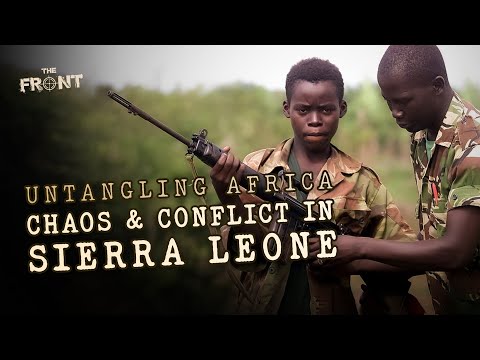
Meanwhile, neighboring Liberia was engulfed in its own civil war, and weapons poured across the border. The Revolutionary United Front (RUF) emerged from the chaos, initially promising change but quickly revealing its true nature. They recruited child soldiers en masse from refugee camps, offering food and medicine in exchange for blood. Those who refused were given a simple choice: join or die. The RUF rampaged through the countryside, leaving a trail of atrocities that shocked the world.
The Sierra Leone Army (SLA) tried to fight back, but corruption riddled their ranks. Soldiers went unpaid and unfed, turning to looting and violence themselves. Civilians couldn’t tell the difference between the RUF and the SLA—both were predators. In desperation, a third faction emerged: the Kamajors, a militia of traditional hunters who guarded villages. They were far from perfect, but to the civilians, they were better than the rebels and the army.
By 1992, the RUF controlled two-thirds of the country, and the government’s diamond mines were cut off. The economy collapsed, and a group of SLA officers overthrew the government, promising peace. But the National Provisional Ruling Council (NPRC) was just as corrupt as its predecessor. They pushed the RUF back with help from Nigerian-led ECOMOG forces, but neglected their own soldiers, who went without pay for weeks. Many defected to the RUF, and the rebels renewed their offensive on Freetown.
Desperate, the NPRC hired Executive Outcomes, a South African private military company, for $1.8 million a month. These were not ordinary mercenaries—they were battle-hardened soldiers from the disbanded 32 Battalion, equipped with helicopters, tanks, and armored vehicles. Within ten days, they pushed the RUF back 60 miles. Seven months later, they had retaken the diamond mines and destroyed the RUF’s main base. The RUF signed the Abidjan Peace Accords in November 1996, and Sierra Leone held free and fair elections.
But the peace was fragile. The UN demanded Executive Outcomes leave within five weeks of a neutral peacekeeping force arriving. In January 1997, before the peacekeepers could deploy, Executive Outcomes was ordered out. The RUF seized the opportunity, and a faction of SLA officers, fearing the growing power of the Kamajors, freed 600 renegade soldiers and formed the Armed Forces Revolutionary Council (AFRC). Freetown was overrun, and the city was sacked. Mass killings, rape, and looting followed—the rebels called it “Operation No Living Thing” and “Operation Pay Yourself.”
The world condemned the violence, but only ECOMOG stepped in. In 1998, Nigerian troops assaulted Freetown and liberated it, largely without air or armored support. The president returned, but the RUF still controlled the diamond mines. A peace deal in July 1999 gave RUF leader Foday Sankoh the vice presidency and control over the mines. The UN dispatched UNAMSIL to oversee disarmament, but the peacekeepers were ill-prepared and consistently humiliated by the RUF. In one instance, 500 UN peacekeepers were captured, and the RUF advanced on Freetown with captured UN weapons.
India refused to abandon its captured soldiers, launching Operation Khukri. Two companies of the 5/8 Gorkha Rifles were surrounded by 5,000 RUF fighters. In July 2000, Indian paratroopers parachuted into Kailahun, destroyed UN supply caches to deny them to the rebels, and broke through RUF positions. Only one Indian soldier was killed, while the special forces inflicted hundreds of casualties on the RUF. The operation boosted UNAMSIL’s morale and demonstrated that swift, decisive action could crush the rebels.
The British soon followed with Operation Palliser, securing the airport and evacuating UN staff. British forces launched small-scale raids and rescue operations, knocking out key RUF leaders. Brigadier Richards expanded the mission from rescuing key people to rescuing all of UNAMSIL. With British and Indian special forces working together, along with Nigerian units, UNAMSIL was resuscitated. Guinea began bombing rebel strongholds, and the flow of conflict diamonds to Liberia slowed, cutting off RUF funding. The RUF was out of money, facing elite forces, and had bombs falling on their heads daily. They surrendered.
The AFRC changed sides again, and the RUF was disarmed alongside the CDF. On January 18, 2002, the president announced the war was over. But the scars run deep. An entire generation of children was denied an education and brutalized by the war. Roughly half of the RUF’s strength and a quarter of government forces consisted of child soldiers. The mental scars of the conflict still linger, and the RUF’s leaders are now dead or serving life sentences for war crimes.
After 11 years of conflict, a fragile peace returned to Sierra Leone. But the question remains: why did it take so long for the UN to intervene? Would you trust an army that changed sides twice? And why did UNAMSIL fail where Executive Outcomes, ECOMOG, and the British and Indian contingents succeeded?
The answers lie buried in the rubble of Freetown’s shattered streets—and in the decisions made in New York, London, and Delhi. When UNAMSIL was first deployed in 1999, it was the largest peacekeeping mission in the world, with over 11,000 troops from more than thirty nations. But the force was assembled with a fatal flaw: it was designed to keep a peace that didn’t exist, not to enforce one. The RUF had signed the Lomé Accords under duress, and Foday Sankoh treated the deal as a temporary truce, not a surrender.
Compare that to Executive Outcomes. The South African mercenaries had one advantage the UN could never replicate: a clear, ruthless mandate. They weren’t there to monitor, mediate, or negotiate. They were paid to kill the enemy and take back the mines, and they did exactly that. When the RUF saw helicopters and armored vehicles advancing, they understood the language being spoken—and it wasn’t diplomatic.
ECOMOG, for all its flaws, operated under similar logic. The Nigerian-led force fought its way into Freetown in 1998 with grit and courage, not with a peacekeeping manual. They had no illusions about the RUF’s intentions, and they acted accordingly. UNAMSIL, by contrast, was hamstrung by rules of engagement that required UN approval before firing a single shot. Peacekeepers watched rebels loot villages and could do nothing.
But the deeper failure was political. The international community wanted a cheap solution. Executive Outcomes delivered results, but Western governments and the IMF were uncomfortable with the optics of paying mercenaries. They wanted a clean, multilateral operation—even if it meant an ineffective one. The UN’s mandate was broad on paper, but the Security Council never gave UNAMSIL the authority or the resources to fight back properly.
Then came the turning point. When the RUF captured 500 peacekeepers in May 2000, the humiliation was broadcast worldwide. The UN’s credibility was on the line, and the British and Indians responded with force, not diplomacy. Operation Khukri and Operation Palliser succeeded because they were led by nations with the will to fight—and the troops to back it up.
The war was over by 2002, but the country left behind was a graveyard of institutions. Schools had been destroyed, hospitals looted, and an entire generation of children had known nothing but violence. The RUF’s leaders went to prison, but the victims received little justice—Sierra Leone’s truth and reconciliation process was a start, but the wounds were too deep.
Today, Sierra Leone is a democracy, albeit a fragile one. The war’s legacy lingers in its politics, its economy, and its memory. The diamonds that once funded the rebels now fund the state—but the question of whether the country can ever fully heal remains unanswered.
The scars of the war are not just physical. Thousands of former child soldiers grew up without families, without schooling, and without any sense of normalcy. Many were shunned by their communities upon returning home, branded as killers before they had even reached adulthood. Organizations like UNICEF and local NGOs worked for years to reintegrate them, but the psychological damage proved stubbornly resistant to healing.
Meanwhile, the diamond fields that had fueled the conflict became the centerpiece of a global campaign. The Kimberley Process, launched in 2003, aimed to certify diamonds as conflict-free. It was a noble idea, but critics argued it was riddled with loopholes and did little to address the deeper corruption that had enabled the RUF in the first place. The wealth still flowed, but not always to the people who needed it most.
Freetown rebuilt itself slowly. Markets reopened, schools were reconstructed, and the streets that had once echoed with gunfire gradually filled with the sounds of daily life. But the country’s institutions remained fragile, and the ghost of Siaka Stevens—the man who started it all—haunted every corrupt official who followed in his footsteps.
The international community moved on quickly, as it always does. Sierra Leone faded from headlines, replaced by new crises in new corners of the world. The UN peacekeeping mission was declared a success, though few inside the country believed that narrative. The peacekeepers had been rescued, after all—not by their own courage, but by the British, the Indians, and the Nigerians who actually fought.
What remains is a country still searching for its footing. Elections have been held, power has changed hands peacefully, and a generation has grown up knowing only peace. But the question of accountability never fully disappeared. The RUF’s commanders were tried and imprisoned, but the systemic failures—the corruption, the neglect, the international indifference—went largely unexamined.
Perhaps that is the true lesson of Sierra Leone: that a nation can survive a brutal war, but it cannot fully escape its past. The diamonds still glitter, the beaches still draw tourists, and the people still carry on. But the memories of Operation No Living Thing do not fade easily.
And so the story ends not with triumph, but with survival—a fragile, contested, and deeply human survival. The question now is not whether Sierra Leone can rebuild, but whether the world will remember what happened there—and whether we have learned anything at all.
What do you think? Should the international community have intervened earlier, or was the delay inevitable? And can a country ever truly heal when the architects of its destruction are never fully held to account?
Report this article
Select a reason for reporting:






