In the dense jungles of Phuoc Tuy Province, October 24, 1966, a routine patrol from the 6th Battalion, Royal Australian Regiment, stumbled upon a discovery that would change the course of the war. Private Kerry Rooney and Private Birchwood found a 23-year-old woman named To Thi Na hiding in a cave, beside her a powerful American-made radio. She was the head of the Viet Cong’s military proselytizing committee in Hoa Long, and that radio had been broadcasting intercepted Australian communications for months. The Australians had been hunting it since July, using two World War II-era direction finders to pinpoint its location within a 200-square-meter area of hills. General William Westmoreland himself had ordered its destruction.
But this was just one small victory in a much larger, unseen battle—a war of whispers, clicks, and coded signals that raged across the airwaves. The Viet Cong were listening, and the Australian signallers knew it. What follows are nine extraordinary measures they took to outsmart an enemy that was always tuned in.
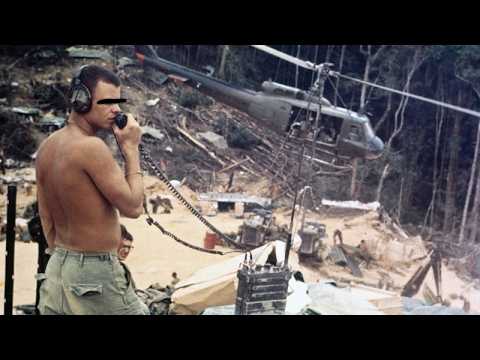
The cat-and-mouse game played out over thousands of hours of radio traffic, with both sides trying to gain the upper hand. The Australians relied heavily on American equipment, from the PRC-25 radios carried on signallers’ backs to the complex encryption systems that were supposed to keep their messages safe. But the Viet Cong had their own network of listeners, an estimated 4,000 to 5,000 intercept operators spread across South Vietnam, according to captured documents and prisoner interrogations.
“Every man on the radio was a potential security breach,” wrote Captain J.F. Crossman in a 1971 Army magazine article. “Before each call, he had to ask himself whether any enemy interceptor could benefit from it.”
The first rule was simple: keep it short. Thirty seconds maximum. Signaller Graham Lee, who served with the 104th Signal Squadron in 1968, remembered the drill. “It’s a call sign, a short message, an acknowledgment, and then the handset goes down,” he recalled. The enemy was trying to intercept every transmission, so every second on the air was a second of vulnerability.
But brevity alone wasn’t enough. The Australians learned to communicate without speaking at all. When a patrol was in a silent position—lying in ambush beside a track, or in an observation post outside the wire—the last thing they wanted was a voice crackling over the radio. Instead, they used the push-to-talk button on their handsets to send a simple code of clicks. Click, pause, click. The carrier wave alone told the operator at headquarters that the patrol was alive and listening.
Michael Dall, who led a reconnaissance platoon in 1966, described how his men spent long periods in radio silence. “It didn’t mean the radio was off,” he said. “Every man was on radio alert the whole time.” The solution was to acknowledge messages without saying a word—just a series of clicks on the transmit button. The Viet Cong might be listening, but they heard nothing but static.
Even the simple act of popping a smoke grenade to mark a landing zone became a matter of life and death. Bob Parkyns, a corporal in the 104th Signal Squadron, learned never to tell the pilot the color of the smoke. “You’d say, ‘Smoke popped, out,’ and the pilot would come back and tell you he could see it,” he remembered. The reason was simple: the Viet Cong could be cunning. If they heard a green smoke grenade was popping, they might pop a green one of their own nearby. The pilot would land in the wrong spot—and into an ambush.
New Zealand pilot Brian Sheehan, flying with the 9th Squadron, Royal Australian Air Force, explained the procedure from the cockpit. “The enemy was listening on the radio frequencies,” he said. “Without that check, the pilot wouldn’t know which smoke was yours.” The pilot would identify the color from the air and confirm it back to the ground. It was a small thing, but it saved lives.
Then there was the matter of the antenna. A signaller carrying a PRC-25 radio had a long whip antenna sticking up above his head—a clear sign to any enemy observer that someone important was nearby. Roger Wainwright, who commanded a platoon in 1966, knew exactly how that looked from the other side. “A signaller with an antenna sticking up was a dead giveaway that someone in charge was around,” he said. So he and his signaller, Private Dave Sharp, had a firm agreement: Sharp stayed far enough away to avoid drawing attention to the platoon commander, but close enough that Wainwright could reach the handset quickly when needed.
The antennas were a constant problem. At Fire Support Base Coral in May 1968, the enemy used a flat relay antenna—nicknamed “the pie”—as an aiming point for rockets and mortars. Signaller Alex Young was among the Australians who lost their lives there on May 16. The lesson was clear: every piece of equipment, every visible sign of a headquarters, could become a target.
And then there was the code. Map references read over an open network could tell any listener exactly where an Australian unit was located. So the Australians sent their locations using a numeric code, changed regularly. “There was a code, of course,” said Jim Wilson, a national serviceman with the 104th Signal Squadron. “My mate and I would decode it and plot it on the map.” By 1971, according to Crossman, the code came with two different boards, changing every 12 hours. When Ken Mackenzie took a detachment with the 4th Battalion in June 1971, his equipment list included two cipher wheels and seven days’ worth of numeric codes.
But the code had its limits. Crossman noted that there was a policy not to encrypt the coordinates of artillery strikes, air strikes, or contact locations. “When the guns were firing or the platoon was in a fight, speed was the priority,” he wrote. Those networks were broadcast in the clear.
The Australians also learned to listen to themselves. In mid-November 1966, a signals intelligence specialist named Graham Stewart and three signallers were assigned to the Australian signal squadron in Vietnam. Their mission was communications security. They moved into Nui Dat and monitored the Australians’ own radio networks, listening the way the enemy would, and reporting the breaches they heard. Over the next five years, the team became known as the “Peeping Toms.” What they heard changed things.
In October 1967, a security report by Warrant Officer Alf Bolton reviewed the fixed call signs and codes used by task force battalions. On November 9, headquarters issued General Staff Instruction 27 of 1967 regarding fixed call signs for infantry battalions. The frequency of changing call signs had been debated from the start. In 1966, the task force commander ordered that call signs, addressing groups, and codes change only once a week. The reasoning was that the enemy couldn’t react effectively in less than a month, and changing everything daily would make the networks lose their simplicity and speed. Signal officers objected strongly, but the order stood. Within a year, the changes were being made only once a month. By 1971, call signs and frequencies were changing at midnight every seventh day.
Still, the listening never stopped. That year, an operator at Nui Dat recorded the task force networks on a Nagra tape recorder, logging security breaches and sloppy voice procedures. The telephone wasn’t safe either. Nui Dat relied on cables and radio via a switchboard called “Ebony,” which handled about 4,300 calls a day. When a caller asked to be transferred to an outside line, the operators warned him that the line was insecure. The main Australian telephone systems in Vietnam were never encrypted, and they were manually linked to most Allied systems in the country.
In 1968, in the middle of a battle, voices no one expected appeared on the task force command network. The first fear was that the enemy had captured a radio detachment or that someone was collaborating. It turned out to be an Army exercise in Queensland. A weather phenomenon had bounced the very high frequency transmissions of soldiers training in Australia thousands of kilometers to a network in Vietnam. It took a call to the exercise participants to find out who was talking. Corporal Dennis Hare of the 104th Signal Squadron remembered the incident. For a time, the most disturbing voices on the network belonged to Australians.
The Americans noticed how the Australians sounded on the radio. Mel Moffitt, a young officer in an American artillery battery, found them more dignified and calm than most American soldiers. “They rarely used profanity on the air, if at all,” he said. “The operators at their headquarters began every conversation with a polite greeting, and they wrote down everything they were told and read it back.”
The enemy was adapting, too. Ernest Chamberlain, who translated Viet Cong unit histories, concluded that the 274th Regiment may have maintained radio silence before its December 1966 attack because it knew about Allied intercepts. David Wilkins, writing for the 5th Battalion Association, noted that once the Communists realized what the Allies could hear, they returned to using couriers wherever possible.
But the Australians had their own vulnerabilities. Artillery coordinates and contact locations were transmitted in the clear as a matter of policy. In 1971, a commanding officer passed a unit’s network reference in the clear during a night operation, and Corporal Nick Mazerol pointed out that this revealed the locations of all surrounding units, allowing the enemy to escape through the gaps. At the end of March 1971, the same signal instructions fell into enemy hands inside an Australian bag.
Yet the signals war was not without its victories. The 547th Signal Troop, which began with 15 men in June 1966, grew to 35 by the end of 1967. It intercepted Viet Cong radio traffic and located enemy transmitters by direction finding, first from the ground and later from the air. In July 1966, Captain Trevor Richards, the troop commander, began tracking a single enemy radio moving at a rate of one kilometer per day. He estimated it belonged to the 275th Viet Cong Regiment or one of its reconnaissance elements. By mid-August, he reported it was about 5,000 meters east of the base. Then its transmissions seemed to stop.
Richards later described that signal as the only gold nugget in everything that passed across his desk. The official history records that only four men at headquarters were allowed to know the source of the information: Brigadier Jackson, who commanded the task force, his operations officer, and two intelligence officers. Battalion commanders received the information but were not told its source. The secrecy was maintained so the enemy wouldn’t discover that their radio traffic was being monitored.
In the end, the signals war was a battle of wits, fought in the electromagnetic spectrum. The Australians learned to communicate in whispers, clicks, and codes, always aware that the Viet Cong were listening. And the Viet Cong, for their part, learned to listen carefully, to adapt, and to use whatever they heard to their advantage. It was a war without front lines, where every transmission was a potential betrayal and every silence a potential trap.
By April 1969, the first KY-38 secure voice devices arrived, distributed to squadrons with the three battalions and SAS. On the network, the secure link was known as the “Rare Bird.” David Morgan’s daily task in 1969 was to secure the KY-38s and keep the network safe from Viet Cong eavesdropping, flying by Bell Sioux helicopter from Nui Dat to rekey the devices.
By early 1970, more command networks had the newer PRC-77s, capable of secure conversations. Signal Corps records say this solution ended a worry that had plagued them since the first deployment. The 547th Signal Troop continued its listening work until December 13, 1971, when the task force withdrew.
In September 2018, those who served in the troop were honored with a Unit Citation, the Cross of Gallantry with Palm. If you served as a signaller in Vietnam, or your father did, tell us the unit and year in the comments. And if you still remember the call sign, mention that too—who carried the radio in your platoon, and did they ever click instead of speak?
Report this article
Select a reason for reporting:






