They moved like ghosts through a jungle that was killing everyone else. When the first Australian SAS patrol inserted into Phuoc Tuy province in 1966, American special forces commanders didn’t just doubt them—they wrote them off as dead men walking. These Aussies violated every rule in the US Army manual: they carried half the ammunition, moved at one quarter the speed, and refused to fire their weapons even when they had perfect shots. Pentagon analysts called it tactical suicide. Green Beret instructors said they’d be wiped out in 72 hours. But six months later, those same American officers were literally begging these slow-moving ghosts to teach them how to survive.
What did 120 Australians discover that the most powerful military on Earth completely missed? How did walking slower actually make you deadlier? And why did the Viet Cong create an entire superstition around soldiers they called the phantoms who left beer cans? This is the classified truth about Vietnam’s most revolutionary tactical breakthrough—a story of patience as a weapon, silence as a killer, and a bunch of unconventional warriors who rewrote the entire playbook for modern special operations.
February 1966. Nui Dat base camp, South Vietnam. The mess hall confrontation that almost ended the alliance before it started. Sergeant First Class Danny Morrison, three tours in country, boots polished to mirrors, uniform creases sharp enough to cut paper, sits down with his breakfast tray. The smell hits him before he even sees the source. Rotten earth mixed with sweat and something worse—something feral.
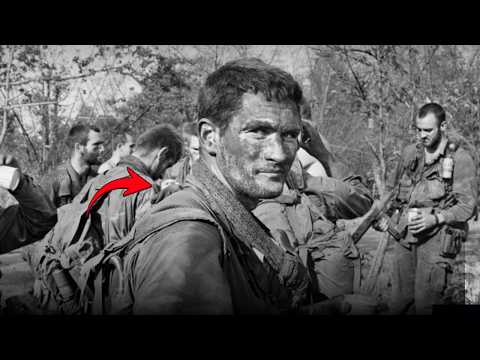
He turns and there they are. Five Australian SAS troopers, beards grown wild, uniforms caked in dried mud and jungle rot, skin dark with camouflage that hasn’t been washed off in days. The stench rolls off them like a physical wave. Morrison’s fork stops halfway to his mouth. He can’t eat. Not with that smell contaminating the air around him.
“You blokes know there’s showers on this base, right?” Morrison says loud enough for the whole mess hall to hear.
Laughter erupts from the American tables, but the Australians don’t react. The closest one, Corporal Harry Thompson, just looks at Morrison with eyes that have seen things Morrison can’t imagine.
“Mate,” Thompson says quietly. “Your soap is going to get you killed. We can smell you from 200 meters away. And if we can smell you, Charlie can smell you from 400.”
Morrison’s face goes red. “That’s the most ridiculous thing I’ve ever heard. Soldiers maintain hygiene. It’s called discipline.”
Thompson stands up slowly. He’s not threatening, just tired. “Your discipline is why your patrols keep walking into ambushes. You smell like a department store exploded. Charlie doesn’t even need to see you. He just follows the Old Spice.”
The mess hall goes silent. This isn’t banter anymore. This is something deeper, something dangerous.
“We’ve been doing this for three years,” Morrison snaps back. “Lost good men. Don’t you dare tell me we don’t know how to fight.”
Thompson nods. “You know how to fight. We’re trying to teach you how to survive. There’s a difference.”
He walks out and the other Australians follow. Their smell lingers behind them. Twenty-three days later, Morrison’s patrol walks into an ambush 600 meters from their insertion point. Two KIA, three wounded. When the survivors are extracted, the after-action report notes unusual enemy proficiency, but nobody connects it to the conversation in the mess hall. Not yet.
While mess halls turned into cultural war zones, the actual jungle was becoming a slaughterhouse for American special operations. The numbers circulating through classified briefings in Saigon painted a picture so horrifying that senior officers refused to believe them at first. MACV-SOG reconnaissance teams in the northern I Corps region—the absolute elite of American special warfare—were lasting an average of only five and a half missions before complete team casualties. Not wounded, not rotated out. Casualties. In certain operational areas along the Laotian border, the contact rate hit 100%. Every single patrol detected, every single patrol engaged. Some RT teams suffered annual casualty rates exceeding 350%. The mathematics were impossible. You’d have to replace your entire roster three and a half times in a single year just from the wounds and the dead.
The problem wasn’t courage. These were the bravest men America produced. The problem wasn’t training. Green Berets went through the most rigorous selection on the planet. The problem was philosophical. The American way of war—forged in the forests of Europe and the deserts of North Africa—emphasized speed, firepower, and aggressive momentum. In the jungle, those virtues became fatal liabilities.
A standard six-man SOG patrol carried 450 pounds of equipment between them, 75 pounds per man. The PRC-25 radio alone weighed 23 pounds, but you needed it for calling air strikes. M16 rifles with 20-inch barrels, excellent for 300-meter engagements in open terrain, scraped against vines with every step, creating metallic screeches that echoed through the jungle. Every man carried 400 to 600 rounds of ammunition, plus grenades, claymore mines, smoke grenades, signal flares, and C4 explosives. All of it jangling, clanking, broadcasting their position with every movement.
They advanced at 100 meters per hour, which seemed slow by conventional standards but was a stampede compared to enemy movement. They stopped every 15 minutes for security halts, following the manual exactly. They maintained perfect radio discipline, checking in at scheduled intervals. They applied heavy insect repellent to prevent malaria. They washed daily when possible, maintaining the soldier’s discipline of cleanliness. And they died. Again and again and again.
April 19th, 1968. Call sign Viper Six—Green Berets under Staff Sergeant Marcus Hedrix, a Silver Star recipient and four-tour veteran—launched into Hat Dich at first light with total confidence. This was textbook perfect. Equipment inspection at 0500 showed every rifle cleaned and oiled, uniforms fresh from laundry. Each man had showered that morning, shaved, applied deodorant and insect repellent per SOP. They carried the full combat load, 87 pounds per man, because firepower equals security.
The helicopter insertion went smooth. Multiple false landings executed per doctrine. Viper patrol touched down at 0615 and immediately began their advance toward a suspected supply cache, moving at the approved 100 meters per hour with proper spacing.
What they didn’t know—what they couldn’t know—was that they’d been detected before their boots touched the ground. Two hundred meters downwind, a Viet Cong scout named Phan Van Duc, a 28-year-old farmer’s son from Long Hai who’d been tracking American patrols for three years, caught the scent at 0612 hours. Soap, shaving cream, the chemical burn of deep insect repellent. It drifted through the humid jungle air like a signal flare. To Duc’s nose, trained since childhood to distinguish the subtle smells of the forest, the Americans announced themselves as clearly as if they’d fired a flare gun. He didn’t need to see them, didn’t need to hear them. The smell told him everything. Direction, approximate distance, probably six men based on the concentration. He keyed his radio twice. Alert. Enemy patrol detected.
The machine gun crews were in position within eight minutes. Viper patrol continued their advance, completely unaware. At 0643, the point man, Specialist Rodriguez, noted unusual silence in the jungle ahead. Birds had stopped calling. Monkeys had ceased their chatter. He hand-signaled the information back to Hedrix. Standard procedure called for a security halt to assess. They froze in place, listening—but the enemy wasn’t making noise. They were positioned in a perfect L-shaped ambush, waiting with infinite patience honed by generations of jungle warfare.
At 0647 hours exactly, the world exploded. Three RPD light machine guns opened up simultaneously from predetermined positions. 1,200 rounds per minute from the left flank. Another gun pouring fire from an elevated position on the right. Mortars dropping from a position 600 meters distant, the coordinates already calculated based on Duc’s sent report. Rodriguez went down in the first burst, hit seven times before his nervous system could register the threat. The radio operator took shrapnel across his shoulders, the PRC-25 sparking and dying, cutting off communication before the first call for help could be transmitted.
Viper patrol returned fire desperately. 600 rounds poured out in the first 90 seconds. Fragmentation grenades thrown blind uphill. M16s on full automatic, barrels heating to glowing red. But the enemy controlled the tempo. They’d chosen the ground, chosen the moment, chosen the range. It was an execution, not a battle.
The helicopter extraction fought through a storm of ground fire, the pilot taking three hits to the fuselage, just barely making the hot LZ. Two bodies couldn’t be recovered, their positions too exposed to enemy fire. Three survivors were pulled out—shell-shocked, bleeding, still carrying those 87-pound combat loads that had slowed their movement just enough to make them perfect targets. Mission time on ground: 32 minutes. Intelligence gathered: zero. Enemy casualties confirmed: zero. American casualties: five out of six. 83% casualty rate. And the sickest part? This was the fourth identical patrol loss in that sector in six weeks. The pattern was obvious, but nobody understood why.
Three kilometers away—same jungle, same enemy—a completely different outcome was unfolding. Australian SAS call sign Whiskey Three. Five men under Sergeant Bill “Tracker” Johnson inserted at 0720 hours, thirty minutes after Viper’s catastrophe. But they moved like they belonged to a different species.
The helicopter made seven false insertions across a five-kilometer spread before the patrol slipped out on the fourth touchdown, so smoothly that even the door gunner wasn’t sure they’d exited. Once on the ground, they didn’t move. Not for 45 minutes. They simply froze in place, becoming part of the jungle, listening to the forest resettle around them, learning its rhythm and becoming part of it.
When they finally began to move, it was at a pace that would have driven American commanders insane. Fifteen meters in the first hour. Not 100 meters—15. Each footstep placed with deliberate precision, heel down first, feeling for anything that might crack or snap, rolling the weight forward gradually, testing every inch of ground before committing. No boots crunching on dry leaves, no equipment rattling, no radio squelch breaks. Just the sound of wind in the canopy and the distant call of birds.
They carried 40 pounds per man, not 87. Minimal ammunition—180 rounds each, because if you needed more than that, you’d already failed your mission. No backpacks, just webbing. No spare batteries, no extra anything. And critically, they smelled like the jungle. Three days before the patrol, every man had stopped using soap, shampoo, toothpaste, deodorant—anything with an artificial scent. They’d eaten nothing but local food, heavy on fish sauce and garlic, changing their sweat chemistry to match the indigenous population. Their uniforms had been deliberately rolled in mud, leaf litter, and charcoal dust, absorbing the smell of decomposing vegetation.
When they moved through the jungle, the enemy guard dogs—specifically trained German Shepherds that had detected dozens of American patrols—walked right past them at five meters distance. The dogs registered nothing unusual. The scent profile was identical to the forest itself.
At 1400 hours, after advancing just 200 meters in nearly six hours, Whiskey Three froze again. Johnson had spotted something. Not movement, not sound—just an irregularity in the pattern of the undergrowth. Fresh footprints. Twenty men moving fast, heading northeast, the same direction as the suspected supply cache Viper patrol had died trying to reach. Instead of pursuing, Johnson made the hardest tactical decision in warfare. He decided to wait.
For 11 hours, the five Australians remained absolutely motionless in an observation position overlooking the trail. No eating, no drinking, minimal breathing. They became stones, trees, shadows. At 0300 hours the next morning, the trail came alive with movement. Forty Viet Cong porters, heavily loaded with ammunition crates, medical supplies, and rice sacks, moving with the confidence of men who believed they owned the night. They were heading directly toward a concealed bunker complex—the actual supply cache that intelligence had missed by 600 meters.
Johnson watched them file past at eight meters distance. He could have killed 20 with the first burst, but he didn’t fire, because the mission wasn’t to kill porters. The mission was intelligence. For the next six hours, as dawn broke, Whiskey Three observed and photographed the entire complex. Twelve hardened bunkers, three command hooches with radio antennas, ammunition storage sufficient for a battalion, mortar pits pre-registered on likely approach routes. The Pentax 35 camera clicked softly, capturing undeniable proof. Not a single shot fired. Not a single enemy alerted.
At 1100 hours, Whiskey Three withdrew the same way they’d come, erasing their trail, moving at the same glacial pace, disappearing into the jungle like smoke. Extraction at 0600 the next day. Total mission time: 34 hours. Zero friendly casualties. Zero enemy contact. Intelligence value that would lead to three follow-on operations, destroying the entire enemy supply network in that region.
When Captain Warren Wallace reviewed both after-action reports—Viper and Whiskey Three—he sat at his plywood desk in the TOC for twenty minutes just staring at them. Same jungle, same enemy, same time window. One patrol: five casualties and zero intelligence. The other patrol: zero casualties and intelligence worth its weight in gold. The difference wasn’t courage or training or equipment. It was philosophy. The Australians had figured out something the Americans refused to believe. In the jungle, the hunter who moves slowest wins.
But patience and smell discipline were just the foundation. The Australians weaponized invisibility in ways that bordered on psychological warfare.
May 3rd, 1968. Corporal Jack “Shadow” McAllister accomplished something so audacious that American intelligence officers initially refused to believe the report. A Viet Cong regimental headquarters, identified through signals intelligence, operating from a fortified complex in the Hat Dich region. Heavy security, multiple defensive positions, considered untouchable without a major combined-arms operation. McAllister went in alone. Not with a patrol—alone.
At 2100 hours, absolute darkness, he penetrated the outer perimeter through a drainage ditch barely fourteen inches wide, having spent the previous 48 hours memorizing guard rotations from an observation post 300 meters distant. He noted a nine-minute gap in the patrol overlap—a tiny window caused by human imperfection in timing. That nine-minute gap was his entire operational window. He slithered through the perimeter wire, beneath the bamboo stakes, past sleeping sentries at two meters distance. His breathing synchronized with theirs, his movement imperceptible.
Inside the command hooch, he could hear the regimental commander snoring. Maps on the wall annotated with upcoming operation plans. Radio equipment powered down for the night. He could have killed the commander with his knife. One thrust. Dead man. Mission accomplished. But McAllister had a different plan.
From his webbing, he pulled out an empty Foster’s lager can—standard Australian issue from their beer ration. He placed it carefully on the commander’s field desk, right next to his sleeping mat, positioned so it would be the first thing visible when he woke up. Then he left the way he came. Eleven minutes total inside the wire, leaving no trace except that aluminum can gleaming in the predawn light.
The radio intercepts the next morning were pure chaos. The Viet Cong regimental command net lit up with frantic transmissions. Security lockdown. Supernatural violation. Forest demon confirmed. The communist leadership, despite their ideological rejection of superstition, couldn’t explain how an enemy had penetrated their most secure facility and left a calling card without triggering a single alarm. It triggered a three-day operational halt while they conducted traditional ceremonies to cleanse the compound. Troop movements were delayed. Supply convoys rerouted. An entire regimental offensive postponed by 72 hours, which gave American and South Vietnamese forces time to reinforce defensive positions.
One beer can accomplished what a B-52 strike couldn’t. It weaponized fear. It created doubt. It proved that nowhere was safe—that the phantoms could reach anywhere, any time. The psychological impact rippled through Viet Cong operations for months. Captured documents later referenced mandatory supernatural countermeasures against “the ghosts who leave metal talismans.” The Australian SAS had become legend, myth, something beyond soldiers.
The American conversion came in blood and humility. June 14th, 1968. Route 246, eight kilometers northwest of Baria. Green Beret Reconnaissance Team Colorado—eight men—pinned down in a riverine kill zone by an estimated battalion-strength enemy force. The ambush had been perfect. Colorado walked right into it, detected 400 meters before contact by their noise signature. The trap closed like steel jaws. Within 90 seconds, two men were down. The radio operator hit in the first burst. Communication severed. They were alone, surrounded, outgunned forty to one, with ammunition running critical.
The team leader, Master Sergeant Robert Hayes, a veteran of 27 months in country, calculated their chances at zero. He made peace with dying and prepared to sell their lives as expensively as possible. Then at 1747 hours, something impossible happened. The enemy machine gun nest on the left flank—the one that had been pouring fire into their position for twenty minutes straight—suddenly went silent. Not suppressed, not destroyed by grenades or LAWs. Just silent. Like someone had flipped a switch. Forty seconds later, the right-flank machine gun stopped firing. Same thing. No explosion, no sustained firefight. Just abrupt, absolute silence.
Hayes couldn’t understand it. Then the jungle directly behind their position parted, and a figure emerged that looked like the jungle itself given human form. Mud-covered, face painted with charcoal and clay, moving without sound. Australian SAS. The trooper put one finger to his lips—the universal gesture for silence—then beckoned them to follow through what appeared to be a solid jungle wall, impenetrable undergrowth, but turned out to be a tiny game trail invisible unless you knew exactly where to look.
Colorado team followed. Eight men moving single file through a gap barely eighteen inches wide, threading between enemy positions so close they could hear the VC talking. As they passed the silenced machine gun nests, Hayes saw the Australians’ handiwork. Both gun crews slumped over their weapons, killed by single precise shots to the head—7.62mm from a cut-down L1A1 rifle at point-blank range. The brass casings had been policed up. No evidence, no trace. The enemy battalion, over 300 men, had no idea their perimeter had been penetrated, their key weapons silenced, and eight American soldiers evacuated through their midst.
The extraction rally point was a degraded rubber plantation 600 meters from the kill zone. Two more Australian SAS troopers waited there with a radio already coordinating dust-off. The helicopters came in under Cobra gunship escort at 1824 hours. As Colorado team boarded, Hayes grabbed the lead Australian’s forearm, unable to speak, his throat tight with emotion. The trooper just nodded once, then vanished back into the jungle with his mates, dissolving into the green like they’d never existed.
The after-action report documented 100% casualty avoidance against battalion-strength enemy force through direct Australian intervention. Eight men who should have died went home to their families. Captain Wallace read that report three times, then walked to the Australian liaison office and asked, very quietly, if his men could train with the SAS. The answer was yes.
The lessons came hard and humbled even the most elite American operators. Sergeant First Class Daniel Peterson, 75th Rangers, spent two weeks embedded with an Australian patrol and came back a changed man. “Everything I thought I knew about soldiering was wrong,” he wrote in his debrief. “These guys moved through the jungle like they were born there. We did a seven-day patrol and I don’t think we spoke a hundred words the entire time. All hand signals, all absolute discipline. And the speed—Jesus, the speed. We covered maybe three kilometers in seven days. Three kilometers. I could have walked that in an hour. But by the end I understood. We’d observed two enemy base camps, cataloged movement patterns, identified three supply caches, and photographed a battalion commander. All without firing a shot, without being detected even once. That’s not warfare. That’s art.”
The Australian methodology spread through American special operations like wildfire. MACV-SOG began adopting the techniques wholesale. Smaller teams, lighter loads, slower movement. The PRC-77 radio replaced the heavier PRC-25. Weapon modifications became standard, with armorers cutting down rifle barrels despite initial resistance from conventional commanders. The soap ban went into effect. Teams began pre-mission diet modifications, eating local food to change their scent profile. The average SOG patrol size dropped from eight men to five. The average equipment load dropped from 85 pounds to 52. The average movement rate dropped from 100 meters per hour to 40. And the casualty rates plummeted.
By late 1969, recon teams operating with Australian-style tactics were completing 15, 20, sometimes 25 missions before taking casualties. The mathematics of survival had completely inverted. What had seemed like suicidal slowness turned out to be the only way to stay alive.
The weapon that symbolized the entire revolution sat on a table at Fort Bragg in 1989. Colonel James Wallace—the same officer who’d commanded the tactical operations center at Nui Dat—now instructing the next generation of special operators, held up two rifles before a classroom of young Rangers and Green Berets. On the left, an M16A1 with its 20-inch barrel, the standard of the Vietnam era. On the right, an M4 carbine with its 14.5-inch barrel, the modern standard.
“This shorter weapon,” Wallace said, his voice carrying the weight of memory, “exists because 120 Australians proved that Pentagon doctrine was killing American soldiers. The generals called their modified rifles ‘garage trash,’ said they violated specifications, threatened to court-martial any American who copied the modification. But those garage-trash rifles won the war that mattered—the war to come home alive.”
He hefted the M4. “Every single design choice on this weapon traces back to Australian lessons. The shorter barrel: 33% reduction in vegetation contact, 40% reduction in noise signature. The collapsible stock allowing compact carry in tight spaces. The modular rail system minimizing unnecessary weight. This isn’t American engineering genius. This is us finally learning the lesson we should have learned in 1966.”
Wallace set down the rifles and looked at the young faces before him. “Don’t make our mistake. Don’t mock the guy who looks different, fights different, thinks different. The Australians looked like bums, smelled like swamps, and moved like sloths. They were also the most lethal soldiers in Vietnam. Every modern special operations manual, every doctrine we teach today, carries their DNA. It took us three years and rivers of blood to learn what they knew instinctively. Sometimes the crazy ones are the only ones who survive.”
The room sat in absolute silence. Then one young Ranger raised his hand. “Sir, do we still train with the Australian SAS?”
Wallace smiled. A real smile this time. “Every single year. And every year they teach us something we thought we already knew. That’s the mark of true professionals. They never stop learning, never stop adapting, never assume they have all the answers.”
The Australians changed jungle warfare forever—not through technology or firepower, but through philosophy. They understood something profound. The jungle isn’t your enemy. Your approach to the jungle is your enemy. Master the environment, become the environment, and you become invisible. And invisible warriors are unstoppable.
The legacy echoes through every special operations unit on the planet today. Navy SEALs train in Australian-developed fieldcraft techniques. Delta Force sends operators to Perth for cross-training with the SASR. The British SAS, the parent organization, adopted lessons from their Australian counterparts’ Vietnam experience. From the mountains of Afghanistan to the jungles of the Philippines, from the deserts of Iraq to the forests of Eastern Europe, special operators move slow, stay quiet, and prioritize intelligence over engagement.
In 2018, a reunion brought together veterans from the original Australian SAS Vietnam deployment and the American SOG teams they’d worked with. Fifty years later, gray-haired and slow-moving now in a different way, they gathered at a small ceremony in Virginia. An American veteran, former Sergeant First Class Michael Chen, stood up to speak. His voice shook.
“In June 1968, I was part of RT Illinois. We got hit bad—surrounded, out of ammo, no comms. I made peace with dying. Then these guys showed up.” He gestured to three elderly Australians sitting in the front row. “They appeared out of nowhere, killed the machine guns that had us pinned, and walked us through an enemy battalion like we were invisible. I shouldn’t be here. My kids shouldn’t exist. My grandkids shouldn’t exist. But they do because these men saved my life.”
He paused, fighting tears. “For fifty years, I’ve tried to find the words to thank them properly. I still don’t have them. All I can say is—you taught us how to survive. You taught us that pride kills and humility saves. You taught us that different doesn’t mean wrong. I owe you everything.”
The room was silent except for the sound of old warriors crying. The Australians stood up, walked over, and embraced their American brothers. No words necessary. The bond forged in jungle hell transcended language.
That’s the real legacy. Not the tactics, not the techniques, not the equipment modifications. The understanding that warfare is ultimately about humans—and the side that understands human nature most deeply wins. In warfare, intelligence beats strength, stealth beats speed, and patience beats aggression. Every time. The jungle proved it, the mountains proved it, the deserts and the cities proved it. The lesson is universal, eternal, written in blood and validated by survival.
Those dirty, slow, quiet Australians who didn’t fight like Americans taught the world’s warriors their most important lesson: sometimes the best way to win is to rewrite the definition of winning. Mission success isn’t body count. It’s intelligence gathered, enemy disrupted, objectives achieved, and all your people coming home alive. By that metric, the Australian SAS were the most successful warriors in Vietnam. And their legacy continues every single day, in every special operations unit worldwide.
So here’s the question that still haunts military planners today: if 120 unconventional soldiers could humble the most powerful military on Earth simply by rejecting its assumptions—how many of our current doctrines are dead wrong, and which ‘backward’ ally might be quietly holding the answers we refuse to hear?
Report this article
Select a reason for reporting:






