May 18, 1944. The battle for Monte Cassino is over. Nazi flags have fallen, and the Allies claim victory. But for the women of the Ciociaria region, the nightmare is just beginning.
As the guns fall silent, a new terror descends from the mountains. Thousands of Moroccan soldiers—the goumiers—flood into the villages. They have been promised freedom. For fifty hours, they will be absolute masters of whatever they find.
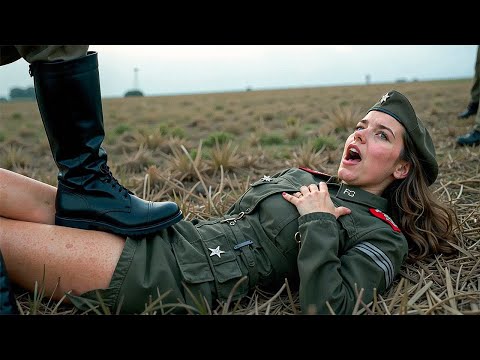
What happens next is a chapter of history so brutal it has been buried for decades. Women and girls are dragged from their homes. Mothers are violated in front of their children. Priests are beaten for trying to protect their flock. The screams echo through the valleys, heard by Allied soldiers who are ordered not to intervene.
This is the story of the Marocchinate—the Moroccan. A night of unimaginable savagery that left thousands of Italian women shattered, and a legacy of silence that persists to this day.
General Alphonse Juin, commander of the French Expeditionary Corps, had given his men a speech before the final assault. Victory, he said, would make them masters of the land. “For fifty hours,” he declared, “you will be free to do whatever you want.” No one would punish them. No one would ask questions.
He was true to his word.
When the battle ended, the goumiers—colonial soldiers from Morocco, Algeria, and Tunisia—poured into the mountain villages. They were feared even by their allies; American soldiers were warned to mark their helmets with tape to avoid being mistaken for Germans in the dark. But the true targets were the civilians.
Eyewitnesses describe scenes that defy belief. In the town of Esperia, 700 women out of a population of 2,500 were assaulted. In Lenola, 50 young women—nearly the entire female population—were attacked. Girls as young as six, women as old as eighty; none were spared.
One survivor recalls hearing the cries of young women abducted in the afternoon, their moans chilling the blood of those hiding in fear. “We thought we might be next,” she said. “So we kept silent.”
But the violence was not limited to women. Men who tried to defend their wives and daughters were beaten, castrated, or killed. Even a priest, Don Alberto Teri, was brutally abused and murdered for trying to save two young girls.
The horror lasted for days. And when it was over, the silence began.
American soldier Len Zabos was attached to a unit near the goumiers. He later recounted how, upon reaching the village of Spigno, he and his comrades heard gunfire and screaming. “We knew there were no Germans there,” he said. “So we didn’t know what was happening.” Another soldier muttered, “I think they’re attacking those women.” A sergeant asked if they should intervene, but was told to await orders. They listened to the screams until they faded.
Other witnesses described finding a priest, Don Alberto Teri, tied to a post, beaten and sexually assaulted through the night. He had tried to save three little girls. He died of his injuries.
The French command did execute a few soldiers caught in the act, but it was a token gesture. General Juin never faced consequences. Neither did General de Gaulle, who knew and stayed silent. The Allies, eager to avoid scandal, helped bury the story. The Italian government, desperate to maintain good relations with France, refused offers of help from the Red Cross.
No official apology ever came from France. In 2004, a Moroccan veterans’ association did apologize, but the French government has never acknowledged the crimes.
The numbers are staggering: over 7,000 civilians abused, 20,000 documented cases of sexual assault, and estimates suggest the true figure could be as high as 60,000. Many women were left pregnant, and hundreds of babies were sent to orphanages. Some women went mad; others took their own lives.
And yet, the story of the Marocchinate remains one of the least known atrocities of World War II. For the survivors, the wounds never healed. For the world, the silence continues.
The silence did not last forever. In the decades that followed, a few brave women began to speak. Their voices, tentative at first, grew louder as the years passed. They told of nights when the darkness itself became a predator, when the sound of boots on cobblestones meant run, hide, pray.
One such woman was Maria, who was just seventeen in May 1944. She had hidden in a hayloft with her younger sister when the soldiers came. They found the sisters within hours. Maria later testified that she was assaulted by nine men in succession while her sister was held down nearby. “I stopped counting after a while,” she said. “I just waited to die.” She didn’t die. She lived, but she never married, never had children, and rarely left her small house in the hills.
The stories share a grim pattern. The goumiers would enter a village at dusk, often after a day of heavy drinking. They would round up the women and girls, sometimes using the village church as a holding pen. The men who resisted were shot or bayoneted on the spot. One witness described how a father was forced to watch his three daughters being assaulted before he was castrated and left to bleed out in the town square.
These were not isolated acts of opportunism. They were systematic, organized, and carried out with the full knowledge of the French high command. General Juin’s words had unleashed something primal, and no one in authority tried to stop it.
The aftermath was a different kind of horror. Thousands of women found themselves pregnant. In a conservative, rural society, this was a mark of shame not just for the woman but for her entire family. Many pregnancies ended in dangerous, clandestine abortions. Others carried to term, and the babies were often given up. The Veroli orphanage recorded around 400 such children in the years after the war. Most were never adopted. They grew up without knowing their mothers, their fathers, or the truth of their conception.
Medical records from the period reveal another layer of suffering. Sexually transmitted diseases spread rapidly through the affected villages. Syphilis, gonorrhea, and other infections left lasting damage. It was only the arrival of American penicillin that prevented a wider epidemic.
Psychological trauma was even harder to treat. Some women developed severe mental illnesses and were institutionalized for life. Others committed suicide. Many simply withdrew from public life, refusing to speak of what had happened even to their closest family members.
One woman, now elderly, recalled how her mother had tried to protect her by pushing her into a cupboard when the soldiers arrived. “She told me to close my eyes and cover my ears,” she said. “But I could still hear her screaming.” Her mother survived but never spoke of that night. She died in 1985, taking the full story with her.
The shame extended beyond the victims. Entire communities were stigmatized. Men who had failed to protect their women were seen as weak. Families were torn apart. And the perpetrators—most of them—walked away free.
In the years after the war, a handful of French officers quietly admitted in private letters what they had witnessed. One captain wrote of “scenes that would make the devil weep.” But these letters were locked away, and the official history of the Italian campaign was written without them.
The Cold War soon demanded new alliances. France and Italy became partners in NATO, and the Marocchinate became a diplomatic inconvenience. Italian politicians were warned not to raise the matter. “The past must remain the past,” one minister reportedly said. The victims were told to forget.
But memory is stubborn. In the 1990s, a local historian in Frosinone began collecting testimonies. He traveled from village to village, recording the voices of elderly women who had never spoken publicly before. “I have waited fifty years for someone to ask,” one woman told him. “I thought God had forgotten me.”
Their stories were published in a small book that sold only a few hundred copies. But it reached the ears of a journalist in Rome, and gradually the silence cracked. In 2004, the Moroccan veterans’ association issued its apology, and for a moment the world paid attention. Yet France remained silent.
In 2016, a group of Italian mayors from the affected villages signed a joint letter to the French president. They asked for a formal acknowledgment. The letter was acknowledged, filed, and forgotten. No apology came. No compensation was offered.
Today, the villages of the Ciociaria are quiet. The mountains are green, the churches rebuilt. Tourists come to see the abbey of Monte Cassino, restored to its former glory. Few of them know what happened in the valleys below.
At a small memorial in the town of Esperia, a plaque lists the names of some of the victims. It was erected in 2010, funded by private donations. “We did it ourselves,” the local priest explained. “No one else would help us.”
The last survivors are now in their nineties. Some still live in the same houses where the horror unfolded. They have children, grandchildren, and great-grandchildren who know only fragments of the story. “My grandmother never spoke of it,” one young woman said. “But I saw her cry in her sleep.”
The Marocchinate is not just an Italian story. It is a story about what happens when war strips away restraint, when commanders grant permission for cruelty, and when governments choose silence over justice. It is a story about the women who survived and the world that looked away.
And it is a story that asks a simple question: If we do not remember, how can we ever demand that it never happen again?
What do you think—should France finally issue a formal apology to the victims of the Marocchinate, or is it too late for words to matter? Share your thoughts in the comments.
Report this article
Select a reason for reporting:






