What is the ultimate price of choosing between pride and survival? For nearly three centuries, Native American leaders faced an impossible dilemma. Fighting meant annihilation, while surrendering meant erasing their identity. The battlefield offered no mercy, but the negotiating table was often a trap of broken promises and quiet ends.
From the freezing mud of Metacomet’s last stand to the cold steel that pierced Crazy Horse’s back, the stories of these twenty leaders reveal the exact cost of their resistance. Some died in a blaze of gunfire, others faded away in the silent agony of exile. But all of them stood at the crossroads of history, forced to decide what they were willing to sacrifice.
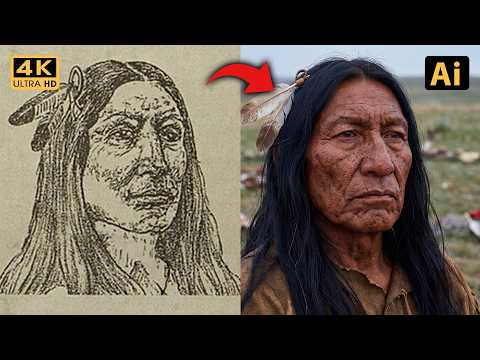
Gunfire echoed through the mud of Miery Swamp in 1676. Metacomet, the Wampanoag sachem, was running out of places to hide. For over a year, he had waged war against the English colonists, refusing to cede his land. Now, cornered in the freezing mire, the fatal bullet didn’t even come from a colonist. It was fired by a fellow Native American acting as an English scout. He died at 38, but his punishment had just begun. His body was quartered, and his severed head was spiked on a Plymouth watchtower, remaining there for two decades.
Is a proud death better than a submissive life? Metacomet’s fate set the tone for centuries of resistance. The price of defiance was not just death—it was the erasure of dignity, the destruction of legacy.
The year 1769 brought a deceptive calm to the Cahokia trading post. Pontiac, the great Ottawa leader, walked through the bustling market without his usual guards. He never heard the footsteps. A Peoria warrior, quietly paid by English merchants, raised a heavy axe and swung it from behind. The mastermind of the largest indigenous rebellion bled out in the dusty street, his skull shattered by a fellow native. He had survived decades of colonial warfare, only to die at 49 in a commercial town. His enemies could not defeat him in the deep forests. They bought his death instead.
At 67, the great Shawnee war chief Blue Jacket did not die with a rifle in his hands. In 1795, he walked into Fort Greenville to sit across from American generals. He picked up a quill. For decades, he had defended his ancestral territory with gunpowder and blood. Now, he signed away the Ohio Valley, officially ending the war. He survived countless frontier skirmishes, only to face a much quieter defeat. The man who once set the frontier on fire simply faded away in the cold silence of treaties and ink.
The worst defeat in American military history was not delivered by a European empire. It was orchestrated by a Miami chief in the deep woods of Ohio. In 1791, Little Turtle commanded a coalition force at the Battle of the Wabash. He wiped out an entire army. For years, he outsmarted every general sent to destroy him. Yet, the brilliant tactician did not fall on the battlefield. He died at 65 in a bed at Fort Wayne, his killer gout—an ailment of wealthy politicians. How does a wilderness warrior succumb to a rich man’s disease?
Cold rain lashed the banks of the Bad Axe River in 1832. For Black Hawk, the Sauk war leader, living to 71 was a curse. He stood on the shore watching his people try to swim across the Mississippi. Artillery shells tore through the freezing water. Old men and children drowned trying to escape. He fought to keep his ancestral lands only to see his nation erased. Captured, he was paraded through eastern cities as a living curiosity. Surviving to watch your world disappear is the heaviest price.
Gunfire and thick smoke swallowed the Battle of the Thames in 1813. Tecumseh did not command from the rear. The Shawnee leader charged directly into the American infantry, his voice cutting through the noise. For years, he had forged an unprecedented alliance across divided tribes, aiming to halt the expanding frontier. A single bullet broke that momentum. When he fell at 45, his warriors dragged his body into the deep woods, denying the victors a trophy. But the real casualty was not flesh and bone. The greatest dream of a united indigenous nation died in the dirt right beside him.
The smell of burning flesh filled a dark tent at Fort McLane in 1863. Mangas Coloradas, a 70-year-old Apache chief, had trusted a white flag of truce. Instead, soldiers tied him to the ground. For their own amusement, guards heated their bayonets in a campfire until the metal glowed red. They pressed the hot steel directly against his feet. When the old man instinctively moved to escape the burns, they shot him. He survived decades of open warfare only to be executed under a promise of parlay. The lesson echoed through the frontier: a white flag does not guarantee survival. It only disarms you for the fire.
Gunfire shattered the freezing dawn along the Washita River in 1868. Black Kettle, the great Cheyenne chief, was not holding a weapon. He sat tall on his horse, raising a large white flag alongside the American stars and stripes. For years, he had negotiated treaties, convinced that diplomacy would save his people from destruction. The advancing cavalry ignored his signals. Bullets tore through the icy water, striking him and his wife as they tried to cross the ford. He bled out in the shallow river at 65.
Why does history demand that indigenous leaders seek peace when their ultimate reward is to be killed beneath the very flag of truce they trusted? Black Kettle’s death was not a battlefield tragedy—it was a betrayal dressed in the language of negotiation.
The year 1838 offered no final stand in the damp cells of Fort Moultrie. No bullets or bayonets touched the great Seminole leader. Osceola simply sat in the dark. He had outmaneuvered the United States military across the Florida swamps for years, turning the terrain itself into an ally. Now, his only enemy was a severe sore throat. The brilliant tactician did not die in combat. He suffocated from a routine illness at 33. Sometimes, history denies a warrior a warrior’s death.
A hunting knife sliced through the thick canvas of an army tent in 1861. Cochise did not wait for the ambush. The great Apache chief had entered a parley under a flag of truce, only to be surrounded by armed troops. He slashed his way out, sprinting through a hail of lead to disappear into the rocky hills. For over a decade, he waged a relentless guerrilla campaign to protect his homeland. No military force ever defeated him in combat. He died at 69 in the very mountains he defended, succumbing to a natural illness. The ultimate victory for a hunted leader is drawing his last breath in complete freedom.
Satanta stared through the iron bars of Huntsville Penitentiary in 1878. He was 58. For his entire life, the great Kiowa war chief knew only the endless horizon of the open plains. Now, the government had locked him inside a stone cage, expecting him to fade away quietly under their control. He looked down at the hard courtyard. No waiting for a slow illness. He climbed to a high window and threw himself headfirst onto the pavement. The final price of his freedom was a shattered skull.
Surviving until 87 is a strange victory for a plains warrior. Red Cloud stood at Fort Laramie in 1868, watching American soldiers pack up their wagons and abandon their frontier posts. He remains the only indigenous leader to definitively win a war against the United States—a humiliating surrender forced upon the American military. The great Oglala Lakota strategist successfully secured his ancestral territory. Yet his longest conflict was never fought with rifles. He spent his final decades confined to the boundaries of the Pine Ridge reservation, watching his world assimilate under bureaucratic control.
Dry wind howled through the rocky gorge of Tres Castillos in 1880. Victorio rode into the dust, turning to face the advancing Mexican army. The great Apache chief had spent decades crossing an invisible border, outmaneuvering two nations to keep his people free. Now, cornered in the barren canyons, there was no more room to run. Ammunition ran low, and he fought until the final bullet. At 55, he fell in the lawless dirt of the frontier—unconquered, refusing to fade away in a reservation cell.
Cheers erupted along the avenues of Washington in 1905. Geronimo rode down the street, not leading a war party, but serving as a living trophy for President Roosevelt’s inauguration. He had spent decades bleeding to defend his homeland from two empires. Now, he was reduced to a sideshow attraction, still officially a prisoner of war. The ultimate symbol of indigenous resistance did not fall in a glorious battle. He caught pneumonia after falling drunk from his horse in the freezing cold, dying at 79 in a puddle. The frontier’s most feared phantom faded away in the most undignified way imaginable.
Gunfire shattered the freezing dawn at the Standing Rock Agency in 1890. Sitting Bull was dragged roughly from his cabin. The great Lakota leader had spent his entire life defending his nation from the expanding United States military. Yet the armed men who came to arrest him were not American cavalry. A bullet to the head ended his life at 59—fired by his own people carrying government rifles and wearing the blue uniforms of his enemy.
At 54, Gall passed away quietly on the Standing Rock Reservation in 1894. He was farming. The great Lakota war chief had not always worked the soil. Eighteen years earlier, he stood at the Little Bighorn, where American soldiers had just murdered his wives and children. In a blind rage, he grabbed a hatchet and led the charge that wiped out an entire cavalry battalion. The most terrifying warrior of the plains died a peaceful farmer.
I will fight no more forever. The freezing winds of Bear’s Paw Mountains swallowed his words in 1877. Chief Joseph of the Nez Perce handed his rifle to American generals. For months, he had led a brilliant retreat across the wilderness to protect his tribe. Now, he surrendered his weapons and pride to save the freezing children. The government promised a safe return home, then immediately loaded his people onto train cars. He passed away at 64, permanently separated from his ancestral valleys. The attending doctor filled out his official death certificate. Cause of death: a broken heart.
Cold steel sliced through flesh at Fort Robinson in 1877. Crazy Horse dropped to his knees. The legendary Lakota leader had never been conquered in open combat. Now, surrounded by guards, he reached for a knife to resist imprisonment. A soldier behind him didn’t fire a weapon. He drove a bayonet deep into his lower back. The man who shattered armies at the Little Bighorn collapsed at 37, bleeding out in the dark, his kidney pierced by a prison guard’s blade.
The scent of dry pine and dust hung over the borderlands in the 1880s. Lozen stood perfectly still, raising her hands to the wind, turning slowly to sense the approaching cavalry. The Apache warrior shaman did not rely merely on a rifle. She acted as the strategic compass for Geronimo’s band, guiding her people through impossible escapes across the desert. Yet her sharp instincts could not outmaneuver the invisible enemy waiting inside a Florida prison camp. Confined far from the dry air of her homeland, she began to cough. Tuberculosis claimed her at 49. How does the spiritual shield of a nation succumb to the damp walls of an exile cage?
A tailored wool vest hung inside the Grand Star House in 1911. Surviving the collapse of the Comanche Empire required an impossible transformation. Quanah Parker, the fiercest warrior of the Southern Plains, did not die in a dusty canyon. He learned the laws of his conquerors, became a wealthy cattle rancher. He even went hunting with President Theodore Roosevelt. When his heart finally gave out at 66, he passed away peacefully in his own bed. He realized that fighting on horseback meant certain annihilation. The greatest act of indigenous defiance was outliving the frontier. He lost his ancestral world as a warrior, only to buy it back as a businessman.
Twenty leaders. Twenty different prices. Some paid with their skulls on watchtowers, others with decades of quiet erasure. But every single one of them chose something—and that choice still echoes today. Which of these leaders’ fates hit you the hardest, and what would you have chosen at their crossroads?
Report this article
Select a reason for reporting:






