Most people would never return to a war zone after being kidnapped, beaten, and held captive for 44 days. James Foley did. He believed their stories were so important that they were worth risking everything to tell. He embedded himself alongside soldiers, rebel fighters, and ordinary civilians trapped in some of the world’s deadliest conflicts, determined to show the human cost of war. But in 2012, after crossing into Syria, he vanished. For 636 days, his family had no idea if he was alive or dead. Behind the scenes, the US government launched one of its most daring hostage rescue missions, while one of the most ruthless ISIS terror cells ever created subjected him to unimaginable torture. And then, in August 2014, the entire world watched as ISIS released a video that changed modern warfare forever. This is the life, captivity, and horrific murder of American journalist James Foley.
James was the eldest of five siblings born to Diane and John Foley, and grew up in Wolfeboro, New Hampshire. In 1996, he graduated from Marquette University with a Bachelor of Arts in History, before joining the Teach for America program, teaching elementary school children in Arizona for three years. But teaching was never his true calling. In 1999, he left to pursue a Master of Fine Arts in Creative Writing at the University of Massachusetts, Amherst, which he completed in 2002. He then moved to Chicago in 2004 to teach writing to young offenders at the Cook County Boot Camp, before furthering his education in 2007 at Northwestern’s Medill School of Journalism, earning a Master of Science in Journalism.
In 2009, Jim traveled to Iraq and worked on US aid-funded development projects in Baghdad. It was there that he became an embedded journalist with the US 101st Airborne Division and the 76th Infantry Brigade of the Indiana National Guard. The following year, he began reporting from Afghanistan alongside the United States 4th Infantry Division and the 10th Mountain Division. In January 2011, Jim joined Stars and Stripes as a reporter assigned for Afghanistan. However, two months later, he was detained by US military police at Kandahar airfield on suspicion of possessing and using marijuana. In March of that year, Jim admitted to the offense and subsequently resigned from his position.
Shortly after, he began working for the Boston-based Global Post. He traveled to Libya to cover the uprising against Muammar Gaddafi, embedding himself with rebel fighters. At that time, Libya was a very dangerous place due to the brutal and chaotic civil war aimed at overthrowing Gaddafi’s regime. And Jim and his colleagues would soon discover just how vulnerable journalists were in such an environment.
On the morning of April 5th, 2011, Jim was traveling in a civilian rebel vehicle in the desert outside the strategically important eastern port city of Brega. He was accompanied by freelance reporter Claire Gillis, Spanish photographer Manu Brabo, and South African photojournalist Anton Hammerl, when two heavily armed vehicles belonging to the Gaddafi regime appeared over a hill firing machine guns directly at them. During this violent encounter, Hammerl was tragically shot and killed. The rest of the group were tied up, blindfolded, and loaded into a military vehicle. They were driven to Gaddafi’s hometown of Surt before being transferred to a military detention facility in Tripoli, where they faced the harsh realities of being prisoners amidst a conflict.
During the first few weeks, Jim was interrogated repeatedly under the suspicion of being a spy. He also faced administrative court hearings for entering Libya illegally without a visa and for reporting without permission. And he and his fellow captives were brutally beaten by pro-Gaddafi troops. After spending a harrowing 44 days in captivity, Foley was finally freed on May 18th. He, along with fellow detainees Gillis, Brabo, and Nigel Chandler, an English journalist who was also held, were transferred to the opulent Rixos Hotel in Tripoli.
Once back in the United States, Jim returned to his hometown of Milwaukee, where he felt compelled to express his gratitude to the community that had fervently prayed for his safe return through a series of emotional interviews. Following his release, Jim lived with his brother Michael for three months to recover from his ordeal. He was later offered an office-based job as an editor for the Global Post. But Jim was restless, and to the dismay of his family, he quickly returned to Libya and was at the scene of Gaddafi’s capture with Global Post correspondent Tracey Shelton on October 20th, 2011.
In 2012, the Syrian uprising escalated into a full-scale civil war as peaceful, localized protests transformed into a militarized rebellion against President Bashar al-Assad’s government. The conflict intensified significantly as rebels gained control of key territories and major urban centers. Jim began to express his intention to travel to Syria to report on the atrocities and told Claire Gillis that he planned to go with British photojournalist John Cantlie, whom he had met in Libya the previous year. While Libya was dangerous, the situation in Syria was on an entirely different level.
Despite the risks and the concern expressed by his family and friends, in the fall of 2012, Jim traveled to Syria to cover the war as a freelance correspondent. Jim’s journalism in Syria focused on humanizing the civilian toll of the civil war and providing an objective ground-level perspective on the fracturing rebel forces. He spent considerable time in hospitals, makeshift shelters, and devastated neighborhoods, capturing the raw trauma and resilient spirits of everyday Syrians. As a freelance video reporter, primarily contributing to Global Post and Agence France-Presse, he was known for embedding deeply in high-risk areas like Aleppo and Idlib province.
Jim was known for operating with minimal equipment, allowing him to travel lightly and quickly build trust with both locals and rebel fighters. He demonstrated great bravery by placing himself in increasingly perilous situations. And as major news networks began withdrawing their staff from Syria due to the heightened risk of kidnapping, freelance conflict journalists like Jim became the primary source through which the world witnessed the escalating atrocities of the war. However, he was not oblivious to the risks involved. And shortly before he was kidnapped for the second time, Jim and his fellow journalists had noticed a significant shift in the relationships between themselves and the civilians who had previously welcomed them. There was also the as yet unknown threat of ISIS, who were transitioning from an underground Iraqi insurgency into a formidable militant force in the Syrian civil war. This breakaway Islamic group had a deep hatred of the West, and particularly the US and UK, putting journalists like Jim and his colleagues in grave danger.
On November 22nd, 2012, Jim Foley, John Cantlie, and their Syrian translator, Mustafa Ali, were working out of an internet cafe in Binnish, Syria. While they were downloading video footage, John reportedly playfully teased a heavily bearded man in the cafe. The man, who they were unfamiliar with, did not find the joke amusing and left shortly afterward. Later investigation suggested that the man may have been actively monitoring the journalists’ email communications from the cafe, compromising their identity and itinerary. After leaving the cafe, the journalists hired a local taxi driver to transport them north toward the safety of the Turkish border.
As they drove through Idlib province toward the town of Taftanaz, an organized detachment of armed jihadists were waiting for them, forcing their vehicle off the road. The armed men then pushed Foley and Cantlie out of the taxi at gunpoint, initially telling them that they would only be detained for five minutes for questioning. However, there was no questioning. They were instead tied up and thrown into the trunk of a car. After a brief interrogation, the gunmen released the Syrian taxi driver and Mustafa Ali before speeding away with the two Western journalists. Before leaving, one of the masked abductors gave Ali a final ominous threat. “If you try to follow us, we will kill you.”
Despite this threat, Ali alerted authorities and provided crucial witness testimony of the moments leading up to the abduction, including describing the suspicious non-Syrian man who had scoped them out at the internet cafe just an hour before the attack. Foley and Cantlie were initially held by a localized cell of foreign jihadists before being consolidated into a central ISIS prison network alongside more than 20 other Western hostages.
During his 636 days of captivity, Jim endured an underground network of prisons, extreme physical torture, and systemic starvation under ISIS. Because he was American, he bore the brunt of the captors’ anger and was routinely singled out for harsher treatment, mock executions, and cruel psychological mind games. His captors subjected Jim and other Westerners to regular beatings and waterboarding. They were frequently moved to different hidden locations and forced to live in dark, overcrowded cells, often dealing with cold and severe starvation.
However, despite these brutal conditions, accounts from surviving cellmates reveal that Jim became a pillar of emotional strength, leadership, and compassion for his fellow hostages. To combat psychological despair, he helped organize mental distractions such as memory trivia, debates, and complex tournaments of games like checkers and Risk. Survivors told how Jim frequently shared his meager rations with those who were weak or sick. He led long group discussions about sports, movies, and childhood memories to alleviate tension. And as a lifelong Catholic, he turned deeply to prayer and fostered an environment where captives of different faiths and backgrounds could openly support one another spiritually.
At times, the hostages were guarded by a notorious four-member cell of British ISIS terrorists. The captives gave this group the grim nickname the Beatles, inspired by the English rock band, due to their distinctive London accents. The ringleader, and by far the most brutal of these guards, was Mohammed Emwazi, who is more widely known in the media as Jihadi John. Making up the rest of the group were Alexanda Kotey, George, who worked heavily as a recruiter and was an exceptionally cruel interrogator. Elshafee Elshaikh, Ringo, who acted as the principal enforcer of the group, orchestrating complex ransom demands and physical abuse. Aine Davis, Paul, a former London gang member and drug dealer who traveled to Syria to join ISIS.
Surviving hostages later testified that the Beatles were feared far more than local Syrian or Iraqi ISIS guards. Because they reveled in highly creative, deeply sadistic, psychological, and physical torture. Their documented actions included cruel song parodies. They frequently forced the prisoners to sing a twisted parody of the Eagles hit song Hotel California, rewriting the lyrics to Hotel Osama with the forced refrain, “You will never leave.” Fight clubs. They forced starving, weakened hostages to physically fight each other until they collapsed from exhaustion. And mock executions. They regularly subjected Foley and others to mock hangings, waterboarding, and crucifixions against walls. They would place guns to the captives’ heads, pull the triggers on empty chambers, and laugh at their terror.
In the weeks directly following the abduction, Foley’s family and his primary employer, Global Post, received no communications or ransom demands. They had no idea if he was dead or alive, and out of extreme caution and fear for his safety, the family and media organizations initially chose to keep his case quiet, hoping to prevent his value as a high-profile asset from skyrocketing among unknown captors. Investigative efforts focused on tracking the physical route Jim had taken from Taftanaz towards the Turkish border. However, early leads quickly dried up as he was passed between various rebel factions before ultimately being transferred to ISIS.
For well over a year, the Foley family received no direct confirmation that Jim was alive. It wasn’t until late 2013 that released European captives provided the first concrete evidence that he was still alive. They described a network of hidden underground prisons in Syria where Jim was being held along with nearly two dozen other Western hostages. And then in December 2013, ISIS captors finally initiated contact by asking Foley three deeply intimate personal questions to prove his identity to his family. Including asking who cried at his brother’s wedding. This brief contact sparked immense hope for the family.
But that hope would not last. Unlike European governments, the US refused to pay ransoms or swap prisoners, and ISIS answered with a deadline and a threat.
In July 2014, President Obama authorized a secret raid deep into Syria. Delta Force commandos stormed the compound near Raqqa, but the cells stood empty. They had missed Jim by days.
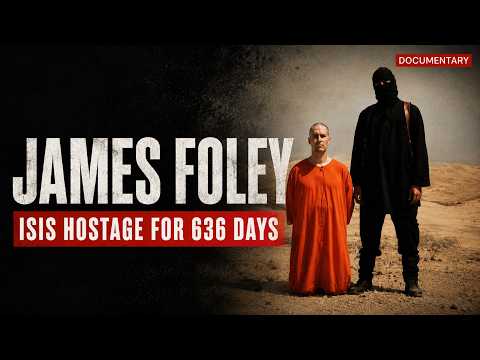
On August 19th, 2014, ISIS uploaded a video titled A Message to America. Jim knelt in an orange jumpsuit beside a masked man with a London accent. The world watched in horror as Jihadi John raised a knife.
Diane Foley’s response became her family’s creed: “We have never been prouder of our son Jim. He gave his life trying to expose the world to the suffering of the Syrian people.”
ISIS believed the murder would break America’s will. It did the opposite. Within weeks, airstrikes expanded into Syria, and a global coalition rose to destroy the caliphate. Jihadi John was killed by a drone in 2015; Kotey and Elshaikh received life sentences.
Diane even sat face to face with her son’s killer, seeking answers and offering forgiveness. Jim’s legacy lives on in the James W. Foley Legacy Foundation, protecting journalists and freeing hostages.
So now we ask you: should governments pay ransoms to bring hostages home, or does that only fund the next kidnapping? Tell us your thoughts below.
Report this article
Select a reason for reporting:






