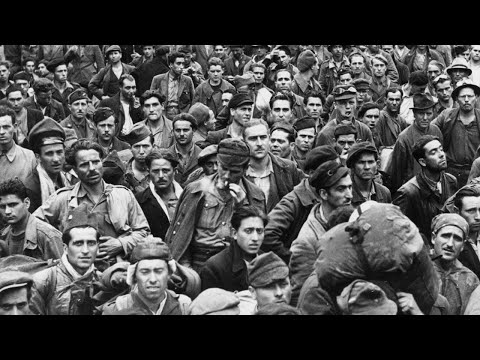
September 1943. The transport ships cut through the Indian Ocean, carrying thousands of German soldiers to a prison camp on the far side of the world. They had been told their captors were savages. They expected torture, starvation, and death. Instead, they stepped off the trains into a reality that would shatter everything they believed.
What happened next would change their lives forever—and lead over 1,850 of them to make a choice that shocked the world.
The prisoners came from the deserts of North Africa, where Rommel’s Afrika Korps had surrendered to the Allies. Now they were bound for Australia, a place most had never imagined visiting. The journey took weeks, and during that time, the men had plenty of time to think about what awaited them. Nazi propaganda had painted a brutal picture: Allied soldiers were cruel colonizers who tortured and starved their captives. Many genuinely believed they would be executed upon arrival. Others thought they would be worked to death in terrible conditions.
They could not have been more wrong.
Australia in 1943 was a nation stretched thin. Seven million people lived on the enormous continent, and nearly a million Australian men had left to fight overseas. Farms needed workers. Wheat fields stood ready for harvest with no men to cut the grain. Fruit ripened and rotted on trees because no hands picked it. The nation desperately needed labor, and these German prisoners would help fill that gap.
But the prisoners knew none of this. They stepped off the trains exhausted, thin from months of short rations. Their uniforms were worn and dirty. They looked around nervously at the Australian guards, at the strange landscape, at the camps with tall fences that would contain them.
What happened next shocked them completely.
Instead of dark cells or crowded pens, they were led to clean barracks. Inside, they found individual beds with real mattresses. The buildings had windows that let in light and fresh air. Guards told them they would receive medical checkups. Doctors would examine their wounds and illnesses. They would get medicine if they needed it.
The prisoners looked at each other in confusion and disbelief.
Then came the food.
Three times a day, meals arrived that made the prisoners think they were dreaming. Breakfast brought porridge, eggs, bacon, bread with real butter and jam, and hot tea or coffee. Many of these men had not seen eggs or bacon in years. Lunch included meat stews with vegetables and bread. Dinner brought roasted meat—beef, lamb, or pork—with potatoes and greens, and even desserts like pudding.
The guards told them they would receive 3,200 calories every single day. This was more food than Australian civilians received, who got only 2,800 calories.
One prisoner named Heinz Schumann would later write about his first day. He said he stepped off the train expecting chains and beatings. Instead, an Australian guard offered him a cigarette and asked if he would like some tea.
The contrast with home hit them immediately. These prisoners knew what life had become in Germany by 1943. Food had grown scarce. Civilians in cities like Berlin received only about 1,400 calories per day, mostly from bread and potatoes. Butter had disappeared from most tables. Sugar was rationed to just 280 grams each month. Meat appeared once or twice a week in tiny portions. Coffee had been replaced by a bitter substitute made from chicory root. People were hungry all the time. Children grew up thin and pale.
And here in this prison camp on the other side of the world, their enemies served them more food in one day than their own families might see in three days back home.
Along with the food and clean beds came other supplies. The prisoners received personal hygiene items—soap, toothbrushes, razors. They got clean uniforms to replace their ragged ones. They could shower regularly in facilities with hot water. The camps had medical buildings where doctors treated their illnesses and injuries.
All of this was completely unexpected. This was not how they thought enemies treated prisoners of war. Something did not match what they had been told. The propaganda had promised them that Allied captivity meant suffering and death. But here they were, eating three full meals a day, sleeping in real beds, and being treated by doctors who actually cared whether they lived or died.
The first small cracks began to form in everything they thought they knew about the world and this war.
The food kept coming, meal after meal, day after day, and the German prisoners could not believe it would continue. Surely this abundance was temporary, they thought. Surely the guards would reduce their rations soon. But weeks passed and the meals remained the same. Each prisoner received 22 pounds of meat every single week. Back in Germany, civilians were lucky to get half a pound of meat in that same time. The prison camp kitchens served portions that would have fed entire German families. Bread came with every meal, fresh and plentiful—not the dark, heavy loaves mixed with sawdust that had become common back home. Real butter spread on that bread, not the artificial substitutes German housewives had learned to make from whatever they could find.
The morning meals amazed the most. Eggs appeared regularly—sometimes fried, sometimes scrambled, always real chicken eggs. Bacon sizzled in the kitchen and its smell drifted across the camp. Jam came in different flavors: strawberry, apricot, plum. The coffee was actual coffee, not the bitter chicory substitute. Some prisoners wept quietly as they ate their first real breakfast in years. They thought about their wives and children back home who would consider this meal a feast for a special holiday. Here in this prison camp, this was just an ordinary Tuesday morning.
After the prisoners settled into camp routine, the Australian authorities put them to work. The Geneva Convention allowed this as long as the work was not military in nature. Australia desperately needed workers, so the prisoners went out to farms and forests and roads. They picked fruit in orchards where apples and pears hung heavy on branches. They harvested wheat in fields that stretched to the horizon. They sheared sheep, cut timber, and maintained rail lines.
The work was hard, and the days were long. But something remarkable happened. The Australians paid them for their labor. Each prisoner earned one or two shillings per day—real money they could actually spend. The camps had canteens where they could buy cigarettes, chocolate, soap, and other personal items. Some camps even sold beer. Yes, beer. The prisoners could not believe their captors would allow them to purchase and drink beer.
The abundance they witnessed outside the camps shocked them even more than the abundance inside. German prisoners working on Australian farms saw machinery they had only dreamed about. Mechanical harvesters cut and gathered wheat faster than dozens of men working by hand. Trucks with refrigerated compartments transported meat and produce without spoiling. Fuel seemed unlimited while Germany’s synthetic fuel program was failing and vehicles sat useless for lack of gasoline.
The Australian farmers threw away fruit that was slightly bruised or misshapen. They tossed it aside without a second thought. In Germany, people would have fought over that bruised fruit. Nothing went to waste back home because there was nothing to waste. Here, abundance created casual disposal of food that would have been treasured in Europe.
One summer day in 1944 at Marrinup camp, something happened that a prisoner named Wilhelm Lehmann would never forget. An ice cream truck drove up to the camp gates on a Saturday afternoon. The vendor sold ice cream to the Australian guards, who then turned and asked the German prisoners if they wanted some, too. Wilhelm had not tasted ice cream since 1939—five years earlier, before the war consumed everything. He stood there holding a vanilla ice cream cone, and tears ran down his face. The Australian guards laughed, not meanly, but with friendly amusement, and patted him on the shoulder. This small moment of ordinary pleasure, this simple treat that Australian children enjoyed without thinking, broke something open inside Wilhelm. How could these people be the cruel enemies he had been warned about? How could a nation that gave ice cream to its prisoners be the barbaric society Nazi propaganda described?
The cultural shocks continued in unexpected ways. At Cowra Camp, before the terrible breakout attempt that would come later, guards organized soccer matches between German prisoners and local Australian teams. Real soccer balls appeared, proper equipment, referees who knew the rules. Australian families came to watch the games. They sat in the sunshine and cheered for both sides. Children ran around playing while their fathers competed on the field. Some German prisoners said this was the first time in many years that anyone had treated them like human beings instead of like machines built only for war. They were allowed to be men again—to play and laugh and feel the simple joy of a game.
Christmas 1944 brought even more surprising kindness. The camps across Australia prepared special celebrations. Guards brought in pine trees from nearby forests, and the prisoners decorated them with homemade ornaments. The kitchens prepared enormous holiday meals with roasted turkey or ham, plum pudding rich with fruit and spices, fresh fruits, and bowls of nuts. The prisoners were allowed to sing German Christmas carols—songs that reminded them of home and family and better times before the war. Red Cross packages arrived containing chocolate, tobacco, and small personal items. Some prisoners even received letters from Australian families they had never met—families who wrote to express goodwill and hope for peace. The prisoners sat in their barracks on Christmas night full of good food, holding letters from strangers who wished them well, and wondered what kind of upside-down world they had entered.
The industrial efficiency they witnessed troubled them deeply. Everything in Australia seemed to work better than things worked in Germany. Farms produced more food with fewer workers. Factories ran smoothly with plenty of materials. Transportation moved goods quickly and reliably. The prisoners had been told that Germany represented the peak of human civilization, that German engineering and organization surpassed all other nations. But these Australians, whom Nazi propaganda had mocked as backward colonials, lived with an ease and abundance that made German life look poor and desperate by comparison. Their children were healthy and well-fed. Their workers earned fair wages. Their stores had goods on the shelves. Meanwhile, Germany was starving and burning and dying.
Franz Neumann wrote in his diary in December 1944 about these growing realizations. He said they had been told Germany was strong, that they fought for the greatest civilization on earth. But these Australians lived like kings. Their farms produced ten times what German farms produced. Their workers were paid fairly and treated with respect. Their children grew fat and healthy while German children grew thin and sick. Franz asked himself what they had really been fighting for. What had all the sacrifice and death accomplished? The questions gnawed at him and at many other prisoners. They began to see that maybe, just maybe, everything they had been told was a lie. The propaganda had promised German superiority, but the evidence of their own eyes showed them something completely different. Australia was not perfect, but it was functioning and prosperous. While Germany collapsed into ruin, some fundamental understanding was shifting inside these men, and they could feel the change, even if they could not yet name it.
By late 1944, the Australians had created “trust camps”—minimal security, farm work alongside civilians, meals shared at family tables. Klaus Becker, a former Wehrmacht corporal, sat at the Mallister family’s Sunday lunch and wept when Mr. Mallister showed him photos of his two sons fighting the Japanese. “He treated me like another father who understood that fear.”
Then came April 1945. Films from Bergen-Belsen and Auschwitz. Herbert Fischer vomited, then could not move for hours. “Everything I had fought for was built on mass murder. The Australians had saved my life in more ways than one.”
When Germany surrendered, the choice tore men apart: return to rubble and 1,000-calorie rations, or stay with former enemies. 1,850 applied to remain. 1,457 were approved. Hans Müller went home to Hamburg, found his family in a bombed-out flat, and ate thin soup remembering Australian roast lamb. Wilhelm Schneider stayed, married Margaret, and in 1955 brought his furious mother to see his farm. She wept, took his hand, and said she finally understood.
At the 1985 reunion, 82-year-old Ernst Hoffmann summed it up: “I came as a prisoner but stayed as a free man. Australia taught me a nation’s greatness is measured in how it treats the powerless—even its enemies.”
So here is the question that still echoes: if kindness can turn an enemy into a neighbor in a single generation, why do we keep choosing the propaganda over the plate of food?
Report this article
Select a reason for reporting:






