What if the dead could speak again? Not through dusty manuscripts or faded portraits, but through faces so vivid they seem to breathe? Imagine standing face-to-face with Elizabeth I, her sharp eyes piercing through centuries of silence, or watching Genghis Khan’s stern gaze sweep across a vast, invisible empire. This is not a dream. This is the startling reality of Relax History AI, where cutting-edge artificial intelligence resurrects the most iconic figures in human history, pulling them from the shadows of time and into the palm of your hand.
But this is no mere gallery of ghostly apparitions. It is a journey—a deeply immersive descent into the lives, loves, and legacies of twenty extraordinary individuals who shaped our world. From the fiery reformer Martin Luther to the visionary astronomer Galileo Galilei, each face carries a story, each wrinkle a secret. And as the veil between past and present thins, you may find yourself wondering: what would they say if they could see us now?
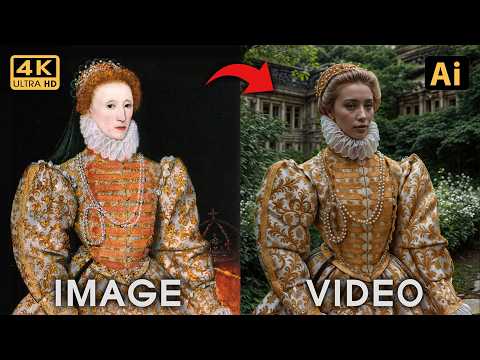
Our first stop: Elizabeth I, the Virgin Queen. Born in 1533 to Henry VIII and Anne Boleyn, she ascended to the throne in 1558 amid a kingdom fractured by religious turmoil. Her reign, the Elizabethan era, became a golden age of cultural and economic expansion, and her defeat of the Spanish Armada in 1588 cemented her legend. But behind the regal mask lay a woman of fierce intellect and cautious diplomacy, whose patronage of writers like William Shakespeare gave birth to some of the greatest works in the English language.
Then, the stage shifts to Charlemagne, the Father of Europe. Crowned Emperor of the Holy Roman Empire in 800 by Pope Leo III, he unified vast swaths of Western Europe for the first time since Rome’s fall. His Carolingian Renaissance sparked a revival of learning and the arts, laying the foundation for medieval Europe. But Charlemagne was also a warrior king, his campaigns brutal and his rule absolute—a complex figure whose legacy is as much about bloodshed as about enlightenment.
From the throne to the pulpit, we meet Martin Luther, the German theologian who, in 1517, nailed his Ninety-Five Theses to the church door in Wittenberg. His challenge to the Catholic Church’s sale of indulgences ignited the Protestant Reformation, shattering the religious unity of Europe. Luther’s insistence on salvation through faith alone and the authority of Scripture alone birthed new denominations and forever altered the political and social landscape of the continent.
But faith was not the only force reshaping the world. As Luther preached in Germany, Marco Polo was traversing the Silk Road, his travels to the court of Kublai Khan opening Western eyes to the riches of Asia. His book, The Travels of Marco Polo, became a medieval bestseller, inspiring generations of explorers—including Christopher Columbus, who carried a copy on his fateful voyage. Polo’s journey was not just about trade; it was about bridging worlds, a precursor to the globalized era we know today.
And speaking of bridges, Christine de Pizan built one for women. Born in Venice in 1364 and raised in the French court, she became one of the first professional female writers in Europe. Her masterpiece, The Book of the City of Ladies, defended women’s contributions to society and challenged the misogyny of her time. In an age when women’s voices were silenced, Christine’s pen was a weapon of quiet revolution.
Far to the east, another woman wielded power from the Chrysanthemum Throne. Empress Suiko, Japan’s first reigning empress, ruled from 592 to 628. With her nephew Prince Shōtoku, she championed Buddhism and promulgated the Seventeen-Article Constitution, a blueprint for Japan’s future governance. Her reign marked a turning point, as Japan began to centralize its government and embrace continental culture.
Meanwhile, in India, the Mughal Empire reached its zenith under Akbar the Great. Ascending the throne in 1556 at just thirteen, he expanded his realm to cover most of the subcontinent. But Akbar’s true genius lay in his religious tolerance, his administrative reforms, and his patronage of the arts—creating a syncretic culture that blended Hindu, Muslim, and Persian influences. His court was a haven for poets, philosophers, and musicians, a testament to the power of diversity.
In the quiet cloisters of Germany, Hildegard of Bingen composed celestial music and penned theological visions that still astonish scholars. Declared a Doctor of the Church in 2012, she was a polymath—a mystic, composer, herbalist, and preacher—whose influence transcended the male-dominated Church of the Middle Ages. Her visions, vivid and apocalyptic, were not mere hallucinations but profound meditations on the divine and the natural world.
And then there is Isabella I of Castile, whose marriage to Ferdinand of Aragon united Spain and launched the age of exploration. Her patronage of Christopher Columbus in 1492 opened the Americas to European conquest—a legacy as celebrated as it is contested. Isabella’s reign also saw the Spanish Inquisition, a dark chapter that reminds us that power, however glorious, often comes at a terrible cost.
As we pause here, having glimpsed just a handful of these resurrected icons, the full scope of this journey begins to unfold. Each face, each story, is a thread in the vast tapestry of history. And the AI that brings them to life does more than satisfy our curiosity—it invites us to question, to reflect, and to see ourselves in the mirror of the past. But this is only the beginning. There are still more legends waiting in the shadows, their stories aching to be told.
The next face to emerge from the digital mist is Johannes Gutenberg, the man whose invention would change the world forever. Around 1439, he developed the movable-type printing press, a device that would democratize knowledge and ignite the Renaissance and Reformation. His masterpiece, the Gutenberg Bible, was among the first books produced in mass quantities, and it remains a symbol of human ingenuity. As his reconstructed visage stares back at you, imagine the weight of that first printed page—the moment when ideas could travel faster than any army.
From the printing press to the algorithm, we meet Al-Khwarizmi, the Persian mathematician who lived from 780 to 850. Working in Baghdad’s House of Wisdom, he wrote The Compendious Book on Calculation by Completion and Balancing, the foundational text of algebra. His name, Latinized as Algorithmi, gave us the word ‘algorithm’—a term that now defines our digital age. Without his breakthroughs, the computers that resurrect these figures might never have existed.
And speaking of computers, imagine the colossal fleets of Zheng He, the Chinese admiral who commanded seven epic voyages from 1405 to 1433. His treasure ships, some over 400 feet long, dwarfed Columbus’s Santa Maria and carried Chinese goods and culture to Southeast Asia, India, the Middle East, and East Africa. His voyages were a display of Ming China’s power and a testament to the possibilities of peaceful exploration.
But not all conquerors came in peace. Genghis Khan, born Temujin around 1162, forged the largest contiguous empire in history. His cavalry swept across Asia and Europe, uniting nomadic tribes and establishing the Pax Mongolica, which facilitated trade and cultural exchange along the Silk Road. His face, reconstructed from historical descriptions, reveals a man of iron will and strategic genius—a leader who could be as ruthless as he was visionary.
In the realm of faith and reason, Anselm of Canterbury stands as a towering figure. Born in 1033 in Aosta, Italy, he became Archbishop of Canterbury and one of the founders of scholastic theology. His ontological argument for the existence of God, presented in the Proslogion, remains a cornerstone of philosophical debate. His serene expression hints at a mind constantly reaching for the divine.
Then there is Pliny the Elder, the Roman naturalist whose Natural History comprised 37 volumes covering astronomy, geography, botany, zoology, and medicine. His curiosity was insatiable, and his death during the eruption of Mount Vesuvius in 79 AD—while attempting to rescue others—cemented his legacy as a martyr to knowledge. His reconstructed face shows the earnestness of a scholar who believed that understanding nature was the highest calling.
And who could forget Galileo Galilei, the man who dared to look up and question the heavens? With his improved telescope, he observed Jupiter’s moons and championed Copernican heliocentrism, earning the ire of the Inquisition. His trial and subsequent house arrest did not silence him; his Dialogue Concerning the Two Chief World Systems laid the groundwork for modern physics. His face, lined with wisdom and defiance, reminds us that truth often demands courage.
From the stars above to the annals of history below, Anna Komnene emerges as a brilliant chronicler of her time. Daughter of Emperor Alexios I Komnenos, she wrote the Alexiad, a detailed account of her father’s reign and the First Crusade. Her intellectual prowess in philosophy, medicine, and literature made her a standout figure in the Byzantine court. Her penetrating gaze suggests a woman who observed the world with a historian’s eye and a philosopher’s soul.
And then we encounter Thomas Aquinas, the Angelic Doctor, whose Summa Theologica synthesized Aristotelian philosophy with Christian theology. His doctrine of natural law and his arguments for the existence of God shaped Western thought for centuries. Canonized in 1323, he remains a beacon of the harmony between faith and reason.
Eleanor of Aquitaine, one of the most powerful women of the Middle Ages, follows. As Queen of France and then England, she wielded immense political influence, and her patronage of the arts fostered the troubadour tradition. Mother to Richard the Lionheart and King John, she was a force to be reckoned with—a strategist, a patron, and a survivor.
Finally, we come to Nicolaus Copernicus, the quiet revolutionary who placed the Sun at the center of the universe. His On the Revolutions of the Heavenly Spheres, published in 1543, challenged millennia of geocentric belief and set the stage for the Scientific Revolution. His face, calm and contemplative, belongs to a man who dared to move the Earth.
As these twenty figures flicker before us, their stories intertwine, forming a mosaic of human achievement and folly. The AI that animates them does more than entertain—it invites us to learn, to question, and to connect with the past in ways never before possible. And yet, as the journey continues, we are left to wonder: what other secrets lie hidden in the faces of history, waiting to be revealed?
The digital mist swirls one final time, and the faces fade—not into darkness, but into a quiet, lingering presence. Elizabeth’s sharp gaze, Galileo’s defiant brow, Eleanor’s knowing smile—they remain with you, echoes of lives lived fiercely across centuries.
Relax History AI has done more than resurrect the dead; it has built a bridge across time, inviting us to walk alongside giants. But every bridge has two ends. As we stand on our side, the question is no longer who these figures were, but who we are in their shadow.
The screen dims, but the journey doesn’t end. History is not a closed book—it is a living conversation, and you now hold a voice in it. What will you do with the echoes you’ve heard today?
Which of these twenty figures would you bring back for a single conversation—and what would you ask them? Share your answer in the comments below, and subscribe to Relax History AI for more journeys into the past. The next face waiting to speak might just change how you see everything.
Report this article
Select a reason for reporting:






