In July 1945, the heart of a defeated Germany became the stage for a new world order. The Big Three—Truman, Stalin, and Churchill—converged on Potsdam, a city reduced to rubble, to negotiate the rules that would govern the post-war period. But beneath the formalities, a silent battle for supremacy was already underway.
Stalin arrived a day late, his demeanor icy. When US Ambassador Averell Harriman remarked on the satisfaction of being in Berlin after all the trials and tragedies, Stalin’s deadpan reply was chilling: “Tsar Alexander got to Paris.” The Kremlin’s shadow dominated the conference. With hundreds of divisions having liberated Eastern Europe, Stalin wanted it all under the red flag. Communist parties everywhere would blindly follow his orders. In his eyes, Truman was just a Kansas City shopkeeper who couldn’t hold a candle to Roosevelt.
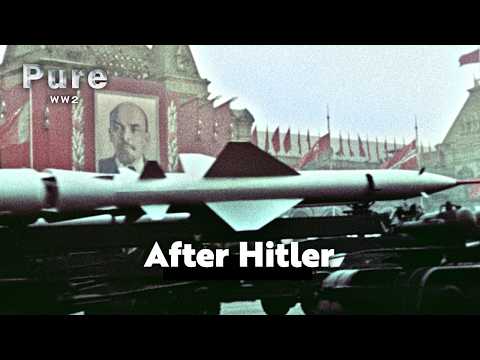
But Truman had a trump card: Trinity. Just four days earlier, the first atomic bomb had been tested in the New Mexico desert, unleashing a power equivalent to 20,000 tons of TNT. Humanity had entered the atomic age. During the talks, Truman cryptically announced to Stalin that he had developed a new weapon of great destructive power. Stalin didn’t even blink. Away from the conference, he confessed to Molotov that they had to catch up with the USA. “No doubt Washington and London are hoping we won’t be able to develop the bomb for ourselves,” he said. “They want to force us to accept their plans. Well, that’s not going to happen.”
A few days later, Truman ordered two atomic bombs to be dropped on Hiroshima and Nagasaki. In minutes, the nuclear blasts wiped out more than 150,000 Japanese. The Empire of the Rising Sun surrendered. The Second World War was over. Stalin had come to Potsdam as the top dog, but he soon found out that the little Kansas City shopkeeper was more determined than he thought.
Meanwhile, through all these endless discussions, people were still caught up in the frenzy of liberation. Publicly in France, Italy, Belgium, Norway, and Denmark, women had their heads shaved. Any commerce with the enemy, even socializing, was enough to cause suspicion. Vigilantes gave free rein to their fury—a release for men who might have felt their virility threatened by defeat and occupation. Right up until 1946, tens of thousands of women were still being humiliated. It wasn’t just hair being cut off either. Heads were rolling too. In the Alier region at Cusset, two collaborators were seized from prison by a fanatical crowd, and the police allowed the crowd to express its feelings. “Nazism appears to have been infectious,” read one editorial, “to the point of persuading some people that violence is permissible. What is the point of a victory over barbarians if we then start imitating them?”
This savage purge went on all over Europe. It was as if before the page could be turned, it had to be stained with violence. Once all the fury was vented, it was time for justice to prevail. In France, Belgium, Italy, Holland, and Norway, hundreds of thousands of collaborators were brought to trial. The hangman had his day. In Italy, two young filmmakers, Visconti and De Santis, immortalized the brutal reality of the purges. These images were misleading, though. Many collaborators were either sentenced in absentia or managed to evade justice.
But after years of bloodshed, the world was impatient for the epilogue and for some closure. The biggest criminal trial in history opened in November 1945 in Nuremberg, the very place where the anti-Semitic laws were announced ten years earlier. The leading figures of the Nazi party had to answer for their crimes. Among them: Hermann Göring, Hitler’s right-hand man; Rudolf Hess, the half-mad visionary; and Wilhelm Keitel, supreme commander of the Wehrmacht. In all, 21 former leaders came before the court. At the start of the trials, the US Attorney General addressed the jury: “The wrongs which we seek to condemn and punish have been so calculated, so malignant and so devastating that civilization cannot tolerate their being ignored because it cannot survive their being repeated.”
The accused all stepped up to the bar. It would take almost a year, 400 hearings, and 16,000 pages of transcriptions to show the world the full extent of Nazi barbarism. Among the many witnesses was the communist resistance member Marie-Claude Vaillant-Couturier, who was interned at both Auschwitz and Ravensbrück. Her testimony impressed the courtroom. For such unspeakable acts, the tribunal employed for the first time ever the terms genocide and crimes against humanity. Hundreds of other trials followed—trials such as that of Ilse Koch, who collected tattoos from deportees and shrunken heads. Her macabre trophies were introduced as evidence. She was sentenced to life imprisonment. The worst offenders were hanged, such as the scourge of Czechoslovakia, Karl Hermann Frank. Their bodies were incinerated and their ashes scattered so as to leave no memorial to them or their crimes. In Russia, the executions drew thousands of spectators, all eager to watch their oppressors die.
Widespread as it was, though, the eradication of the Nazis would remain incomplete. The Das Reich division, for example, burnt down the peaceful village of Oradour-sur-Glane and massacred 642 of its men, women, and children. But its commander, General Lammerding, would die peacefully in his bed. And how many others responsible for the Final Solution would remain at large? After all the vengeance, the time had come to rebuild. But it would be a huge task to drag Europe out of the shadows. People were still hungry. And as long as Germany’s future remained uncertain, another war was looming. The Americans and the Soviets didn’t see the coming new era in the same way at all. The Allies had won the war, but could they win the peace?
The answer would come sooner than anyone expected. In the ruined cities of Germany, the lines were already being drawn. The Americans and the British pushed forward with their plans for a democratic, unified Germany, while Stalin moved to consolidate his grip on the East. In the Soviet zone, land reform and the expropriation of industry began almost immediately—not as punishment, but as preparation. By 1946, the communists had merged with the Social Democrats in a forced union, the SED, and the machinery of a one-party state was quietly assembled.
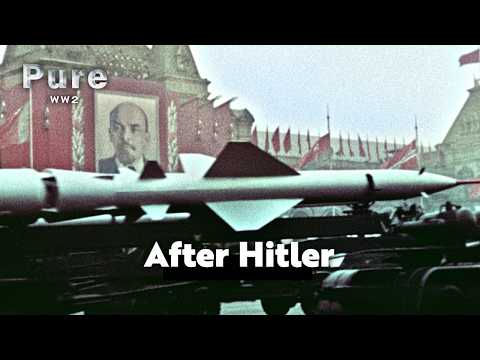
But the most urgent crisis was hunger. Europe was starving. The winter of 1945-46 brought biting cold and empty larders. In the cities, people survived on ration cards and black-market cigarettes. In Germany, the daily ration fell to barely a thousand calories—a piece of bread, a thin soup, and not much else. Children with swollen bellies and hollow eyes became the image of a continent that had won the war but lost its future. Relief came in fits and starts. American grain shipments, UNRRA aid, and the slow revival of trade kept millions alive, but the recovery was fragile.
Then came the speech that would define the age. In March 1946, Winston Churchill, now out of office, traveled to Fulton, Missouri. Standing beside President Truman at Westminster College, he delivered a warning that echoed across the world. “From Stettin in the Baltic to Trieste in the Adriatic, an iron curtain has descended across the continent.” Behind that curtain lay the ancient capitals of Central and Eastern Europe—Warsaw, Prague, Budapest, Bucharest—all now under Soviet control. Churchill’s words were blunt: the Allies of yesterday were now rivals. The world had been split in two.
Stalin’s response was swift and furious. He compared Churchill to Hitler and accused the West of encircling the Soviet Union. In the Kremlin, the doctrine of the two camps hardened: capitalism versus socialism, with no middle ground. The Soviet Union would build its own atomic bomb, no matter the cost. And in the meantime, it would tighten its grip on the new buffer states. In Poland, Romania, and Bulgaria, opposition parties were crushed, elections were rigged, and the secret police grew powerful. The pattern was unmistakable.
Meanwhile, the West began to see that reconstruction required more than charity. In June 1947, Secretary of State George Marshall proposed a plan of massive economic aid to rebuild Europe. The Marshall Plan was an act of astonishing generosity—and of cold calculation. It would stabilize the continent, create markets for American goods, and, above all, keep Western Europe out of the communist orbit. Stalin forbade the Eastern bloc from accepting the aid. Czechoslovakia, which had initially shown interest, was forced to withdraw. The dividing line was no longer a metaphor. It was a policy.
The first great test of the new order came in Berlin. The city lay deep inside the Soviet zone, divided into four sectors. In June 1948, the Western Allies introduced a new currency in their zones and began to build a separate West German state. Stalin responded by cutting off all land access to West Berlin. Two and a half million people were suddenly isolated, with enough food for only a few weeks. The world held its breath. Would this be the war that followed the peace?
But Truman refused to back down. Instead of sending tanks, he sent planes. The Berlin Airlift began, a round-the-clock operation that would last nearly a year. C-54s and Lancasters flew through the night, carrying coal, flour, medicine, and hope. At the height of the operation, a plane landed every forty-five seconds. Children gathered on the rubble of Tempelhof to cheer the pilots, and the candy bars dropped on tiny parachutes became a legend. The blockade failed. In May 1949, Stalin lifted it. West Berlin had survived.
That same year, the world was formally divided. NATO was founded in April, a military alliance bound by the principle that an attack on one was an attack on all. In August, the Soviet Union tested its first atomic bomb. The American monopoly was over. The arms race had begun, and with it a new kind of fear—not of war itself, but of annihilation. In schoolrooms, children practiced ducking under desks. In the corridors of power, strategists spoke of deterrence and mutual assured destruction.
Europe was rebuilding, but it was rebuilding in two halves. The West, fueled by Marshall Plan dollars, saw factories hum and cities rise. The East, drained by reparations and rigid planning, lagged behind. The dream of a single, peaceful Europe had faded. In its place stood a continent of borders and barbed wire, of ideologies and spies. The war was over, but the peace had become a cold, enduring conflict—one that would shape the lives of millions for the next forty years.
And yet, amid the hardening lines, there were still moments of humanity. In the ruins of Warsaw, a young couple rebuilt their bookshop from a single surviving shelf. In a Paris café, a former resistance fighter and a former collaborator sat at neighboring tables, each trying to forget. In the rubble of Cologne, a British soldier and a German widow shared a cigarette and said nothing about the war. The past was never far away, but the future demanded attention.
For the survivors of the camps, liberation had brought a different kind of struggle. Many returned to homes that no longer existed, to families that had vanished. In displaced persons camps across Germany and Austria, hundreds of thousands of Jews waited for a place to go. Some dreamed of Palestine. Others of America. The creation of the state of Israel in 1948 gave many a destination, but the scars of the Holocaust could not be healed by a passport. The world had promised “never again,” but the promise would be tested again and again in the decades to come.
The Nuremberg trials ended in October 1946. Twelve defendants were sentenced to death, seven received prison terms, and three were acquitted. Göring cheated the hangman by swallowing cyanide in his cell. “The wrongs we sought to punish were so calculated,” the verdict read, “that civilization could not survive their repetition.” Yet the world soon learned that justice, however solemn, could not erase the past.
By 1949, the Cold War had hardened into a permanent condition. The Marshall Plan rebuilt the West, while the East was bound to Moscow by ideology and fear. Europe was no longer a continent but a chessboard. The peace the Allies had won had become a fragile, anxious thing—guarded by atomic bombs and watchtowers.
And so the question lingered in the rubble of a broken century: was this peace at all, or merely the pause between wars?
What do you think—did the victors truly win the peace, or only postpone the next war? Share your thoughts below.
Report this article
Select a reason for reporting:






