They were called the Forgotten Army, and they knew it. In the dense, sweltering jungles of Burma, a group of soldiers fought a war that the world seemed determined to ignore. While headlines celebrated victories in Europe, these men battled not only a ruthless enemy but also the crushing silence of being forgotten. Their story is one of extraordinary courage, leadership, and sacrifice—and it begins with a general who refused to let them fade into history.
“When you go home, don’t worry about what to tell your loved ones and your friends about service in Asia. No one will know where you were or where it is if you do. You are and will always remain the forgotten army.” These words, spoken by General William Slim himself, cut to the heart of the matter. The 14th Army, forged by Slim into a formidable fighting force, would ultimately retake Burma from the Japanese in 1945. Yet their triumph would be overshadowed, their names lost in the annals of time.
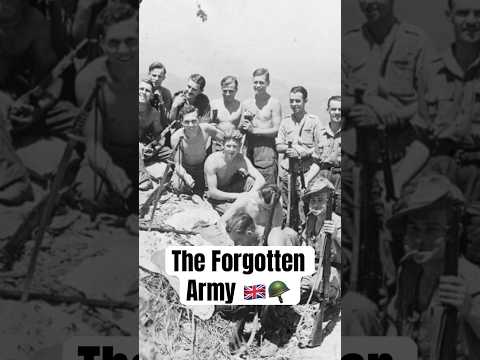
General Slim was not just any commander; he was one of Britain’s best. He understood his men, shared their hardships, and inspired a loyalty that few leaders could command. Under his leadership, the 14th Army became a symbol of resilience in the face of impossible odds. But the media of the time, and even today, has largely overlooked their campaign. The jungles of Burma were far from the front pages, and the soldiers who fought there were left to wonder if their sacrifices would ever be acknowledged.
The Forgotten Army was a diverse coalition—British, Indian, African, and others—united by a common purpose. They faced not only the Japanese but also the brutal terrain: monsoons, disease, and impenetrable forests. Yet they persevered, pushing back the enemy inch by inch. Their story is one of unsung heroism, of men who fought not for glory but for duty.
As the war in Europe drew to a close, the Forgotten Army’s fight in Burma continued. The world’s attention was elsewhere, but the men of the 14th Army pressed on. They knew that their efforts were crucial to the overall victory, even if no one would ever know their names. General Slim’s words echoed in their minds, a bitter reminder of their anonymity.
But perhaps that is why their story deserves to be told. In a world that often celebrates the loudest voices, the Forgotten Army reminds us of the quiet heroes who shape history without fanfare. Their legacy is not in medals or monuments but in the freedom they helped secure.
Do you know anyone who served in Asia or in the 14th Army? Their stories are waiting to be heard, and it’s up to us to ensure they are never forgotten again.
Yet the silence that surrounded the 14th Army was never total. In the villages and towns across Britain, India, and Africa, there were families who knew. They had received the letters, worn thin from being folded and unfolded a hundred times, written in pencil by candlelight. They had traced the outlines of strange-sounding places—Imphal, Kohima, Mandalay—on maps spread across kitchen tables. For those families, the Forgotten Army was never forgotten at all.
Take the story of Havildar Ram Singh, a Sikh soldier from the Punjab who served in the 14th Army’s supply columns. He never fired a shot in anger, yet he drove his truck through roads that turned to rivers of mud during the monsoon, hauling ammunition and rice to the front lines. Once, his convoy was ambushed. He lost two friends that day, but he kept driving. When asked later why he did it, he simply shrugged. “The men at the front needed us. What else could we do?”
Then there was Private Thomas Okello from Uganda, one of the thousands of African soldiers who served in the King’s African Rifles attached to the 14th Army. He had never seen a jungle before Burma, and it terrified him. But he learned to read the forest—the sounds of birds that fell silent when the enemy was near, the tracks in the mud that told him which way a patrol had gone. His commanding officer called him “the best scout I ever had.” Okello never received a medal for his service. He returned home to his village, married, and raised six children. His grandchildren only learned of his war years after he died, from a tattered discharge paper found in a wooden box.
These are the stories that history books often skip over. The 14th Army was not a single, homogeneous force—it was a patchwork of languages, faiths, and cultures, stitched together by necessity and shared hardship. Sikhs fought alongside Scots, Gurkhas beside West Africans, and in the chaos of battle, those differences mattered less than the man beside you.
General Slim knew this better than anyone. He walked among his troops, shared their rations, and listened to their complaints. He once said that “the British soldier is the best in the world, but he is not the only one.” He insisted that every soldier in the 14th Army, regardless of origin, be treated with the same respect. It was a radical notion at the time, and it earned him the devotion of his men.
But devotion alone could not change the reality of their situation. As the war dragged on, supplies were scarce, medical care was rudimentary, and the jungle itself seemed to conspire against them. Malaria, dysentery, and leeches were as deadly as Japanese bullets. Yet the 14th Army fought on, not because they believed they would be remembered, but because they believed the job had to be done.
It was this quiet determination that carried them through the darkest days of the campaign. In early 1944, the Japanese launched Operation U-Go, a massive offensive aimed at smashing into India itself. The British and Indian forces at Imphal and Kohima were surrounded, cut off from supplies, and forced to fight for their very survival. For weeks, the outcome hung in the balance.
At Kohima, the fighting was so close that soldiers fought hand-to-hand across a tennis court—the British garrison’s last defensive position. Men who had never held a rifle before found themselves defending a hilltop with bayonets and grenades. The battle raged for days, the jungle around them littered with the debris of war. When the siege was finally broken, the 14th Army had achieved what many had thought impossible: they had stopped the Japanese advance in its tracks.
But the cost was staggering. The casualties at Imphal and Kohima were among the highest of any British-led campaign of the war. And yet, back home, the newspapers barely mentioned it. The invasion of Normandy was being planned, and the world’s eyes were fixed on Europe. The men of the 14th Army fought and died in a campaign that history would almost forget.
General Slim, however, never forgot. After the war, he wrote a memoir called Defeat into Victory, in which he paid tribute to his men. He described the 14th Army as “the finest army I have ever known”—a force that had been forged in adversity and had never lost a battle under his command. He insisted that their story be told, even if the world was not listening.
And there were others who remembered too. In the decades that followed, veterans of the Forgotten Army held reunions in small halls across Britain. They wore their medals with quiet pride and swapped stories of the jungle, of friends lost and battles won. They never sought fame, but they refused to let their comrades be forgotten.
One of those veterans, a former signalman named Albert Jenkins, was asked in his old age why he thought the 14th Army had been overlooked. He thought for a moment and then said, “We weren’t in the newsreels. We weren’t in the papers. But we were there. And we did our bit.” His words echo the sentiment of thousands of others who served in Burma—men who asked for nothing more than a quiet acknowledgment that their sacrifice mattered.
Today, the jungle has reclaimed much of the ground they fought over. The tennis court at Kohima is overgrown, the trenches filled with earth. But the memory of the Forgotten Army lives on in the stories passed down through families, in the tattered letters and fading photographs, and in the words of a general who told his men they would always remain forgotten—and in doing so, ensured they never truly would be.
Perhaps that is the real legacy of the 14th Army: not the medals they never received, nor the headlines they never made, but the quiet, stubborn act of remembering. Every time a grandchild unfolds a tattered discharge paper or a family traces a route through Kohima on an old map, the Forgotten Army is pulled back from the edge of history. They were forgotten by the world, but never by the people who loved them.
General Slim’s words, spoken to men who had endured the worst the jungle and the enemy could offer, were meant as a bitter comfort. Yet they became something else—a challenge. “You are and will always remain the forgotten army,” he told them. And so they have remained, in the official histories and the newsreels. But in the kitchens and living rooms of Britain, India, and Africa, their names are still spoken. The truck driver who kept going. The scout who read the forest. The signalman who did his bit.
Their war is over, but our duty to remember is not. The jungle has swallowed the trenches and the tennis court at Kohima, but it cannot swallow the stories—not if we keep telling them. The Forgotten Army asked for nothing more than a quiet acknowledgment that their sacrifice mattered. That is something we can still give them, one story at a time.
So the next time you see an old photograph of a soldier in a slouch hat, or hear a fragment of a story about Burma, listen closely. You may be hearing the voice of the Forgotten Army, still waiting to be remembered. And remembering them is the least we can do.
Do you have a story of someone who served in Asia or the 14th Army? Share it in the comments below—because every name remembered is one more victory over the silence.
Report this article
Select a reason for reporting:






