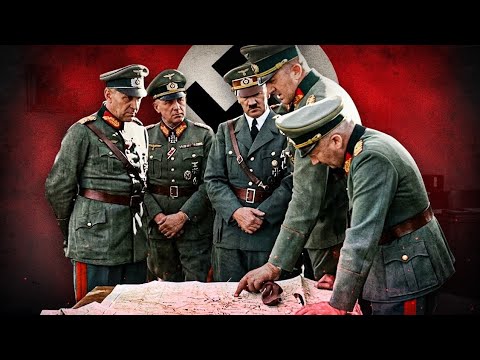
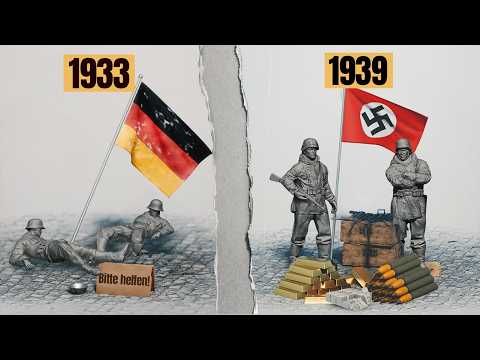
In 1933, Berlin was a city of broken men. Nearly a third of the working-age population was unemployed. Soup lines snaked through the streets, and factories stood half-empty. The Weimar Republic seemed to have no answer.
Six years later, on Hitler’s birthday in 1939, the scene was unrecognizable. Unemployment had vanished. In place of communal kitchens, columns of tanks, heavy artillery, and modern squadrons of fighters and bombers paraded through the capital.
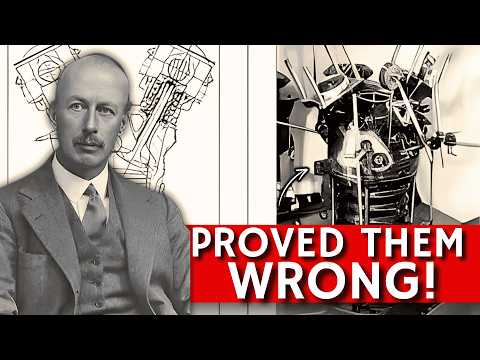
How did a country economically suffocated transform into a military power in less than a decade? The answer was not improvisation. It was led by Hjalmar Schacht, an experienced banker known for unorthodox methods that earned him the nickname Dark Wizard of International Finance.
To understand this transformation, one must return to the earlier collapse that shaped both Germany and Schacht himself. The German Empire, unified in 1871, had quickly become an industrial power capable of rivaling the British Empire. Schacht was born into this environment of national ascent.
Graduated in economics from the University of Kiel, he built a career at Dresdner Bank until reaching the vice directorship. During World War I, he worked as a financial consultant in occupied Belgium. The conflict revealed a structural German fragility: dependence on external resources.
The Allied naval blockade restricted access to oil, rubber, and minerals. Poor harvests worsened food shortages. In 1918, the combination of hunger, exhaustion, and military defeat led to the fall of the Kaiser and the birth of the Weimar Republic.
Schacht returned to banking, but also entered politics through the German Democratic Party, a liberal center-left party. The young republic faced two gigantic problems. The first was external: a collapse in the balance of payments. The second was internal: a colossal war debt inherited from the Empire.
The Treaty of Versailles reduced Germany’s export capacity, confiscated resource-rich territories, and imposed reparations payable in foreign currency. At the same time, Germany needed to import raw materials to sustain its industry. The Reichsbank depended on reserves in gold or strong currencies to finance imports. With reparations draining foreign exchange and weakened exports, reserves evaporated.
Internally, the government also needed to honor debts contracted with its own population during the war. The options were harsh: severe austerity or default. Instead, it chose to expand money issuance. Printing money made it possible to buy foreign currency and pay reparations, as well as keep the state functioning.
The result was devastating: the hyperinflation of 1923. The German currency lost value at a dizzying pace. Savings and pensions disappeared. Paradoxically, unemployment remained relatively low during this period, as excess money stimulated spending and economic activity. Internal debt was eroded by inflation, but at the cost of public trust.
In 1923, a new government brought Schacht in to stabilize the economy. He introduced a new currency and, above all, negotiated the Dawes Plan, which restructured and temporarily reduced reparations. With less external pressure, the need to print money ceased. Inflation dropped rapidly.
Foreign investments, especially from the United States, flooded the country. The so-called golden period of Weimar followed, but the recovery was fragile. It depended on external loans and a favorable global environment. When the New York Stock Exchange collapsed in 1929, the flow of credit abruptly ceased.
At the same time, the United States and the United Kingdom adopted protectionist policies that drastically reduced German exports. The country once again faced a balance of payments crisis. This time, printing money was politically impossible. What remained was to compress imports. As the government did not directly control consumption and investment decisions, the indirect way to reduce imports was to make the population poorer through severe austerity.
Spending cuts and tax increases deepened the recession. Unemployment skyrocketed. Soup lines returned. Political radicalism flourished in this environment. Communists and Nazis gained strength by promising rupture. Schacht, frustrated with reparations policy, moved closer to the nationalist camp and appeared alongside Hitler at events against the Weimar government.
In 1932, there was a renegotiation that drastically reduced reparations. There were timid signs of recovery. Foreign correspondents noted slight economic relief, but political instability was too deep. The Nazis became the largest party. In 1933, Hitler came to power and once again called Schacht to lead economic policy.
He faced three simultaneous challenges: eliminate unemployment, finance a vast rearmament program, and avoid a new currency crisis. Germany still imported more than it exported and needed to pay private debts abroad. Foreign currency reserves remained limited.
The solution began with an expansion of public spending. Like Franklin D. Roosevelt’s New Deal in the United States, the German government began stimulating the economy through debt-financed investments. However, after 1933, most of the increase in spending was directed towards the military sector.
As rearmament violated the Treaty of Versailles, Schacht created an indirect mechanism: the fictitious company Mefo, Metallurgische Forschungsgesellschaft. It ordered armaments and paid with securities, the so-called Mefo bills, guaranteed by the Reichsbank. In practice, it was public debt disguised as a private operation.
This model allowed rapid expansion of production without generating immediate inflation. There was idle capacity in the economy. Underutilized factories and millions of unemployed could be absorbed without putting pressure on prices. Unemployment fell dramatically.
However, as the economy approached full employment, inflationary risks emerged. To contain them, the regime abolished independent unions and created the German Labor Front. Instead of pushing for wage increases, it imposed moderation. At the same time, gradual price controls were introduced whenever significant increases appeared.
The result was growth with stagnant wages and shortages in civilian sectors. Where prices could not rise, shortages appeared. To manage critical resources such as steel and coal, the government established quota systems that directed inputs primarily to the military sector.
By the end of 1934, unemployment had practically disappeared, but the balance remained delicate. Germany continued to depend on essential imports. Internal expansion increased demand for foreign currency. Resolving this tension would be Schacht’s next great test.
Even with unemployment practically eliminated and industrial production strongly expanding, the weak point of the German economy remained the same that had brought down Weimar twice: the scarcity of foreign currency. Germany needed to import oil, rubber, minerals, and various strategic inputs. At the same time, it still owed payments to private creditors in financial centers such as New York, London, Amsterdam, and Zurich.
Internal growth further increased the need for imports. Each reemployed worker meant greater consumption. Each new military factory required more raw materials from abroad. Schacht’s first drastic measure was to directly attack external liabilities.
In 1934, he announced the suspension of payments on a significant portion of external debts. It was a selective default. The calculation was cold. In the midst of the Great Depression, international credit had already contracted. Germany did not depend on new loans in the short term. By cutting payments, it preserved reserves.
However, the decision provoked trade retaliation. Affected countries reduced their purchases of German products, once again pressuring the balance of payments. Faced with this, Schacht adjusted the strategy. He negotiated bilateral agreements with some European creditors, accepting partial payment in exchange for favorable trade conditions. With the United States, however, there was no significant agreement. German-American trade had already been weakened by high protectionist tariffs.
In practice, Schacht prioritized commitments that maintained essential trade flows and discarded others. Even so, the structural problem persisted. Imports remained high. To control the outflow of foreign currency, Schacht implemented strict exchange controls. Companies could not simply buy foreign currency on the market. It was necessary to request authorization from the Reichsbank, justifying in detail the purpose of the import.
Bureaucracy grew. Every international transaction passed through state scrutiny. This system transformed the Central Bank into a permanent filter of the economy. Sectors considered strategic received priority. Others were restricted. Foreign trade ceased to be merely the result of business decisions. It became an instrument of state policy.
However, controlling imports was not enough. It was necessary to sustain exports. As the United Kingdom and the United States had devalued their currencies, German products became relatively expensive. Devaluing the Reichsmark could restore competitiveness, but it would threaten to reignite inflation, a still recent trauma. Schacht chose to subsidize exporters. The state compensated companies so they could sell abroad at lower prices. It was a costly mechanism, but functional in maintaining inflows of foreign currency.
At the same time, he developed a network of compensation agreements with countries in Southeastern Europe and Latin America. Instead of transactions settled in dollars or pounds, clearing systems were used. Germany exported industrial goods and received raw materials with payments accounted bilaterally. This reduced the need for hard currency.
Another critical point involved the regime’s anti-Semitic policy. As persecutions intensified, many Jews sought to emigrate. It was estimated they held significant wealth within Germany. If they converted assets into foreign currency to leave the country, reserves would be rapidly exhausted. To prevent this drain, the government imposed severe restrictions on the transfer of personal capital. Those emigrating could take only a limited amount. It was a form of capital control directed at individuals.
Thus, to preserve reserves and finance rearmament, the regime progressively restricted economic freedom. Controlled wages, administered prices, monitored trade, limited capital. Growth was not based on a free market, but on centralized coordination.
From 1935 onward, when rearmament was officially announced, the context changed again. Germany openly abandoned the limitations imposed after World War I. Initial financial secrecy ceased to be essential, but the international arms race accelerated. Powers with far more natural resources, such as the United States, the Soviet Union, and the British Empire, expanded their military production.
In this scenario, Germany’s fundamental constraint was no longer unemployment or internal credit. It was material capacity. The economy approached full employment. Physical resources became the bottleneck. Schacht intensified the redirection of inputs to the military sector. The textile industry, for example, had imports of cotton, wool, and leather limited to save foreign currency. Civilian production shrank. As prices were controlled, shortages emerged.
In the construction sector, steel was redirected to armaments. Municipal budgets were compressed, housing credit restricted. The housing deficit worsened, but more steel flowed to factories producing tanks and artillery. Large businessmen maintained formal ownership of their companies, unlike the Soviet model. However, their autonomy was reduced. Business associations began to operate under state supervision. Those who resisted the regime’s directives faced severe consequences. Control was indirect, but effective.
In 1936, Hitler announced the Four Year Plan with two central objectives: to prepare the economy for total war within four years, and to reduce external dependence through import substitution and expansion of synthetic production, especially fuels and artificial rubber. Hermann Göring received broad powers to coordinate the plan, overriding the Ministry of the Economy.
From that point on, the divergence between Hitler and Schacht became more evident. Schacht saw his instruments as emergency solutions to stabilize and strengthen the country. Hitler viewed the economy as a permanent machine for preparation for an inevitable confrontation with major powers. For the dictator, acceleration was imperative. For the banker, there were material and financial limits.
Schacht warned of risks of overheating and disorganization. He advocated moderation in the pace of expansion. His influence diminished. In 1937, he left the position of Minister of the Economy, although he remained at the head of the Reichsbank for some time. Even after losing political power, he still participated in measures aimed at increasing reserves. The annexation of Austria in 1938 allowed access to Austrian foreign exchange reserves and additional mineral resources. Economic relations with Eastern European countries became increasingly asymmetric, with German pressure for raw materials under favorable conditions.
At the beginning of 1939, Schacht was also removed from the presidency of the Reichsbank. The path was cleared for even more aggressive monetary and fiscal expansion. The German economy already operated under intense state direction, with priority focus on the military sector. When Hitler celebrated his birthday that year, in front of mechanized columns and modern squadrons, the spectacle reflected years of financial manipulation, administrative control, and forced redirection of resources.
The system functioned as long as territorial expansion promised new sources of raw materials and reserves. Schacht, although removed from the decision-making core, remained formally linked to the regime for some time. In 1944, after suspicions related to conspiracies against Hitler, he was arrested by the Gestapo and sent to a concentration camp. He survived the conflict and was tried in the post-war period, being acquitted of the main charges in the international tribunal, although he faced additional proceedings in Germany. The economy he had helped structure continued to be conducted by other leaders during the war, expanding controls, exploiting conquered resources, and using forced labor to sustain military production on a growing scale.
By 1945, the machine Schacht had built had consumed itself. The factories that once hummed with rearmament now stood in rubble, and the reserves he had hoarded were worthless. The Dark Wizard had survived the camp and the courtroom, but the system he engineered could not survive its own logic.
He watched from the sidelines as the economy he had stabilized collapsed under the weight of a war it was designed to feed. Schacht’s tools—Mefo bills, exchange controls, bilateral clearing—had bought time, not permanence. They financed a sprint, not a marathon.
In the end, the wizard’s magic ran out. The only question left is whether any economy can be engineered to defy its material limits—or whether such defiance always ends in ruin. What do you think?
Report this article
Select a reason for reporting: