July 1941, Tobruk, Libya. The Germans had the port surrounded on three sides, the Mediterranean Sea at the defenders’ backs, and nowhere to run. Inside the perimeter, 25,000 Allied soldiers waited in trenches carved from hard desert rock. They waited for supply ships that might not come, for relief forces hundreds of miles away, and for the next artillery shell, the next tank attack, the next German probe that could crack their defenses wide open.
Already men whispered that Tobruk would fall just like every other fortress Rommel had attacked. But what nobody knew—not even the Australians themselves—was that this North African port would become the place where German soldiers learned to fear an enemy who refused to fight the way soldiers were supposed to fight.
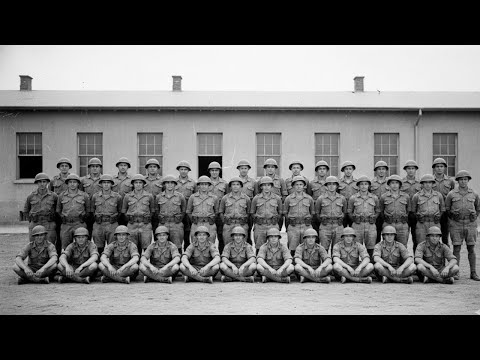
The crisis was simple and brutal. British commanders had ordered a standard defensive strategy: stay in your trenches, conserve ammunition, wait for the enemy to attack, then fight them off. Do not waste men on unnecessary risks. Every military manual said this was how you held ground when outnumbered and surrounded.
The problem was that it was killing them slowly. Each night, German patrols crept close to the Allied lines, watching, learning, calling in artillery on exact positions. During the day, Axis planes bombed supply dumps and water stations with growing accuracy. The defenders lost ten men here, twenty men there, bleeding away their strength while accomplishing nothing. Morale dropped like a stone.
In the first month of the siege, the Allies lost over 400 men without inflicting serious damage on the enemy. The Germans surrounded them with 45,000 troops and could bring up more whenever they wanted. Inside Tobruk, food rations dropped to half portions. Water was limited to one gallon per man per day, and that had to cover drinking, cooking, and washing in desert heat that climbed past 110 degrees.
The math was brutal and simple. If things continued this way, the Germans would not need to attack. They could just wait for Tobruk to collapse from within.
German intelligence officers studied the Allied units and felt confident. Their reports described the British as disciplined but tired. The Polish brigade was small and isolated. The Indian troops were reliable but needed strong leadership. As for the Australians who were arriving to reinforce the garrison, the Germans saw them as colonial amateurs—farmers and sheep herders from the other side of the world. The report said they might be brave, but they had no experience against a modern European army. They certainly would not change the outcome of the siege.
Then Major General Leslie Morshead arrived with the 9th Australian Division, and everything the Germans thought they knew turned out to be dangerously wrong.
Morshead was 51 years old, a school teacher before the First World War who had learned to fight in the trenches at Gallipoli. He had watched thousands of men die in that earlier war because generals ordered them to sit in holes and wait for Turkish bullets. He had survived by learning a different way. At Gallipoli, the Australians who lived longest were the ones who went out at night, who hunted the enemy instead of waiting to be hunted. Morshead had spent twenty years thinking about those lessons.
British high command expected him to follow their defensive playbook. They expected him to keep his men safe in their trenches and bunkers, to preserve his forces for the relief that would surely come. Morshead took one look at the siege lines and made a decision that shocked his fellow commanders.
He gathered his officers in a sandbagged bunker on his second day in Tobruk. The air inside was thick and hot, smelling of sweat and cigarette smoke. Maps covered a makeshift table made from ammunition crates. Morshead pointed at the German positions marked in red pencil, some less than a thousand yards from the Allied trenches. His voice was calm, but his words were not.
“We are not going to sit here and die slowly,” he told them. “We are not going to wait for the Germans to pick us apart piece by piece. From now on, we fight differently.”
Starting tonight, small teams would go out into no man’s land. They would hunt German patrols. They would capture prisoners. They would make the enemy afraid to sleep.
The British commanders thought he was insane. Night patrols were for gathering information, not for fighting. Sending men out into the darkness where German machine guns waited was wasteful and reckless. “You will lose your best soldiers for nothing,” they warned.
Morshead listened to their objections politely. Then he gave the orders anyway.
The 9th Australian Division would not fight like the British. They would not fight like anyone the Germans had faced before. They would turn the siege inside out, making the hunters into the hunted. In the oppressive heat of that North African summer, surrounded by an enemy that outnumbered them nearly two to one, the Australians prepared to teach the Wehrmacht a lesson about fear that would haunt German nightmares for the rest of the war.
The plan Morshead created was simple, but it required iron discipline and nerves most men did not have. Teams of six to twelve soldiers would leave the trenches two hours after sunset. They would move silently across no man’s land, staying low to the ground, using every shell crater and rock for cover. Most raids targeted positions between fifty and two hundred meters from the Australian lines—which meant crawling through sand and stone for thirty to forty minutes just to reach the enemy.
The teams carried no rifles, because rifles were too long and made noise when they scraped against rocks. Instead, each man carried a knife, a bayonet, and maybe a pistol wrapped in cloth to muffle any sound. Some brought improvised clubs made from pick handles wrapped in barbed wire. These were weapons for killing up close in the dark, where you could smell the other man’s breath.
The Australians removed their helmets before these raids, because steel caught the moonlight and made a silhouette German sentries recognized. They blackened their faces and hands with burnt cork or oil so their skin would not reflect light. Many went forward in just socks, because boots crunched on gravel and gave away positions. The goal was to become invisible and silent—to get right up to a German position before anyone knew they were there.
Once there, they would strike fast: kill the sentries, grab any prisoners they could, destroy whatever equipment looked valuable, then vanish back into the darkness before the Germans could organize a response. The entire operation, from leaving the trenches to returning, had to take no more than four hours. Any longer, and they risked being caught in the open when the sun came up.
The first raids went out in early August 1941, just days after Morshead gave his orders. The targets were German observation posts on the high ground overlooking the Australian sector—posts that directed artillery fire during the day and watched for any Allied movement at night. Taking them out would blind the Germans and save Australian lives.
The first team consisted of nine men led by a lieutenant who had hunted rabbits on his family farm before the war. They left their trench at ten at night. The temperature had dropped from the brutal daytime heat to something almost cold, and the men shivered as they crawled. They could hear German voices ahead—relaxed, careless men who thought they were safe behind their wire and machine guns.
It took the Australians forty-five minutes to cross two hundred meters of open ground. They cut through the German wire with clippers wrapped in cloth tape to prevent any metallic sound. Then they were inside the position.
The whole fight lasted maybe ninety seconds. By midnight, they were back in their own trenches with three German prisoners and a map case full of documents. Not one Australian had been scratched.
British high command heard about the raid and immediately sent angry messages to Morshead. This kind of aggressive patrolling was wasteful and reckless, they said. He was risking his best men for a handful of prisoners and some papers. The siege required patience, not cowboy tactics. Sooner or later, one of these raids would go wrong, and he would lose an entire team to German machine guns.
Morshead read the complaints and filed them away. He sent his men out again the next night, and the night after that, and the night after that. Within two weeks, the 9th Australian Division was running raids almost every night—sometimes two or three different teams hitting different parts of the line.
The man who saved Morshead from being ordered to stop was General Claude Auchinleck, the overall commander of British forces in North Africa. Auchinleck had watched other generals fail because they were too rigid, too stuck in the old ways of fighting. When he read the intelligence reports coming from the prisoners the Australians captured, he saw something valuable. The Germans were starting to crack. Their confidence was shaking.
One prisoner, a corporal who had fought in France and Greece, told his interrogators that he would rather face a British regiment than spend another week opposite the Australians. The night raids were destroying German morale faster than any artillery barrage could. Auchinleck sent a message to Morshead in late August. Keep doing what you are doing, it said. You have my full support.
The breakthrough came in early September. The Australians had learned that a German headquarters unit was operating from a fortified position about three hundred meters beyond the front line. This was a bigger target than the observation posts—more guards, better defenses. Morshead put together a larger raiding party: twenty-four men split into three teams. They spent two nights just watching the German position, learning the guard routines, counting how many men were there.
On the third night, September 7th, they went in. The lead team cut the wire at exactly midnight. The second team went left to block any reinforcements. The third team, the assault group, went straight into the German bunker.
The fight was brutal and close. Men grappled in the darkness, stabbing and clubbing. Someone fired a pistol and the muzzle flash lit up faces twisted with fear and rage. But the Australians had surprise, and they had trained for this kind of chaos. In less than five minutes, the German position was theirs. They grabbed thirty-two prisoners, killed or wounded at least a dozen more, and seized maps, radios, and code books. Then they pulled back before German artillery could plaster the area.
Every single Australian made it home. Not one was even wounded.
The intelligence haul from that raid was extraordinary. The code books helped British signals officers break German communications for weeks. The maps showed defensive positions the Allies had not known existed. But the most valuable thing the Australians brought back could not be measured in documents or prisoners. It was fear.
German radio traffic, intercepted and decoded, started using new words to describe the Australians. They were devils, demons, ghosts. They did not fight like proper soldiers. They came in the night like criminals and murderers. Some German units started requesting transfers to other sectors—anywhere that was not facing the 9th Australian Division.
The Australians were doing all this with almost no special equipment, no extra supplies—just knives and courage and tactics learned in another war a quarter century earlier. They were turning the siege of Tobruk upside down, and the Germans were starting to realize they had seriously underestimated these colonial amateurs from the other side of the world.
The numbers told a story even the skeptics could not ignore. In the six weeks before the raids, German probing attacks hit the Tobruk perimeter an average of eight times per week. In the six weeks after, they dropped to fewer than three. That was a 60% reduction in enemy aggression.
Night operations inflicted losses at a 3:1 ratio. For every Australian killed or wounded on a raid, three Germans fell. By October 1941, the 9th Division had conducted over 150 separate night raids. British commanders who had dismissed Morshead’s tactics now competed to get Australian units attached to their sectors.
The siege finally lifted in December 1941 after 241 days. The night raids did not end—they evolved. At El Alamein in October 1942, the Australians led the breakthrough using the same methods, and by 1943, the SAS and US Rangers had built their doctrines on what Morshead’s men proved in the desert.
Morshead was knighted, but his greatest reward was knowing his ideas saved lives. The lesson endures: when conventional wisdom fails, refusing to fight by the enemy’s rules is exactly what it takes to win.
What unconventional tactic have you seen turn an impossible situation into victory?
Report this article
Select a reason for reporting:






