Reid had spent years inside the machinery of American special operations selection. He knew exactly how to break a man: cold water, screaming instructors, a brass bell on a pole, and an audience of peers to witness the surrender. So when he arrived in Western Australia to observe the Australian SAS selection course, he expected more of the same—just with different accents.
What he found instead was a program with no bell, no surf torture, no shouting, and no formal speeches about the cost of failure. The instructors barely raised their voices. The candidates simply walked into the bush, one by one, and most of them never finished. “Go and play in the sand,” Reid had said, dismissing the entire course as unserious. He would spend the next nine days discovering how wrong he was.
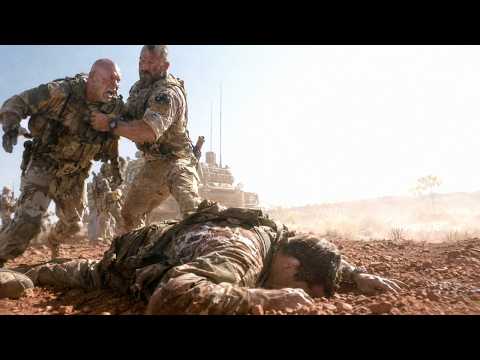
The first shock wasn’t the heat or the terrain. It was the silence. At 4 a.m. on day one, 121 candidates lined up in the dark, their faces lit only by vehicle headlights. No one gave a speech. No one told them how few would survive. A staff sergeant read out numbers, checked weights on a spring scale, and then—without fanfare—began sending them into the scrub at ninety-second intervals.
Reid stood by the truck with his notebook, waiting for the moment that would make sense of this. It never came. The withdrawal procedure was explained in a single, almost bored sentence: “If you decide you’ve had enough, stop walking. Put your pack down, sit beside it, and wait for transport. No one will argue with you. No one will ask why.”
In Coronado, the exit was a bell in a courtyard—a public act, a sound that carried across the grinding machine, a moment owned by the instructors. Here, the exit was a patch of gravel and a wait. No audience. No shame. No one to surrender to.
By the evening of day three, more than twenty men had quit. Not one of them had been removed by a trainer. They simply stopped. Reid’s notebook, which he had filled with the confident shorthand of a man who had seen four hundred men break, began to feel inadequate. He had always believed that exhaustion was something you applied to a man. The Australians seemed to believe it was something a man applied to himself—if you removed every reason to keep going.
Then he watched a candidate sit down at a crossroads. The man didn’t collapse. He unclipped his waist belt, lowered his pack carefully, and set it upright on the red gravel so it wouldn’t fall. Then he sat beside it, hands on his knees, and waited six hours for a truck. No one came to talk him out of it. No one marked the moment. The course simply flowed past him, and he became a number on a clipboard.
That night, Reid wrote a single line in his notebook and underlined it twice: The withdrawal doesn’t tell you about the man. It tells you about the instructor. He was beginning to understand that the Australians had designed a course where the instructor was deliberately absent from the moment of failure—and that absence was doing more work than any scream he had ever delivered.
By day four, Reid had stopped looking for the moment of collapse. Instead, he started watching the terrain itself—the way the laterite rolled under a boot, the way the dry creek beds swallowed sound, the way the map in every candidate’s plastic sleeve described a country that no longer existed. The pine plantation on the northern edge had been clear-felled two seasons ago. The solid dark rectangle of tree line on the paper was now a field of stumps and slash, and no one had corrected it.
He found a candidate standing at the edge of that cleared ground at midday, compass in hand, turning slowly in a full circle. The man checked his map, checked his bearing, checked the sun. Then he did it again. The staff escort stood four paces behind his left shoulder with a radio in his chest pocket and said nothing. Not a word. Not a gesture. Not even a confirming nod.
The candidate lost fifty-five minutes in that open red dirt. Reid timed it. When the man finally found a fence line that wasn’t on the paper and reoriented himself, the escort simply followed. No correction. No praise. The lesson was delivered by the ground, and the ground did not care.
That evening, Reid wrote in his notebook that the map was older than the country it described. He underlined the phrase because it felt like the whole design in miniature. The real map is always older than the real ground. The man who couldn’t see that the land had changed since the paper was printed was not the man you wanted alone on a Borneo ridgeline with resupply forty-eight hours away.
On day five, the course introduced what the regiment called the “random selection” phase. No fixed distance. No announced endpoint. A candidate was given a grid reference, walked to it carrying his weight, and when he arrived he was handed another coordinate on a scrap of paper. There was no way to ration effort against a total, because the total did not exist anywhere in the program.
Reid checked this twice with two different members of the directing staff. Both confirmed it without interest. One of them shrugged and said the men who needed a finish line to keep walking were the men they were trying to find before the jungle did.
The final night march began at 8 p.m. in four degrees Celsius with wind coming off the slope. The firebreaks ran straight, which looked like mercy but wasn’t. A straight firebreak at night gives a man a clear view of the distance he hasn’t covered yet, and the mind does its arithmetic whether he wants it to or not.
At the first checkpoint, there was a pile of jerrycans, a man with a clipboard, and a new grid reference. It was not the end. At the second, 1:22 a.m., the same scene. Not the end. Two candidates sat down at that checkpoint to adjust their feet. One of them never stood up again. He unclipped his pack, set it upright on the gravel beside the star picket, and that was that. No one argued. The clipboard recorded a number, not a name, not a reason.
By first light, three withdrawals had become four. Reid stood at the final truck line on a firebreak in the northeast corner of the training area at 9:26 a.m. on Saturday and watched the men who were still standing. There was no bell. There had never been a bell anywhere in the Bendon training area. No end arch, no formation, no congratulation. Two staff handed out water from a trailer and wrote numbers on a board, and one of them told the men they could take their packs off.
Of the 121 who had stood on the hanging scale nine days earlier, fourteen were still in the truck line. Eighty-eight point four percent had withdrawn. A handful had been pulled by the medical team for injuries and heat. The overwhelming majority had simply stopped walking, on their own, at a time that suited them, without supervision.
Reid closed his notebook. He had come to Western Australia believing that a man’s breaking point was something an instructor discovered for him, in front of witnesses, with a bell to formalize it. Nine days on red gravel without a single raised voice had dismantled that belief. The strongest man on the course had set his pack down at an empty crossroads where no one existed to surrender to, and the staff had deliberately excluded themselves from the decision.
He still had questions he couldn’t answer—about what the jungle phase would do to the fourteen who remained, about whether the absence he had witnessed was policy or merely the natural shape of a course run by men who trusted the ground more than they trusted themselves. The answers were somewhere north, in the wet country, and Reid had eleven days left before his flight home.
The reinforcement course waited for those fourteen men, eighteen months of it, and Reid had heard enough from the directing staff to know that the jungle phase in Tully would take its own share. The men who had survived Bendon were not finished being measured. They were only finished being invited to quit.
On his last morning in Perth, Reid sat in a corrugated-iron shed with a warrant officer who had run the Bendon phase for six years. The man had a coffee, a folding chair, and the calm of someone who had long ago stopped needing to defend his methods. Reid asked the question he had been carrying since day one: why announce the exit at all? Why make it that easy, that private, that quiet?
The warrant officer set down his cup. “Because the man who needs to be told he can quit is the man we want to find.” He said it without heat, the way a carpenter might describe the grain of a particular wood. The course wasn’t trying to keep men in. It was trying to see who stayed when staying cost nothing but the walking itself.
Reid thought about Coronado. The bell, the surf, the instructors at every shoulder—all of it built on the assumption that pressure had to be applied from outside. The Australians had built the opposite. They removed the pressure and let the man’s own arithmetic do the work. No audience meant no performance. No performance meant the only thing left was the truth of what a man did when no one was watching.
He asked about the fourteen. The warrant officer said some would pass reinforcement and some wouldn’t, and the ones who wouldn’t would fail in ways no selection course could predict—a bad night on a rope, a decision made too slowly in the wet, a body that gave out on a ridge in Queensland the way it hadn’t on the gravel. “Selection finds the men who won’t quit when it’s quiet,” he said. “Reinforcement finds out if they were right.”
Reid wrote that down. Then he asked the question that had been forming since the crossroads, since the six-hour wait, since the man who set his pack upright on the gravel because a man who has carried something for four days does not throw it on the ground even when he is finished with it.
“What do you do about the ones who sit down and then change their mind?” The warrant officer looked at him for a long moment. Then he said that almost none of them did. The decision to stop was not a moment of weakness that passed. It was a conclusion a man reached after hours of private argument, and by the time he set his pack down, the argument was over.
Reid flew out of Perth with his right foot bandaged and his notebook full. The exchange report he filed through the Naval Special Warfare Center ran to nine pages. It contained no recommendation to adopt any element of the Australian program in Coronado, and no explanation of the attrition figure. What it contained, on the last page, under the heading Observer’s Notes, was a single line.
He had arrived believing that a man’s breaking point was something an instructor discovered for him, in front of witnesses, with a bell to formalize it. Nine days on red gravel without a single raised voice had dismantled that belief. The line read: They do not break men. They remove every reason not to stop walking, and then they stand where they cannot be seen.
What Reid could not yet see was that the gravel had only done the first half of the work, and that the wet country to the north was waiting to finish it.
Reid never filed a recommendation. Nine pages, no verdict, just that one underlined line at the end. But the following spring, a junior officer at Coronado found the report in the archive and read it twice. Then he walked out to the courtyard, stood in front of the brass bell, and asked himself a question nobody had ever asked him before.
“Who is this bell for?” he said aloud. No one answered. The instructors were at lunch. The bell just hung there, polished and patient, waiting for a man to make a sound that proved he had been broken by someone else.
Reid heard later that the officer left the bell where it was. Some things you don’t change. But he started writing a different kind of report—one that asked what a man does when the only witness is the ground beneath his boots.
So here’s the question that followed Reid home, and it follows me too: if no one is watching, what exactly are you still walking for?
Report this article
Select a reason for reporting:






