The hangar bay of the HMAS Melbourne was supposed to be a floating casino. Instead, the 20,000-tonne aircraft carrier—stripped of its catapults, its electronics, and its dignity—was sold for scrap to a Chinese company in 1985. What happened next stunned Western intelligence.
Before the People’s Liberation Army Navy could study her flight deck, Melbourne had already lived three lives: a Cold War warrior, a troop ferry to Vietnam, and a cursed vessel that sank two destroyers in peacetime. Her story begins not in Sydney Harbour, but in the smoke-choked skies over Korea.
In 1947, the Royal Australian Navy made a bet on the future. They purchased two Majestic-class carriers from Britain—ships that had been laid down during World War II but never finished. The first, HMS Terrible, was rushed into service as HMAS Sydney in 1948. The second, HMS Majestic, would take eight more years to complete.
That delay changed everything. While Melbourne sat in a British shipyard, the RAN needed a stopgap. They borrowed HMS Vengeance, a Colossus-class light carrier, from 1952 to 1955. For three years, Vengeance kept Australian naval aviation alive—her deck buzzing with Sea Furies and Fireflies, her crew learning the hard lessons of carrier operations.
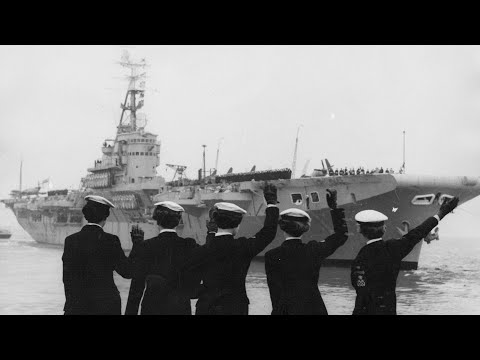
When Sydney deployed to Korea in August 1951, she carried 12 Sea Furies and 12 Fireflies. Her mission: keep a Commonwealth carrier in the Yellow Sea while HMS Glory underwent maintenance in Australia. What followed was a record-breaking performance. On one day, Sydney launched 89 sorties—a record for a light carrier—with 31 aircraft airborne simultaneously.
Her aircraft struck North Korean supply lines with relentless precision. But it was a mission on October 26, 1951, that would define her legacy. A Firefly was shot down 120 kilometers inside North Korea after bombing a railway tunnel. The crew faced capture or death as darkness approached.
A US Navy Sikorsky Dragonfly volunteered for the rescue. The observer was quickly taught how to fire an Owen submachine gun before takeoff. Two Australian Fireflies provided cover, but as evening fell, they were ordered back to the carrier. Two disobeyed—turning around when they spotted the helicopter heading inland.
At 5 PM, the Sikorsky touched down and picked up the downed crew while the observer opened fire with his machine gun. The Fireflies joined in, strafing enemy positions. All three aircraft returned safely—the Fireflies landing on Sydney, the helicopter touching down near Seoul guided by truck headlights. It was the longest helicopter rescue of the entire Korean War.
That mission convinced Australia to buy its first helicopters—Bristol Sycamores. Sydney served in Korea until January 1952, then later in Vietnam, earning the nickname “Vung Tau Ferry” for ferrying troops and supplies from 1965 to 1972.
But the story of Australia’s carriers was only beginning. The second carrier, HMAS Melbourne, finally entered service in 1955—the third carrier in the world with an angled flight deck. She would become the most famous—and most cursed—of them all.
Melbourne’s early years were a showcase of naval aviation. She carried de Havilland Venom fighters and Fairey Gannet anti-submarine aircraft, her deck a constant hum of activity. By the late 1960s, the Venoms gave way to Douglas A-4G Skyhawks and Grumman S-2E Trackers. At her peak, she operated 27 fixed-wing aircraft simultaneously—a remarkable feat for a light carrier.
But Melbourne’s legacy would be scarred by tragedy. On February 10, 1964, she collided with the destroyer HMAS Voyager during night exercises off Jervis Bay. Eighty-two sailors died—Australia’s worst peacetime naval disaster. Five years later, on June 3, 1969, Melbourne struck the US destroyer USS Frank E. Evans during SEATO exercises in the South China Sea. Seventy-four American sailors perished.
Both collisions were attributed to navigational errors by the destroyers, but the superstition stuck. Sailors whispered that Melbourne was jinxed. She was a carrier that killed more sailors in peacetime than many warships did in war.
Despite the tragedies, Melbourne soldiered on. She deployed to Vietnam in 1967, though her role was limited to escorting Sydney and providing anti-submarine patrols. The RAN kept her busy—but by the 1970s, her age was showing. Replacement plans surfaced repeatedly.
The Americans offered an Essex-class carrier; the British offered HMS Hermes. Both would have cost only the price of refit. But the RAN calculated that operating a larger carrier would require too many sailors and too much money. Both offers were declined.
Melbourne was decommissioned in 1982. Plans to turn her into a floating casino in Sydney Harbour fell through. In 1985, she was sold to a Chinese scrap company. What happened next surprised everyone.
When the hulk arrived in China, PLA Navy officers boarded her. They found the steam catapult and landing systems still intact. Admiral Zhang Jong later recalled that the navy didn’t even know the purchase had been made until the ship arrived. Many officers said she was the largest warship they had ever seen.
The study of Melbourne reportedly helped convince Beijing to fund Admiral Liu Huaqing’s carrier program—a program that had been stalled for lack of money. The old Australian carrier became an unlikely teacher for China’s future fleet.
Today, Australia has no aircraft carriers. But the debate has returned. Japan’s decision to operate F-35Bs from its Izumo-class ships has sparked questions: could Australia do the same with its Canberra-class amphibious assault ships?
The Canberras are larger than Melbourne and already have ski-jumps. The F-35B offers stealth, sensor fusion, and unmatched situational awareness. A small squadron of these jets could provide air cover for amphibious task groups, defend the fleet, and project power far from Australian shores.
But there are trade-offs. Converting the Canberras for fixed-wing operations would be expensive and would cut into their amphibious capabilities. The F-35B has shorter range and smaller payload than conventional fighters. And any carrier group would need escort ships—something Australia lacks in sufficient numbers.
Still, the ghost of Melbourne lingers. The question remains: in an era of rising tensions, can Australia afford to be without a carrier? Or is the era of the Australian carrier truly over?
To answer that, one must look at what Melbourne actually gave Australia—and what it cost. For nearly three decades, she was the floating spearhead of Australian sea power. Her Skyhawks could strike targets hundreds of kilometers from the task group; her Trackers could hunt submarines across vast ocean distances. No other Australian warship could project that kind of reach.
But reach requires escorts. A carrier alone is a target, not a weapon. Melbourne never sailed without destroyers and frigates screening her—ships that Australia could barely afford to keep in service. When the RAN ran the numbers in the 1970s, the arithmetic was brutal: one carrier consumed the manpower of two destroyer squadrons.
That calculus has not changed. The Canberra-class ships already strain the fleet’s personnel. Converting them to F-35B operations would demand more deck crew, more maintenance specialists, more pilots—people the RAN does not have.
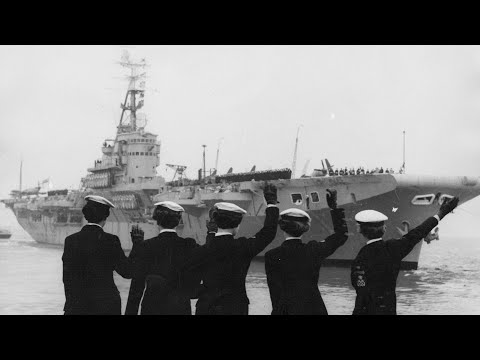
Yet the strategic environment has shifted in ways Melbourne’s planners never imagined. China now operates more carriers than any navy except the United States. Japan is converting two ships for F-35Bs. South Korea is building a light carrier of its own. In the Indo-Pacific, the carrier is not obsolete—it is proliferating.
For Australia, the question is not whether carriers are useful. It is whether a middle power can afford them. The answer may lie not in buying a carrier, but in borrowing one.
During the Korean War, Australia operated Sydney alongside British and American carriers as part of a coalition. During the Vietnam War, Melbourne and Sydney sailed with US task groups. The RAN has always been comfortable fighting from someone else’s deck when necessary.
That tradition may point the way forward. Rather than building a dedicated carrier fleet, Australia could focus on interoperability—training RAN pilots for F-35B operations aboard allied ships, just as it trains with US submarines today. In a coalition war, a carrier is a shared asset, not a national one.
But critics argue that interoperability is no substitute for sovereignty. If Australia cannot deploy air power from the sea on its own, it cannot defend its maritime approaches alone. And in a crisis, allies may have other priorities.
The ghost of Melbourne whispers both lessons. She proved that Australia could operate a carrier—and that it could not sustain one without sacrifice. Whether the next generation of Australian sailors will walk an angled flight deck again is not a question of technology. It is a question of will.
That will has been tested before. In 1982, when Melbourne’s ensign was lowered for the last time, the RAN chose submarines and frigates over flight decks. The decision was pragmatic, cost-driven, and—by most measures—correct. But correctness and capability are not the same thing.
What Melbourne left behind was not just a hangar of spare parts or a generation of pilots without a deck. She left a template: a small navy proving it could sail with the giants, launch strikes, and rescue its own from deep inside enemy territory. The Korean rescue mission, the record 89 sorties, the angled deck that trained a generation—these were not accidents of history. They were choices.
Today, the Canberra-class ships sail without a single fixed-wing jet. They are excellent amphibious vessels, but they are not carriers. The ski-jump on their bows is a promise unfulfilled—a ramp leading to a deck that has never felt the heat of a fighter’s exhaust.
China studied Melbourne and built a fleet. Japan studied its own constraints and found a workaround. Australia, meanwhile, studies the question endlessly—and buys nothing. The ghost of Melbourne does not demand a new carrier. It demands a decision, one way or the other.
Perhaps the answer is smaller than a carrier: a squadron of F-35Bs rotating through allied decks, RAN pilots qualified for coalition operations, and a Canberra or two modified just enough to land and launch when the situation demands it. That is not a carrier group. But it is a capability—and in the Indo-Pacific, capability is currency.
Or perhaps the answer is to let the era end cleanly. To admit that Australia’s geography, budget, and manpower make the carrier a luxury it cannot sustain. To invest instead in submarines, missiles, and long-range strike—the weapons that don’t need a flight deck.
Either path is defensible. What is not defensible is drift. Melbourne was sold for scrap because Australia stopped deciding. The same could happen to the question itself.
So here is the final lesson from the cursed carrier and the proud one, from Sydney’s record day and Melbourne’s tragic collisions: a navy without a carrier is not incomplete—but a nation without a decision is. The flight deck is empty. The debate is not.
What do you think—should Australia buy F-35Bs and turn the Canberras into real carriers, or close the chapter on Australian carrier aviation for good? Let us know in the comments.
Report this article
Select a reason for reporting:






