The world watched in horror as the twin towers fell, and in that moment of unimaginable loss, a continent united. For Canadians, it was personal. “I know it was the states but I still feel like it’s North American soil and I feel like that’s a part of us,” one soldier recalled, echoing a sentiment that would soon propel a nation into its first official combat mission in half a century.
As the dust settled over Ground Zero, the call went out: “It’s go time. The Americans are our closest allies; we need to help them out.” Hundreds of Canadian soldiers left behind wives and children, bound for Afghanistan with live rounds in their magazines and a determination to make things right.
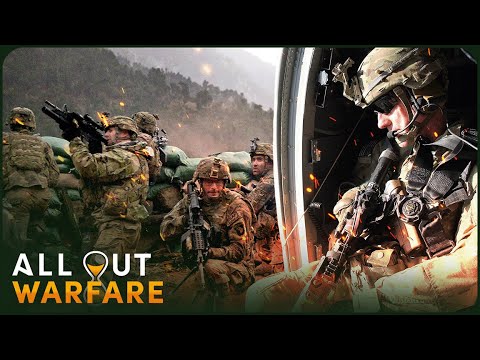
The journey was surreal. “They said we’re flying you right into Kandahar Airfield,” a veteran remembered. “We had to do evasive maneuvers just due to the threat of surface-to-air missiles.” The adrenaline was palpable, but nothing could prepare them for the moment the ramp dropped and they stepped onto the tarmac.
“It was like the moon—desolation,” another soldier described. “That first step, you knew you were in a war zone.” The Americans, fit and young, looked at the Canadians—many in their late 30s and 40s—with curiosity. “Why did Canada bring all these old men to fight?” they wondered. But the answer came swiftly, in the form of a Coyote vehicle rolling off a C-17, adorned with an “I Love New York” bumper sticker. “It reduced them to tears,” a Canadian recalled. “Here are these hardened soldiers, appreciating that sentiment—we were brothers in arms, helping to right a wrong.”
The mission ahead was daunting. Special Forces were chasing al-Qaeda fighters through the Hindu Kush, trying to cut off escape routes into Pakistan. “We were fantasizing that a Canadian group might catch bin Laden,” one soldier admitted. But the reality was far grimmer. “We’re going into a hornet’s nest,” a Delta Force sniper warned. The mountains were crazy, the flying intense, and when the ramp went down, the loadmaster shouted, “All right, get out!”
Intelligence estimated 40 to 60 al-Qaeda fighters, but the Canadians soon realized they were facing a determined enemy using guerrilla tactics. “We never experienced anything bigger than fleeting shots,” a soldier said. “They’d shoot and disappear.” Colonel Strogen decided snipers were needed. “We were to provide over-watch and act as cut-offs,” a sniper explained. “If al-Qaeda tried to get out, we could interdict them.”
In a two-man team, the sniper and spotter moved outside their designated box, knowing the risk. “We made the decision to move outside the box,” one admitted. “The Americans were getting shot at, and we needed to eliminate the targets.” And eliminate they did. “We identified a three-man team, one carrying an RPK,” a sniper recalled. “First round, no reaction. Second shot, I hit his bag. Third shot—target drops.” The shot, at 2,430 meters, was a world record. “There’s no celebration; it’s work,” the sniper said. But the impact was undeniable. “They saved a lot of American lives,” a soldier affirmed. “The Americans talked about our snipers for days.”
Back at Tarac Farms, the Canadians trained, using old Soviet tanks as targets. Then, tragedy struck. “I heard the whistling, and then a huge explosion,” a soldier remembered. “The blast threw everyone down the wadi.” In the chaos, Private Green was gravely wounded. “I was holding his hand, and he wasn’t responding,” a comrade said. “He had minutes to live.” Fortunately, a US military neurosurgeon was passing through Kandahar that day and saved his life.
But the worst was yet to come. “I’m saddened beyond words to inform you that several of our troops were involved in a tragic friendly fire accident,” the announcement came. An American F-16 had dropped a 500lb bomb, killing four Canadians and wounding eight. “I wanted to rip that smug look off Schmidt’s face,” a soldier admitted. The trial revealed the pilots had mistaken the Canadians’ Carl Gustaf backblast for enemy fire. “I hope we did the right thing,” one pilot was heard saying on the cockpit recording. The military judge called it willful misconduct but not criminal. “Ten years in jail wouldn’t have changed a thing,” a Canadian said. “Life goes on.”
Despite the tragedy, the bond between the forces remained. “Every time we got in trouble, one radio call and American fighter bombers were there,” a soldier praised. “You can’t blame the whole American forces.” The fallen were honored, and the mission continued.
The Canadians pressed on, their resolve hardened by loss. “We very quickly put our emotions to the side and kept up with our mission,” a soldier recalled. Colonel Strogen gathered everyone together: “You may be angry, but the mission carries on.” The Americans, too, mourned with them. “We are brothers, and you are one of us,” US Colonel Frank Rinsky declared. “We’re going to memorialize these fine young men and move on.”
Kandahar was the heartland of the Taliban, the first city they conquered and the last to fall. “Canadians were foran, but they didn’t realize how bad it was going to turn out,” a veteran reflected. “I told the Foreign Affairs guys, ‘Kandahar is going to be tough,’ and they said, ‘Really? We heard it’s all good.’ I said, ‘I don’t know who’s telling you that, but that’s a tough part of Afghanistan.'”
Now a new group of Canadian soldiers was returning to Kandahar Province—not to fight, but to rebuild. The Provincial Reconstruction Team, or PRT, was a mix of soldiers, police, and aid workers. “When we took over from the Americans, the Afghans realized it was a different group running the show,” a soldier explained. “We put up the Afghan flag, not the Canadian one. They looked at us like, ‘Where’s your flag?'” Everything was anchored on development, and that year, Afghanistan became the largest Canadian aid program in the world.
Glyn Berry, a senior diplomat, was in charge. “We called him the professor—very, very intelligent,” his driver recalled. “His job was to extend the will of the central government out to the province.” The mission was twofold: assist with reconstruction and deal with remaining insurgents. “We were in danger every single day,” a soldier said. “You couldn’t accomplish anything inside the wire. You had to get out and talk to people, show you weren’t afraid.”
Driving through Kandahar was a high-speed affair. “You’re driving full bore in a Mercedes G-Wagon—no rules, no regulations, just fun,” Glyn’s driver remembered. “But your head was on a swivel, always watching for suicide bombers.” The threats were constant: donkey-borne IEDs, backpack bombs, even children with grenades. “It wasn’t uncommon for people to retreat into their huts when a convoy arrived,” a soldier noted. “But we had good interpreters.”
One interpreter, a young woman, started working for the Canadians at 15. “Our neighbors didn’t know where I was,” she said. “Working for a soldier is something a prostitute would do—that’s how Afghans see it. It was risky.” The shuras—meetings with village elders—were crucial. “The oldest guy would talk first, telling us what they needed: schools, protection,” a soldier explained. “It was important that the young kids saw us as friendly, not occupiers.”
The first school they opened was for girls. “I asked them what they wanted to be when they grew up,” a soldier recalled. “They said airline pilots, even the president of Afghanistan. Their goals were amazing. I said, ‘That’s how the war is going to end.'” But somebody forgot to tell the Taliban.
Kandahar was the cradle of the Taliban, its birthplace and stronghold. The soccer stadium had borne witness to executions, stonings, and amputations. “It was a brutal regime—the darkest day in Afghan history,” a soldier said. By 2006, there were already signs of a resurgent Taliban. “We were getting the feeling that this was supposed to be getting easier, but it was getting harder,” a veteran admitted.
The Afghan police were a mixed bag—some courageous, many corrupt. “Police salaries weren’t being paid; it was being siphoned off,” a civilian police advisor discovered. “Nobody paid attention.” When villagers were mistreated by Afghan forces, they blamed the foreigners. “Injustice drove people back to the Taliban,” an advisor explained. “When they don’t get justice from the government, they ask the Taliban to do it.”
The Taliban were coming back to power. “We thought they were defeated and would never return, but we were wrong,” a soldier conceded. Security briefings were daily, and the threat was constant. “I was told by guards that people were asking about me—I shouldn’t be coming here,” the female interpreter said. “The director of women’s affairs told me, ‘You are a child and you don’t know that you are at risk.'” That was the first time her father realized his daughter was in danger.
January 15, 2006, started like any other day. Glyn Berry’s patrol headed out for a presence patrol, driving through Kandahar City. “We were told there were possible suicide bombers in Kandahar—we got that all the time,” his driver said. “But this was a difficult place to keep watching because there was so much activity.” Suddenly, his co-driver shouted, “Car right!” He swerved hard left. “I remember the concussive wave coming at us, lifting our vehicle up through the air, tumbling.” The suicide bomber detonated on the axle. “My left leg was ripped off instantly, my right leg destroyed, hands and face on fire.”
Glyn Berry was killed instantly. “I remember every second—the pain was like a chainsaw,” the driver said. Two Afghans walked out of the crowd toward him. “My buddy Jake Paton brought up his rifle, ready to shoot them, but for whatever reason, he didn’t,” he recalled. “They were helping me.” They lifted him into a vehicle and sped to the hospital. “Paul came in first, talking, unconscious,” a medic said. “The first thing he wanted to know was, ‘Is everyone else okay?'” The medic reassured him. “I said, ‘You don’t need to worry about that right now, Paul. We’re going to worry about you.'”
Later, the medic joked with him: “I heard someone lost a leg.” Paul replied, “That was me. I lost both.” The medic laughed. “Medic humor,” he said. But the gravity of the situation was not lost. “I knew I had to make it—it was a matter of no ifs, ands, or buts,” Paul said. “I was going to stay alive and see my family.”
The attack was a shock. A senior Canadian diplomat was dead, three soldiers grievously injured. “Why Glenn? Why not me?” his driver wondered. “I was only 25 yards away. Did I give my legs to a future Afghan? I don’t see it that way—I was protecting a diplomat. I failed in my mission because he’s dead.” But the mission continued. “We looked at each other and said, ‘We’re taking patrols out tomorrow,'” a soldier said. “If we waited, they’d be too nervous to go out again.” The resolve only strengthened. “We won’t let this break us.”
The interpreter’s brother, only eleven, was kidnapped and tortured by the Taliban for three days. “They kept asking him who the lady was, where her address was,” she said. “But my brother never told them she was my sister.” The family fled Kandahar within twenty-four hours. Her father stayed behind with her. “If we don’t work there, how are we going to change Afghanistan?” he asked.
Through every ambush and every loss, that question echoed. “We wear the watch, but they have the time,” a soldier said of the Afghans. The Canadians did not win the war in their year there. They moved the yardsticks a couple of inches and handed them off.
Operation Medusa broke the Taliban’s grip on Kandahar, and for a moment, the girls who dreamed of being airline pilots had a chance. But the root causes remained, and the Taliban returned. “We did what we said we would do, and we left when we said we would,” a veteran insisted. “I think we stood by our own word.”
So was it worth it? The only ones who can truly answer are the loved ones of the fallen. And that question—does sacrifice without a lasting victory still carry meaning—is one every Canadian must answer for themselves.
What do you think? Was the Afghan mission worth it? Share your thoughts below.
Report this article
Select a reason for reporting:






