On August 8, 1945, the Soviet Union declared war on Japan. Over a million Red Army soldiers surged out of Siberia into Manchuria, crushing the Japanese Kwantung Army in a matter of days. But why did it take them so long? Why had the two countries been at peace for nearly the entire war? Why didn’t Japan invade when the Germans were gaining ground in the west? The answers lie in a story of ambition, fear, and the greatest spy who ever lived.
To understand this tale, we must rewind to 1931. Japan, hungry for resources and territory, fabricated an excuse to invade Manchuria, a resource-rich province in northern China. The Chinese nationalist army fought back, but by February 1932, the region was effectively under Japanese control. Not satisfied, the Japanese established the puppet state of Manchukuo and soon turned their eyes northward, toward the Soviet Union.
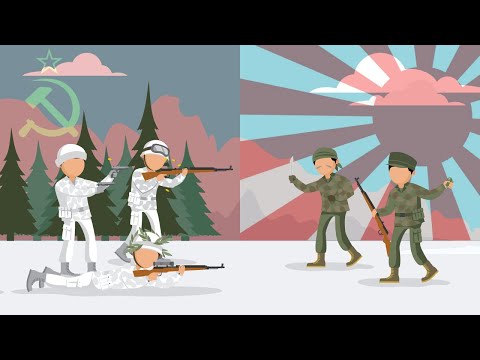
The Kwantung Army, Japan’s elite force in Manchuria, began a series of border provocations that escalated into the undeclared Soviet-Japanese Border War. The first skirmishes pitted Soviet-aligned Mongolian horsemen against Japanese-led Manchukuo infantry. The Manchurian troops, unprepared for the ferocity of the Mongolian cavalry, lost over half their strength in casualties. Retaliation followed retaliation, and within months, Mongolian horsemen and infantry were attacking Japanese positions along the disputed border. The Japanese responded with hundreds of soldiers and scores of tankettes, taking many Mongolian prisoners.
The decisive battle came in the summer of 1939 at Khalkhin Gol, on the border of Soviet Mongolia and Manchukuo. Seven years of skirmishes had built up enormous reserves on both sides. The Japanese commander, noting that Soviet reserves were growing faster than his own, decided to strike first. In July, he launched an attack with four full infantry regiments and 100 tanks, crossing the river in two thrusts. The Soviets took heavy casualties and lost much equipment, but Japanese supply lines were stretched too thin to press the advantage.
Then, in August, the Soviets counterattacked under the command of General Georgy Zhukov, the greatest commander in Soviet history. Three tank brigades, two mechanized brigades, two Mongolian cavalry divisions, and 550 aircraft were hurled at the Japanese. Massive armored pincers enveloped the Japanese on both sides of the river while aircraft pounded them from above. The staunch Japanese refused to surrender and were virtually obliterated by artillery and air power.
The Kwantung Army had been hit hard, but Zhukov couldn’t advance into Manchukuo. Stalin’s signing of the Molotov-Ribbentrop Pact forced a cease-fire between the battered Japanese and Soviets in the east. For the time being, there was peace on the border.
Between 1939 and 1941, the defeated Kwantung Army was rebuilt to 700,000 troops. Its commanders had seen the devastation wrought by Soviet tanks and the critical logistical role of supply trucks. Tank and truck production in Japan increased, and the Kwantung Army became one of the best-equipped and best-trained forces the Japanese had. They even trained a reserve unit from conscripts in Manchukuo, known as the Manchukuo Imperial Army. But while they gained thousands of recruits and vital equipment, the Kwantung Army lost many of its officers.
The Japanese government faced a difficult decision in 1939: where to secure vital wartime resources now that they faced a U.S. blockade. The army and navy were divided. The navy coveted the Dutch East Indies, while the army wanted to capture resource-rich Siberia. The Soviet show of force at Khalkhin Gol had convinced the government that an invasion of Siberia would require a massive buildup, whereas kicking out the Dutch would be easier. The Kwantung Army officers who had heavily supported the Siberian option were purged from the ranks.
Even with its strongest proponents out of the picture, an invasion of Siberia by the Kwantung Army was still on the table. The Soviets knew this and kept a massive depot of military supplies and over a million soldiers ready on their eastern border. Each side waited for the other to make the first move.
But one man managed to tip this precarious balance against Imperial Japan. His name was Richard Sorge, and he was so instrumental that his story is the stuff of legend.
A German veteran of the Great War, Sorge had become dissatisfied with nationalism and became an ardent socialist. In 1929, he was recruited by the GRU, Soviet military intelligence. The GRU found him a job as a journalist to give him a cover story. After a stint in China, Sorge was sent to Berlin in 1933. What the GRU wanted more than anything was intelligence from Japan, and what better way than to have an agent in the German embassy?
To prepare for this impossible job, Sorge joined the Nazi Party and made friends with many senior Nazi journalists. It wasn’t long before the most prestigious newspaper in Germany, the Frankfurter Zeitung, offered him a position as their Japanese correspondent. Sorge was in. Before he left, he hosted a farewell dinner with his Nazi mates—even Joseph Goebbels attended.
Sorge had one mission in Tokyo: to give a very careful study to the question of whether or not Japan was planning to attack the USSR. What’s the best way to do this? It’s a three-step process: set up a spy network, become best mates with the German chief military attache, and seduce his wife to inform on her husband. Yes, Sorge literally did this.
The German’s name was General Eugen Ott, and Sorge would have breakfast with him every morning. If he didn’t get all the classified intel he needed over breakfast, he would extract it from Ott’s wife, Helma, later that evening. A hard drinker, Sorge got drunk with all the major Nazi players in Tokyo. They loved him, and so did many of their wives, whom Sorge frequently bedded. He was so well trusted by the Germans that they made him a courier for top-secret military documents. He passed absolutely everything to the Soviets.
Sorge passed so much intelligence to Moscow that Stalin and the other leaders grew suspicious. How could this alcoholic know so much about German warplanes? They thought he was making things up. He wasn’t.
In 1941, Sorge had gotten the job of drafting General Ott’s reports for Berlin. He knew everything the Germans in Japan knew about the impending attack. In May, he sent one of the most important messages of his life: expected start of German-Soviet war around June 15. Stalin saw the message and laughed. Exactly one week after Sorge’s prediction, Operation Barbarossa began. Stalin was completely shocked by Hitler’s betrayal, but he learned the hard way that Sorge’s intel was reliable. Sorge’s intelligence was never taken for granted again.
In September, the master spy advised Moscow that Japan would not attack the Soviet Union until Moscow had been captured. The Kwantung Army had become three times the size of the Soviet Far Eastern forces, and a civil war had started in Siberia. These caveats indicated that Japan was unwilling to commit much of its strength in the east. Probably the only thing that would have made Stalin happier than this news was Zhukov smashing Hitler’s head on a plate. It meant that the vast bulk of Soviet strength could be committed to fighting the Germans at a critical point in the war.
This information allowed thousands of men and vital equipment to be moved west from the depot in Siberia, where they would be desperately needed to repel Operation Typhoon, the German offensive to take Moscow. Had these men and supplies not been diverted, many have suggested that the Germans would have broken through Moscow’s defenses. This would have dealt Stalin and his leadership a crippling blow they might never have recovered from. If this was the case, Sorge’s intelligence work in Japan was likely the most important spying of the entire war.
Spies don’t live long, and Sorge was no exception. A man of duty to the very end, his penultimate message sent in October 1941 was: the Soviet Far East can be considered safe from Japanese attack. He was captured days later. Like an absolute king, he spent his last night as a free man in bed with Helma before being captured by the Japanese secret police the next day. Knowing he was to be executed, Sorge confessed to spying. He declared: “I successfully approached the German embassy in Japan and won the absolute trust of people there. That was the foundation of my organization in Japan. Even in Moscow, the fact that I infiltrated into the center of the embassy and made use of it for my spying activity is evaluated as extremely amazing, having no equivalent in history.”
Sorge was only officially acknowledged by the Soviet Union as an undercover spy in 1964 when he was posthumously awarded the title of Hero of the Soviet Union. That was the incredible story of the Kwantung Army, Richard Sorge, and why the Japanese didn’t invade the Soviet Union along with the Germans. But what do you think? Do you think Operation Barbarossa would have been as successful if Stalin had listened to his spies? What do you think would have happened if the Kwantung Army had invaded in 1941? Was Sorge the most influential spy of the war? Let us know in the comments below.
Yet the story of Sorge’s triumph and the Kwantung Army’s paralysis came full circle in those final days of August 1945. The very troops Japan had kept in Manchuria, waiting for a Soviet collapse that never came, were now the ones being encircled and annihilated by the Red Army. The million men Stalin had once held in the east, freed by Sorge’s assurance that Japan would not strike, were finally on the march—not to defend Moscow, but to tear apart the empire that had hesitated.
The Kwantung Army, once the pride of imperial Japan, crumbled in days. Its best units had been bled dry in the Pacific, its tanks outmatched, its air cover a memory. The border war that began with Mongolian horsemen in 1931 ended with Soviet armor rolling into Harbin and Mukden.
And Richard Sorge, executed in 1944, never lived to see it. He died in a Tokyo prison, hanged on November 7—the anniversary of the Bolshevik Revolution. His last message had already saved Moscow. His death was a footnote to the victory he made possible.
History rarely offers such tidy symmetry. The spy who kept the east quiet died in silence, while the army he had warned against vanished in a week. What do you think—was Sorge the most influential spy of the war, or simply the luckiest? Let us know below.
Report this article
Select a reason for reporting:






