On a sunny Sunday morning in June 1941, the German army crossed the Soviet border with no declaration of war. They marched east with confidence, believing they were liberators. But nothing could have prepared them for what they would face. This is the story of the Eastern Front, a conflict so brutal it would change the world forever.
For the German soldiers awaiting the start of Operation Barbarossa, the Soviet Union was a complete mystery. Since the revolution, hardly any reliable information had been published, and the little that circulated was distorted by propaganda. The prevailing image portrayed the Russians as prisoners of a harsh and backward system. Many Germans considered Slavic peoples an inferior race, assuming conditions in Russia must be even more primitive than in other Slavic nations.
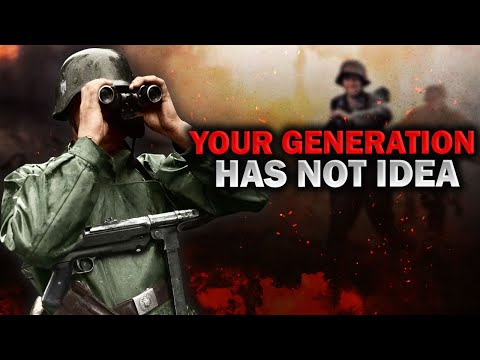
But the reality on the ground was far more complex. As the German columns advanced, they were stunned by the vastness of the land. Sunflower fields stretched to the horizon, immense forests seemed like jungles, and swamps equaled two German provinces. The climate was extreme, with freezing winters and scorching summers. The terrain itself became an enemy.
Yet, the initial reception from the local population surprised the invaders. In the westernmost provinces, many welcomed the Germans as liberators from Soviet rule. Villagers lined the roads, offering bread and salt, and some even brought out their family Bibles to bless the troops. The soldiers were told they were on a crusade against atheistic communism. “The girls, usually dressed in national costumes, offered gifts of bread and salt, the traditional offering to welcome honored guests.” Vodka was drunk, and there were songs and dances. Those were the days of optimism.
But the euphoria was short-lived. The Red Army fought with a ferocity that stunned the Germans. Despite rapid advances and massive encirclements, the Soviet resistance never crumbled. “The hardness of Soviet resistance seemed to confirm the assumptions on which the German strategy had been built.” But those assumptions were wrong. The Germans had underestimated the Russian colossus.
As summer turned to autumn, the rains came, turning roads into bottomless mud. Entire armies sank into the mire. Then winter arrived, bringing catastrophe. The German high command had prepared only for a quick campaign, not for a winter war. Soldiers fought in worn summer uniforms, their weapons jammed in the cold, and frostbite claimed thousands. “Those who managed to adapt survived. The rest perished.” The toll was devastating.
In the midst of this, the German leadership was torn. Hitler wanted to seize the Soviet Union’s industrial and oil resources, while his generals insisted Moscow was the key. “There is no doubt that the loss of the capital would have been a powerful blow to the Soviet enemy.” But the decision came too late. By the time Operation Typhoon was launched in October 1941, the Germans were exhausted, and the weather had turned against them.
As the offensive stalled, the initial hope of being received as saviors quickly turned into a brutal war of resistance and revenge. Partisan activity behind the lines grew, and German reprisals became increasingly harsh. “Repression breeds resistance. Terror produces counterterror.” The soldiers who had once been greeted with flowers now faced a hostile population. The illusion of liberation was suffocated by the cruelty of the conflict.
What followed would test the limits of human endurance. The Eastern Front was a war of attrition, where soldiers on both sides fought with a ferocity that defied comprehension. And for the Germans, the worst was yet to come.
The winter of 1941–42 was not merely a meteorological event; it was a psychological onslaught. Temperatures plunged to thirty or forty degrees below zero, freezing oil in engines and men in their tracks. Weapons jammed. Boots, already worn thin from months of marching, offered no protection. Soldiers wrapped their feet in straw and rags, anything to stave off the frostbite that claimed fingers and toes with surgical indifference. “Those who managed to adapt survived. The rest perished,” one veteran later recalled, and it was no exaggeration.
Yet the cold was only one enemy. Behind the German lines, the partisans grew bolder. Civilians who had once offered bread and salt now slipped away into the forests to join the resistance. “Repression breeds resistance. Terror produces counterterror,” and the cycle spiraled without end. Villages suspected of harboring partisans were burned, hostages shot, and the line between combatant and civilian blurred into nothing. The war in the east had become something ancient and merciless.
At the Führer’s headquarters, the debates raged. Hitler, increasingly convinced of his own strategic genius, ignored the warnings of his generals. The drive on Moscow had failed, but he would not concede. Instead, he sacked Field Marshal von Bock and took personal command of the army. “The Führer’s ability to impose his will on his advisers demonstrates how far he had mastered operational strategy,” one historian would later note, though the mastery was more delusion than genius.
In the spring of 1942, the Germans prepared for a new offensive. This time, the objective was the south—the oil fields of the Caucasus and the industrial city of Stalingrad on the Volga. The plan was ambitious, perhaps too ambitious. “If there was any chance for the Reich, Hitler thought, it lay in the Caucasus.” Seize the oil, cripple the Soviet war machine, and force a collapse. It was a gamble born of desperation.
The offensive began on June 28, 1942. Once again, the Germans advanced with stunning speed, crossing the endless steppe and reaching the Volga by late August. But this time, the Soviets did not stand and fight. “Stalin, after long hesitation, had finally given his commanders permission for a tactical withdrawal.” The Germans captured vast territories but few prisoners. The enemy was slipping away, trading space for time.
Then came Stalingrad. The city on the Volga became a symbol, a name that both sides would never forget. Hitler demanded its capture; Stalin demanded its defense. “Not a step back!” the Soviet leader thundered. The battle that followed was fought street by street, house by house, room by room. Soldiers on both sides fought with a ferocity that bordered on madness. The ruins of the city became a fortress, and the Volga became a lifeline.
For the Germans, the initial confidence gave way to a grinding, horrific attrition. The Sixth Army, once the pride of the Wehrmacht, was bleeding out in the rubble. “The battle on the Volga became a duel between dictators, a matter of prestige absorbing more and more troops.” Neither side could afford to lose, and so both poured men into the furnace.
By November, the Germans had taken most of the city, but they were exhausted. Their flanks were held by Romanian, Hungarian, and Italian divisions—poorly equipped and poorly led. The Soviets saw the weakness. On November 19, two massive Soviet offensives smashed through the fragile lines north and south of Stalingrad. “By November 22, the German 6th Army was encircled.” Two hundred thousand men were trapped in the frozen wasteland, surrounded by seven Soviet armies.
Inside the pocket, the situation was catastrophic. Supplies ran low, ammunition dwindled, and the wounded filled every cellar and dugout. Göring promised an air bridge, but the Luftwaffe could not deliver. “This is the last letter I can send you,” wrote a German corporal. “If these lines reach home, then your son is no longer here. I mean on this land.” On February 2, 1943, the last German units surrendered. Of the 110,000 men taken prisoner, only 5,000 would ever return to Germany.
The news of Stalingrad sent shockwaves across the world. For the first time, the myth of German invincibility was shattered. “According to an intelligence report, the Germans were deeply disturbed.” Germany’s allies began to reconsider their loyalty. Hope grew among the Allies. The war on the Eastern Front had reached its turning point.
But the road from Stalingrad to Berlin would be measured in blood, and the German army was far from finished. In the spring of 1943, Field Marshal Erich von Manstein launched a counteroffensive that recaptured Kharkov and stabilized the front. The Wehrmacht could still bite. Yet the initiative had passed to the Soviets, and the initiative would never return.
The summer offensive of 1943, Operation Citadel, was the last great German gamble in the east. The objective was the Kursk salient, a bulge in the Soviet lines that invited encirclement. But the Soviets knew the attack was coming. They had months to prepare, laying millions of mines and digging miles of trenches in concentric belts. “The German command had completely exhausted its resources,” and at Kursk it would become clear that the qualitative edge had vanished.
When the attack began on July 5, the Germans ran into a wall of fire. The new Soviet defenses absorbed the blow, and the Red Army counterattacked with reserves that seemed inexhaustible. Kursk was the largest tank battle in history, and it ended in German defeat. From that moment on, the Eastern Front moved in only one direction: west.
The retreat was a nightmare of mud, snow, and blood. “From the winter of 1941 to 42 onward, the Eastern Army lived day by day, both militarily and logistically,” and now those days were numbered. Soldiers who had marched east as conquerors now trudged back through the same scorched villages, this time as hunted men. The civilians who had once greeted them with bread and salt now watched them with silent hatred—or vanished into the forests to join the partisans.
Behind the front, the Waffen-SS continued to grow. By 1943, it had become an army of over thirty divisions, a polyglot force of Dutchmen, Norwegians, Frenchmen, Walloons, and even Bosnian Muslims. “It could hardly have been more colorful in medieval armies,” a German doctor remarked of his Eastern cavalry squadron. They were united not by blood but by a shared conviction—however twisted—that they were fighting for a new Europe against Bolshevism. Their loyalty would be tested to the breaking point.
In February 1943, during the fighting around Kharkov, the SS Totenkopf division found itself in a desperate struggle. A battalion had been surrounded, and rescue seemed impossible. Yet SS units launched a series of counterattacks that broke through Soviet lines and pulled the survivors out. “The wounded were not left behind, and those too seriously injured to move were not allowed to fall alive into enemy hands.” Such acts of comradeship, repeated again and again, became the cement of the SS legend.
But there was another side to the story. The Waffen-SS was also implicated in atrocities—reprisals against civilians, the shooting of prisoners, the burning of villages. “Many of its veterans claimed they never saw or guarded a concentration camp,” yet the record was far from clean. The contradiction was part of the reality of the SS on the Eastern Front, a contradiction that history has never fully resolved.
By the autumn of 1943, the Germans were in full retreat toward the Dnieper. The river was supposed to be the new defensive line, but the Soviets crossed it on the move. Kiev fell in November. The Wehrmacht, once the master of maneuver warfare, was now reduced to fighting desperate rearguard actions. “More German vehicles were being lost to dust, mud, and catastrophic roads than to enemy action,” an officer noted with despair, and the same could now be said of men.
In the winter of 1943–44, the Red Army launched a series of offensives that shattered Army Group South. The Germans were pushed back through Ukraine, losing the very territory they had conquered in the first year of the war. The cauldrons that had once trapped Soviet armies now trapped German ones. “The question that had hung in the air for weeks, how long the Soviet Union would withstand this new assault, began to find an answer slowly, almost imperceptibly.” The answer was that the Soviet Union would withstand everything, and Germany would not.
Yet the soldiers fought on. Desertion remained rare until the final months of the war. The reasons were a mixture of fear, comradeship, and ideology. “The reasons were undoubtedly a strict diet of authority and obedience along with an enemy whom most Landsers rightly feared,” and the fear was well founded. Soviet propaganda made clear what awaited those who surrendered—and the few who returned from captivity told stories that confirmed the worst.
In the spring of 1944, the Eastern Front seemed to stabilize. The Germans held a line that ran from the Baltic to the Carpathians, and for a moment there was hope that the war could be fought to a standstill. But the Soviet high command had other plans. “Operation Bagration,” named after a tsarist general, would be the largest Soviet offensive of the war, and it would destroy Army Group Center in a matter of weeks.
The offensive began on June 22, 1944, three years to the day after the German invasion. The Soviets attacked with overwhelming force, and the German lines collapsed. Within days, the Red Army had encircled and destroyed entire divisions. “The German army could still be a formidable opponent,” but at Bagration it was annihilated. The road to Berlin was open.
As the front collapsed, the Waffen-SS was thrown into the breach again and again. Divisions that had been decimated in earlier battles were rebuilt with fresh recruits—many of them teenagers or volunteers from occupied countries who had no idea what they were fighting for. “They were promised independence in a future Europe led by national socialism,” but those promises were lies. The volunteers fought and died for a regime that viewed them as expendable.
Among the German soldiers, the mood had changed. The optimism of 1941 was a distant memory. “The east was beginning to show its true face,” an officer wrote, and that face was one of endless retreat, of burning villages and frozen corpses, of a war that could no longer be won. The soldiers no longer asked whether they would win. They asked only whether they would survive.
As the Red Army crossed into German territory, the soldiers who had once marched east with such confidence now fought on their own soil. “As long as there is a corner of Germany free from the enemy, I will not believe that history has sentenced my people to death,” a young Red Cross nurse wrote in November 1944. But the end was no longer in doubt.
In April 1945, the final Soviet offensive began on the Oder. German positions were overrun within days, and the fighting pushed to the very gates of Berlin. “Of the German soldiers who had marched east in the summer of 1941, most had died, been wounded, or disappeared forever.”
When the guns fell silent in May 1945, the Soviet system Hitler had sworn to destroy now determined the fate of half of Europe. The dead of the Eastern Front lay beneath fields plowed and replanted, their graves erased by a regime that decreed there would be no memory for invaders.
What do you think—was the Eastern Front lost at Stalingrad, or had the war already been decided in those first terrible months of 1941?
Report this article
Select a reason for reporting:






