What is the true price of becoming an American icon? We build statues to these figures because statues don’t bleed, don’t sleep, and don’t break. But before they were carved in marble or printed in textbooks, they were flesh and blood. And flesh is always what pays the price.
In this video, we explore 20 of America’s greatest historical figures and reveal the hidden cost behind their public immortality. Watch until the end to discover who required the ultimate sacrifice for their memory.
Number one. In the summer of 1776, Benjamin Franklin sat in a stifling room in Philadelphia planning the birth of a new nation. “We must all hang together,” he told the Continental Congress, uniting 13 scattered colonies into one entity. But the unity he publicly demanded stopped at his own doorstep.
While Franklin drafted America’s independence, his loyalist son William was rotting in a filthy colonial prison. The father didn’t send a single letter. He refused to intervene. A severe bout of pleurisy finally ravaged his body at age 84. History got its brilliant Founding Father, but the marble myth buried the real man. Fame demands a personal price.
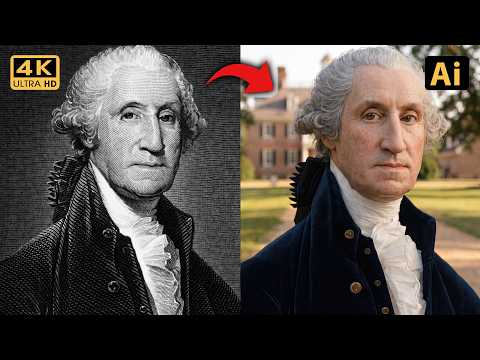
Number two. On December 23, 1783, the most revered man in America reached a trembling hand inside the Annapolis statehouse. General George Washington was resigning his military commission. With visible exhaustion, he handed control of a victorious army to a civilian Congress. Directly behind him sat an empty chair covered by a cloak—symbolizing the royal crown he had adamantly refused.
Maintaining a fractured nation together by sheer willpower had drained him. He wanted nothing more than quiet solitude at his Mount Vernon farm. But history would not let him rest. A acute throat infection claimed his life at 67. The highest standard of American greatness cost him his right to be an ordinary human being.
Number three. To save the United States, Abraham Lincoln first had to destroy his own body. Four years of civil war transformed the great president into a walking skeleton. He lost 30 pounds, deep hollows carved permanent shadows under his eyes. Holding a fractured nation together through its bloodiest conflict drained every ounce of his vitality.
He finally secured the Union’s survival in April 1865. Then came Ford’s Theatre. He sat in the presidential box breathing freely for the first time in years. A bullet pierced the back of his skull. John Wilkes Booth’s shot instantly turned the highest victory into a national catastrophe, killing America’s greatest savior at 56.
Number four. A brutal blow fractured her skull at 13, yet she spent the following decades retracing her steps into hostile territory. Harriet Tubman lived her entire youth as a woman constantly hunted. By June 1863, she stood on the deck of a Union gunboat on the Combahee River. She led armed forces past hidden Confederate mines. Moving at night from the shadows to the heart of open war.
The trauma of endless escape marches and constant vigilance left her body permanently broken. But she endured long enough to outlast everyone who sought to bring her down. When she died of natural causes at 90, America’s most famous fugitive received a full military funeral. The arrest orders fell away. Her defiance remained eternal.
Number five. At nearly sixty, he had no more mountains left to hide in. In September 1886, near the dusty U.S.-Mexico border, the exhausted Apache leader finally stopped running. Geronimo stood before federal troops and surrendered his life, ending decades of ghost warfare to protect his homeland. The long resistance cost him his family, his ancestral land, and the lives of his warriors.
When pneumonia, brought on by a winter fall, took him at 79, he was still an official prisoner of war. The man who once fought armies spent his final years selling his signature to the very nation that had erased his people. Fame only arrived after his world was destroyed.
Number six. Boots shattered the pre-dawn silence at Standing Rock on December 15, 1890. Armed men burst through the door to drag out Sitting Bull, the most legendary Native American chief in North America. Washington feared his immense influence more than it could bear to let him live. A chaotic scuffle erupted in the frozen dark. A gunshot rang out.
The famous strategist of Little Bighorn fell dead. It was the deepest kind of betrayal. The fingers that pulled the trigger belonged to Lakota police acting on federal orders. Assassinated at 59, the man who embodied unyielding freedom was erased to secure an expanding empire. A single bullet silenced that symbol. The Wild West bled to death beside him.
Number seven. In his final decade, echoes of raucous laughter drifted from packed lecture halls in New York around Mark Twain. He stood center stage in his iconic white suit, delivering the words that captivated America. But the moment the curtain fell, he retreated backstage into a pale, desolate silence. The pristine suit was just a mask.
While audiences cheered his brilliance, his private reality was quietly collapsing. Bankrupt, he forced himself through an exhausting world tour just to satisfy creditors. Worse still, he was burying his own family, losing his wife and two daughters to illness. A heart attack finally ended his life at 74. The man who taught a nation how to laugh died choking on grief.
Number eight. John D. Rockefeller engineered the American century and outlived everyone who tried to stop him. He lived 97 years. In 1899, the country rose up against his oil monopoly. Inside a Washington hearing room, the richest man in history sat in silence. His hands were clasped, his back straight. He answered angry legislators in a calm, steady voice, dismissing his ruined competitors as mere business inefficiency.
His chilling composure terrified the public far more than any outburst could have. He pulled the global economy toward the future, amassing an empire of wealth. Arteriosclerosis finally stopped his heart at 97. Money bought him decades of extra time. But it couldn’t buy him a single ounce of affection.
Number nine. The Wizard of Menlo Park. That was nothing but a convenient newspaper myth. In reality, Thomas Edison engineered the twentieth century by turning his body into an exhausted machine. By the 1880s, severe deafness had isolated him from the sounds he recorded. Instead of surrendering, he bent over the laboratory piano and bit straight into the hard wood.
“I hear through my teeth,” he muttered, forcing raw vibrations to travel directly through his skull. He traded sleep for years of relentless labor, sacrificing his own biology to light up the world. Complications from diabetes finally ended his life at 84. He gave humanity the phonograph, leaving behind a piano forever scarred by his teeth.
Number ten. Room 3327 of the New Yorker Hotel reeked of old seeds and quiet isolation. By the late 1930s, the mind that electrified the world had shrunk to the space of a windowsill. Nikola Tesla sat hunched over. A skeletal figure feeding a particular white pigeon and murmuring to it while human society moved on. The visionary who designed the modern age now lived in the shadow of mounting debts.
When a fatal blood clot stopped his heart at 86, there was no one around to notice. The man who gave the twentieth century its light faded into darkness. Outside his window, the city ran on his alternating current.
Number eleven. The Highland Park assembly line never stopped moving. By 1913, Henry Ford stood above the noisy factory floor, watching men work like iron pistons. He stepped closer to the machines, pointing his finger to speed up the conveyor. A sweat-soaked worker, exhausted, kept pace with the relentless rhythm, repeating the same motion endlessly. Ford saw efficiency, not human exhaustion. Just replaceable parts.
He mass-produced the future by standardizing human beings. A cerebral hemorrhage finally halted his biological engine at 83. He put the entire world on wheels, giving humanity a new kind of mobility. But what is the true price when a visionary builds the modern age by turning people into machines?
Number twelve. At 39, Amelia Earhart flew into a dense cloud bank over the Pacific and never returned. July 2, 1937. Heavy overcast skies near Howland Island. She had shattered conventional boundaries to forge an American legend that knew no impossible. The radio crackled with her distressed transmissions, fading as she spoke of running low on fuel and searching for land. Then, only static. No wreckage, no trace of a body.
The ocean quietly erased every physical trace of her existence. The ultimate price of freedom was flying straight into an inescapable myth.
Number thirteen. Walt Disney designed the landmarks of modern American childhood, but his empire ran on nicotine and constant anxiety. By July 1955, the visionary behind the happiest place on earth was physically trembling. On the morning of Disneyland’s opening, he was trapped inside his apartment in the fire station. Workers had painted the heavy wooden door shut, accidentally sealing him in. He paced the small room in his pajamas, silently chain-smoking. His eyes were red and bloodshot from chronic sleep deprivation.
The massive production of global joy demanded a steep personal price. Lung cancer stopped his relentless drive at 65. The genius who sold the world innocent magic paid for that illusion with his breath.
Number fourteen. She simply didn’t move. On December 1, 1955, inside a Montgomery bus, Rosa Parks held her seat. She was not a tired seamstress making a spontaneous choice. She was a trained investigator fully aware of exactly what her arrest would cost her. When police boarded to take her away, she sacrificed her personal safety to ignite the boycott.
History remembers a quiet heroine. But that single act consumed her ordinary life. After being fired from her job and hunted with death threats, she was forced to flee the very city she helped change. Leaving at 92, she left behind a fractured system. One quiet act made a normal life impossible forever.
Number fifteen. “Peace be upon you.” That was how he greeted the crowd at the Audubon Ballroom on February 21, 1965. It had taken no less than 20 years for a traveling salesman to become America’s harshest voice. Malcolm X built his life on a dangerous reinvention, peeling back past identities in pursuit of a clearer truth. But his final evolution made him a stranger to the very organization that had shaped him.
As he stood on stage waiting to speak, a scuffle broke out among the audience. He called for peace. Instead, he received a hail of bullets. Assassinated at 39, the man who preached self-defense found no shield to protect him from his former brothers. Do bullets kill a movement, or do they only immortalize the martyr?
Number sixteen. An empty pill bottle rested on the nightstand. August 1962. A quiet bedroom in Brentwood. Marilyn Monroe had built a persona that captivated the entire world. Yet the famous icon remained a fragile shell. Public adoration only deepened her profound isolation. She became a prisoner of the American imagination, suffocating beneath the image she had created herself.
The glare finally snuffed out the noise. Found dead at 36, the camera flashes outlived a woman who departed alone inside a sealed room.
Number seventeen. On the evening of April 4, 1968, Martin Luther King Jr. stepped onto the balcony of the Lorraine Motel. The most famous civil rights leader on earth was utterly exhausted. A decade of constant danger had torn at America’s racist society, forcing an entire nation to confront its conscience. But relentless travel and daily death threats had quietly worn down his 39-year-old heart.
He had traveled to Memphis simply to stand with striking sanitation workers. Then, a sniper’s bullet cracked through the dusk. The man who armed a historic revolution with strict nonviolence fell onto the cold concrete. One bullet stopped the preacher. But it only immortalized his dream.
Number eighteen. At 39, he spoke the most famous words in human history. A billion people listened through a radio broadcast on July 20, 1969. Neil Armstrong stepped onto the lunar dust. He achieved a historic technological victory. But that footprint trapped a reclusive engineer inside a public myth.
He returned to Earth a global icon. But he hated it. The man who sailed among the stars spent four decades hiding from the spotlight. No interviews, no autographs. Complications from coronary bypass surgery finally stopped his heart at 82. The world gained a pioneer. Yet in the silent void, a dusty footprint outlived the man who just wanted to be left alone.
Number nineteen. “I ain’t draft dodging.” That’s how he announced it, voluntarily surrendering the prime of his athletic youth. He sacrificed peak physical fitness for a principle. On April 28, 1967, Muhammad Ali stood inside a crowded Houston induction center. A military officer called his name three times. He refused to step forward.
That single choice instantly stripped him of his heavyweight title. He traded the boxing ring for a prison threat, risking years behind bars to protest a distant war. Decades of absorbing brutal blows finally took their toll. Septic shock and respiratory illness ravaged his battered body at 74. Nerve damage finally silenced the loudest man in sports.
Number twenty. He designed the twenty-first century to his exact specifications. Steve Jobs treated reality itself as a moldable product. But the man who controlled global supply chains couldn’t control his own cells. After a rare pancreatic tumor diagnosis in 2003, he treated the disease like an engineering flaw. He delayed recommended surgery for 9 months.
He turned to alternative diets and acupuncture, convinced his willpower could override biology. That plan failed. The tumor spread quietly. He passed away at 56, the visionary engineer of the modern age surrendering to the one system he couldn’t redesign. He gave humanity devices that control everything, but died powerless before his own body.
Thank you for watching. If you enjoyed this video, don’t hesitate to share it with your friends and subscribe to the channel so you don’t miss our next exciting content. Which of these twenty icons paid the heaviest price for immortality? Tell us in the comments below.
Report this article
Select a reason for reporting:






