The wind howled through the frozen Norwegian wilderness, a relentless adversary that cut through their woolen uniforms and numbed their faces. Six men, shadows against the moonlit snow, moved with the silence of predators. Each step was a battle against the biting cold, each breath a plume of determination. They were the elite, handpicked for a mission that could alter the course of history—or end in ignominious death.
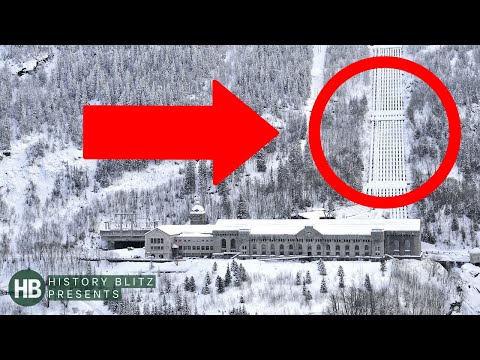
Ahead, the Vemork hydroelectric plant loomed, a fortress of concrete and steel nestled deep in the mountains. Its generators hummed with a sinister purpose: producing heavy water, the vital ingredient for Nazi Germany’s atomic bomb. The plant was heavily guarded, surrounded by treacherous terrain, but these men were undeterred. They had trained for this, bonded by a silent promise to stop the Nazi war machine at any cost.
The year was 1943, and the world was at a critical juncture. The Allies had made strides against the Axis powers, but a looming threat could tip the balance: Germany’s pursuit of an atomic bomb. The seeds of this ambition had been sown in the late 1930s, when German chemists Otto Hahn and Fritz Strassmann discovered nuclear fission. The international scientific community was aware, but as tensions rose, concerns about military applications grew.
At the forefront of Germany’s nuclear program were brilliant minds like Werner Heisenberg, a Nobel laureate and pioneer of quantum mechanics. He and his colleagues formed the Uranium Club, tasked with exploring the possibility of nuclear weapons. They were at the cutting edge, probing the mysteries of fission and chain reactions. The Allies, aware of the importance of atomic research, monitored Germany’s activities through espionage and defectors.
A pivotal moment came in 1942 when intelligence indicated that Germany was heavily invested in producing heavy water. The Vemork plant was the only facility in Europe capable of producing it in large quantities. The Allies realized that allowing this production to continue unchecked could have dire consequences. The responsibility to neutralize this threat fell to the British Special Operations Executive (SOE), a clandestine organization tasked with espionage, sabotage, and reconnaissance in occupied Europe.
The mastermind behind the operation was Colonel John Wilson, a senior SOE officer who understood the strategic importance. Wilson worked closely with Norwegian resistance leader Leif Tronstad, a scientist and former professor who had fled to Britain. Tronstad provided crucial intelligence about the plant and the feasibility of a sabotage mission. His expertise and insider knowledge were invaluable.
The operation, code-named Gunnerside, was meticulously planned and authorized at the highest levels of the British government. Joachim Rønneberg, a young but capable Norwegian officer, was chosen to lead the team. His team consisted of five highly trained Norwegian operatives: Knut Haukelid, Fredrik Kayser, Kasper Idland, Hans Storhaug, and Birger Strømsheim. They underwent rigorous training in sabotage techniques, survival, and guerrilla warfare, preparing for the harsh Norwegian winter and the formidable defenses of the plant.
As the date approached, tension mounted. The success of Operation Gunnerside was not just a tactical necessity; it was a moral imperative. The Allies knew that a successful sabotage could delay or derail Germany’s nuclear ambitions, preventing a potential atomic catastrophe. With every detail meticulously planned, the team of six brave men prepared for their dangerous mission.
On February 16, 1943, the six operatives parachuted into Norway. The freezing temperatures and rough terrain made the initial phase incredibly challenging. Despite these obstacles, they successfully made contact with the local resistance in a remote and mountainous region. The Vemork plant was heavily guarded and difficult to access. The Allies understood that the success of the mission depended greatly on the support of the Norwegian resistance.
On the night of February 27, 1943, the team embarked on the final leg of their mission. They skied across the mountainous terrain, avoiding German patrols thanks to valuable intelligence from the resistance. Reaching the outskirts of the plant, they saw the Vemork plant standing like an impenetrable fortress, its high walls and watchtowers bathed in the harsh light of floodlights that cut through the darkness.
The men huddled together, their breaths fogging in the frigid air, every nerve on edge. The scent of oil and metal was strong here, mingling with the cold, clean air of the Norwegian mountains. With each step closer, the tension mounted. They knew that one wrong move could spell disaster.
They approached the plant’s perimeter, hearts pounding, eyes scanning for any sign of movement. Suddenly, the beam of a searchlight swept over their position. They froze, pressed against the cold, hard ground. The searchlight moved on, but the close call left their pulses racing.
Ahead lay their first major obstacle: a narrow bridge guarded by vigilant German soldiers. Crossing it was not an option. Instead, they opted for a more perilous route—descending into a deep, shadowy gorge. They navigated the icy rocks, the sound of their breathing and the rush of the river below the only noises breaking the silence.
With the sheer cliffs conquered, they found themselves at the plant’s edge. The sound of machinery was now a constant hum. Using wire cutters, they silently breached the outer fence, moving like phantoms through the shadows. Every creak of the wire, every crunch of snow underfoot was amplified in the stillness, setting their nerves on edge.
Inside the plant, the air was warmer, filled with the acrid smell of machinery and the faint tang of chemicals. The commandos moved swiftly, their eyes adjusting to the dim light, scanning for the weak points in the heavy water production facility. The rhythmic thumping of the machines provided cover for their movements but also heightened the sense of urgency.
They reached the heart of the facility: the heavy water production cells. The team worked quickly but meticulously, placing the explosives with the precision of skilled craftsmen. Each man was acutely aware of the stakes. This moment, this action, could alter the course of the war. The scent of explosives mingled with the metallic air, a stark contrast to the sterile environment of the plant.
Timers were set, and with one last check, they prepared to make their escape. The plant was now a ticking time bomb, and the silence felt even more oppressive. The team retraced their steps, every second feeling like an eternity, every sound a potential threat.
As they slipped out of the plant, the sense of relief was fleeting. German patrols were on high alert, the beam of searchlights sweeping the area with relentless precision. The commandos moved with calculated stealth, blending into the night, their breaths shallow, hearts pounding. The distant hum of the plant and the whisper of the wind were the only sounds accompanying their silent retreat.
Finally, at a safe distance, they paused. The enormity of their actions sank in. The cold air filled their lungs, the scent of pine and snow a sharp contrast to the industrial smell they had left behind. They waited, each second stretching into infinity.
Then it happened. The ground beneath them trembled, and a distant, thunderous boom shattered the silence. The explosion lit up the night sky—a brilliant flash followed by a billowing cloud of smoke. The plant, once a symbol of the Nazi war machine’s strength, was now a smoldering ruin.
For a moment, the six men stood in awe, the reality of their success washing over them. The roar of the explosion echoed through the mountains, a testament to their bravery and determination. They had done it. They had crippled Germany’s last hope for an atomic bomb.
But the explosion was both a moment of triumph and a signal to flee. The team quickly retraced their steps, evading the alerted German guards. They split into smaller groups to increase their chances of survival. Despite the overwhelming odds, all six men managed to evade capture and eventually reunited with the resistance.
The success of Operation Gunnerside significantly impeded Germany’s progress in developing nuclear weapons. The mission had targeted the Vemork hydroelectric plant, the primary source of heavy water in Europe. Heavy water, or deuterium oxide, was a crucial moderator in nuclear reactors that Germany required for sustained nuclear fission.
The destruction of the heavy water production facility dealt a substantial blow to Germany’s atomic bomb project, known as the Uranverein, or Uranium Club. The immediate impact was the loss of approximately 500 kilograms of heavy water, which significantly delayed further research and experiments.
Despite the Germans’ efforts to restart production and transport additional heavy water from Norway, continuous Allied bombing campaigns and subsequent sabotage efforts—including the sinking of the ferry carrying heavy water in Lake Tinnsjø—further disrupted their supply chain. While the German nuclear program continued, it struggled with resource shortages, internal disagreements, and prioritization issues.
The Vemork sabotage, coupled with these other factors, meant that Germany was never able to accumulate enough heavy water to sustain a large-scale nuclear reactor, let alone develop an atomic bomb. Hitler’s decision not to pursue nuclear weapons more aggressively was influenced by several factors, not solely the sabotage at Vemork. However, the disruptions caused by Operation Gunnerside and the ongoing heavy water supply issues did play a role in highlighting the challenges and limitations of the program.
As one of the most successful missions of World War II, Operation Gunnerside was arguably the single most important mission of the war, as it prevented a nuclear-armed Nazi Germany from dominating the world. The six men who stood on the precipice of history had sacrificed everything to stop the Nazi war machine, and their tale of unparalleled bravery, meticulous planning, and the unbreakable bond forged in the fires of war would echo through the ages.
But the story was far from over. The men who had blown up Germany’s last chance to win World War II now faced a new challenge: escaping the frozen wilderness of Norway with their lives, hunted by a furious enemy and facing a journey that would test every ounce of their endurance.
Joachim Rønneberg and his men knew that the explosion would bring a storm of retaliation. The German guards, now fully alerted, scoured the mountainside with searchlights and dogs. The commandos split into small groups, each man relying on his training and the silent promises made to his brothers.
Rønneberg, Haukelid, and Kayser skied through the night, the cold biting at their faces, their legs burning with exertion. They crossed frozen lakes and climbed steep ridges, always pushing forward. “We knew that if we stopped, we would die,” Rønneberg later recalled. “So we kept moving.”
After days of evading German patrols, they reached the Swedish border. Neutral Sweden offered sanctuary, and from there, they were smuggled back to Britain. All six men survived, a testament to their skill and the resistance network that sheltered them.
The mission’s impact was immediate. The heavy water plant was crippled, and Germany’s atomic ambitions suffered a blow from which they never fully recovered. The war would rage on for two more years, but the Nazi bomb was never realized.
Operation Gunnerside stands as one of the most daring sabotage missions in history, a story of courage, sacrifice, and the unbreakable bond of six men who changed the world. Their legacy reminds us that even in the darkest times, a few brave souls can alter the course of history.
What would have happened if they had failed? Share your thoughts in the comments below.
Report this article
Select a reason for reporting:






