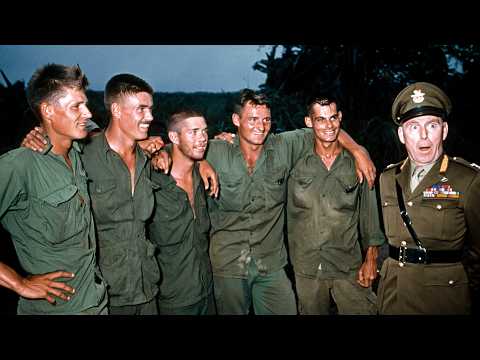
In the spring of 1918, a British major general named Sir Aylmer Hunter Weston stepped off a staff car near a forward Australian encampment outside Amiens. He had come to inspect. To evaluate. What he witnessed in the first 90 seconds made him reach for his notebook—not to record praise, but to document what he believed was a total breakdown of military discipline.
An Australian private was sitting on an ammunition crate. Beside him sat a captain. They were sharing a tin of bully beef. The private was talking. The captain was listening. And when the private made a joke, the captain laughed so hard he nearly choked. There was no saluting, no standing at attention, no visible difference between the two men except the pips on one man’s shoulder that he seemed almost embarrassed to be wearing.
Hunter Weston turned to his aide-de-camp and said seven words that would be quoted in official correspondence for the next three decades. “These people do not have an army.”
He was wrong.
What the Australians had was something the British couldn’t recognize because they had never seen it before. They had a fighting force built on a principle so alien to European military tradition that it looked like chaos from the outside. From the inside, it was the most lethal command structure on the Western Front.
The principle was simple. Respect is earned. Rank is not respect. And the men who fight have the right to know why they’re fighting every single time. That isn’t philosophy. That’s a tactical system. And it produced results that still stun military historians who bother to look at the actual numbers.
To understand what Hunter Weston walked into, you need to understand what he walked away from. The British Army in 1918 operated on a hierarchy so rigid it functioned almost as a caste system. Officers came from public schools, enlisted men came from factories and farms. The two groups did not eat together. They did not socialize. In many battalions, enlisted men were forbidden from making eye contact with officers above the rank of major. Communication flowed in one direction, downward. Orders were issued. Orders were obeyed. Questions were not asked because questions implied that the man giving the order might be wrong. And in the British system, officers were not wrong. They were officers.
Punishment for insubordination was severe. The punishment for disrespect could be worse. During the war, the British Army executed 306 of its own soldiers, many of them for offenses that amounted to nothing more than refusing to follow orders they believed were suicidal. Which, in most cases, they were.
The Australians looked at this system and rejected it completely. Not partially. Not with minor modifications. They looked at the British command model and decided it was going to get them killed. And they were right.
Here’s what the Australians did instead. Officers in the Australian Imperial Force were expected to prove themselves, not once, constantly. A lieutenant who gave a stupid order would be told it was a stupid order to his face by the men who would have to carry it out. And the astonishing part, the part that made the British generals physically uncomfortable, was that the good Australian officers welcomed it. They wanted to be challenged because a challenged order that survives scrutiny is an order men will actually follow. Not because they have to, because they believe in it.
Private Frank Mitchell of the 3rd Battalion described it in a letter home in 1916. “Our lieutenant asked us what we thought about a night patrol route, not as a formality. He actually wanted to know. Jenkins told him the route was suicide because of a machine gun post he’d spotted that morning. The lieutenant changed the plan. Jenkins is alive. We’re all alive. That doesn’t happen in the British units.”
That letter wasn’t unusual. It was standard. The Australian system generated thousands of moments like that. Small corrections. Ground level intelligence flowing upward instead of being ignored. Privates who had spent three days staring at a particular section of no-man’s land telling their officers what they’d actually seen. And officers who listened.
The British called it indiscipline. The Australians called it not dying.
The results spoke in a language that required no translation. Numbers. During the 100 Days Offensive from August to November 1918, the five divisions of the Australian Corps achieved breakthrough rates that no British formation matched. They captured 23,000 prisoners. They seized over 300 guns. They advanced through some of the most heavily defended positions on the Western Front, and their casualty to achievement ratio was consistently better than comparable British units operating on the same front in the same conditions against the same enemy.
The difference wasn’t equipment. They used the same rifles, the same artillery, the same grenades, the same mud. The difference was communication.
In a British battalion preparing for an assault, the briefing worked like this. Brigade headquarters issued orders to battalion commanders. Battalion commanders issued orders to company commanders. Company commanders issued orders to platoon leaders. Platoon leaders told their men where to go and when to go there. The men at the bottom received instructions. They did not receive explanations. They were told to advance on a specific trench at a specific time. They were not told why that trench mattered, what was on either side of it, or what the plan was if the trench turned out to be more heavily defended than intelligence suggested. Because intelligence was for officers.
In an Australian battalion, the process looked completely different. Lieutenant Colonel William Ninnis of the 7th Battalion would gather his entire company, every man, around a sand table model of the objective. He would walk them through the entire plan, not just their part. The whole thing. He would show them where the flanking units would be. He would show them the artillery timetable. He would point out the known machine gun positions and the suspected ones. And then he would ask if anyone had questions.
They always had questions. What if the barrage falls short? What if Charlie Company gets held up on the left? What if the wire isn’t cut? And Ninnis would answer every single one. Not because he was soft, because he understood something that the British command structure refused to accept. A soldier who understands the plan can adapt when the plan fails. A soldier who only knows his own small piece of the plan is helpless the moment that piece stops working.
And plans always stop working. The Germans had a word for it: friction. Clausewitz coined it. Every plan degrades upon contact with the enemy. The question isn’t whether your plan will break. The question is what your soldiers do when it does.
British soldiers who didn’t understand the larger plan would stop. They would wait for new orders. They would huddle in a shell crater and send a runner back to ask what to do next. That runner would take 20 minutes if he survived. The reply would take another 20. In 40 minutes, the momentum was dead. The Germans had reorganized. The advantage was gone.
Australian soldiers who understood the entire plan would adapt on the spot. A corporal who knew the overall objective could make a tactical decision without waiting for permission. He could swing his section left to cover a gap. He could bypass a strong point and hit it from behind. He could recognize that the situation had changed and adjust accordingly. Because he had the information.
Information is ammunition. The Australians treated it that way. The British treated it as classified.
Now, the saluting. This drove the British absolutely insane. And it’s where most people think the story is just about Australian informality. Larrikins who couldn’t be bothered with protocol. Undisciplined colonials who didn’t understand how a real army worked. That reading is wrong. The Australian approach to saluting was tactical. Here’s why.
In the trenches and the forward areas, snipers watched for salutes. A cluster of men suddenly stiffening and throwing their hands up meant an officer had arrived. An officer was a high-value target. Kill the officer and the unit loses coordination. The British lost officers to sniper fire at a catastrophic rate. In some sectors, the average life expectancy of a newly arrived British subaltern was six weeks. Six weeks. Not because they were braver than their men. Because they were identifiable.
The Australians figured this out immediately. Private James Alcorn of the 11th Battalion put it bluntly in his diary. “We don’t salute officers near the line. Not because we don’t respect them. Because we don’t want them shot. A salute is a signal. A signal gets a man killed.”
This wasn’t unofficial. It became doctrine. Australian standing orders in forward areas explicitly prohibited unnecessary saluting. Officers were instructed to remove rank insignia when moving through exposed positions. They wore the same equipment as their men. They carried rifles, not just pistols. From 200 yards away, through a German scope, an Australian officer was invisible. A British officer was a target with a sign on his chest.
The survival rates reflected this perfectly. Australian officer casualty rates in the forward areas were significantly lower per engagement than British officer casualty rates, not because the Australians saw less combat. They saw more, but their officers lived longer because their men had the tactical intelligence to protect them by treating them as equals. Respect through sameness. Protection through informality.
The British saw disorder. The Australians saw survival.
And it wasn’t just about snipers. The entire officer-enlisted relationship in the AIF functioned as what modern military theorists would call a decentralized command network. Every man was a potential decision-maker. Every corporal was a potential platoon leader. If the lieutenant went down, the sergeant didn’t just hold position and wait for instructions. He already knew the plan. He already understood the objective. He already had the authority and the expectation to take command and push forward.
This happened at Hamel, July 4th, 1918. General Sir John Monash, himself Australian, himself a believer in the system, planned an assault that relied entirely on decentralized execution. The plan was detailed to an extraordinary degree. Every man knew his role. Every man knew everyone else’s role. The artillery, the tanks, the infantry, the supply drops, all synchronized to the minute. But here’s the critical difference. Monash didn’t just give orders and hope they were followed. He held briefings at every level. He used scale models. He ran rehearsals on ground that matched the terrain. He insisted that every single private in every single platoon understood what the battalion on his left was doing, what the tanks were supposed to accomplish, and what the fallback was if any element failed.
The battle lasted 93 minutes. 93 minutes to capture all objectives, every single one. The British Fourth Army had been trying to take the same ground for weeks. They had failed repeatedly. The same German defenders, the same wire, the same machine guns. The Australians walked through it in an hour and a half.
After Hamel, a British Brigadier reviewed the action report. His assessment was recorded in the Fourth Army war diary. “The Australians appear to operate with an internal communication speed that we cannot replicate. Their junior NCOs make decisions that in our forces would require a runner to battalion HQ and a 15-minute delay. They simply act.”
He was describing the product of a culture, not training. Culture. You cannot teach a man to think independently if your entire system is built on obedience. You cannot create adaptive soldiers if the first thing you do is crush their willingness to question. The British system produced brave men who would charge machine guns because they were told to. The Australian system produced smart men who would figure out how to silence the machine gun before anyone had to charge it.
The numbers from Hamel tell the story. Australian casualties, 1,300. German prisoners captured over 1,500. The Australians lost fewer men than they captured enemies. The battle was so efficient that it was later studied by the American Expeditionary Force as a model for combined arms operations. The Americans were so impressed, they asked for Australian instructors, not British ones, Australian ones, because the Americans were already building a similar system. They just didn’t know it yet.
But the relationship with officers went deeper than battlefield communication. It went to selection. In the British Army, officers were commissioned based on social class. A man’s accent determined his rank as much as his ability. The public school system fed directly into the officer class. A factory worker from Manchester could serve four years in the trenches, win a military medal, and still be passed over for promotion in favor of an 18-year-old fresh from Eton who had never heard a shot fired.
The Australians did something radical. They promoted from within. A man who proved himself as a private could become a corporal. A corporal who showed leadership became a sergeant. A sergeant who demonstrated tactical ability could be commissioned as an officer. The path was based entirely on performance, not background, not education, not who your father was, but what you did in the field.
This created something the British system could not produce. Officers who had been enlisted men, leaders who had carried a rifle, dug a trench, and gone over the top as one of the men they were now commanding. These officers understood the experience of the soldiers they led because they had lived it.
Lieutenant Albert Jacka is the defining example. He enlisted as a private. He won the Victoria Cross at Gallipoli for single-handedly clearing a Turkish trench. He was commissioned in the field. His men didn’t follow him because he outranked them. They followed him because they had watched him fight. They had seen him bleed. They knew with absolute certainty that he would never ask them to do something he wouldn’t do himself.
Jacka’s platoon had the highest morale ratings and the lowest desertion rate in his battalion. Not because he was lenient. He wasn’t. He demanded excellence, but his authority came from demonstrated competence, not inherited status, and his men could tell the difference. Every Australian soldier could tell the difference.
“We had a new officer come in from training in England,” wrote Sergeant Harold Davies of the 21st Battalion, “public school type, very proper, called us ‘men’ in that voice they use, gave orders like he was reading from a manual. Lasted two weeks before the boys set him straight. Not roughly, just honestly. Told him straight, out here, you earn it or you don’t have it. He either figured it out or he didn’t. This one figured it out. Became a good officer, but only after he stopped pretending he was better than us.”
That process, that brutal, honest, democratic grinding down of pretension was the Australian filtering system. Officers who couldn’t handle it requested transfers. Officers who could handle it became exceptional. The system was self-selecting. It kept the leaders who were actually good at leading and ejected the ones who were only good at commanding. There’s a difference. A commander gives orders, a leader makes men want to follow them.
The British General Staff never understood this distinction. And their inability to understand it cost thousands of lives.
Consider the planning for Pozières in 1916. The British command structure decided that the village needed to be taken. They issued orders. The Australian 1st Division was assigned the task. The orders specified the time of attack, the direction of advance, and the objective. They did not specify how the Australians should deal with the fortified cellars that German engineers had spent months reinforcing. They did not address the overlapping fields of machine gun fire that covered every approach. When Australian officers at the battalion level raised these concerns, they were told the artillery would handle it.
The artillery did not handle it. The Australians took Pozières, but they paid a price that still haunts the national memory. Over 23,000 Australian casualties in seven weeks of fighting around a single village. It was the worst sustained bloodletting in Australian military history, and Australian commanders at the division level, men like Major General Harold Walker, placed the blame squarely on a British planning process that refused to incorporate ground-level intelligence from the men who would actually do the fighting.
Walker wrote to General Birdwood after Pozières. The letter was blunt in a way that no British general would have written to a superior. “The men know what they’re walking into better than the staff officers drawing lines on maps 20 miles behind the front. If we’d been permitted to adjust the assault plan based on what our forward scouts reported, we would have achieved the same result with a fraction of the cost.”
That letter wasn’t insubordinate in the Australian system. It was expected. Feedback flowed upward. Problems were named. Solutions were proposed. And if the senior commander was worth his rank, he listened. Birdwood listened. He fought with the British command structure for greater Australian autonomy in planning. He didn’t get everything he wanted, but the seed was planted. By 1918, the Australian Corps under Monash was operating with a degree of independence that no other dominion force enjoyed. And the results were historically unprecedented.
The Germans noticed before the British did. Captured German intelligence documents from 1918 reveal a fascinating assessment of Australian troops. A report from the German 18th Army intelligence section dated August 1918 specifically warned about the Australian command style. The report noted that Australian units adapted faster than British units, that their junior leaders made independent decisions that disrupted carefully planned German defensive responses. That killing an Australian officer did not paralyze the unit the way killing a British officer did. The Germans called it elastische Führung, elastic leadership. They recognized it as tactically superior even as they struggled against it.
The German report concluded with a recommendation. “When facing Australian units, target the entire leadership chain, not just the officers, because in an Australian unit, every man with a stripe on his sleeve is effectively an officer.”
That is the highest compliment an enemy can pay. They studied the system and concluded that it worked. Not despite the informality, because of it.
Think about what that means. The most professional and analytically rigorous military in Europe, the German army, studied the Australians and concluded that their lack of traditional discipline was actually a superior form of military organization. The British studied the Australians and concluded they needed more saluting.
This divide between the British obsession with form and the Australian obsession with function played out across every theater where the two forces operated together. And it continued long after the First World War.
In North Africa in 1941, the pattern repeated. The Australian 9th Division held Tobruk against Rommel’s Africa Corps for 241 days. The garrison was mixed—Australian, British, Indian, and Polish—but the defensive tactics that made Tobruk impregnable were overwhelmingly Australian innovations. The most famous was the fighting patrol. British defensive doctrine said you held your line. You stayed in your trench. You waited for the enemy to come to you. The Australians decided this was stupid. Sitting and waiting gave the initiative to the attacker. It let the Germans choose the time, the place, and the method.
So, the Australians went out. Every night, small teams, four to eight men. They crawled into no man’s land, found German positions, and attacked them. Not to capture ground, to destabilize, to deny the Germans any sense of security in their own forward positions. To make every German sentry spend every night wondering if there were Australians in the darkness outside his post.
And the way these patrols were organized tells you everything about the Australian command system. A British fighting patrol would be organized from the top down. An officer would select the men. The officer would plan the route. The officer would lead the patrol. The men would follow. An Australian fighting patrol was organized from the bottom up. The platoon sergeant would ask for volunteers. The volunteers would collectively decide the route based on what they’d observed from their own positions. A corporal or sometimes a senior private would lead. The officer would approve the plan, but the plan came from the men who would execute it.
Corporal Jack Edmondson led one of these patrols on the night of April 13th, 1941. He took six men out through the wire. They found a German machine gun post. Edmondson attacked it with bayonet and grenades. He was wounded. He kept fighting. He took the position, killed or wounded the crew, and destroyed the weapon. Then he led his men back through the wire and reported to his platoon commander before collapsing. He died of his wounds the next morning. He was awarded the Victoria Cross. He was 27 years old.
The point isn’t just his bravery. Brave men existed in every army. The point is that the patrol was his. He planned it. He chose his men. He picked the target. His officer trusted him to make those decisions because the Australian system was built on that trust. In the British system, a corporal would never have been given that degree of autonomy. The plan would have come from above. The route would have been prescribed, and the German machine gun post would probably still have been firing the next morning because the bureaucracy of permission would have smothered the opportunity.
Speed of decision, that’s what the Australian system produced. At every level, a private saw something and reported it immediately. A corporal saw an opportunity and acted on it. A sergeant adjusted the defense without waiting for written authorization. A lieutenant changed the plan mid-operation because conditions had changed.
British General Thomas Blamey, who despite his rank was Australian and operated within the Australian tradition, once described the difference in a briefing to visiting British staff officers. “In your army, information goes up and orders come down. In ours, intelligence goes up, ideas go up, criticism goes up, and decisions come down. The difference is that our decisions are better because they’re informed by the men closest to the problem.”
One of the British officers reportedly responded, “But how do you maintain discipline?”
Blamey’s answer has been quoted in Australian military histories ever since. “We don’t maintain discipline. We maintain standards. Discipline is following rules, mate. Standards are achieving results. My men might not salute properly, but they take their objectives.”
That distinction between discipline and standards is the key to everything the Australians built. Discipline is external. It’s imposed. You salute because the rules say salute. You march in formation because the rules say march. You follow orders because the rules say follow orders. Discipline requires enforcement, punishment, and fear.
Standards are internal. They’re chosen. You maintain your weapon because you know a dirty rifle jams. You dig your foxhole to regulation depth because you know a shallow foxhole gets you killed. You execute your drills perfectly because you’ve seen what happens when they’re done badly. Standards require understanding, commitment, and pride.
The Australian soldier had pride that was almost pathological. Not in his appearance, not in his saluting, in his craft. An Australian rifleman took personal offense at missing a target. An Australian sapper who wired a defensive position considered it a point of professional honor that not a single strand was poorly placed. An Australian machine gunner maintained his Vickers with a devotion that bordered on obsession. But ask that same soldier to polish his boots for a parade, and you’d get a lecture about wasted time that could be spent on something useful.
The British saw the unpolished boots and missed the perfectly maintained Vickers every single time.
This is where Hunter Weston’s assessment, “These people do not have an army,” reveals itself as one of the great strategic misreadings of the 20th century. He saw the surface and judged the substance. He saw informality and assumed incompetence. He saw a private sharing beef with a captain and concluded that the chain of command was broken.
The chain of command wasn’t broken, it was different. It was horizontal where the British chain was vertical. It was conversational where the British chain was dictatorial, and it produced combat outcomes that the British chain could not match.
Here are the numbers that should have changed his mind. At Villers-Bretonneux on April 24th, 1918, Australian troops launched a night counterattack to recapture the town from the Germans. The attack was organized in hours, not days. Units that had never worked together coordinated through verbal briefings and shared understanding of objectives. There were no detailed written orders. There wasn’t time. Officers and NCOs gathered, discussed the plan, agreed on boundaries and timings, and attacked.
The town was recaptured by dawn. The German advance toward Amiens, which could have split the British and French armies, and potentially changed the outcome of the war, was stopped by Australians who organized a major combined arms counterattack through conversation rather than paperwork.
A British staff officer at Fourth Army headquarters wrote in his diary that night, “The Australians have done in 12 hours what we estimated would require 3 days of planning and a full divisional operation. I do not understand how this is possible without proper orders process.”
The answer was staring him in the face. The Australian orders process was proper. It was just different. It was faster because it was based on shared understanding rather than transmitted instructions. When every man already understands the principles, you don’t need a 20-page operations order. You need a map, an objective, and a conversation.
“Take that town back before sunrise. Here’s where the Germans are strongest. Here’s where they’re weakest. Here’s your boundary with the battalion on your right. Questions? Good. Move.”
That was an Australian operations order for a major counterattack, and it worked because every man in the room already understood combined arms principles, fire and movement, and the importance of maintaining contact with flanking units. They had been taught these things, not just ordered to do them. Taught at every level, from private to brigadier. Education as a weapon system.
And this takes us to the deepest layer of the Australian approach, the one that the British never even attempted to understand. The Australians treated their soldiers as intelligent adults. This sounds obvious, sounds like it should be the baseline, but in 1914 to 18, it was revolutionary. The prevailing military philosophy across European armies was that enlisted soldiers were instruments, tools of the command structure. They needed to be sharp, obedient, and replaceable. They did not need to think. Thinking was an officer’s job.
The Australian rejection of this philosophy was total. It began in training, and it permeated every aspect of military life. Australian recruit training was longer on explanation and shorter on blind obedience than any comparable program. Instructors didn’t just show a recruit how to dig a trench. They explained why this angle of fire was better than that one, they showed the recruit what happened to a badly sighted trench. They let the recruit see the consequences of poor work before he ever reached the front.
Sergeant William Haskell, an instructor at the Broadmeadows Training Camp in Victoria, described his philosophy in a 1916 letter. “I tell my men everything. I show them everything. I explain every drill, every technique, every piece of kit, because a man who understands what he’s doing will keep doing it when no one is watching. A man who was just told to do it will stop the moment the sergeant turns his back.”
That insight, that understanding produces reliability and obedience produces performance only under supervision, is now a cornerstone of modern leadership theory. The Australians arrived at it through practical experience in 1915. The British military establishment didn’t fully accept it until the 1960s. Fifty years. It took the British 50 years to learn what Australian diggers knew instinctively in the mud of Gallipoli.
And here is where the story comes full circle, because the tactical innovation wasn’t a weapon or a technique or a formation. The tactical innovation was the relationship between officers and men. The Australian approach to military hierarchy was itself a weapon system. It produced faster decisions, better intelligence, higher morale, lower desertion rates, greater adaptability, and more effective combat outcomes than the rigid British alternative. Every metric supported it. Casualty ratios supported it. Prisoner capture rates supported it. Objective completion timelines supported it. Post-war analysis supported it. Even German intelligence assessments supported it.
And yet, for decades after the war, British military historians described the Australians as brave but undisciplined, effective but disorderly. Natural fighters who succeeded despite their lack of military bearing, rather than because of their approach to leadership. This misreading persists in some quarters even today. People hear about Australian soldiers calling their officers ‘mate’ and assume it’s a cute cultural quirk, a bit of colonial color, the digger mystique. It wasn’t a quirk. It was a system.
Mate meant something specific. It meant I trust you. It meant I’ll follow you because you’ve earned it. It meant we’re in this together, and if you make a bad call, I’ll tell you. And if I make a mistake, you’ll correct me, and neither of us will waste time pretending that your rank makes you right.
Sir, in the British system, meant something different. It meant I acknowledge your authority. It meant I’ll do what you say regardless of whether it makes sense. It meant there is a barrier between us that neither of us is permitted to cross.
Mate wins battles. Sir loses them. Not always. Not every time. The British Army fought with extraordinary courage throughout both World Wars. Individual British officers were brilliant, compassionate, and tactically gifted. The system produced Montgomery and Slim and many others who were exceptional leaders despite the hierarchy, not because of it. But as a system, as an institutional approach to warfare, the Australian model was superior. The evidence is overwhelming and consistent across every theater, every campaign, and every era in which the two systems operated side by side.
Vietnam proved it again. Australian troops in Phuoc Tuy province operated with a level of small unit autonomy that American and South Vietnamese commanders found extraordinary. A four-man SAS patrol could operate independently for weeks, making life-or-death decisions without radio contact, because they understood the mission, because they had been briefed completely, because their officers trusted them to think.
The Battle of Long Tan in 1966 was won by 180 Australian soldiers against somewhere between 1,500 and 2,500 North Vietnamese and Viet Cong fighters. The Australians were outnumbered by at least 10 to 1. They survived and won because every section commander made independent tactical decisions in a fluid, chaotic firefight. They shifted fire. They adjusted positions. They coordinated resupply drops. They called in artillery corrections, all at the section and platoon level, without waiting for battalion to tell them what to do.
Major Harry Smith commanded Delta Company that day. His radio communications during the battle reveal a commander who gave intent, not instructions. “Hold your position and keep firing” was the guidance. The how was left to the men doing the holding and the firing, and they figured it out under fire, in a rubber plantation, in a monsoon, outnumbered and almost out of ammunition. They figured it out because the system trusted them to figure it out. 108 men, 18 killed, 24 wounded, and they held against a regimental strength enemy force that should have overrun them in the first 30 minutes.
After Long Tan, an American colonel from the 1st Infantry Division visited the Australian Task Force. He reviewed the battle reports. He interviewed survivors. He asked Major Smith how a company strength unit had held against a regiment. Smith’s answer was characteristically Australian. “My blokes knew what they were doing.”
That’s it. That’s the whole secret. That’s the tactical innovation that Hunter Weston couldn’t see. That the British General Staff couldn’t process. That European military tradition couldn’t accommodate. Teach your soldiers everything. Trust them completely. Treat them as partners rather than subordinates. Let them question orders. Let them contribute ideas. Let them call you by your first name if that’s what makes the information flow faster. And then, get out of their way.
The Australian soldier didn’t need to be commanded. He needed to be pointed in a direction, an objective, and the information to make good decisions. He was the most effective infantry soldier of the 20th century. Not the best equipped, not the most numerous, not the most technologically advanced, the most effective per man, per engagement, per campaign, because someone had the sense to share a tin of bully beef with the private and listen to what he had to say.
Hunter Weston wrote his report. He recommended that the Australians be assigned British officers to instill proper discipline. His recommendation was filed. It was ignored by every Australian commander who read it, and the Australians went on to break the Hindenburg Line, capture Hamel in 93 minutes, stop the German Spring Offensive, and compile a combat record that remains one of the most impressive in military history.
The British general looked at the Australian Army and said, “These people do not have an army.” The Australian Army looked at the British general and thought something far simpler, “Mate, you have no idea what you’re looking at.”
Eighty years later, military academies around the world teach a concept called mission command, decentralized execution, commander’s intent, empower junior leaders, trust-based leadership. Every modern Western military has adopted some version of it. It is considered the gold standard military command philosophy. The Australians were doing it in 1915. They just called it common sense.
Hunter Weston’s report gathered dust, but his misreading became a footnote to a larger truth. The system he dismissed as chaos had already proven itself in the mud of Amiens, and it would prove itself again and again—in the deserts of Tobruk, the rubber plantations of Long Tan, the mountains of Afghanistan.
What the British general never grasped was that the Australians had reinvented something ancient: the warband. Trust earned through shared risk. Authority granted by competence. Every soldier a leader in waiting.
The diggers didn’t fight for king or country. They fought for the man beside them—and for officers who had proven they deserved to be followed. That was the army Hunter Weston couldn’t see.
So here’s the question for you: If trust beats rank on the battlefield, why do so many institutions still cling to hierarchy over competence? Let me know in the comments.
Report this article
Select a reason for reporting:






