October 14, 1941. German troops storm into Rzhev after a brutal encirclement near Vyazma. No one imagines that this small city on the Volga will become the site of the most ferocious positional warfare of World War II—a slaughterhouse that will consume more Soviet lives than the United States loses in the entire war.
By January 1942, the Red Army launches a massive winter offensive to crush Army Group Center. Stalin believes the enemy is on the ropes. But the Germans hold. And Rzhev becomes the anvil on which the Soviet winter offensive shatters.
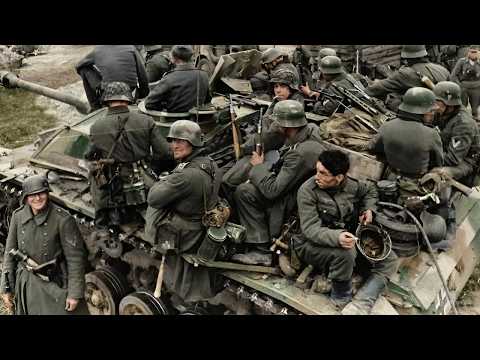
The numbers are staggering. 430,000 Soviet soldiers killed in the Rzhev salient—compared to 405,000 American casualties across all theaters of WWII. The average lifespan of a Soviet soldier in the Rzhev meatgrinder: less than a day. In some units, just a few hours.
Hitler forbids any retreat. Walter Model takes command of the 9th Army and turns every village into a fortress. “There is no land here, only muddy corpses and steel,” German soldiers write home. They call it der Fleischwolf—the meat grinder.
In July 1942, Model strikes first. Operation Seydlitz obliterates the Soviet 39th Army and 11th Cavalry Corps near Kholm. The Germans tighten their grip. But in November, the Red Army tries again with Operation Mars—a plan so convoluted that it scatters its armored spearheads across multiple directions. The result is catastrophe.
Zhukov is absent from the planning, called away to Stalingrad. Soviet intelligence misses three German panzer divisions lurking near Smolensk. When the offensive begins on November 25, the tanks of the Kalinin Front break through initially—but infantry and supply columns bog down in the mud and murderous crossfire from fortified villages.
Model counterattacks. The 41st Army and Solomatin’s mechanized corps are encircled. Men fight for days in the frozen wilderness before remnants are finally pulled back on December 15. Mars fails.
Yet the blood sacrifice is not in vain. The panzer divisions pinned down at Rzhev are desperately needed at Stalingrad. By the time of Kursk, the German 9th Army is a skeleton of its former self. On March 3, 1943, the Wehrmacht abandons the Rzhev salient—Operation Buffalo—and the city is finally liberated.
Thirteen months of carnage. The Red Army has lost 430,000 dead and missing. The Wehrmacht, 150,000 to 200,000. The battles around Rzhev have been erased from Soviet textbooks—until a 25-meter memorial rises in 2020, bearing the names of 17,000 fallen soldiers.
But before the silence, before the forgetting, there is the story of what really happened in the Rzhev meatgrinder—a story of desperate courage, catastrophic errors, and a victory that cost more than anyone could bear.
The spring of 1942 brought no relief. The front froze into a stalemate of trenches, minefields, and sniper duels—a grotesque echo of 1916. Both sides dug in. Both sides bled. And in Berlin, Hitler demanded that the salient be held at all costs.
Model understood what his Führer did not. He ordered his engineers to build a web of fortified villages, each one a self-contained strongpoint with interlocking fields of fire. He called it the Königsberg Line. Behind every burned-out house, a machine gun. Behind every haystack, a Panzer.
The Red Army hurled itself against these positions again and again. Regiments dissolved into companies. Companies into platoons. Replacements arrived from the east—boys of eighteen, farmers and factory workers—and were dead within days.
By late July 1942, the Germans launched Operation Seydlitz. The 39th Army and the 11th Cavalry Corps were trapped near Kholm. For two weeks they fought in a shrinking pocket, eating horse meat, drinking swamp water, calling down artillery on their own positions. Only a few thousand escaped.
Then came the autumn lull—a deceptive quiet. Stavka planned its next blow. The operation would be called Mars, and it would be the largest offensive the Western Front had ever attempted. But the plan was flawed from the start.
Instead of a single concentrated thrust, the forces were split across three separate axes. The 3rd Mechanized Corps under Katukov was sent on a lonely mission toward the Leningrad highway. The Western Front was supposed to link up with the Kalinin Front and encircle the entire 9th Army. It was a plan drawn on a map, not on the ground.
Soviet intelligence failed catastrophically. Three German panzer divisions sat hidden near Smolensk—undetected. And Model’s men had intercepted radio traffic. They knew Mars was coming.
On November 25, 1942, the offensive began. The initial breakthrough near Belyi gave Stalin hope. Soviet tanks reached the Rzhev railway. But then the supply columns stalled. German fire from fortified villages shredded the truck convoys. Fuel ran dry. Ammunition ran out.
Model counterattacked with surgical precision. The 41st Army and Solomatin’s mechanized corps were encircled. For days they fought in the frozen wilderness, temperatures plunging to minus thirty. Men froze to death in their foxholes. Others, wounded, were left behind.
On December 15, the remnants were ordered to break out. Few did. Mars had failed—but it had also bled the German panzer reserves white, reserves that might have changed the outcome at Stalingrad.
The spring of 1943 found the Rzhev salient a ghost of its former self. The snows melted to reveal a landscape of blackened tree stumps, cratered earth, and the frozen corpses of thousands. Model, ever the pragmatist, had already begun preparing his withdrawal. Operation Buffalo was a masterpiece of deception—a phased retreat under the noses of the Red Army, leaving behind booby-trapped ruins and minefields sown in every abandoned trench.
On March 3, the first Soviet scouts entered the city of Rzhev. They found it empty. The Germans were gone. The streets were silent save for the wind whistling through shattered windows. After thirteen months of slaughter, Rzhev was free—but the price was beyond reckoning.
Stalin received the news with a grim nod. He understood what the world did not: that the battles around Rzhev had been a necessary sacrifice. The German 9th Army, bled white in the salient, would never again be the force it once was. The panzers that might have broken through at Stalingrad were rusting hulks in the Rzhev mud.
But the silence that followed was deafening. No victory parades. No triumphant headlines in Pravda. The city was a symbol of endurance, not triumph. The soldiers who fought there—those who survived—returned home with haunted eyes and no medals. They had held the line. They had paid the price. And they were forgotten.
In the decades that followed, the Rzhev salient became a footnote in the official histories. The Great Patriotic War was told through the lens of Stalingrad and Kursk, not through the meatgrinder that had drained the Wehrmacht’s best. The men who died in the swamps and forests around Rzhev were simply listed as missing—their families never knowing where they fell.
Yet the truth could not be buried forever. In the 1980s, Soviet veterans began to speak. They wrote letters. They organized reunions. They demanded recognition. And slowly, the story of Rzhev began to emerge—a story of unimaginable courage and equally unimaginable incompetence.
On a cold October morning in 1941, a young lieutenant named Nikolai stood in a trench outside Rzhev, watching German tanks roll across the horizon. He had no anti-tank rifle, no grenades, and only half a clip of ammunition for his rifle. His unit—what was left of it—numbered forty men. They were ordered to hold the road to Moscow.
They held it for three days.
When the Germans finally overran the position, Nikolai was the only survivor. He crawled through the snow for two nights, frostbitten and bleeding, until he reached Soviet lines. He was nineteen years old. He would fight for another three years, through the ruins of Stalingrad and the forests of Belarus. He would never speak of Rzhev.
But his son would. And his grandson. And in 2020, when the memorial was unveiled, a family stood before the bronze soldier with its twenty-five-meter height—and placed a single red carnation at its base.
The silence was finally broken. In 2020, the Rzhev Memorial to the Soviet Soldier rose above the scarred earth—a twenty-five-meter bronze figure gazing east, toward Moscow, as if still guarding the road he died defending. At its base, seventeen thousand names are carved into stone.
Veterans who had waited decades for recognition wept openly at the ceremony. One old man, bent and frail, whispered to his grandson: “We were not forgotten. We were only waiting.”
But the deepest truth of Rzhev is not in the bronze or the names. It is in the arithmetic of sacrifice. Four hundred thirty thousand Soviet dead—more than America lost in the entire war—bought time, bled the Wehrmacht white, and made Stalingrad possible. The victory at the Volga was paid for on the Volga’s upper reaches, in mud and snow and silence.
Nikolai’s grandson stood before the memorial that October morning and read the names aloud. He found no Nikolai. His grandfather had survived—but so many others had simply vanished into the earth, their families never knowing where they fell.
The Rzhev meatgrinder never made the textbooks. But it made the victory. And now, at last, the bronze soldier stands watch over the forgotten—a sentinel for those who held the line and paid the price.
So here is the question that remains, long after the guns fell silent: How many other Rzhevs are buried in the footnotes of history—and will we ever learn to remember them before the last witness dies?
Report this article
Select a reason for reporting:






