The Pacific was a chessboard, and Japan had just made its boldest move. In the predawn darkness of June 4, 1942, four Japanese aircraft carriers—Akagi, Kaga, Soryu, and Hiryu—sliced through the ocean toward Midway Atoll. They carried the finest naval aviators in the world, men who had shattered Pearl Harbor and swept across Asia. Victory seemed inevitable.
But 325 miles northeast, three American carriers waited. USS Enterprise, USS Hornet, and the miraculously repaired USS Yorktown held the line. Their crews were outnumbered, outgunned, and largely untested. Yet they possessed one advantage the Japanese could not imagine: they knew the enemy was coming.
The seeds of this confrontation had been planted months earlier. After Pearl Harbor, Japan’s military machine ran wild. The Philippines fell. Malaya, Singapore, the Dutch East Indies—all crushed under the Rising Sun. By March 1942, the empire stretched across the Pacific, and its leaders believed they were invincible.
Then came the Doolittle Raid. On April 18, sixteen B-25 bombers launched from USS Hornet and struck Tokyo itself. The damage was minimal, but the psychological blow was devastating. Japan’s military leadership was humiliated. The emperor himself had been endangered. They resolved to push their defensive perimeter outward—far outward—to prevent any future attacks on the homeland.
Admiral Isoroku Yamamoto, commander of the Combined Fleet, devised a plan of breathtaking ambition. He would lure the American carriers into a trap at Midway, destroy them, and force the United States to negotiate peace. The operation involved nearly the entire Japanese Navy: eleven battleships, eight carriers, twenty-three cruisers, and dozens of destroyers.
What Yamamoto did not know was that American codebreakers in Pearl Harbor, led by Commander Joseph Rochefort, had partially cracked the Japanese naval code JN-25. They suspected Midway was the target but needed confirmation. So they devised a clever trick: they had Midway send a fake message claiming a water shortage. Days later, Japanese radio traffic confirmed that “AF” was low on fresh water. AF was Midway.
With the target confirmed, Admiral Chester Nimitz, the new commander of the Pacific Fleet, made a bold decision. He would risk his three remaining carriers—all he had left—in a desperate gamble to ambush the Japanese fleet. He placed them under the command of Rear Admirals Frank Fletcher and Raymond Spruance.
On June 3, the Japanese fleet approached Midway. Nagumo’s carriers launched 108 aircraft to pound the island’s defenses. The attack was ferocious, but the American bombers based on Midway had already taken off. The runways remained operational.
Nagumo then made a fateful decision. Believing no American carriers were nearby, he ordered his reserve aircraft rearmed with bombs for a second strike on Midway. Then a scout plane reported sighting American ships. Nagumo hesitated—and that hesitation cost him everything.
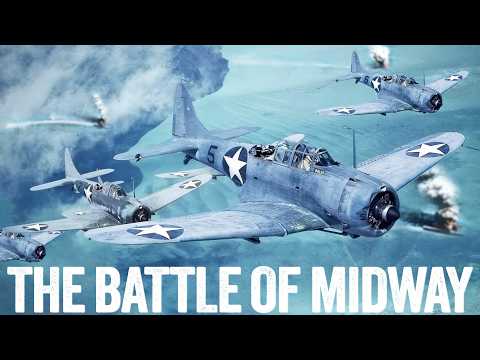
At 10:20 a.m., American Dauntless dive bombers from Enterprise and Yorktown appeared in the sky, unnoticed by Japanese fighters. They plunged through the clouds and attacked. Within minutes, Akagi, Kaga, and Soryu were blazing infernos. The pride of the Japanese Navy was reduced to burning wreckage.
The remaining carrier, Hiryu, launched a counterattack that crippled Yorktown. But by late afternoon, American bombers found Hiryu and sent her to the bottom. In one day, Japan lost four fleet carriers and hundreds of irreplaceable veteran pilots. The tide of the Pacific War had turned.
As darkness fell on June 4, Yamamoto ordered a general retreat. The battle was over. The Japanese Empire, which had seemed unstoppable just months earlier, had suffered its greatest defeat in over 300 years.
The defeat at Midway was more than a military setback; it was a psychological earthquake that rattled the very foundations of the Japanese Empire. The myth of invincibility, carefully cultivated since Pearl Harbor, shattered in a single morning. When the surviving ships limped back to Hashirajima on June 14, they did so in strict radio silence, their crews sworn to secrecy. The wounded were hidden away, and the dead were cremated in secret. The Japanese people were told nothing of the catastrophe.
But the truth could not be buried forever. Whispers spread through the naval bases. Officers who had lost sons and brothers demanded answers. Admiral Yamamoto, the architect of the Pearl Harbor attack, was consumed by guilt and shame. He had gambled everything on one roll of the dice, and he had lost. In private, he confided to a fellow admiral that he now felt only one duty remained: to fight to the death and seek redemption for his failure.
For the Americans, the victory at Midway was a ray of hope in a year of darkness. Newspapers across the United States proclaimed a great triumph, though the details remained vague. The public, weary of bad news from the Pacific, rejoiced. In Pearl Harbor, Admiral Nimitz allowed himself a rare smile. But he knew the war was far from over. Japan still possessed powerful naval forces, and its army remained entrenched across Asia and the Pacific islands.
Yet something fundamental had shifted. The Japanese Navy, for the first time in its modern history, had been decisively beaten. The initiative in the Pacific passed to the United States. From this point forward, Japan would be fighting a defensive war, and the Americans would be coming for them, island by island, across the vast ocean.
The battle also revealed a stark truth about the nature of modern naval warfare. The age of the battleship was over. The aircraft carrier, with its planes and skilled pilots, had become the undisputed queen of the seas. The Japanese had placed their faith in the great guns of their battleships, but those ships had played almost no role in the battle. The Americans, with their smaller carrier force, had proven that air power could decide the outcome of an entire campaign.
In the aftermath, both sides drew bitter lessons. The Japanese realized they had underestimated American resilience and industrial might. They had believed that one decisive defeat would break the American will to fight. Instead, the United States responded with a massive shipbuilding program that would eventually produce dozens of new carriers, overwhelming Japan’s depleted resources.
The American commanders, on the other hand, learned the value of intelligence and the importance of decisive action. The codebreakers at Pearl Harbor had given them the edge, but it was the courage of the pilots and the skill of the damage control teams that had sealed the victory. Yorktown, crippled by Japanese bombs and torpedoes, had been saved by her crew’s heroic efforts—only to be sunk days later by a Japanese submarine. Her loss was a painful reminder that the enemy was still dangerous.
As June turned to July, the war in the Pacific entered a new phase. The Japanese retreated to their inner defensive perimeter, while the Americans prepared their first counteroffensive. The target was Guadalcanal, a remote island in the Solomons that would become the next bloody battleground. The road to Tokyo would be long and brutal, but the first step had been taken at Midway.
For the men who fought there, the memories would never fade. The roar of engines, the scream of diving bombers, the flash of explosions—these would haunt their dreams for years. But they had done something extraordinary. They had faced the mightiest fleet in the world and had not flinched. They had won a victory that would be studied by military academies for generations to come.
And yet, even as the Americans celebrated, a new and terrible weapon was being developed in secret laboratories in the New Mexico desert. The atomic bomb would soon change the rules of war entirely. The battle at Midway, fought with bombs and torpedoes, would seem almost quaint compared to the destruction that was coming.
But that was still in the future. For now, the Pacific was quiet. The Japanese fleet had withdrawn to its bases, licking its wounds. The American carriers patrolled the waters around Midway, vigilant for any sign of the enemy. The war was not over, but the tide had turned. And every sailor and aviator knew it.
In the end, Midway was not just a battle. It was a turning point in human history. It marked the end of one era and the beginning of another. The age of the battleship had passed; the age of the aircraft carrier had begun. And the United States, once reeling from Pearl Harbor, had proven that it was not beaten. The road ahead would be long, but the destination was no longer in doubt.
The victory at Midway rippled outward far beyond the Pacific. In Washington, President Roosevelt received the news with quiet satisfaction, but his mind was already on Europe. The war against Germany remained his priority, and Midway bought him the time he needed. Yet he understood that the Pacific could not be neglected, and he ordered Nimitz to press the advantage.
For the Japanese, the defeat was a wound that would not heal. The Navy’s pride had been shattered, and the Army, which had always viewed its naval rivals with suspicion, now blamed them for the disaster. Recriminations flew between the services, and the unity that had once driven Japan’s conquests began to crack. Emperor Hirohito, kept in the dark about the full extent of the loss, was told only that the battle had been a draw.
But the truth could not be hidden forever. As the weeks passed, the Japanese public began to notice the absence of triumphant announcements, the silence of their leaders. When the news finally leaked, it was met not with despair but with a grim resolve to fight harder. The Japanese people had been taught that surrender was shameful, and they clung to that belief even as their empire began to crumble.
On the American side, the victory at Midway produced a new generation of heroes. The pilots who had plunged through the clouds to destroy the Japanese carriers became legends. Their names—Dick Best, Wade McClusky, Jimmy Thach—were spoken with reverence. But for every hero, there were dozens of young men who never returned, their bodies lost to the deep.
Nimitz, ever the strategist, wasted no time. He ordered his carriers to remain at sea, hunting for any remaining Japanese ships. But the enemy had vanished, retreating to the safety of their home waters. The Pacific was, for the moment, quiet.
Yet the war was far from over. In the months that followed, the Americans would land on Guadalcanal, beginning a brutal campaign that would test their resolve as never before. The Japanese would fight with a ferocity that stunned their opponents, and the cost in lives would be staggering. But the initiative had passed to the United States, and it would never be surrendered again.
Years later, historians would debate the significance of Midway. Some would argue that it was the decisive battle of the Pacific War, the moment when Japan’s fate was sealed. Others would point out that Japan still had powerful forces and that the war would drag on for three more years. But all would agree that Midway was the turning point, the day when the tide of conquest was reversed.
The men who fought there never forgot. They remembered the fear, the chaos, the sudden flash of dive bombers in the sun. They remembered the friends they lost and the enemies they killed. And they remembered the strange, quiet moment after the battle, when the ocean was empty and the sky was clear, and they knew they had done something extraordinary.
As the sun set on that June day, the world had changed. The age of the battleship was over; the age of the aircraft carrier had begun. The United States, once reeling from Pearl Harbor, had proven that it was not beaten. The road ahead would be long, but the destination was no longer in doubt.
And so the story of Midway ends, not with a final victory, but with a promise. The promise that tyranny would not prevail, that free nations would stand together, and that the sacrifices of the brave would not be in vain. The Pacific was no longer a Japanese lake; it was a battlefield where the future of the world would be decided.
What do you think was the most decisive factor in the American victory at Midway—was it intelligence, luck, or the courage of the pilots? Share your thoughts in the comments below.
Report this article
Select a reason for reporting:






