In the sweltering heat of the Malayan jungle, a single ambush on a dusty road would change the course of a war. In October 1951, communist guerrillas lay in wait, their rifles trained on the road, ready to strike at any British vehicle. But when the first car appeared, it carried none other than Sir Henry Gurney, the British High Commissioner. In a hail of bullets, Gurney was killed, sending shockwaves through the colonial administration. This was the Malayan Emergency—a conflict never officially called a war, but one that would become a blueprint for counterinsurgency and a stark contrast to the quagmire of Vietnam.
The Malayan Emergency (1948–1960) was a bitter struggle between British and Commonwealth forces and the Malayan National Liberation Army (MNLA), the armed wing of the Malayan Communist Party. At its heart was a battle for the loyalty of the people, a fight that would be won not just with bullets, but with a strategy that changed the fate of nations.
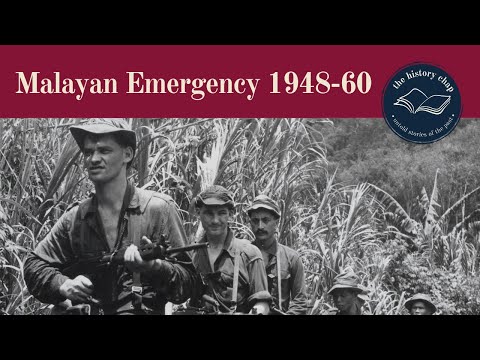
The roots of the conflict lay in the post-World War II landscape. The British had returned to Malaya after the Japanese occupation, but the local communist guerrillas, many of whom had fought alongside the British against the Japanese, had different plans. Led by Chin Peng, a young revolutionary who had been awarded the Order of the British Empire for his wartime service, the communists aimed to overthrow colonial rule and establish a People’s Republic. Their recruitment drive found fertile ground among the Chinese squatter communities, marginalized and denied citizenship by the British. By 1948, the MNLA had launched a rebellion, attacking rubber plantations, tin mines, and police stations, and unleashing a campaign of terror.
The British response was swift: a state of emergency was declared, and the full weight of the colonial security apparatus was brought to bear. But the early years were marked by stalemate. The guerrillas melted into the jungle, sustained by the very communities the British had alienated. Lieutenant General Sir Harold Briggs, a veteran of the Burma campaign, recognized that the key to victory lay not in more troops, but in cutting off the guerrillas from their support base. His plan, known as the Briggs Plan, involved the forced relocation of over 400,000 Chinese squatters into fortified “New Villages.” Surrounded by barbed wire and armed guards, these villages provided better housing, running water, and schools—but also severed the guerrillas’ access to food and recruits.
Yet, just as the British seemed to gain the upper hand, disaster struck with Gurney’s assassination. The timing was critical, but salvation came in the form of a new leader: General Sir Gerald Templer. A decorated war hero and former Olympic runner, Templer was a man of action and vision. He arrived in Malaya in 1952 with a clear strategy: “The answer lies not in pouring more soldiers into the jungles, but in the hearts and minds of the Malayan people.” Templer understood that military force alone could not win; he needed to win over the civilian population.
He continued the Briggs Plan but added a new dimension: building trust. Police were stationed in the New Villages, and Chinese officers were recruited to bridge the gap with the community. A local home guard was established, eventually numbering over 250,000, freeing up British troops for offensive operations. Most crucially, Templer promised independence for Malaya, undermining the communists’ claim to be fighting a war of national liberation. Why fight the British when they were leaving anyway? The strategy worked. Intelligence from the locals increased, and the guerrillas found themselves isolated and starving.
Meanwhile, the military campaign intensified. Commonwealth forces from Australia, New Zealand, Fiji, and Africa joined the fight, and the SAS was reborn for deep jungle operations. By 1954, the tide had turned decisively. Communist incidents dropped from over 500 a month in 1950 to just 100 in 1953. Templer’s approach—a blend of military pressure and political reform—was proving successful. But the cost was high: over 1,400 British servicemen and thousands of Malayan troops and civilians lost their lives.
As the emergency drew to a close, the communists were pushed to the Thai border, their insurgency in tatters. In 1957, Malaya gained independence, and in 1960, the emergency was declared over. The British had achieved what many thought impossible: a counterinsurgency victory. But the story of how they did it—and the lessons learned—would echo through the decades, shaping conflicts from Vietnam to Afghanistan.
But the jungle war was far from a simple tale of British ingenuity. The MNLA, though weakened, fought with a ferocity born of desperation. In the dense rainforests of Perak and Pahang, small bands of guerrillas continued to ambush patrols, booby-trap trails, and vanish into the green labyrinth. British and Commonwealth soldiers learned to dread the silent, dripping jungle, where an unseen enemy could strike at any moment.
One such unit was the Malayan Scouts, later absorbed into the SAS. Led by the legendary Major Mike Calvert—a former Chindit commander—these men pioneered deep-jungle penetration tactics. They would be dropped by helicopter into remote areas, living off the land for weeks, hunting the guerrillas on their own terms. It was brutal, exhausting work. Malaria, leeches, and foot rot were constant companions.
The guerrillas, for their part, adapted. Chin Peng ordered his fighters to avoid large concentrations, to strike only when certain of success, and to rely on the remaining squatter sympathizers for food. But the New Villages had done their job. The food supply was strangled. Guerrilla rations dwindled to little more than roots and stolen rice.
Then came a breakthrough that few had anticipated. In 1955, Chin Peng agreed to meet for peace talks at the town of Baling. The British, confident of victory, sent a delegation. But the communists demanded recognition as a legitimate political force—a demand the British and their Malayan allies flatly rejected. It was Tunku Abdul Rahman, the future prime minister, who delivered the final blow: unconditional surrender, or nothing. Chin Peng walked out, but the writing was on the wall.
The failed talks marked the beginning of the end. By 1956, Templer’s successor, General Sir Roger Bower, intensified the pressure. Operation Ginger, a massive sweep in the Belum Valley, netted dozens of guerrillas and destroyed key supply caches. The SAS and Malayan Scouts were now operating with deadly precision, their intelligence fed by a growing network of local informants.
The guerrillas began to surrender in small but steady numbers. Many were Chinese squatters who had been conscripted or coerced into the MNLA, and who now saw no future in the jungle. They were offered amnesty, resettlement, and a chance to rebuild their lives. For the hardcore communists, there was no such mercy.
As independence approached in 1957, the emergency entered its final phase. The MNLA was reduced to a few hundred fighters, hiding in the deepest jungle along the Thai border. They launched occasional attacks, but these were more acts of desperation than strategy. The British and Malayan forces, now working seamlessly together, hunted them relentlessly.
Yet even in victory, there were uncomfortable truths. The New Villages, for all their success, had uprooted hundreds of thousands of people. Many Chinese never forgot the barbed wire and the armed guards. And the use of herbicides to destroy guerrilla crops—a precursor to Agent Orange—left a legacy of bitterness among some communities.
But the strategic result was undeniable. When the emergency was finally declared over in 1960, Malaysia stood as a stable, independent nation—a stark contrast to the chaos that would engulf Vietnam. The lessons of Malaya were studied in military academies around the world, though they were rarely applied with the same success.
For the men who fought in the Malayan jungle, the victory was personal and hard-won. Sergeant David Chen, a young national serviceman from the Devonshire Regiment, remembered the day his patrol stumbled upon a guerrilla camp. “We were exhausted, soaked to the bone, and then we saw the huts,” he recalled. “We called in an airstrike and watched the place burn. But the smell—rice and smoke and something else—stayed with me for years.”
Not all encounters ended in fire and blood. The amnesty program, championed by Templer, offered guerrillas a way out. Those who surrendered were given land, tools, and a fresh start. Many took the offer. “I was tired of running,” said one former MNLA fighter, interviewed decades later. “The British promised us a life. The jungle promised only death.”
But the war had a darker side that the official histories often glossed over. Forced relocations, collective punishments, and the detention of thousands without trial left deep scars. In the New Villages, resentment simmered beneath the surface. Some villagers secretly continued to aid the remaining guerrillas, hiding food in hollowed-out logs or passing messages through relatives.
The British were not blind to this. Intelligence officers like John Davis, a former SOE operative, spent months living among the villagers, learning their language and customs. “You can’t win hearts and minds from behind a barbed-wire fence,” he wrote in his memoir. “You have to sit on their floor, drink their tea, and listen to their fears.” It was slow, painstaking work—but it paid off.
By 1957, the year of independence, the MNLA was a shadow of its former self. Chin Peng, now hiding in the dense border jungles, issued a directive: cease large-scale operations, preserve the party, wait for a better day. It was an admission of defeat. The revolution had failed.
Yet the emergency dragged on for three more years. Small bands of holdouts continued to ambush patrols, more out of habit than hope. The security forces responded with precision raids, using helicopters and tracked vehicles to chase them down. The SAS, now hardened jungle experts, became legends. One squadron, led by Major Ron Reid Daly, spent six months in the deep jungle, living on airdropped rations and rainwater. They emerged with twenty-two kills and zero casualties—a feat still studied today.
The final surrender came not with a bang but a whimper. In July 1960, the British and Malayan governments jointly declared the emergency over. The remaining guerrillas—perhaps three hundred in total—fled across the Thai border, where they would linger for decades, forgotten by most of the world.
For the people of Malaya, the end of the emergency meant something more profound: a chance to build a nation. The New Villages, once symbols of colonial control, evolved into thriving communities. Many Chinese residents, initially hostile, came to appreciate the schools, clinics, and roads. Some even named their children after Templer—a strange tribute to the man who had once confined them.
But the cost was never far from memory. In Kuala Lumpur, a memorial wall lists the names of over 1,400 British and Commonwealth soldiers, alongside thousands of Malayan police and home guards. The communist dead—estimated at over 6,000—have no such monument. Their families still wait for closure.
As the 1960s dawned, the world’s attention shifted to Vietnam, where a very different war was beginning to unfold. The British had shown that counterinsurgency could succeed—but only with patience, political will, and a willingness to address the grievances that fueled rebellion. Whether anyone would remember those lessons was another matter.
The Malayan Emergency stands as a rare Cold War success story, a conflict won not by overwhelming firepower but by addressing the root causes of rebellion. Templer’s “hearts and minds” approach—coupled with the Briggs Plan’s resettlement strategy—deprived the MNLA of its lifeblood while offering the Chinese squatters a stake in the emerging nation.
Yet the victory came at a steep price: over 1,400 British and Commonwealth servicemen, 1,300 local troops, and thousands of civilians perished. Malaysia’s subsequent stability and prosperity were built on their sacrifices—and on hard lessons that Vietnam, tragically, would ignore.
As the jungle swallowed the last guerrillas, a new nation rose from the emergency’s ashes. The British Empire was winding down, but Malaya showed that how you leave can matter as much as how you arrived.
Was the Malayan Emergency a genuine blueprint for counterinsurgency, or a success too dependent on unique circumstances to replicate? Share your thoughts below.
Report this article
Select a reason for reporting:






