The rhythmic thump of helicopter blades was the soundtrack to his war. Vic Smith, a young RAAF airfield defense guard, never imagined he’d trade the safety of the ground for the perilous skies of Vietnam. But when the call came for door gunners, he volunteered—and stepped into a world where every mission could be his last. From the bustling base at Nui Dat to the harrowing evacuations at Vampire Pad, Vic’s story is one of adrenaline, camaraderie, and the haunting cost of survival.
His first taste of the Iroquois came at Fairbairn Airbase, where he was hoisted like a ‘tea bag’ during training. Little did he know that those brief rides would prepare him for the chaos of combat. “I volunteered because they needed door gunners,” Vic recalls. “And the helicopter beside me now? That was the very one I trained on during my second day as a gunner.” Imagine lifting off from Nui Dat with 15 souls aboard, the cabin packed with Americans and Australians desperate for a ride. “Where are you going? Oh, I’m going to this place. Can I get a lift? Sure, hop on.” It was organized chaos, bound by a simple rule: strap in with the monkey harness and hold on.
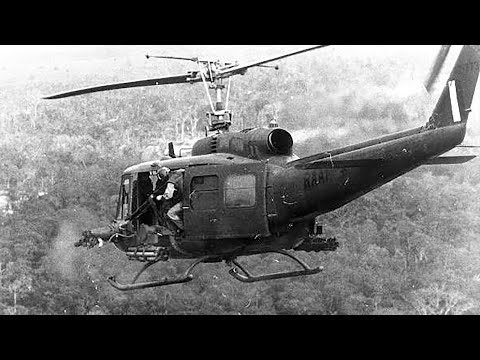
One of his mates learned the hard way just how unforgiving that harness could be. “He was on a hot food run to a fire support base. On the way back, an empty food box fell out. The commander told him to move forward to check if anything else was loose. Well, he fell out himself.” Luckily, his monkey harness caught him, leaving him dangling beneath the landing skids. It took the co-pilot, a crewman, and a passenger to haul him back in. “He was shaken up, still trembling after a few beers at the Amon club later that day.” Vic, oddly, never had trouble climbing ladders—but sitting in a helicopter, performing his duty? That was second nature.
When a battalion was heading home, Vic flew 27 sorties from Nui Dat to the ship, ferrying troops back and forth. “A busy day,” he says with a shrug. But it was during combat support missions that the real danger hit home. “We’d go out and receive fire, staying as long as possible until fuel or ammo forced us back.” The pilots were skilled with Gatling guns and rocket pods, but the enemy was relentless. One mission over the jungle still haunts him: a medevac under fire, with an ANZAC soldier being winched up as the battle raged below. “We didn’t know two American Cobras had been cleared to make gun runs. When they started firing rockets and miniguns, we were cursing—we had no idea what was happening.” They were focused on the rescue, not the firepower shaking the sky.
Medevac missions to Vampire Pad at the 1st Hospital in Vung Tau meant one thing: critical casualties on board. “Some didn’t make it, of course.” But Vic’s job was to get them there, no matter what. Other missions were stranger—like the one called ‘Cantaloupe,’ where a box in the fuselage with tubes to the skids sniffed the air for smoke or sulfur, a telltale sign of an enemy camp. “We could read the air and its components,” he explains. It was a cat-and-mouse game from above.
On one return trip to Nui Dat, Vic was disarming his guns when he glanced up to see a pair of South Vietnamese Skyraiders flying off their left wing. “The pilot closest to me had a big grin, and I thought, ‘My God, if he was enemy, I’d be dead.’ But he just smiled and waved.” It was a chilling reminder of how close death always lurked. The SAS relied on 9 Squadron for support, and Vic flew the last patrol out. “They’d been wading in thigh-deep water for hours, securing the area. If attacked, they wanted out fast.” But one SAS soldier’s story ended in tragedy: a botched extraction, a fall from 60 meters, and a body not recovered for 17 years. “It was a bad day,” Vic says quietly.
His six months with 9 Squadron were feverish. They lost at least five helicopters. “One was crewed by a mate from my airfield defense course. The pilot and gunner were killed. The co-pilot was wounded but stayed in Vietnam, recovered, and flew again.” It was a good time, but when those two ships went down, Vic started to wonder, “What the hell was I doing there?” Later, he had a reunion with an Iroquois at Bathurst, donning a flight suit for an airshow and firing blank rounds from the guns. But the war never really left. His friend Peter stayed with helicopters after Vietnam and died in 1974 on a flood relief mission—a crash that killed him instantly and the pilot the next day. “You survive a war zone and then get killed in a peace mission,” Vic murmurs. “I’m sorry. I just…” He trails off, the weight of memory too heavy.
The squadron’s emblem—an albatross—hearkens back to its days as a naval cooperation squadron, the call sign for unarmed aircraft. “In Vietnam, you’d have a formation of four planes, 01, 02, 03, 04. That sort of thing.” But as Vic’s voice fades, it’s clear the stories are far from over. The sky was his battlefield, and the echoes of those missions still resonate.
He shifts in his chair, the cup of tea trembling slightly in his hand. For a moment, the only sound is the distant hum of an air conditioner. Then he clears his throat and looks up, his eyes carrying a glint of something between mischief and sorrow.
“You know, people always ask about the fear. Was I scared? And the truth is, you don’t have time to be scared. Not when you’re up there.” He sets the cup down. “But there’s one thing that got to me every single time—the kids. The Vietnamese kids.”
He describes a village near the perimeter of Nui Dat, where children would run out whenever the helicopters passed overhead. “They’d wave like we were Father Christmas. Big smiles, muddy feet, hands reaching up. We’d throw out lollies and tinned fruit, anything we had. And you’d think, these are the same kids whose parents might be VC. But they were just kids, you know?” His voice catches. “I often wondered what happened to them. If they made it. If they even remember the blokes in the choppers who threw them sweets.”
Then there was the night mission he almost didn’t come back from. “We were doing a hot extraction—picking up a Long Range Recon Patrol that had been compromised. The pilot came in low, and I mean low. Tree-top level. I’m on the gun, and the tracer fire is coming up at us like fireworks, except these fireworks want to kill you.” He pauses, rubbing his thumb against the rim of his mug. “The pilot, a bloke called ‘Blue’ Ferguson, he put that aircraft down in a clearing the size of a tennis court. I still don’t know how he did it. We got the patrol out. All of them. But the ship was so shot up they had to write it off when we got back.”
What Vic remembers most vividly, though, isn’t the combat. It’s the quiet moments between missions. “We’d sit on the skids, smoking, not talking. Just watching the sun go down over the rubber plantations. And someone would say, ‘Reckon we’ll see tomorrow?’ And someone else would say, ‘Yeah, reckon so.’ And that was it. That was the whole conversation.”
He recalls one particular mate, a gunner named ‘Tiny’ Williams, who was anything but. “Tiny was six-foot-four and built like a brick dunny. He had a laugh you could hear over the rotor blades. We lost him three weeks before I rotated out. A rocket hit the ship. He was sitting right where I usually sat.” Vic’s jaw tightens. “I’ve never told anyone this, but I swapped shifts with him that day. He wanted to go to the PX to buy a present for his missus. So I took his shift. And then…” He doesn’t finish the sentence. He doesn’t have to.
The silence stretches, filled only by the ticking of a clock somewhere in the house. Vic looks out the window at the Australian sky, clear and blue and utterly peaceful. “You come home, and everyone wants to know if you killed anyone. They don’t ask if you saved anyone. They don’t ask about the bloke you carried to the medevac with his leg hanging off, telling him he’d be okay, knowing he probably wouldn’t.”
He reaches for a photograph tucked into the frame of a nearby mirror—a grainy black-and-white shot of a young man in a flight suit, standing beside an Iroquois with the albatross emblem visible on the nose. “That’s me. Nineteen years old. Thought I was invincible.” He laughs, but it’s hollow. “Turns out I was just lucky.”
And then, as if remembering something, he leans forward. “There’s one more thing you should know. About the day I stopped flying.”
He sets the photo down gently, aligning it with the frame’s edge. “It was a routine supply run. No contact, no drama. We were coming back to Nui Dat, and I was on the gun, just watching the treeline like always.” His voice drops. “Then I saw a flash—just a glint, maybe a sniper’s scope, maybe nothing. And I froze. Not scared. Just… done. Like a switch had flipped.”
He told his commander he couldn’t fly anymore. No explanation, no medical board. “They didn’t push. I think they’d seen it before. Blokes who just ran out of whatever it is that keeps you going up there.” He rotated home soon after, and the war carried on without him.
Decades later, Vic visited the memorial in Canberra. He found Tiny Williams’ name and stood there for a long time. “I said sorry. For swapping shifts. For being the one who came home.” He wipes his eye with the back of his hand. “And then I said thank you. For the laugh. For the present he never got to buy.”
The tea has gone cold. Vic stands, walks to the window, and watches a magpie land on the lawn. “You know what I think about now? Not the rockets or the tracers. I think about that pilot who waved at me—the one who could have killed me but didn’t. And I wonder if he made it home too.”
He turns back, and for the first time, his smile reaches his eyes. “That’s the thing about war. You spend your whole life trying to forget, and then you spend the rest of it trying to remember the good bits.”
What would you ask a veteran like Vic if you had one more cup of tea with him?
Report this article
Select a reason for reporting:






