At 4 a.m. on September 2, 2008, Sergeant Troy Simmonds already had a bad feeling about a road that had been too quiet for too long. His patrol moved inside a small convoy—deliberately exposed, deliberately slow, designed to look like an easy target. That was the entire point of the mission. Somewhere above the road, on high ground he and his men couldn’t yet see, that bad feeling was about to prove itself right.
The first rocket came fast, low, and precisely aimed. Then a second. Then machine-gun fire erupted from a position no one had spotted. Within six minutes, Simmonds realized this was not the fight anyone had planned for. Before the sun fully rose, he would be wounded three separate times and would not stop giving orders. Before the day ended, a soldier fighting beside him would be dead. A search dog would vanish into hostile ground for over a year. An Australian soldier would run 80 meters across open, fire-swept ground to drag a wounded man to safety—then go straight back into the fire instead of taking cover.
None of that had happened yet. Right now, it was just 4 a.m., the convoy was silent in the worst possible way, and six minutes were about to unfold that no one inside it had expected.
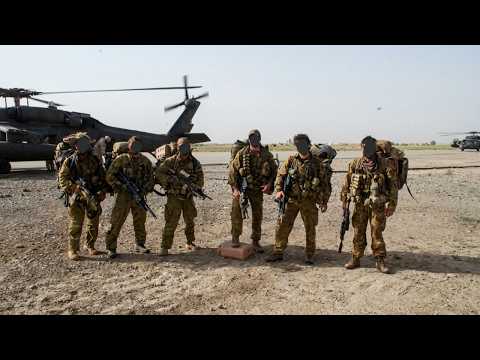
This is the story of what happened next in a valley called Ana Kalay in Uruzgan Province, Afghanistan. It involved two patrols from the Australian Special Air Service Regiment (SASR), a small team of US Army Special Forces soldiers, and an American military dog handler fighting alongside them. It produced one of the most highly decorated single actions in Australian military history—and it is the reason why, according to every available account from US units that served in Uruzgan that year, this particular fight is impossible to forget.
The ground around Ana Kalay in September carries a dry, relentless heat that turns dust the color of pale ash. It makes judging distance by eye difficult because everything beyond a few hundred meters shimmers and blurs in the same flat light. It is not a forest. It offers no natural concealment for a man moving on foot across open fields. The walls, when they exist, are of mud brick and stand waist- to shoulder-high—useful for a fighter shooting from behind them, but nearly useless for anyone caught in the open trying to shelter from the other side of the same wall.
This is the terrain that shaped the Ana Kalay ambush, and the terrain every man in that convoy had to cross, fight through, or survive in for nine hours on September 2, 2008. Uruzgan in 2008 was not a place that rewarded confidence. It was mountainous and poor, teeming with a Taliban insurgency that had spent years reorganizing after the collapse of their government in 2001, and it sat in the volatile southern-central belt of the country.
It was the same part of Afghanistan that saw most of the war’s fiercest fighting. Coalition forces described it as one of the most dangerous provinces they operated in, and within the Australian task force, the valley around Ana Kalay had a reputation for a specific kind of danger. Not the danger of a fortified compound, but the danger of the ground itself. Uruzgan mattered to the insurgents for reasons that had nothing to do with international headlines. It was the home province of the movement that founded the Taliban in the early 1990s—land they considered theirs long before the 2001 invasion. They fought to hold it with a tenacity that coalition planners did not always encounter in other, less symbolically important provinces.
The Taliban ambush set in Uruzgan in 2008 was not simply a tactical opportunity spotted by someone. It was fighters defending land they believed was theirs against a foreign coalition they had never stopped resisting since its arrival. The Australian Special Operations Task Group had been operating in Uruzgan since 2005, alongside Dutch-led reconstruction efforts and, increasingly, with US Special Forces soldiers attached to the same area of operations. The relationship between the SASR and the Green Berets of 7th Special Forces Group was not ceremonial. These were men who had trained together, planned together, and by 2008 had built a kind of working trust that comes only from repeated exposure to the same risks.
By the time the convoy entered Ana Kalay shortly after dawn, the valley opened fire on them from three directions at once. In an ambush like this, the first minutes of the engagement decide everything that follows, because they determine who will hold the initiative once the shock wears off. It began with rocket-propelled grenades. Several rounds targeted the front and rear vehicles to trap the convoy at both ends before anyone inside could process what was happening. Then sustained machine-gun fire followed from elevated positions the Australians and Americans could not see, let alone silence.
Walls and high terrain on one side, open agricultural fields on the other—no place to hide. No cover ahead, no cover behind. Within moments, the convoy’s ability to simply drive out of the kill zone had vanished. The road ahead was covered by enemy fire. The road behind was covered too. This was not an engagement anyone could end by flooring the accelerator and hoping to survive. It was a fight that required fighting while standing in the open until the ambush broke or the convoy did.
By every important measure in that valley that morning, it was a sealed trap—and for six minutes it worked exactly as its architect had intended.
Simmonds took his first wound almost immediately—a graze, then blast fragments from a rocket, then a gunshot as the fight dragged on. He was dragged roughly 25 meters clinging to the side of a moving vehicle, just to get clear of direct fire long enough to keep working. He spent the rest of the battle giving orders, despite injuries that would have ended most soldiers’ participation in the first 60 seconds.
Sergeant First Class Gregory Rodriguez was killed in the opening phase. He was not a Green Beret—he was a military dog handler from the 527th Military Police Company, attached to the patrol, fighting beside men he had trained with. He left behind a wife, Laura, and three children. His working dog, Jaco, was in the convoy that day.
Somewhere in the chaos, the explosives detection dog Sarbi slipped her leash and vanished into the terrain. No one had time to search. There was a battle to survive first.
The convoy was pinned. Simmons was wounded and still leading. Rodriguez was gone. An Afghan interpreter lay wounded in the open, roughly 80 meters from the vehicles, under direct enemy observation.
Eighty meters. Under machine-gun fire from elevated positions with clear lines of sight. Long enough for a trained gunner to track a moving target the whole way.
Private Mark Donaldson ran it. Then he ran back into the fire.
He reached the interpreter, began moving him toward cover, and was hit by rounds striking the ground around him repeatedly. He didn’t stop. He got the man to the vehicles alive—then, instead of staying under cover, he turned and went back to engage the enemy positions that had nearly killed him seconds earlier.
It took about two hours of continuous fighting to break contact and begin moving out of the kill zone. The convoy fought through roughly four kilometers of contested ground against a Taliban force estimated at 100 to 200 fighters. The broader battle lasted nine hours. Almost all ammunition was expended before it ended.
Donaldson received the Victoria Cross for Australia—the first ever awarded to an Australian, and the first to an Australian in 40 years. He asked to remain in an operational role rather than take ceremonial postings. He deployed to Afghanistan again in 2009, 2010, and 2013.
Sarbi survived 14 months alone in hostile territory before a US soldier spotted her in November 2009 and confirmed her identity with basic obedience commands. She was flown to Australia and reunited with her handler, David Simpson, who had been wounded in the same ambush that separated them. She died of a brain tumor in March 2015.
One American did not come home from that valley. The Australians who fought beside him did not lose a single man—but they did not walk away unchanged.
Six minutes belonged to the ambush. Nine hours belonged to the men who refused to break.
What do you think—does a battle like Ana Kalay get remembered for the medals, or for the men who kept fighting after the plan fell apart? Let us know in the comments.
Report this article
Select a reason for reporting:






