What if the faces of history’s most enigmatic figures could stare back at you? Imagine standing face-to-face with Catherine de’ Medici, the cunning queen who orchestrated France’s bloodiest power plays, or Timur, the conqueror whose name made empires tremble. Thanks to advanced AI, these long-dead icons are no longer just names in dusty textbooks—they’re breathing, blinking, and demanding your attention.
But behind every resurrected face lies a story of ambition, scandal, and tragedy. Some were erased from history. Others were vilified. And a few vanished without a trace. This is their story, brought back to life in ways you’ve never seen before.
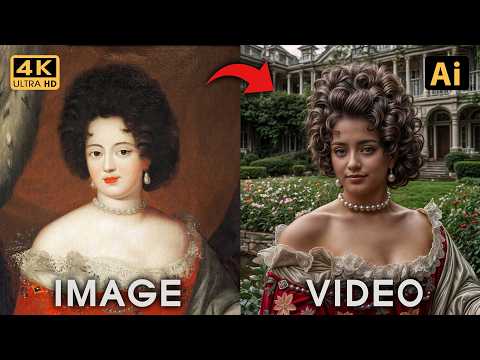
Take Sophia Dorothea of Brunswick-Lüneburg. Born in 1666, she was a princess destined for greatness—until her marriage to George Louis, the future King George I of Britain, turned into a gilded cage. Accused of an affair with Count Philip Christoph von Königsmarck, she was imprisoned in Ahlden Castle in 1694. She never saw her children again. For 32 years, she lived in isolation, erased from British royal history as if she had never existed.
Her crime? Defying a loveless marriage. Her punishment? Oblivion. Yet here she is, her face reconstructed by AI, staring out from the past with eyes that hold centuries of silence.
Then there’s Elizabeth Báthory, the infamous Blood Countess of Hungary. Born in 1560, she was a noblewoman of immense power and wealth. But her name became synonymous with horror. Accused of torturing and killing hundreds of young girls—allegedly bathing in their blood to preserve her youth—she was convicted and walled up in her castle until her death in 1614.
Was she a monster, or a victim of a political witch hunt? AI brings her face to life, and the answer isn’t as clear as history would have you believe.
And who could forget Catherine de’ Medici? Born in 1519, she was the queen of France and mother of three kings. After her husband Henry II died, she wielded power with ruthless precision, navigating the treacherous Wars of Religion. She was controversial, yes—but she also strengthened royal authority when France teetered on the brink of collapse.
Her face, now resurrected, reveals a woman who knew exactly what it cost to survive in a world ruled by men.
From the mysterious Kia, an Egyptian noblewoman whose presence vanishes from records, to Timur, the brutal conqueror who built an empire from Central Asia to India—each face tells a story of power, loss, and legacy. Some were revered. Others were feared. But all of them shaped the world we live in today.
As the AI peels back the layers of time, one thing becomes clear: history is never just about the past. It’s about who we choose to remember—and who we choose to forget. And sometimes, the most forgotten faces have the most to say.
Consider Diane de Poitiers, born in 1499, the woman who captured the heart of King Henry II of France. She was twenty years his senior, a widow with sharp wit and timeless beauty, yet she became the most powerful mistress in French history. She didn’t just rule his bedchamber—she helped rule the kingdom. Diane advised Henry on politics, patronized the arts, and shaped the culture of the Renaissance court.
But when Henry died in a jousting accident in 1559, Catherine de’ Medici finally had her revenge. Diane was banished from court, forced to surrender her beloved château at Chenonceau. AI restores her face now—elegant, calculating, and utterly unrepentant.
Then there’s Mary of Guise, born in 1515, the French noblewoman who became Queen Consort of Scotland and later regent for her daughter, Mary Queen of Scots. A devout Catholic in a land rapidly turning Protestant, she fought to preserve her authority against impossible odds. She governed a kingdom on the brink of revolution—and she did it alone.
Her face, reconstructed from portraits and descriptions, shows a woman of iron will masked by diplomatic grace.
And what of Kia? The Egyptian noblewoman whose name appears on artifacts from the 14th century BCE, described only as ‘the Beloved of Akhenaten.’ She may have been a secondary wife of the heretic pharaoh, possibly the mother of a royal prince or princess. Then, without explanation, she vanishes from the historical record entirely.
No death. No burial. No mention. Just… gone. AI reconstructs her face from fragments of sculpture and relief, but her story remains a mystery that even technology cannot solve. Was she disgraced? Assassinated? Or simply erased by rivals who wanted her forgotten?
The AI doesn’t just resurrect faces—it resurrects questions. And sometimes those questions are more haunting than any answer could be.
Take Marie Antoinette, born in 1755, the Austrian princess who became the last queen of France. History remembers her as frivolous, out of touch, the woman who allegedly said ‘let them eat cake.’ But there’s no evidence she ever said those words. AI brings her face to life—young, frightened, and far more complex than the caricature history painted.
She was executed by guillotine in 1793, a scapegoat for a revolution she never understood. Her reconstructed face shows a woman who was never given a chance to be anything but a symbol.
And then there’s Jean-François de La Pérouse, the French explorer who vanished in 1788. Commissioned by Louis XVI to lead a scientific expedition across the Pacific, he sailed from Alaska to Australia—and then disappeared. His ships, his crew, his entire expedition—swallowed by the sea.
It would take nearly forty years to discover the wreckage. AI reconstructs his face from portraits, but the mystery of what happened to his crew remains one of maritime history’s greatest unsolved puzzles.
Each face the AI brings back is a doorway into a life that was messy, complicated, and deeply human. These weren’t saints or demons—they were people who made choices, made enemies, and paid the price. And now, centuries later, they’re staring back at us, waiting to be seen.
But the resurrection doesn’t stop with the famous. It reaches deeper—into the lives of those who shaped history quietly, from behind thrones and within the shadows of power. Consider Anne of Denmark, born in 1574, the queen consort of King James I. She was a woman of fierce independence, a patron of the arts who brought masques and theater to the Jacobean court. She refused to be a passive queen. AI restores her regal bearing, but also the weariness of a woman who navigated a foreign court and a husband who famously preferred the company of his male favorites.
Then there’s Agnès Sorel, born around 1422, the first officially recognized mistress of a French king. She was more than a beauty—she was a political force, advising Charles VII and pushing him to reclaim France from the English. She died at just 28, under circumstances that still spark suspicion. Poisoning? A sudden illness? AI brings her face back, and the mystery of her death lingers like a shadow behind her eyes.
And what about Claude of Valois, born in 1547, the fragile daughter of Catherine de’ Medici? She was married off to secure an alliance with Lorraine, her health always precarious, her life a pawn in her mother’s ruthless games. She died at 27, her kindness and dedication overshadowed by the political machinery that consumed her. Her reconstructed face is gentle, almost apologetic—a woman who never asked for power, only for peace.
Then there’s Elisabeth Gonzaga, born in 1471, the Renaissance noblewoman who turned the court of Urbino into a cultural beacon. Childless, yet revered for her intellect and grace, she attracted artists and scholars from across Italy. She was a symbol of virtue in an age of vice. AI reveals a face that is both wise and quietly sad—a woman who built a legacy without heirs, knowing her name would live on only through the culture she nurtured.
And Henrietta Maria of France, born in 1609, the Catholic queen of Charles I. Her religion made her a target, her loyalty to her husband a liability. She sold her jewels to fund his army during the English Civil War. After his execution, she lived in exile, a queen without a throne. Her face, resurrected now, shows the steel beneath the silk—a woman who fought for a cause she knew was doomed.
History is full of these women—women who wielded power from the margins, who paid for their ambition with their reputations, their freedom, or their lives. AI doesn’t judge them. It simply shows us who they were.
And as their faces flicker to life on the screen, one truth becomes impossible to ignore: the past was never simple. It was a battlefield of egos and ideals, of love and betrayal, of people who were just as flawed and fierce as we are today.
These faces, once lost to time, now flicker with a strange urgency—as if they know we’re watching. The AI has done its work, but the final judgment belongs to us. We are the ones who decide which stories survive.
Sophia Dorothea’s silent stare asks: Will you remember me this time? Elizabeth Báthory’s reconstructed gaze challenges: Monster or martyr—which will you choose? And Kia, the vanished beloved, whispers nothing at all, leaving us to fill the void with our own fears.
Perhaps that’s the true power of resurrection—not the faces themselves, but the questions they force us to confront. History isn’t a museum; it’s a mirror. And every time we look into it, we see ourselves reflected back, just as flawed, just as fierce, just as desperate to be remembered.
So go ahead—stare a little longer. Let their eyes meet yours. Because the past is never truly gone. It’s waiting, just beneath the surface, for someone to ask the right question.
Which of these resurrected faces haunts you the most—and why? Share your thoughts in the comments below.
Report this article
Select a reason for reporting:






