The North Atlantic, May 24, 1941. A cold, unforgiving dawn. The pride of the German Kriegsmarine, the battleship Bismarck, had just achieved the impossible: in a mere eight minutes of devastating fire, she had obliterated the Royal Navy’s flagship, HMS Hood, sending the mighty battlecruiser and nearly all 1,418 of her crew to the icy depths. It was a victory that sent shockwaves through Britain—a wound to national pride that could not go unanswered.
But Bismarck’s triumph was not without cost. A shell from the HMS Prince of Wales had struck her bow, causing a critical fuel leak. Thousands of tons of seawater flooded her forward compartments, creating a dangerous list to port. Her radar was knocked out, and oil streamed in her wake, leaving a trail that turned her from hunter to hunted. The wounded giant was now a marked target, bleeding slowly as she made her desperate dash toward the safety of occupied France.
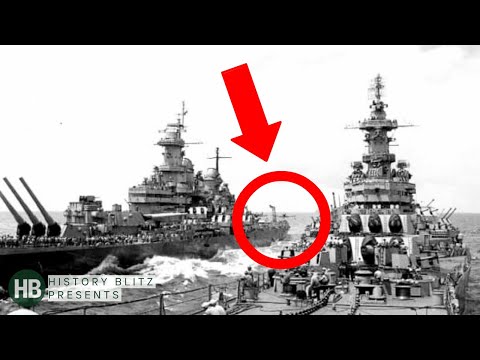
For Winston Churchill, the loss of Hood was an unbearable blow. His command was stern and unyielding: “Sink the Bismarck.” The entire British Home Fleet was mobilized—six battleships, two aircraft carriers, 13 cruisers, and over 20 destroyers—all dispatched with a single mission: find and destroy the Bismarck before she could reach a French port and become an even greater threat.
The chase spanned over 1,700 nautical miles across stormy seas. Every available ship and aircraft was thrown into the pursuit. But with each passing hour, the wounded battleship moved closer to safety, forcing the British to gamble everything in a final, desperate bid to bring her down.
At the dawn of World War II, the battleship was the undisputed queen of the seas—a floating fortress, a symbol of national power. The world’s navies raced to build the biggest and most powerful ships, leading to a global arms race on the high seas. Among them, the British Royal Navy stood as the largest and most experienced, boasting a long tradition of maritime dominance. Its crown jewel was HMS Hood, a battlecruiser renowned for her speed and firepower. Launched in 1918, she displaced over 42,000 tons, measured 860 feet in length, and could reach 32 knots. Her eight 15-inch guns were capable of unleashing devastating firepower, and she was manned by a crew of over 1,400. Hood was not just a warship; she was a symbol of British naval supremacy.
But in 1940, that supremacy was challenged by a new contender: Germany’s Bismarck. At 823 feet long and displacing over 50,000 tons fully loaded, she was one of the largest battleships ever built. Armed with eight 15-inch guns capable of firing shells weighing over 1,800 pounds, she could outrange most of her contemporaries. Her armor, up to 12.6 inches thick, made her a formidable opponent. The launch of Bismarck sent shockwaves through the Allied navies. Her combination of speed, firepower, and armor made her a significant threat to Allied shipping and naval forces. Her mission: to disrupt the vital Atlantic convoys that were Britain’s lifeline.
On May 18, 1941, Bismarck, accompanied by the heavy cruiser Prinz Eugen, set sail from Norway under the command of Admiral Günther Lütjens. Their mission, codenamed Operation Rheinübung, aimed to break into the Atlantic and wreak havoc on Allied shipping. The British, however, were determined to stop her. Admiral John Tovey, commander of the Home Fleet, quickly mobilized to intercept. Among the ships dispatched were the battlecruiser HMS Hood and the newly commissioned battleship HMS Prince of Wales.
Prince of Wales was one of the latest additions to the Royal Navy, boasting modern technology and powerful armament. At 745 feet long and displacing over 43,000 tons, she was equipped with ten 14-inch guns and state-of-the-art radar. However, she was not yet fully operational, with some turrets still experiencing mechanical issues. The stage was set for a monumental clash.
As the British ships raced to intercept, they sighted Bismarck and Prinz Eugen in the Denmark Strait on May 24, 1941. The encounter that followed would become one of the most famous naval battles in history. In the early hours, the two fleets met. Admiral Lancelot Holland, commanding Hood and Prince of Wales, ordered an immediate attack. The British ships opened fire, but Bismarck quickly responded with her superior range and accuracy. At 6:00 a.m., a shell from Bismarck struck Hood, penetrating her thin deck armor and detonating a magazine in a cataclysmic explosion. Hood broke in two and sank within minutes. Of her crew of 1,418, only three survived.
The loss of Hood was a shocking blow to the Royal Navy and the British public. Prince of Wales continued the fight, scoring several hits on Bismarck, but was forced to withdraw due to mechanical issues and the overwhelming firepower of her adversary. Bismarck herself was not unscathed. A shell from Prince of Wales had found its mark, striking Bismarck’s bow and causing a critical fuel leak. Seawater flooded her forward compartments, causing her to list and slowing her down. Worse still, her radar was knocked out, leaving her blind to the dangers that lurked in the vast ocean around her.
The mighty Bismarck, once a symbol of invincibility, was now vulnerable, limping toward the safety of a French port. In London, the loss of Hood was more than just a military defeat—it was a blow to British pride. Prime Minister Winston Churchill, driven by relentless determination, issued a simple but powerful command: “Sink the Bismarck.” The entire Royal Navy was thrown into action. Six battleships, two aircraft carriers, 13 cruisers, and over 20 destroyers were deployed in a desperate race against time. The goal was clear: prevent Bismarck from reaching the safety of occupied France, where she could be repaired and returned to wreak havoc on Allied shipping.
But Bismarck had a head start, and the British knew that if they couldn’t slow her down, she would slip through their grasp. As Bismarck steamed southwards, pursued relentlessly by British forces, the Kriegsmarine and the Luftwaffe scrambled to assist. German U-boats were ordered to form a patrol line in the open Atlantic, hoping to trap and harass the pursuing British ships. But for all the might of the German Navy, it was the aging biplanes of the Royal Navy that would turn the tide.
On May 26th, a squadron of Fairey Swordfish torpedo bombers from HMS Ark Royal was launched into the stormy skies. These antiquated aircraft—relics of a bygone era—would face one of the most fearsome battleships ever built. Their mission: to cripple the Bismarck and give the Royal Navy the chance it needed to close in.
Flying low and slow through a hail of anti-aircraft fire, the Swordfish braved the Bismarck’s desperate gunners. One torpedo struck amidships, causing only minor damage. But the second torpedo found its mark—a hit that would seal Bismarck’s fate. It slammed into her stern, jamming her rudder at a 12-degree angle. The mighty battleship, once the scourge of the Atlantic, was now crippled, forced into a slow, uncontrollable circle. With her steering compromised, Bismarck was a sitting duck, unable to escape the tightening noose of the British Fleet.
The morning of May 27th dawned gray and stormy. The British battleships King George V and Rodney, along with the cruisers Norfolk and Dorsetshire, closed in on their prey. Bismarck, unable to maneuver, prepared for her final battle. Her captain, Ernst Lindemann, and Admiral Günther Lütjens knew they faced impossible odds, but they were determined to fight to the last shell.
As the first light broke through the overcast sky, lookouts aboard HMS King George V spotted the German battleship looming on the horizon, just over 23,000 meters away. Her once-majestic profile now listed in the rough seas—a stark contrast to her earlier might. Admiral John Tovey, commanding from King George V, ordered his ships to maneuver into position for the final assault. HMS Rodney, positioned off King George V’s port quarter, prepared to lead the charge with her massive 16-inch guns.
The British plan was straightforward: close the distance, overwhelm the Bismarck with superior firepower, and bring her down before she could inflict further damage. At 8:47, Rodney opened fire, her forward turrets unleashing a deafening salvo toward the Bismarck. The seas were rough and the distance still significant, but the British were determined. Just four minutes later, King George V joined in, her 14-inch guns adding to the barrage.
Bismarck, despite her damaged state, responded at 8:50, her forward guns targeting Rodney and nearly straddling her with the second salvo. However, her response was hampered by the raging seas and her inability to steer properly. With her rudder jammed, she could not maintain a steady course, making accurate targeting nearly impossible. Her shells landed wide, the erratic movement preventing her gunners from finding a consistent range. What should have been a deadly exchange was instead a lopsided barrage as the British closed in relentlessly.
As the range closed, the accuracy of the British fire improved dramatically. At 9:02, a 16-inch shell from Rodney struck the Bismarck’s forward superstructure with devastating effect. The hit obliterated the forward gun directors and killed hundreds of men, including many senior officers. Another shell smashed into one of her forward turrets, rendering it useless. Despite these catastrophic blows, the Bismarck continued to fire back sporadically, though her efforts were becoming increasingly disjointed as the damage mounted.
By 9:30, the Bismarck was barely fighting back, her guns silenced one by one under the withering British barrage. King George V and Rodney, now at point-blank range, poured shell after shell into the helpless battleship, tearing her superstructure to shreds and setting her ablaze. The heavy cruisers Norfolk and Dorsetshire joined in, their 8-inch guns adding to the destruction. The Bismarck was reduced to a floating wreck, yet she refused to strike her colors.
As the British ships circled closer, preparing to deliver the final blow, the fate of the once-mighty Bismarck was sealed. With no hope of survival, and to prevent the ship from falling into enemy hands, the order was given to scuttle the ship. The bridge had been taken out in the relentless barrage, killing most of the senior officers, including Captain Lindemann and Admiral Lütjens. With the chain of command shattered, the executive officer, Korvettenkapitän Hans Oels, ordered the crew to prepare the scuttling charges.
As the Bismarck was rocked by more incoming fire, Oels knew time was running out. He ordered the charges set with a nine-minute fuse, but in the chaos the ship’s intercom failed—and the crucial order might never have reached every station. Despite the uncertainty, Oels gave the final command: “Abandon ship!”
The charges detonated with a muffled roar, and the Bismarck shuddered as water poured through her gaping wounds. The massive battleship, once a symbol of invincibility, listed heavily to port, her death throes echoing across the cold Atlantic. The remaining crew scrambled to the upper decks, leaping into the freezing waters as the ship began to capsize.
At 10:35 a.m., with her colors still flying, the Bismarck rolled over and slipped beneath the waves, taking with her the hopes of the Kriegsmarine. As British ships moved in to rescue survivors, the full scale of the tragedy became apparent. She had fought bravely, but in the end the combined might of the Royal Navy had prevailed.
The loss of the Bismarck marked the end of the Kriegsmarine surface fleet as a significant threat in the Atlantic, shifting the naval balance firmly in favor of the Allies. It was more than the destruction of a ship—it was the end of an era, a symbol of Nazi Germany’s ambitions now a graveyard in the cold depths.
The hunt for the Bismarck became a legend, a testament to the courage and resolve of all who fought in those dark waters. In the end, her story is not just about steel and fire, but about the men who fought and died on them—a story of bravery, sacrifice, and the relentless pursuit of victory, whatever the cost.
What do you think—was the scuttling order a final act of defiance, or did the Royal Navy truly sink her?
Report this article
Select a reason for reporting:






