March 2002, Paktia Province, Afghanistan. A US commander, fresh off watching Australian SASR troopers move through mountain terrain that had just swallowed American soldiers whole, picked up a radio and did something that almost never happens between elite military forces. He warned an incoming Navy SEAL team not about the Taliban, not about the altitude, not about the cold that dropped to minus 30 at night. He warned them about the Australians.
Six hundred men from Perth, with no dedicated aircraft, no guaranteed evacuation, and no safety net of any kind, had just done something on those mountains that made the most powerful military on Earth stop and take notes. So what exactly did they do up there?
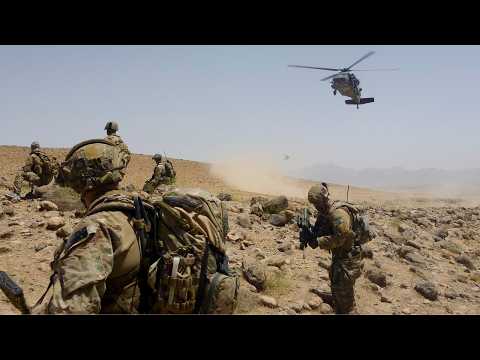
The Shah-i-Kot Valley sat at nearly 3,000 meters above sea level, ringed by snow-covered ridgelines that cut into a sky so blue it looked painted. The cold here was not the kind you complained about. It was the kind that got inside your bones and stayed there. At night, temperatures dropped to minus 30. The wind moved across the rock faces like something alive, searching for any gap in your clothing, any exposed patch of skin it could claim.
The mountains here did not feel neutral. They felt hostile. And in March of 2002, they were killing people.
Operation Anaconda had just begun. Roughly 2,000 coalition and Afghan forces had pushed into the Shah-i-Kot Valley with a clear objective: intelligence had estimated between 150 and 200 Taliban fighters dug into the high ground. Push them out. Destroy them. Control the valley.
What the planners had not counted on was just how wrong that number was. When coalition forces made contact, the Taliban were not 200 men. They were closer to a thousand. They were in the ridgelines, in the caves, in the passes the maps had labeled impassable. The mountains were full. And the mountains were theirs.
The problem started almost immediately. American helicopters were operating at altitudes that pushed their engines to the edge. Above 2,500 meters, rotary-wing aircraft lose roughly 25% of their lift. Chinooks that were supposed to insert soldiers onto elevated landing zones were struggling—slower, harder to control, dangerously exposed during the long, grinding approaches to the high features.
On a ridgeline called Roberts Ridge, one of those insertions turned catastrophic. A Chinook taking fire went down. A second rescue attempt went wrong. Within the first 18 hours of Anaconda, seven Americans were dead. The plan had assumed that firepower and numbers would own the terrain. The terrain had not agreed.
And here is the detail that matters. The one that would eventually put a US commander on a radio warning an incoming SEAL team not about the enemy, but about the Australians. The high passes, the ridgelines above 4,000 meters, the features American planners had marked as not viable for sustained occupation—those were where the enemy lived. And almost no one was up there to watch them. Almost no one could get up there, stay up there, and keep functioning. Almost no one had trained for exactly this.
Somewhere in that same theater, operating quietly and without fanfare, was a group of Australians. The Special Air Service Regiment out of Swanbourne Barracks in Perth, Western Australia, had deployed to Afghanistan under Operation Slipper. The regiment was small—around 600 men total, fewer than a single American Ranger battalion. No dedicated aircraft. No air assets assigned exclusively to their operations. No guaranteed medical evacuation if things went wrong in the high country. If a patrol got into trouble above 3,000 meters in a remote sector, the wait for help could stretch past four hours. Sometimes longer.
The Australians had seen those numbers, understood exactly what they meant, and deployed anyway.
What the regiment had instead of hardware was something harder to measure. Their selection course, run in the Stirling Ranges and the harsh Western Australian bush, broke approximately 80 to 90% of all who attempted it. The course included an 18-day assessment phase, known simply as the long walk. The same crucible that had been forging SASR soldiers for decades before Afghanistan ever became a word in their briefings. Candidates moved through the bush under weight they could not put down, navigating in the dark with no guidance, running on sleep that was never enough.
The whole thing came down to one question. When you have nothing left, what do you do? The men who answered correctly by continuing made it through. The rest did not. Moving through brutal terrain under a crushing load in freezing temperatures was not a feat of heroism for an SASR trooper. It was just what he did. It was Tuesday.
The patrol commanders looked at the same terrain maps the American planners had studied. They reached a different conclusion. Where the Americans saw the high ridgelines as obstacles, the Australians saw them as the route. The Taliban were not using the valleys—coalition air superiority had made the valleys dangerous. The enemy was moving through the passes above, along the high features, across ground that almost no one else was contesting. If you wanted to find them, you had to go up. If you wanted to survive long enough to matter, you had to move the way the mountain demanded. Slowly, quietly, without the comfort of knowing help was close.
The Australians decided to go up.
In the weeks and months that followed, SASR patrols established observation posts at elevations no US planner had considered viable for sustained occupation. Bergen packs weighing between 40 and 55 kilograms. Gradients above 45 degrees. Patrol durations stretching to 14 days without resupply. The troopers moved through terrain that was not supposed to be passable, held positions that were not supposed to be sustainable, and started sending back intelligence that was not supposed to exist.
US commanders started paying attention. The intelligence coming back from those high feature posts was precise. Enemy positions, movement routes, supply lines running through passes no one had been watching. When that intelligence was used to direct air strikes and the post-strike assessments came back, the accuracy rate was noticeably higher than what lower altitude patrols were generating from the valley floors. The Australians were seeing things that no one else was seeing, and they were seeing them clearly.
At the planning level, SASR had been given a support role in the coalition structure. Useful, yes. Valued, certainly. But a regiment of 600 men with no air assets was not expected to define the conversation. That assumption was beginning to crack. And what came next would crack it completely.
The terrain was not the enemy’s greatest advantage. The Australians had worked that out early. Terrain is only an advantage if the other side cannot move through it. SASR could move through it. Not with technology or equipment the Americans lacked, but with selection, training, and a cultural acceptance of isolation built into the regiment’s identity for decades. The mountains were not a barrier to the Australians. They were home ground.
No formal warning had been issued yet. No US commander had yet told an incoming SEAL team to watch the Australians. That moment was still ahead. But the foundation for it was being laid right now, up on the ridgelines above 3,000 meters, in the cold and the wind and the silence, where Australian soldiers were moving through terrain the Taliban thought they owned. Watching. Recording. Waiting.
To understand how they were able to do that, you have to go back before Afghanistan. Back to where these men were made.
The solution was not a new weapon. Not a piece of technology shipped to the front from some laboratory. Not a drone, a better radio, or a more powerful rifle. The solution was a man with a bergen on his back, moving up a mountain in the dark, in the cold, in the silence, doing what he had been built to do.
SASR selection was not designed to find the strongest soldiers or the fastest runners. It was designed to find men who could keep functioning when everything around them was telling them to stop. The long walk pushed candidates through the Western Australian bush under conditions that built into something genuinely brutal. Sleep that never came. Weight that never got lighter. Decisions made alone in the dark with no one to ask. The whole structure came down to one question. When you have nothing left, what do you do? The men who answered by continuing made it through. Between 80 and 90 percent did not.
What came out the other side was a group of men who had already proven they could work in conditions that broke everyone else. Afghanistan was in many ways just a harder version of what they already knew. By 2002, that standard was being tested at altitude.
The posts SASR was establishing ranged from 2,800 to over 4,200 meters above sea level. At that height, even a fully acclimatized soldier burns through energy at a rate that demands constant management. An unacclimatized soldier can expect headaches, reduced thinking, and physical output that collapses within hours. These troopers were not only surviving up there—they were working for days at a time. Bergen packs loaded to between 40 and 55 kilograms, roughly the weight of a grown adult, strapped to your back on a rock face angled above 45 degrees, where every breath gives you less than the one before.
That detail is worth sitting with. It is the physical foundation of everything that follows.
Patrol duration set the Australians apart from almost every other force in the theater. Where conventional infantry expected helicopter resupply every 48 to 72 hours, SASR patrols ran for seven to 14 days without external support. Communication blackout windows of up to 72 hours were accepted as routine, not emergency. The patrol carried what it needed, moved on its own, reported when it could. In the gaps, it trusted its training and the men beside it and kept going.
Early results started coming in during the Anaconda phase and the months immediately after. SASR posts on high features that no other coalition force was occupying were generating targeting intelligence that stood out across the reporting chain. Enemy logistics routes through the high passes above Paktia and Uruzgan were being mapped in real time. Movement patterns that were invisible from valley-level posts became readable from the ridgelines. When that intelligence fed into air strike tasking and post-strike damage assessments came back, the numbers were hard to argue with. Strikes built on SASR-sourced intelligence were consistently more accurate than the coalition average. Senior US commanders started cross-referencing those results. The pattern was clear and it was repeating.
There was resistance—not to the results, but to the method. US liaison officers embedded with Australian elements raised formal concerns about the exposure. By American doctrine, the Australians were dangerously far from their support. A quick reaction force reaching a compromised SASR patrol in some sectors would take more than four hours. The communication blackout windows made real-time oversight impossible. American doctrine required tighter control loops, shorter exposure windows, more regular contact.
The Australians listened, acknowledged the risk openly, adjusted some administrative procedures where it made sense, and kept moving the way they moved. They had not built their method carelessly. Independence and isolation were not flaws in the approach. They were the approach.
That is where the warning was born—not in a briefing room, but in the gap between what American doctrine demanded and what the mountain allowed. The Australians had chosen the mountain.
By the time a SEAL team rotated into Uruzgan, the message had hardened into something the liaison officers delivered without flinching: do not try to match SASR pace above 3,000 meters in your first thirty days. It was not a slight. It was a salute, spoken quietly, between professionals.
Six hundred men from Perth had gone where no one else would go, stayed where no one else could stay, and come down with the most powerful military on Earth taking notes. The mountain does not remember them. The warning does.
So here is the question that outlasts the ridgelines: when the terrain tells you to stop, and no one is coming to confirm the right decision—what do you do?
Report this article
Select a reason for reporting:






