The jungle was holding its breath. For 30 minutes, a young guerrilla squad leader had watched the footsteps of an elite Australian SAS patrol, studying their rhythm, their spacing, their deadly confidence. He knew exactly where they would walk. He knew exactly where they would die.
In the dense forests of Long Khanh, 1969, the Special Air Service Regiment—Australia’s most feared soldiers—moved with the silent assurance of men who had never been surprised. They were hunters, not prey. But on this day, they were walking into a kill zone designed by the forest itself, and the enemy was already waiting.
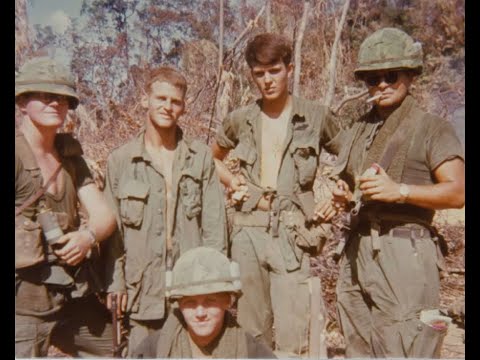
The patrol of six moved single file along a narrow trail, their CAR-15s and M16s held ready. The point man noticed footprints in the soft soil—shallow, barefoot, heading away. Probably a villager. He reported back, and the team leader nodded. No threat. They continued.
Minutes later, a faint smell of smoke and ash lingered in the air. Old cooking fire, the leader judged. Nothing fresh. But the guerrillas had been careful, wiping away obvious signs, leaving only faint traces to lull the Australians into a false sense of security. Every step took them deeper into a natural amphitheater, a bowl-shaped depression where two earth ridges pinched the trail—a perfect ambush site.
The silence that followed was unnatural. No insects, no birds, no wind. The point man froze, raised a fist. The patrol halted. Five seconds passed. Nothing. The leader whispered, “Move.” They continued, and the jungle exhaled.
Hidden behind bamboo and termite mounds, the guerrilla squad—armed with a single RPG-2, a few AK-47s, and one RPD machine gun—waited for the signal. Their squad leader had spent years in this forest, knew every trail, every shadow. He had watched the Australians for half an hour, memorizing their spacing, their rhythm. Now, he gave a soft bird call—a signal indistinguishable from nature unless you had grown up mimicking it.
The trap was set. The jungle held its breath for the final moment.
As the SASR patrol rounded the bend, the world exploded. A blinding flash from the right flank, a thunderous crack—the RPG round struck the point man with devastating precision. Two soldiers were thrown backward, their bodies limp before they hit the ground. Before the shock wave faded, the RPD opened up from the left ridge, stitching bullets across the center of the column. Green tracers carved vicious lines through the foliage.
“Break right! Break right!” the team leader shouted, but his command was drowned out by overlapping gunfire. He tried to raise the radio, but an AK-47 burst ripped into his chest. He collapsed, the radio slipping from his fingers. The radio operator sprinted toward him, but a second RPG detonated against a tree trunk, spraying him with splinters and metal. He fell without a sound. Within 20 seconds, the patrol had lost both communication and command.
Two soldiers remained in fighting condition—a rifleman and the medic. The rifleman crawled behind a rotting log, firing controlled bursts toward the machine gun. The medic dragged himself toward the wounded, ignoring the rounds snapping past his head. But the guerrillas were not giving them time. The RPD shifted fire, sweeping low. The rifleman fell sideways, hit in the neck. The medic reached for his sidearm, but a burst of AK fire tore into the ground beside him. He pressed himself flat, clutching the wounded soldier, trying to make both of their bodies as small as possible.
At the far end of the trail, the last man—a young trooper near the rear—saw the destruction unfold in a blur. Without orders, he rolled off the trail and slid down a small embankment into a patch of ferns. He pressed himself into the mud, barely daring to breathe as bullets hammered the trees above him.
Within 90 seconds, the shooting tapered off. Three SASR soldiers were dead. Two were critically wounded. Only one remained uninjured, and he dared not move. The jungle fell silent again, as if the gunfire had been nothing more than a brief violent dream.
For a long moment, the young trooper lay in the ferns, his face pressed into the damp earth, his heart slamming against his ribs. He could hear nothing but the ringing in his ears and the slow, agonizing return of the jungle’s natural sounds. Somewhere above him, a bird called out—tentative at first, then bolder. The insects resumed their droning. It was as if the forest itself was exhaling, reclaiming its silence.
He counted to sixty. Then to sixty again. Only then did he dare to lift his head.
What he saw would never leave him. The trail, once a faint ribbon of packed earth, was now a churned scar of craters and splintered bamboo. Smoke drifted lazily between the trees. And there, sprawled at unnatural angles, lay his teammates. Three of them motionless. Two others—he could see the shallow rise and fall of their chests, could hear the wet rattle of their breathing. They were still alive. Barely.
He crawled toward them, every muscle screaming, every instinct urging him to flee. But he was an SASR soldier. He would not leave his mates behind.
The medic was the first to see him. The man’s face was pale, streaked with dirt and blood, but his eyes were still sharp. “Radio,” he rasped, his voice barely a whisper. “Get the radio.”
The young trooper scrambled toward the team leader’s body, forcing himself to look away from the man’s face, from the wound that had killed him. The radio was there, crushed beneath the operator’s body, its casing cracked, its handset dangling by a thread of wire. He pulled it free, his hands trembling, and pressed the transmit button.
Static. Nothing but static.
He tried again. Again. Then, faintly, a voice—crackling, distant, but unmistakably Australian. “Any station, any station, this is—”
“Mayday, Mayday,” the young trooper gasped. “Patrol ambushed. Three—three dead. Two wounded. Need immediate extraction. Grid—” He fumbled for the map, his fingers slick with sweat and blood. He read the coordinates twice, his voice cracking on the second attempt.
A pause. Then: “Roger. Birds inbound. Twenty minutes. Hold on.”
Twenty minutes. An eternity.
The medic was already working, tearing open field dressings, pressing them against the wounds of the two surviving soldiers. One of them—a corporal the young trooper had shared a tent with for six months—was drifting in and out of consciousness, his lips moving soundlessly. The other lay still, his eyes open, staring at the canopy above.
“Stay with me,” the medic kept saying, over and over, his voice steady despite the blood on his hands. “Stay with me, mate. Help’s coming.”
The young trooper took up a position at the edge of the kill zone, his rifle raised, scanning the treeline. He expected the guerrillas to return at any moment, to finish what they had started. But the forest remained empty, silent except for the birds and the insects and the wet, labored breathing of the wounded.
The guerrillas were already a kilometer away, moving through the jungle with the same fluid grace that had brought them to the ambush site. They did not run. They did not celebrate. They simply vanished, swallowed by the terrain that had protected them since birth.
Behind them, they left three dead Australians, two dying ones, and a single young soldier who would carry the memory of that 90-second firefight for the rest of his life.
The helicopter arrived in eighteen minutes. The young trooper heard it before he saw it—the deep, rhythmic thrum of rotor blades beating against the air, growing louder, closer. He waved his arms, shouting into the radio, guiding the pilot toward the clearing he had marked with a smoke grenade.
The door gunner spotted them first. His voice crackled over the radio: “I see them. Jesus Christ, what happened down there?” No one answered. There was no answer that could fit into words.
The Huey descended, its rotors flattening the ferns, whipping the smoke into a frenzy. Medics leapt out before the skids touched the ground, their faces tight with controlled urgency. They moved through the kill zone with practiced speed, triaging the wounded, covering the dead. The young trooper watched them work, his rifle still raised, his eyes still scanning the treeline.
“You’re safe now,” a medic said, gripping his shoulder. “Let’s get you on board.”
He shook his head. “Not until they’re all on.”
The flight back to Nui Dat was silent. The wounded lay on stretchers, their breathing shallow, their faces pale beneath the dirt and blood. The bodies of the fallen were wrapped in ponchos, strapped to the floor of the chopper. The young trooper sat beside them, his hands still trembling, his mind replaying the ambush in an endless loop—the bird call, the RPG, the team leader collapsing, the radio dying.
When the helicopter touched down at the Australian base, a crowd had already gathered. Soldiers stood in stunned silence as the stretchers were unloaded. Some of them had trained with these men, had eaten with them, had laughed with them. Now they watched as the bodies were carried away, their faces masks of disbelief.
An officer approached the young trooper, his expression grim. “Debrief in thirty minutes. Get cleaned up.”
The trooper nodded, but he did not move. He stood there, staring at the helicopter, at the bloodstains on the floor, at the empty space where his teammates had lain. Thirty minutes. He had thirty minutes to find the words to explain the unexplainable.
He never did find them. Not fully. Not ever.
The debriefing lasted three hours. Officers pored over maps, radio logs, mission plans. They asked the same questions again and again, as if repetition might yield a different answer. How had the patrol been surprised? Why hadn’t they detected the ambush? Where was the intelligence failure?
The young trooper answered as best he could, his voice flat, his eyes distant. He described the footprints, the smell of smoke, the silence that had felt wrong but not wrong enough to stop. He described the bird call, the flash of the RPG, the way the jungle had exploded around them.
“They knew we were coming,” he said finally. “They knew exactly where we would walk. They were waiting for us.”
The room fell silent. One of the officers, a major with years of service in Vietnam, leaned back in his chair and rubbed his eyes. “A district guerrilla squad,” he said quietly. “Not main force. Not regulars. Local fighters.” He shook his head. “And they took out an SASR patrol in under two minutes.”
No one had an answer. There was no answer that could restore the dead or undo the ambush. There was only the cold, hard truth: the jungle had chosen sides, and the Australians had lost.
Within days, new directives were issued. Patrol routes were changed. Spacing between soldiers was increased. Listening halts became longer, more frequent. The SASR adapted, as elite units do, learning from their mistakes, hardening their doctrine with the blood of their fallen.
But the changes came too late for three men. And for the young trooper who had survived, the lessons would echo for the rest of his life—a quiet, persistent whisper in the back of his mind, reminding him that in Vietnam, no one was untouchable.
The survivors carried more than wounds. They carried the weight of a myth shattered—the belief that elite training could conquer any jungle, any enemy. “We thought we understood the jungle,” one veteran later said. “But those young guerrillas—they were the jungle.”
Today, the site is marked only by a shallow depression in the soil and three small mounds where villagers once placed incense. The bamboo has grown tall again. Birds call from the canopy, unaware of the thunder that once split the silence.
But stand there long enough, and you may feel it—a subtle weight in the air, an echo of men who fought, fell, and disappeared into the soil. Three Australians. Three Vietnamese martyrs nearby. Two nations’ memories intertwined on a trail no wider than a doorway.
A battle that lasted 90 seconds. A legacy that has lasted more than 50 years. In the quiet forest of Long Khanh, the war is long gone, but its lessons, its warnings, its sorrows, and its moments of unexpected humanity are still alive in the shadows between the trees.
What do you think—can any amount of training truly prepare a soldier for a battlefield that belongs to someone else?
Report this article
Select a reason for reporting:






