The first light of dawn on June 6, 1944, revealed a scene of unimaginable horror. Thousands of Allied soldiers stormed the beaches of Normandy, braving a deadly hail of machine gun fire and artillery. The water turned red with blood as the first waves fell, but the survivors pushed forward, driven by a desperate determination to liberate Europe from Nazi tyranny.
But this was not just a battle of men and machines—it was a clash of strategies that could have altered the course of history. As the Allies fought through blood, sweat, and sheer will, a fatal disagreement among the German high command would tip the scales in ways no one could have predicted.
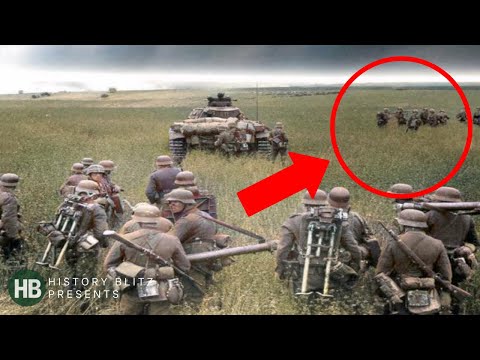
In the early months of 1944, Hitler’s Atlantic Wall stretched from Norway to the French-Spanish border, a vast system of fortifications designed to repel any invasion. The Germans knew an attack was coming, but they were misled by Operation Fortitude, a brilliant deception that convinced them the main blow would fall at Pas-de-Calais, not Normandy.
Field Marshal Erwin Rommel, the legendary Desert Fox, was tasked with fortifying northern France. He believed the Allies had to be stopped on the beaches or Germany would face certain defeat. “The first 24 hours of the invasion will be decisive,” he famously warned. “For the Allies as well as Germany, it will be the longest day.”
Rommel advocated for a powerful, immediate counterattack on the beaches, using mobile Panzer divisions to crush the invasion before it could establish a foothold. But Hitler and Field Marshal Gerd von Rundstedt disagreed. They favored a flexible defense, holding Panzer divisions in reserve for a counterstrike further inland. Hitler, convinced the real invasion would come at Pas-de-Calais, insisted on keeping the bulk of the armored forces far from the beaches.
This disagreement would prove catastrophic. When the Allies landed on June 6, Rommel’s forces were unable to mobilize quickly enough to deliver the decisive counterstrike he had deemed essential. The armored divisions held in reserve were slow to arrive, hampered by Allied air attacks and the chaos on the ground.
On Omaha Beach, the Americans faced a slaughterhouse. High cliffs and heavily fortified positions rained down machine gun fire and artillery. The water turned red with blood, and casualties were staggering. Yet, through incredible bravery and relentless naval bombardment, the Allies secured the beachhead. The tide had turned.
Meanwhile, British and Canadian forces landed at Gold, Juno, and Sword beaches, encountering stiff resistance but making steady progress. Utah Beach saw the Americans quickly gaining ground, thanks in part to a mislanding that placed them in a less defended area.
But the fight for Normandy had only just begun. The bocage country—with its dense hedgerows and narrow lanes—favored the defenders. American forces under General Omar Bradley faced fierce resistance as they advanced. Each hedgerow was a potential ambush site, and progress was agonizingly slow.
The British and Canadians focused on capturing Caen, a critical objective that was supposed to be taken on D-Day. But the city’s strong defenses and the elite 12th SS Panzer Division prolonged the battle for weeks. Operations Epsom and Charnwood slowly pushed the Germans back, but the delay frustrated Allied plans.
To link the Utah and Omaha beachheads, the Allies needed to take Carentan. The 101st Airborne Division faced fierce resistance from the German 6th Parachute Regiment. After days of brutal combat, the town was secured on June 13. This victory was crucial for establishing a continuous front and preparing for the breakout.
As the Allies pushed inland, the German command struggled to send reinforcements. Allied air superiority and French Resistance sabotage disrupted supply lines, further weakening the German defense. The stage was set for a decisive breakthrough.
But the Germans were not done yet. Hitler’s obsession with Pas-de-Calais and his micromanagement of the Panzer divisions had already cost them dearly. Rommel’s warning echoed in the minds of those who understood the stakes: the first 24 hours would decide everything.
And those hours had passed, leaving the Allies with a hard-won foothold. The battle for Normandy was far from over, but the momentum was shifting. The road to Paris lay ahead, paved with blood and sacrifice.
By mid-July, the Allies had finally secured Caen, but the cost had been staggering. The city lay in ruins, and both sides had suffered thousands of casualties. Yet, the capture of Caen allowed the Allies to pivot toward a new objective: breaking out of Normandy entirely. The stalemate was about to end.
On July 25, 1944, Operation Cobra was launched. Massive aerial bombardments pulverized German positions near Saint-Lô, paving the way for a ground assault. American forces under General Omar Bradley punched through the German lines, exploiting a gap that had been torn open by the relentless bombing.
General George S. Patton’s Third Army, newly activated and hungry for glory, surged through the breach. His tanks raced through Brittany and into the Loire Valley, liberating towns and villages as they went. The breakout from Normandy was underway, and the German defenses began to crumble.
Patton’s rapid advance not only liberated French territory but also disrupted German supply lines and communications. The Germans, already reeling from the loss of Caen, found themselves unable to mount a coherent defense. Their retreat turned into a rout.
As the Allies advanced, they trapped thousands of German troops in what became known as the Falaise Pocket. The encirclement was brutal. Relentless Allied air and artillery bombardments decimated the trapped forces. Despite desperate attempts to break out, the Germans suffered massive losses.
The destruction of the Falaise Pocket marked the end of organized German resistance in Normandy. The loss of troops and equipment significantly weakened the German Army’s ability to defend France. The collapse of the front line opened the way to Paris.
With the German front collapsing, the Allies surged through northern France. Towns and cities fell in rapid succession. The French Resistance played a crucial role, sabotaging German supply lines and providing vital intelligence. The Liberation of cities like Rouen and Laval followed swiftly.
By mid-August, the Allies were poised for their final objective: Paris. The rapid advance through northern France showcased the effectiveness of the Allied strategy and the resilience of the French Resistance. The Liberation of key cities disrupted German control and morale, paving the way for the final push.
But Paris was not just another city. It was the heart of France, a symbol of culture and freedom. Both sides knew that its fate would resonate far beyond the battlefield.
On August 19, 1944, the French Resistance in Paris rose up against the German occupiers. Barricades were erected, and fierce street fighting broke out. General Dietrich von Choltitz, the German commander, faced a dire situation. Hitler’s orders were clear: Paris must not fall into Allied hands without a fight, and if it did, it should be left in ruins.
But von Choltitz hesitated. Torn between duty and conscience, he delayed carrying out Hitler’s orders. The uprising in Paris was a dramatic and pivotal moment. The courage of the Resistance fighters inspired the Allied Forces and provided a critical distraction for the German occupiers.
By August 23, the Allies were ready to move on Paris. The Free French 2nd Armored Division, led by General Philippe Leclerc, spearheaded the advance. The US 4th Infantry Division supported them as they raced toward the city. The tension was palpable. Would Paris be destroyed as Hitler had ordered, or could it be saved?
The advance toward Paris was marked by a sense of urgency and determination. The Allied Forces knew that the liberation of Paris would be a significant symbolic victory, and they moved quickly to ensure the city was taken intact. The coordination between the Free French forces and the Allies was crucial in this final push.
On August 25, 1944, the first Allied tanks rolled into Paris. The city erupted in jubilation. General von Choltitz, defying Hitler’s orders, surrendered to the French and American forces. Paris was spared destruction.
General Charles de Gaulle entered the city triumphantly, declaring the Liberation of Paris. His speech at the Hôtel de Ville galvanized the nation and symbolized the restoration of French pride and sovereignty. The Liberation of Paris was a moment of profound joy and relief for the French people.
The arrival of the Allied Forces and the surrender of the German occupiers marked the end of a dark chapter in the city’s history. De Gaulle’s speech reinforced the sense of national unity and determination to rebuild France.
The Liberation of Paris marked a crucial turning point in the war. It was a symbolic victory that boosted Allied morale and signaled the beginning of the end for Nazi Germany. The road ahead, however, remained fraught with challenges. The Allies would continue their push toward Germany, facing fierce resistance and enduring great sacrifices.
But the liberation of Paris was a beacon of hope—a testament to the courage and resilience of those who fought for freedom. The aftermath saw Paris and France beginning the process of recovery and rebuilding. The Allies’ continued efforts to push into Germany would eventually lead to the end of the war in Europe.
The events of those two months highlighted the importance of cooperation, strategy, and the will to fight for a better future. From the blood-soaked beaches of Normandy to the jubilant streets of Paris, the journey was arduous, but the resolve of the Allied Forces and the French Resistance never wavered.
Yet even as Paris celebrated, the war was far from over. The German Army, though battered, was not broken. As Allied forces raced toward the Rhine, they encountered a desperate enemy willing to fight to the last. The liberation of Paris was not the end—it was the beginning of the final, brutal push into the heart of Germany.
The lessons of Normandy echoed forward. The failure of the German high command to unite behind Rommel’s strategy, the decisive delay in mobilizing the Panzer divisions, and the stubborn belief in Pas-de-Calais—all had tipped the scales. Had those mistakes been avoided, the beaches might have become a graveyard of Allied hopes.
But history turned on courage and coordination. The French Resistance, the airborne divisions, the soldiers who fell in the surf—each played a part in a victory that saved Europe. From the hedgerows of the bocage to the barricades of Paris, the cost was immense, but the cause was just.
As the guns fell silent over the City of Light, one question lingered in the minds of those who had lived through the darkness: what if the first 24 hours had gone differently? The world might have been a very different place.
What do you think was the single most decisive moment between D-Day and the liberation of Paris? Share your thoughts in the comments below.
Report this article
Select a reason for reporting:






