The bullet had already taken half his sight and most of his face. Blood poured into his mouth as he wrestled the shattered Zero over four hundred miles of open ocean, one eye clamped shut, the other barely seeing the stars. Saburo Sakai should have died over Guadalcanal in August 1942. Instead, he survived—and returned to the cockpit two years later expecting to do what he had always done: win.
He was wrong. On that summer day in 1944, fifteen American fighters trapped him low over the water, circling like wolves. For twenty minutes he twisted and dodged, waiting for a hit that never came. When he landed, ground crews combed his Zero for bullet holes and found nothing. He had not shot down a single Hellcat. He had barely fired his guns.
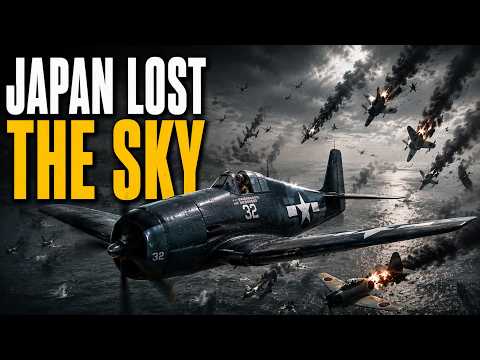
The rules of the sky had changed without him. Before the war, Sakai was already a legend among the men who flew the Mitsubishi Zero. He joined the Imperial Japanese Navy as a teenager and clawed his way through brutal training where the weak simply vanished from the barracks. By the time Japan struck Pearl Harbor, he was flying with the Tainan Air Group—one of the most feared fighter units in the Pacific.
He did not waste ammunition. He did not take foolish risks. He watched and waited, striking only when the odds bent his way. Pilots who flew beside him said he seemed to see the entire sky at once. Every aircraft, every angle, every shifting wind current. That calm confidence came from years of proving the same lesson in the air.
The machine beneath him was built for that kind of pilot. The Zero was lighter than almost anything else in the sky—stripped of armor and self-sealing fuel tanks in exchange for breathtaking agility. Designers shaved weight from every surface, drilled holes in structural ribs, and used a new aluminum alloy that made the airframe strong yet far lighter than its rivals. In the hands of a master, it could out-turn, out-climb, and out-fly anything the Allies had.
In the early months of the war, American and British pilots learned to fear it. Reports described a fighter that seemed to defy physics, pulling turns that should have torn its wings off. Some Allied pilots received direct orders to avoid maneuvering with it and rely on diving away instead. That single order said everything about the Zero’s reputation.
For pilots like Sakai, the Zero was more than a machine. It was proof of something deeper—a belief that skill, discipline, and a pilot’s will mattered more than steel and engine power. That faith carried Japan through the first year of the air war. Sakai himself shot down dozens of enemy aircraft, adding to a growing list of victories that made him one of the most decorated fighter pilots in the fleet.
He flew over China. He flew over the Philippines. He flew over the Dutch East Indies. Wherever the Zero went, it seemed to win. Then came Guadalcanal.
On August 7, 1942, Sakai took off as part of a large formation sent to intercept American aircraft supporting the invasion of the island. What should have been another routine engagement turned to chaos when his squadron collided with a far larger enemy formation than anyone expected. The sky, usually a map he read with ease, filled with tracer fire and shadows moving faster than he could track.
In the melee, machine-gun fire tore through his cockpit. A bullet pierced his skull and shattered the vision in one eye. Blood poured down his face, blinding him almost completely, seeping into his mouth and soaking his flight suit collar. He later admitted he thought for a moment of ending it there—pointing his crippled plane at an enemy ship rather than facing a slow, lonely death over open water.
But he did not. Instead, half-conscious and unable to see clearly for long stretches, Sakai flew his damaged Zero over 450 nautical miles back to Rabaul. He navigated by memory and instinct, correcting his course through glimpses of stars and coastline whenever his vision cleared enough to see. Every few minutes, as he later recalled. He forced his good eye open just long enough to confirm his heading before pain and blood sealed it shut again.
The flight took over four hours. When he finally landed, the ground crew who pulled him from the cockpit could not believe he was still breathing, let alone conscious. Sakai survived, but the wound cost him permanently. He lost most of the sight in one eye and endured months of surgery and recovery—first in Japan, then in hospitals far from the front.
The pilot who once claimed he could see the entire sky at once now spent his days in quiet hospital wings, relearning how to judge distance and depth with half the vision he had once relied on. While he healed, the war did not stop. Battles raged around convoys. Islands changed hands. And in factories half a world away in New York, engineers at Grumman Aircraft were already working on something new.
The men who designed that new aircraft had studied the Zero carefully. In the summer of 1942, American forces recovered a nearly intact Zero that had crash-landed on a remote island in the Aleutians. That single airframe, shipped to the United States and rebuilt for testing, gave American engineers something they had never possessed: a complete picture of what made the Japanese fighter so dangerous—and exactly where its weaknesses lay.
Test pilots who flew the captured Zero came back with new respect for its agility and a clear list of everything it lacked. It had no armor to protect its pilot. Its fuel tanks were not self-sealing, meaning a single well-placed burst could turn the aircraft into a ball of fire. Its lightness came at a brutal price—one that had never been tested against an opponent designed to punish it.
Grumman’s answer was not an attempt to out-turn the Zero. It was something closer to the opposite philosophy. Their new fighter would be heavier, tougher, and less nimble in slow turning fights—but it would protect the pilot inside, hit harder, and absorb damage that would have destroyed Sakai’s aircraft.
It carried a massive engine producing roughly two thousand horsepower, housed in an airframe reinforced with armor plating around the cockpit and fuel tanks designed to seal themselves shut when punctured by enemy fire. Engineers widened the wings, strengthened the landing gear to survive the brutality of carrier landings, and mounted six heavy machine guns capable of tearing an unarmored airframe into pieces in seconds.
Where the Zero sacrificed protection for speed and maneuverability, this new aircraft sacrificed nothing. It simply asked its pilots to fight differently.
News of this new American fighter reached Japan slowly, through intelligence reports, prisoner interrogations, and scattered fragments gathered from wrecked aircraft. What reached Japanese naval headquarters described something unimpressive. Analysts who studied the first reports concluded the new fighter seemed little more than a heavier, more powerful version of the Wildcat—the American fighter Japanese pilots had already learned to outmaneuver with relative ease throughout 1942.
Some officers went further. A larger, heavier aircraft, they argued, would only be slower and clumsier in a turning fight—playing directly into the Zero’s greatest strength. The reports were filed, summarized, and passed up the chain of command without urgency. There was no alarm. Japanese pilots who had spent a year watching American fighters struggle to match the Zero’s agility saw no reason to expect this new aircraft would be different.
The philosophy that had driven Japanese naval aviation through the first stage of the war—that a smaller, lighter, more maneuverable aircraft would always defeat a larger opponent—remained beyond doubt. It had held true over the Philippines, over the Dutch East Indies, over the waters near Rabaul. Nothing in the scattered intelligence suggested that pattern was about to break.
Sakai, recovering far from the front, heard little of this at first. His war, in that moment, seemed to be over. He had lost an eye, endured surgery after surgery, and by most standards should never have flown in combat again. Doctors spoke to him in careful, measured tones about limitations—about a career that had likely ended in a single instant of gunfire over Guadalcanal.
He listened and said little. Deep down, he believed his war was not finished.
Around him, the machinery of war ground on without pause. In shipyards and factories across the Pacific and the American mainland alike, men who had never met were making decisions that would eventually bring them into the same sky.
American engineers refined their new fighter through successive rounds of testing—fixing visibility issues, landing gear problems, engine cooling. Each fix was folded into the next batch of aircraft rolling off the production line. Meanwhile, Japanese naval planners continued to rely on the aircraft and doctrine that had delivered victory in the war’s first year, convinced there was no reason to change either.
But the war was not over for Sakai—and it turned out the same was true for the skies over the Pacific. Somewhere beyond the horizon, the aircraft Japanese intelligence had dismissed as a minor upgrade was already being loaded onto American carriers, waiting for its first chance to prove how wrong that assessment had been.
The new American fighter received its combat baptism on August 31, 1943, far from Sakai’s hospital bed, over a patch of coral and sand called Marcus Island. Aircraft launched from the carrier Yorktown struck the Japanese garrison there in a raid intended primarily to test new tactics and equipment before the larger campaign still to come.
It was a small engagement by the standards of the war that followed. But it was the first time this new fighter—built in the shadow of everything American engineers had learned from the captured Zero—flew in combat anywhere in the Pacific.
Five weeks later, on October 5, the aircraft met Japanese fighters in the air for the first time during a series of strikes against the heavily fortified base at Wake Island. Waves of the new fighters swept over the atoll. Engines roaring low above the coastal lagoon, clearing the sky of the aircraft sent to intercept them.
Japanese pilots who launched to meet the raid found themselves facing something heavier and faster than anything they had trained to fight. An opponent that dove through their formations instead of turning to face them head-on.
Reports from that engagement were not initially treated as extraordinary in Tokyo. Losses were losses, and the Pacific War had already produced plenty of them on both sides. But among the pilots who actually flew against this new opponent, there was a feeling that something had changed—even if no one yet had the words to describe exactly what.
The aircraft itself, once ground crews and American pilots settled on its final name, was the Grumman F6F Hellcat. It was not elegant. Beside the slender, streamlined lines of the Zero, the Hellcat looked massive and almost clumsy—like a thick barrel with broad wings and a deep, rounded nose housing its enormous engine.
But every inch of that bulk had a purpose. The engine alone weighed as much as the entire Zero airframe according to some pilot comparisons, and it produced roughly two thousand horsepower—enough to drive the Hellcat through the air at speeds far beyond anything the Zero could match in a straight line.
Where the Zero relied on reducing weight to improve performance, the Hellcat achieved its performance through brute mechanical power—simply carrying the extra weight of armor and protection without paying the same penalty in speed. And for the pilot sitting inside, the difference was immediately obvious.
An armor plate was placed behind the cockpit, protecting the pilot’s back from the kind of fire that had so often turned damaged Zeros into funeral pyres. The fuel tanks were lined with a rubber compound that expanded and sealed itself within seconds of being punctured—a feature the Zero lacked, and one that alone saved the lives of countless American pilots who returned from missions with bullet holes in their fuel tanks and no fire.
The six heavy machine guns—three in each wing—gave the Hellcat firepower capable of shredding a lightly built aircraft in a burst lasting no more than a second.
Grumman’s engineers designed the aircraft to be more than just firepower and armor. Carrier operations demanded an aircraft that could withstand not only combat but the daily punishment of landing on a pitching deck at sea. The Hellcat was designed from the start with that reality in mind.
Its landing gear folded outward and backward in a wide, stable stance, giving pilots far more margin for error on rough landings than the narrow gear of earlier fighters. Unlike the Wildcat that preceded it, the gear was retracted by a simple hydraulic system rather than the exhausting hand-crank that had forced Wildcat pilots to manually raise their wheels after every takeoff.
Deck crews also found the aircraft easier to maintain between sorties, its engine more tolerant of salt air and the rough handling of shipboard life. None of these details made headlines. But together they meant more aircraft available for the next day’s missions—and more pilots coming home to fly them.
None of this meant the aircraft was easy to dismiss on paper. Yet Japanese intelligence did exactly that. Initial assessments, based on limited encounters and outdated assumptions about American aircraft design, treated the Hellcat simply as a larger, heavier cousin of the Wildcat—the fighter Japanese pilots had already learned to defeat through superior maneuverability.
That assumption ignored the fundamental lesson Grumman’s engineers had built the entire aircraft around: that combat did not necessarily have to be won through turning circles.
Through the final months of 1943, veteran Zero pilots who encountered the Hellcat for the first time made the same mistake repeatedly. They saw the familiar shape with its broad, thick wings and expected another aircraft that would try to match them in a turn—an opponent they could wear down with patience and skill.
Hellcat pilots refused to fight that kind of fight. American pilots had trained according to a doctrine built specifically around their aircraft’s strengths. They dove on Japanese formations from above, fired short, devastating bursts, then climbed away before a Zero pilot could bring his guns to bear.
If a Zero pilot tried to pursue them into a turning fight, the Hellcat pilot simply disengaged—using his superior speed and dive performance to break contact and set up a new attack from a different angle. It was not a fair fight in the sense Japanese pilots understood fairness. It was never meant to be.
Japanese commanders reviewing post-battle reports in late 1943 blamed the growing losses on pilot error, poor formation discipline, or simple bad luck—anything but a fundamental shift in air power. Confidence in the Zero and the doctrine built around it remained remarkably stubborn, even as unit records filled with mounting casualties.
Many senior officers had built their careers on the assumption that well-trained Japanese pilots in agile fighters would always prevail. Admitting otherwise meant years of combat doctrine needed rebuilding from scratch—and there was little appetite for that reckoning.
Then came the Marianas. In June 1944, waves of Japanese aircraft flew straight into a wall of radar-directed Hellcats. Of the hundreds launched, the vast majority never returned. The Americans called it the Great Marianas Turkey Shoot.
Among those who grasped the meaning was Jiro Horikoshi, the Zero’s own designer. The lesson reached Japan’s aircraft industry years too late to change the war’s outcome.
Sakai lived until 2000, one of the last living links to the war’s opening days. He never called his escape over the volcanic islands a victory—only proof of how completely the rules had changed.
Japan did not lose the air war to a better fighter alone. It lost to an opponent that learned faster and more completely what winning truly required.
So here is the question for you: when the rules of your own battlefield change without warning, do you adapt—or keep fighting the last war?
Report this article
Select a reason for reporting:






