June 20th, 1944. The Philippine Sea. Junior Lieutenant Saburo Kitamura of the Imperial Japanese Navy stood frozen in the officers’ mess hall of the USS Enterprise, his hands trembling around a tray of food that defied everything he had been taught to believe. Fried chicken. Mashed potatoes soaked in butter. White bread. Apple pie. A glass of cold milk. He had not eaten a full meal in three days, but that was not why he trembled. It was the impossibility of it all.
An American sailor behind the counter leaned forward, impatient. “Chocolate or vanilla?” The words made no sense. Ice cream did not exist on warships—not on Japanese warships, anyway. It required refrigeration, continuous power, resources that no combat vessel in his navy could spare. And yet there it was. He, a prisoner rescued from the sea just four hours earlier, was being offered a choice of frozen dessert.
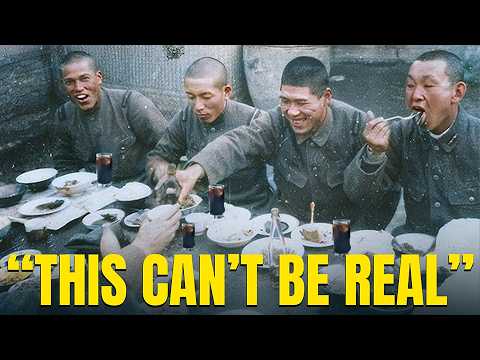
Kitamura had been pulled from the water after the Great Marianas Turkey Shoot, one of forty-three Japanese aviators recovered by American forces. He had expected execution. Or torture. Or, at best, starvation. Japanese propaganda had been explicit: Americans were barbarians, demons who delighted in suffering. But a doctor had treated his wounds. A sailor had brought him hot coffee. And now, this.
The question of chocolate or vanilla would haunt him for decades. It was the first crack in his understanding of war, of the enemy, of everything he thought he knew.
During World War II, prisoner re-education was common practice. Germany, Japan, and Russia all had programs—brutal ones, often including starvation, forced labor, and relentless attempts at brainwashing. The American program was different. It was incidental, though intentional. Prisoners were treated within the guidelines of wartime conduct and dignity. Along the way, they received their re-education.
Survivors from the Japanese aircraft carrier Zuikaku, sunk at the Battle of Leyte Gulf in October 1944, were given ice cream as part of their first meal. None had ever tasted it. Upon learning of this, Vice Admiral Takajiro Onishi—the father of the kamikaze—suppressed the information, classifying it as top secret. Why? Because of what it represented.
Axis propaganda portrayed Americans as weak, morally corrupt, and submissive. The Japanese believed that sacrifice and fighting spirit could overcome material disadvantage. Ice cream was not just a dessert. It was proof that everything they had been told was a lie.
In the winter of 1944, Japanese prisoners were transported across the Pacific to a camp in Wisconsin. Many prepared themselves to be shot the moment they stepped off the train. Instead, they saw rows of wooden barracks against the snow, watchtowers, barbed wire—but also order. Quiet routine. Smoke from kitchen chimneys carrying the smell of food being prepared. Rich food, far stronger than the weak soups they had lived on for months.
Some prisoners exchanged nervous glances. Others kept their eyes down, reluctant to show curiosity. The guards shouted commands in English—quick and firm—but the tone was controlled, not savage. Interpreters explained: “Line up. Move forward. Do not break formation.” Red Cross officers observed from the sidelines, clipboards in hand. Their very presence frightened the prisoners. At home, they had been told that America was lawless, indifferent to treaties. And here were foreigners ensuring that the rules were followed.
Could this be real?
The admission process was mechanical, yet shocking in its humanity. The men were deloused, their lice-infested uniforms burned. Medical examinations measured fever, malnutrition, broken bones. A Japanese soldier with a cast on his arm expected to be ignored. Instead, an American doctor inspected the injury, cleaned it, and rebandaged it. The soldier froze, unable to reconcile the act of care with the image of the barbaric enemy instilled in him.
One prisoner whispered to another, incredulous: “Why would they do this? We are not their men. We are nothing.”
Another shook his head. “It must be a trap. Wait.”
The fear persisted. Every step still seemed to lead toward punishment. Yet with every passing hour, something stranger emerged. An unexpected adherence to the Geneva Convention. A phrase they had once heard whispered but never believed carried any real weight.
After registration, the men were marched through the yard to their new quarters. The snow crunched beneath their boots. The cold cut through their thin coats. But the barracks, though rustic, were heated with stoves, lined with bunks, and stocked with wool blankets. It was not home, not freedom, but it was shelter. Some prisoners sat heavily on the mattresses, testing them with their hands, as if fearing the softness would vanish.
During the Pacific War, about 35,000 Japanese servicemen would be captured by American forces and face this same disorienting reality. They discovered ships where sailors’ meals surpassed those of many Japanese officers, where machines produced unlimited drinking water, and where ice cream was continuously made, even amid combat operations. These encounters with American logistics shattered more profoundly than any military defeat their beliefs about the enemy’s weakness.
The difference was evident in the mathematics of abundance. While Japanese sailors survived on rice balls and pickled vegetables—about 1,400 calories a day when supplies were available—Americans consumed roughly 4,100 calories of fresh, varied food. While Japanese ships fueled aircraft manually, the US Navy automated entire processes. While the Imperial Navy prayed for favorable winds, the Americans controlled everything: refrigeration, air conditioning, and even ice cream at sea.
The psychological impact began the moment the Japanese survivors were brought aboard. Commander Mitsuo Fuchida, the mastermind behind the attack on Pearl Harbor, recorded his rescue experience in 1945 aboard the USS Missouri: “They pulled me up like a captured fish, and I prepared for death. Instead, a medical officer examined my wounds while a sailor brought hot coffee with sugar and cream. I hadn’t had coffee since 1942. The sailor apologized for being out of donuts.”
That trivial reference to a missing item—while Japanese soldiers often ate leather belts—revealed the enormous difference between propaganda and reality. But the true shock would not come from rules or barracks. It would arrive on a tray in the mess hall, carried by the smell of meat and the hiss of soda bottles about to be opened.
The next morning, the prisoners awoke not to blows or shouted insults, but to the sound of a bugle. Many were startled—not because it was loud, but because it was familiar. They had heard the same sound in their own camps in Japan. For a moment, some forgot where they were. Then reality returned with the clinking of boots and voices in English outside.
They were ordered to form ranks. Roll call was taken, and they were directed to the mess hall. The fear of what would come next weighed heavily on their chests. Many expected the food to be withheld, or that they would be fed scraps unfit for animals. Hunger had been their constant companion in the Pacific. Their meals had been reduced to bowls of watery rice, sometimes barley, and if they were lucky, a few pickled vegetables. Meat was a rarity. Sugar almost mythical.
But before the food, there were procedures. The prisoners were gathered in a large hall where a Red Cross representative addressed them through an interpreter. He explained their rights under the Geneva Convention. They would be fed, sheltered, and allowed to write letters home. They would work, but only under certain conditions. They would not be abused. They would be regularly visited by neutral officers to ensure that these rules were upheld.
The words were received with disbelief. Some men lowered their eyes, ashamed to be hearing such things. Others whispered among themselves, distrustful. One soldier murmured to his friend, “They talk of rights, but we are their captives. Why would they care?”
The interpreter paused for the murmurs to subside. “These are not promises,” he said. “They are rules for you. For them, they are mandatory.”
The weight of those words hung in the air. Then came the medical examinations, more thorough than the day before. A doctor pressed fingers to thin wrists, checked teeth, measured blood pressure. The prisoners were weighed, and many were underweight. Some Americans shook their heads silently at the numbers. Malnutrition was obvious, but no one mocked them. A corporal even handed out vitamins—small, chalky tablets that puzzled the men. Medicine for enemies. Kindness so great it was almost insulting.
In the afternoon they received clean clothes: simple, functional uniforms marked with large PW letters. The garments fit better than the torn rags from the field. Some prisoners put them on slowly, hesitating, as if each seam were a surrender of identity. Others embraced the warmth, trembling less as the Wisconsin wind blew through the cracks in the barracks.
The guards themselves were another surprise. Yes, they were armed, stern, and vigilant, but they did not spit at the prisoners or beat them for moving slowly. They maintained order without cruelty. When an elderly prisoner stumbled on the icy path, a guard reached out and helped him up by the arm. No kick, no sarcastic smile—just a curt nod before walking away. It was deeply confusing.
That night, as the prisoners sat in the barracks, their conversations were low and heavy. “Do you believe them?” one man asked, staring at the beams of the ceiling. “They talk of rules as if it were an agreement. Don’t they hate us?”
Another replied, “They must be pretending, trying to make us talk.”
And yet, when silence fell, the smell from the kitchen returned. It was thick, rich, fatty—not the sour, thin soups they knew from the islands, but something whole, something that made their stomachs rumble involuntarily, betraying them. It seemed the Americans did not see food as a weapon. For them, it was routine. A Tuesday dinner, a Thursday lunch, nothing more.
But for the Japanese prisoners, who had marched nearly to death through jungle and beach, who had hidden in caves gnawing on roots, who had surrendered with hollow stomachs and stretched skin, that smell was almost unbearable. Some pressed their faces into their blankets to block it out. Others whispered that perhaps the next day the trap would reveal itself, that the food was baked, that the kindness would vanish as quickly as it appeared.
And yet, when the next day came, the lines formed again, the trays were filled again, and the routine continued—steady and unshaken.
Reports from the Imperial Japanese Navy itself, captured after the war, showed that by 1944, nutrition was dire. Protein came mainly from fish, and diseases such as beriberi, scurvy, and night blindness were common. In contrast, American rations included fresh meat daily, frozen vegetables, fresh bread, dairy, eggs for breakfast, and multiple beverage options. American aircraft carrier mess halls served up to 15,000 meals per day with rotating menus: roast beef on Tuesday, fried chicken on Thursday, ham with pineapple on Sunday. Japanese prisoners, accustomed to monotonous rice rations, could not comprehend such variety.
The impact deepened in the living quarters. Petty Officer Kazuo Sakamaki, captured from a submarine at Pearl Harbor and the first Japanese prisoner of war in the United States, described his astonishment upon seeing American submarines: hot water showers, bunks with mattresses and clean sheets, libraries with books and magazines, and a mess hall with coffee constantly available. To him, American submarine life seemed better than what Japanese sailors experienced on land.
Especially striking was the presence of ice cream factories on board. For the Japanese Navy, ice cream was impossible at sea—an unattainable luxury. Yet, beginning in 1943, the US Navy operated floating ice cream units. The USS Lexington could produce 500 gallons; concrete barges converted into ice cream ships produced up to 5,000 gallons per shift. When the USS Lexington CV-16 was torpedoed, stores of ice cream were rescued before the ship was abandoned. Japanese prisoners looked on in bewilderment as exhausted damage control crews—even while fighting fires and flooding—were served ice cream as part of their combat rations.
The dissonance was overwhelming. Their own country could not provide basic nutrition, while the enemy—considered weak and decadent—was handing out ice cream during battle.
Chief Petty Officer Yoshio Yamada, captured when his destroyer sank in Leyte Gulf, spent three days aboard the USS Iowa before being transferred to a land facility. His diary, smuggled out and discovered decades later, recorded: “The battleship crew eats in shifts, but the food never stops. They have machines that peel potatoes, slice bread, make ice. The kitchen runs 24 hours a day. They throw away more food after one meal than my entire ship received in weekly supplies.” When he asked why they wasted so much, the guard simply laughed. “It’s not waste if you have unlimited supplies.”
At the US camp in Wisconsin, what shocked them most was not the abundance, but the normality of it all. The Americans weren’t celebrating. They weren’t mocking. It wasn’t a feast to impress. It was simply Tuesday dinner. That contrast hurt more than any insult could have. Here were men who had fought fiercely, who had been told that America was starving, decadent, and on the brink of collapse. And yet, in captivity, they ate better than when they had been free soldiers of the empire.
The shame was sharp, but the relief even greater. When the trays were emptied and the bottles stood drained on the tables, the prisoners leaned back in silence. Some clasped their hands as if in prayer. Others stared at the wall, trying to process what had just happened. The mess hall guards called for order, leading the men back to the barracks. The prisoners walked out, still stunned, still whispering among themselves about what they had just tasted.
Months later, Kitamura stood at the fence as the Wisconsin snow melted into spring mud. He had survived. He had eaten. He had learned the enemy’s words—bread, window, mother—and spoken them without shame. When the war ended, he returned to a Japan in ruins, where silence was safer than truth.
He never told his children about the ice cream. But on summer evenings, when the heat pressed down on Tokyo, he would sometimes pause before the freezer, and his hand would hover over the door. “Chocolate or vanilla,” he would whisper to no one, and smile at a ghost.
Decades later, a grandson asked why he always chose vanilla. Kitamura set down his spoon and said quietly, “Because the sailor apologized for having no chocolate. I have never forgotten a kindness I did not deserve.”
The boy did not understand. But one day, he would.
What small act of humanity has ever cracked your own certainty wide open?
Report this article
Select a reason for reporting:






